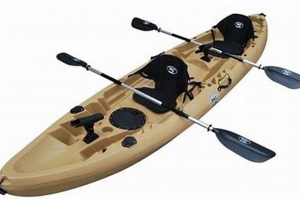
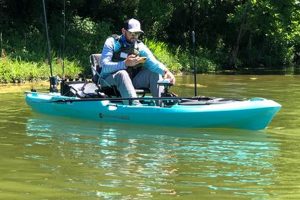
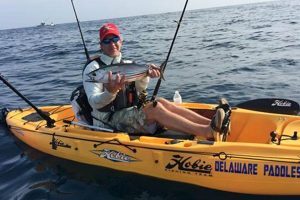
A customized storage and organization system implemented on a kayak for the purpose of enhancing angling efficiency and convenience is a common practice among fishing enthusiasts. This typically involves strategically mounting a crate, often of plastic milk crate or similar construction, onto the kayak’s deck. This provides a central location for tackle, tools, and other essential equipment, keeping them readily accessible and preventing clutter within the limited space of a kayak cockpit.
Effective organization is crucial for successful kayak angling. A well-planned system minimizes time spent searching for gear, maximizing time spent fishing. It also improves safety by reducing clutter and ensuring essential tools are readily at hand in case of emergencies. Historically, anglers improvised storage solutions; however, the increasing popularity of kayak fishing has driven innovation and the development of specialized crates, mounting systems, and accessories designed specifically for this purpose. This evolution reflects the growing recognition of efficient organization as a key factor in successful kayak fishing.
The following sections will delve into crate selection, mounting techniques, customization options, and popular accessories, providing a comprehensive guide to optimizing a kayak for a more productive and enjoyable fishing experience.
Tips for Optimizing Kayak Fishing Organization
Efficient organization is paramount for a successful and enjoyable kayak fishing experience. These tips offer guidance on maximizing space and accessibility.
Tip 1: Prioritize Stability. Weight distribution significantly impacts kayak stability. Heavier items should be positioned low and centrally within the vessel. Consider the combined weight of the crate and its contents and distribute gear evenly to maintain balance.
Tip 2: Select Appropriate Crate Dimensions. Crate size should be proportionate to the kayak’s size and the angler’s individual needs. An oversized crate can impede paddling and movement, while an undersized crate may offer insufficient storage.
Tip 3: Secure Mounting is Essential. Employ robust mounting hardware and techniques to ensure the crate remains firmly attached during navigation and angling activities. Loose crates pose a safety hazard and can damage the kayak.
Tip 4: Customize for Specific Gear. Rod holders, tackle trays, and tool organizers can be integrated to create a personalized system tailored to individual fishing styles and equipment needs.
Tip 5: Accessibility is Key. Frequently used items should be within easy reach. Less frequently accessed gear can be stored in less accessible areas. Consider the angler’s reach and paddling motion when organizing gear within the crate.
Tip 6: Regular Maintenance. Periodically inspect the crate, mounting hardware, and stored equipment for wear and tear. Address any issues promptly to prevent equipment failure during fishing trips.
Tip 7: Consider Environmental Factors. Saltwater environments necessitate corrosion-resistant materials. Ensure all components, including the crate and hardware, are suitable for the intended fishing conditions.
By adhering to these organizational strategies, anglers can create a safe, efficient, and enjoyable kayak fishing experience, maximizing time on the water and enhancing fishing success.
Following these guidelines contributes significantly to a productive and enjoyable fishing experience, enabling anglers to focus on what matters most – catching fish.
1. Crate Selection

Crate selection is a foundational element of a successful kayak fishing crate setup. The chosen crate forms the core of the organization system, influencing stability, storage capacity, and overall fishing efficiency. Appropriate crate selection hinges on careful consideration of various factors, ensuring compatibility with both the kayak and the angler’s individual needs.
- Material and Durability
Crate material directly impacts durability and longevity. Plastic crates offer affordability and resistance to corrosion, making them suitable for various fishing environments. Hard-sided coolers provide both storage and insulation for keeping catches fresh or beverages cold. More specialized fishing crates are often constructed from robust, UV-resistant plastics designed to withstand harsh marine conditions. Choosing a material that resists deterioration ensures a long-lasting, reliable storage solution.
- Size and Dimensions
Crate dimensions must be carefully considered in relation to kayak size and available deck space. An oversized crate can obstruct paddling and movement, compromising maneuverability and stability. Conversely, an undersized crate may not provide sufficient storage capacity for essential gear. Optimal crate size allows for adequate storage without hindering kayak operation. For example, a smaller kayak benefits from a compact crate, while a larger fishing kayak can accommodate a larger crate for additional storage.
- Features and Functionality
Integrated features, such as built-in rod holders, tackle compartments, and mounting points for accessories, can significantly enhance a crate’s functionality. Pre-molded slots or attachment points simplify customization, allowing anglers to tailor the crate to their specific needs. For instance, a crate with integrated rod holders eliminates the need for separate rod mounts, saving valuable deck space.
- Weight Capacity
The crate’s weight capacity dictates the amount of gear it can safely hold. Exceeding the weight limit compromises stability and can lead to structural failure. Consider the combined weight of the crate itself and the intended contents. Selecting a crate with sufficient weight capacity ensures safe and reliable performance.
Careful consideration of these facets of crate selection ultimately contributes to a more efficient and enjoyable kayak fishing experience. The right crate optimizes storage, enhances organization, and contributes to overall stability and safety, allowing anglers to focus on the pursuit of their target species. Selecting the appropriate crate lays the groundwork for a well-organized and functional kayak fishing platform.
2. Secure Mounting

Secure mounting is paramount in kayak fishing crate setups, directly impacting safety and the longevity of the system. A poorly secured crate poses a significant risk, potentially shifting during maneuvers, hindering paddling, and even capsizing the kayak. Furthermore, an unstable crate can damage the kayak’s hull through abrasion or impact. Proper mounting ensures the crate remains stable in various conditions, contributing to a safe and productive fishing experience.
- Mounting Location
Strategic placement maximizes accessibility without compromising stability or paddling efficiency. Positioning the crate too far forward can create an imbalance, while placing it too far back limits reach. Common locations include behind the seat or in front of the footwells, with optimal placement determined by individual kayak design and angler preference. Anglers often experiment with various positions to find the ideal balance between accessibility and stability.
- Mounting Hardware
Selecting appropriate hardware is crucial for ensuring a robust and lasting connection. Stainless steel hardware offers excellent corrosion resistance in marine environments, while specialized kayak mounting systems often utilize durable plastic components. Straps, bolts, and specialized mounting brackets are common choices. High-quality hardware ensures a secure and lasting hold, capable of withstanding the stresses of open water conditions.
- Attachment Surface
The mounting surface must be properly prepared and reinforced to provide a stable foundation. Some kayaks feature pre-installed mounting points, while others require DIY modifications. Reinforcing the attachment area distributes stress, preventing damage to the kayak’s hull. Techniques include using backing plates or reinforcing existing mounting points. This ensures a strong and lasting connection between the crate and the kayak.
- Regular Inspection and Maintenance
Periodic inspections of mounting hardware and attachment points are crucial for maintaining a secure and safe setup. Checking for loose bolts, worn straps, or signs of stress on the kayak hull can prevent potential issues. Tightening loose hardware or replacing worn components prevents catastrophic failures during use. Regular maintenance ensures the long-term reliability and safety of the crate mounting system.
A securely mounted crate forms the foundation of an efficient and safe kayak fishing experience. It ensures gear remains organized and accessible while minimizing the risk of accidents or equipment damage. By addressing each facet of secure mounting location, hardware, surface preparation, and maintenance anglers contribute significantly to a more productive and enjoyable time on the water.
3. Customization
Customization is integral to optimizing a kayak fishing crate setup, transforming a generic storage solution into a personalized workstation tailored to individual angling styles and needs. This process involves modifying the crate and integrating accessories to enhance functionality, accessibility, and overall fishing efficiency. Customization directly addresses the unique demands of various fishing techniques and environments, resulting in a more productive and enjoyable experience on the water. For example, an angler targeting bass might prioritize readily accessible lure storage, while a fly fisherman might require specialized compartments for flies and tools.
Practical examples of customization include adding rod holders for secure rod storage and quick access during retrieves, integrating tackle trays for organized lure and terminal tackle management, and mounting fish finders or GPS units for enhanced navigation and fish location. Further modifications might involve incorporating cutting boards for bait preparation, mounting camera mounts for capturing memorable catches, or attaching anchor trolleys for controlled drift fishing. Each customization caters to specific needs, transforming the crate into a multifunctional fishing hub. An angler specializing in trolling might prioritize rod holders and a fish finder mount, while a bottom fisherman might prefer additional tackle storage and a bait cutting board.
Understanding the significance of customization empowers anglers to tailor their kayak fishing crate setups to maximize efficiency and enjoyment. While pre-fabricated crate systems offer a starting point, true optimization arises from personalized modifications. This process necessitates careful consideration of individual fishing styles, target species, and environmental factors. Addressing these variables through thoughtful customization leads to a more organized, accessible, and ultimately, successful kayak fishing experience. Challenges may include balancing customization with weight capacity and stability considerations, requiring careful planning and execution to ensure a safe and functional setup.
4. Accessibility

Accessibility within a kayak fishing crate setup is paramount for efficient angling. Direct access to frequently used tools and tackle minimizes time spent searching and maximizes time spent fishing. Efficient organization translates directly into increased fishing opportunities and potentially higher catch rates. A well-designed system prioritizes frequently used items, placing them within easy reach, while less frequently used gear occupies less accessible areas. For instance, lures, pliers, and line cutters should be readily available, while spare spools or first-aid kits can be stored in less accessible locations within the crate. Prioritizing accessibility streamlines the fishing process, reducing wasted time and effort. Failure to prioritize accessibility leads to frustration, wasted time, and potentially missed opportunities.
Consider the angler’s seated position and range of motion when designing the layout. Items should be reachable without requiring awkward stretches or compromising balance. Integrating features like tackle trays, tool holders, and rod mounts further enhances organization and accessibility. A dedicated space for each item ensures everything has its place, reducing clutter and facilitating rapid retrieval. Practical examples include placing frequently used lures in a readily accessible tray on the crate’s top and storing less frequently used terminal tackle in compartments lower down. This strategic placement minimizes disruption to the angler’s fishing flow.
Optimizing accessibility improves safety by ensuring essential safety gear, such as a knife, whistle, or signaling device, is readily available in emergencies. Quick access to these items can be crucial in critical situations. Furthermore, a well-organized setup reduces the risk of entanglement or snagging, promoting safe and efficient handling of fishing gear. Accessibility, therefore, plays a dual role, contributing both to fishing efficiency and overall safety on the water. Challenges in achieving optimal accessibility may arise from limited space and the need to balance accessibility with stability considerations. Addressing these challenges requires careful planning and prioritization based on individual fishing styles and needs.
5. Weight Distribution
Weight distribution is a critical factor in kayak fishing crate setups, directly influencing stability, maneuverability, and overall safety. Proper weight distribution ensures efficient kayak performance and minimizes the risk of capsizing, especially in challenging conditions. Understanding and implementing appropriate weight distribution principles is essential for a safe and successful fishing experience.
- Impact on Stability
Uneven weight distribution compromises stability, making the kayak more susceptible to tipping. Concentrating weight in one area, such as the stern or the bow, creates instability. Distributing weight evenly throughout the kayak, including the crate and its contents, enhances stability and reduces the risk of capsizing. For example, placing heavy items low and centrally within the kayak improves stability, while placing them high or towards the edges increases instability. This principle is particularly relevant in kayak fishing crate setups, as the crate and its contents represent a significant portion of the overall weight.
- Influence on Maneuverability
Weight distribution impacts kayak maneuverability, affecting turning and tracking performance. Excessive weight in the stern can make the kayak difficult to turn, while excessive weight in the bow can hinder tracking and make the kayak more susceptible to wind and waves. Balancing the weight throughout the kayak improves responsiveness and control, allowing for more precise maneuvering, particularly important when navigating tight spaces or challenging currents. For example, an evenly distributed load allows for quicker turns and more efficient paddling, enhancing the angler’s ability to position the kayak effectively for fishing.
- Relationship with Kayak Design
Different kayak designs have varying weight capacities and optimal weight distribution patterns. Longer kayaks generally offer greater stability than shorter kayaks, while wider kayaks are more stable than narrower ones. Understanding the specific design characteristics of the kayak is crucial for determining appropriate weight distribution strategies. For example, a sit-on-top kayak with a wider beam may accommodate a heavier load than a narrow sit-inside kayak. This knowledge informs decisions regarding crate size, placement, and overall weight capacity.
- Considerations for Gear Placement
Strategic gear placement optimizes weight distribution and accessibility. Heavier items should be positioned low and centrally, while frequently used items should be within easy reach. Balancing the need for accessibility with weight distribution considerations requires careful planning and organization. For example, placing heavier tackle boxes closer to the center of the kayak and lighter items towards the edges maintains balance while keeping frequently used gear accessible. This approach contributes to both stability and efficiency.
Effective weight distribution is integral to a successful kayak fishing crate setup. By considering the impact on stability, maneuverability, kayak design, and gear placement, anglers can optimize their setup for a safe, efficient, and enjoyable fishing experience. Neglecting weight distribution can compromise safety and performance, underscoring the importance of careful planning and execution in this crucial aspect of kayak fishing.
Frequently Asked Questions
This section addresses common inquiries regarding kayak fishing crate setups, providing concise and informative responses to facilitate informed decision-making and optimal setup configuration.
Question 1: What type of crate is best suited for kayak fishing?
Crate selection depends on individual needs and kayak compatibility. Durable plastic crates offer affordability and corrosion resistance. Purpose-built fishing crates often incorporate specialized features like rod holders and tackle compartments. Hard-sided coolers offer storage and insulation capabilities.
Question 2: How does one ensure a crate remains securely mounted on a kayak?
Secure mounting relies on appropriate hardware and proper installation techniques. Marine-grade stainless steel hardware resists corrosion. Straps, bolts, or specialized mounting brackets, combined with reinforced mounting points on the kayak, ensure stability. Regular inspection and maintenance are essential.
Question 3: How can a crate setup be customized for specific fishing styles?
Customization involves incorporating accessories and modifications tailored to individual needs. Rod holders, tackle trays, fish finder mounts, and cutting boards are common additions. Customization enhances organization and accessibility, improving fishing efficiency.
Question 4: Why is weight distribution important in a kayak fishing crate setup?
Proper weight distribution maintains kayak stability and maneuverability. Distributing weight evenly, with heavier items positioned low and centrally, prevents tipping and enhances performance. Uneven weight distribution compromises stability and control, impacting safety and fishing effectiveness.
Question 5: What are the common mistakes to avoid when setting up a kayak fishing crate?
Common mistakes include overloading the crate, neglecting secure mounting, improper weight distribution, and overlooking accessibility considerations. These errors can compromise stability, safety, and fishing efficiency. Careful planning and attention to detail mitigate these potential issues.
Question 6: How does one maintain a kayak fishing crate setup?
Regular inspection and cleaning are crucial for maintaining a functional and safe setup. Inspecting hardware for corrosion or wear, cleaning the crate to prevent mildew or odor, and ensuring proper storage when not in use prolong the lifespan of the system. Periodic maintenance preserves the integrity and functionality of the crate and its components.
Addressing these frequently asked questions provides a foundational understanding of essential considerations in kayak fishing crate setups. Implementing these principles contributes significantly to a safer, more efficient, and ultimately more rewarding fishing experience.
This information serves as a starting point for further exploration of specific crate setups, mounting techniques, and customization options, empowering anglers to optimize their kayak fishing experience.
Kayak Fishing Crate Setup
Effective organization is paramount in kayak fishing, and a well-planned crate setup provides the foundation for a successful and enjoyable experience. Strategic crate selection, secure mounting, thoughtful customization, prioritized accessibility, and balanced weight distribution are essential components of an optimized system. These elements work synergistically to maximize space utilization, enhance fishing efficiency, and promote safety on the water. A properly configured system streamlines gear management, reduces wasted time searching for equipment, and allows anglers to focus on the pursuit of their target species.
The evolution of kayak fishing crate setups reflects the growing recognition of organization as a key element in successful angling. As kayak fishing continues to gain popularity, further innovation in crate design, mounting systems, and specialized accessories is anticipated. Investing time and effort in optimizing a kayak fishing crate setup translates directly into a more productive and rewarding experience on the water, enabling anglers to fully embrace the challenges and rewards of this dynamic fishing discipline.