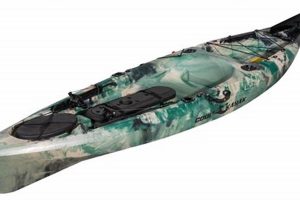
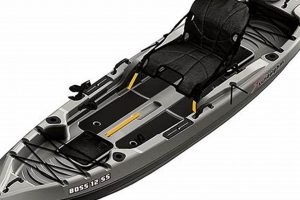
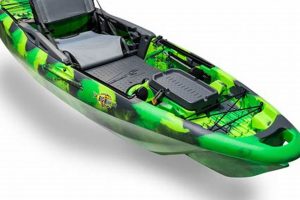
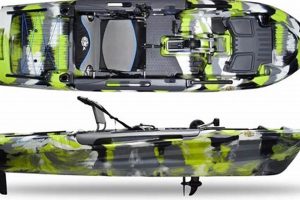
A fishing kayak is a small watercraft specifically outfitted with equipment and modifications to enhance angling effectiveness. These adaptations can include rod holders, fish finders, anchor trolleys, livewells, and specialized storage compartments for tackle and gear. A well-equipped fishing kayak provides a stable and mobile platform for accessing diverse fishing locations, from calm lakes and rivers to coastal waters.
The increasing popularity of this specialized vessel stems from its affordability, versatility, and minimal environmental impact compared to larger motorized boats. It allows anglers to explore shallow waters and hard-to-reach areas inaccessible to traditional boats, offering a closer connection with nature and a unique fishing experience. This method of angling has a rich history, with indigenous cultures utilizing small, human-powered watercraft for fishing for centuries. Modern technology and materials have elevated the fishing kayak into a highly effective and customizable angling platform.
The following sections will explore key aspects of fishing kayaks, including choosing the right type, essential equipment, safety considerations, and popular fishing techniques employed from these versatile vessels.
Tips for Effective Kayak Fishing
Careful planning and preparation are essential for a successful and enjoyable kayak fishing experience. The following tips offer valuable insights for maximizing effectiveness and safety on the water.
Tip 1: Choose the Right Kayak: Kayak selection depends on the intended fishing environment and personal preferences. Sit-on-top kayaks offer stability and ease of re-entry after a water landing, while sit-inside kayaks provide better protection from the elements. Consider factors such as length, width, and weight capacity when making a selection.
Tip 2: Prioritize Safety Equipment: A personal flotation device (PFD) is paramount. Carry a whistle, signaling mirror, and a waterproof communication device for emergencies. A first-aid kit and basic repair tools are also recommended.
Tip 3: Plan Your Trip: Research the fishing location, including water conditions, weather forecasts, and local regulations. Inform someone of your planned route and estimated return time.
Tip 4: Organize Tackle and Gear: Keep essential fishing gear readily accessible in a waterproof bag or tackle box. Utilize rod holders and storage compartments to maximize space and maintain a clutter-free deck.
Tip 5: Practice Paddle Strokes and Maneuvering: Confident paddling skills are crucial for navigating currents, wind, and changing water conditions. Practice entering and exiting the kayak smoothly and safely.
Tip 6: Understand Basic Kayak Fishing Techniques: Learn effective casting and retrieval methods from a seated position. Familiarize yourself with anchor trolley systems and drift fishing techniques.
Tip 7: Respect the Environment: Practice catch-and-release whenever possible. Dispose of fishing line and other waste responsibly. Minimize disturbance to wildlife and their habitats.
By following these guidelines, anglers can enhance their on-the-water safety, improve fishing success, and contribute to the preservation of aquatic environments.
This information provides a foundation for a rewarding kayak fishing experience. Further exploration of specific techniques and equipment choices can further refine angling proficiency.
1. Stability

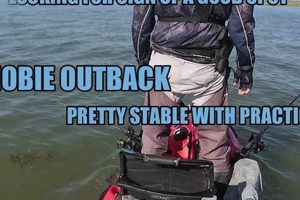
Stability is a paramount consideration in a kayak rigged for fishing. A stable platform is crucial not only for angler safety but also for effective casting, retrieval, and landing of fish. Compromised stability can lead to capsizing, equipment loss, and potentially dangerous situations, especially in challenging water conditions. Several factors contribute to kayak stability and should be carefully considered when outfitting a fishing kayak.
- Hull Design:
The hull design significantly influences stability. Wider hulls generally provide more initial stability, making them suitable for calmer waters and stand-up fishing. Longer, narrower hulls offer greater speed and tracking but sacrifice some initial stability. Specialized hull designs, such as pontoon hulls or those with outriggers, provide enhanced stability but may compromise maneuverability in tight spaces. The choice of hull design should align with the intended fishing environment and angler preferences.
- Weight Distribution:
Proper weight distribution plays a vital role in maintaining stability. Distributing gear evenly throughout the kayak, low and centered, enhances balance. Avoid overloading the kayak or concentrating weight in one area, as this can compromise stability and make the vessel more prone to tipping. Securing heavier items, such as batteries and tackle boxes, low in the hull improves the center of gravity and overall stability.
- Environmental Factors:
Wind, currents, and waves can significantly impact kayak stability. Strong winds can catch the side of the kayak, creating instability, particularly in elevated seating positions. Currents and waves can destabilize the kayak, especially when approaching from the side. Anglers should be aware of prevailing weather conditions and adjust their fishing location and techniques accordingly. Maintaining a low center of gravity by sitting lower in the kayak can improve stability in challenging conditions.
- Angler Movement:
Sudden movements within the kayak, such as reaching for gear or fighting a fish, can shift the center of gravity and compromise stability. Practicing smooth and deliberate movements is essential for maintaining balance. Avoid leaning too far over the side of the kayak, especially when retrieving fish or reaching for dropped items. Maintaining a low center of gravity and anticipating movements before executing them can minimize the risk of capsizing.
Understanding these factors and their interplay is essential for selecting and outfitting a kayak that provides optimal stability for a safe and productive fishing experience. A stable kayak enhances angler confidence, enabling focus on fishing techniques and enjoyment of the on-the-water experience, rather than constant concern about balance. Careful consideration of stability contributes significantly to a successful and enjoyable fishing kayak adventure.
2. Maneuverability

Maneuverability is a critical factor in a kayak rigged for fishing, directly influencing an angler’s ability to access desired fishing locations and effectively present lures or bait. Restricted maneuverability can limit access to shallow waters, tight coves, and areas with complex underwater structures, hindering fishing success. A highly maneuverable kayak allows anglers to navigate efficiently through various water conditions and precisely position themselves for optimal casting angles and drift fishing techniques.
- Hull Design and Length:
Hull design significantly impacts maneuverability. Shorter kayaks generally turn more quickly and require less effort to navigate tight spaces. Longer kayaks track better in open water and offer greater speed but sacrifice some turning agility. Wider kayaks offer more stability but can be less responsive to paddle strokes. The choice of hull design requires careful consideration based on the intended fishing environment. Shorter, narrower kayaks excel in confined areas like creeks and mangroves, while longer kayaks are better suited for open lakes or coastal waters.
- Paddle Type and Technique:
The paddle type and paddling technique also play a crucial role in maneuverability. Longer paddles provide more leverage and power, suitable for open water paddling. Shorter paddles offer quicker strokes and better control for maneuvering in tight spaces. Proper paddling techniques, including sweep strokes and draw strokes, allow for precise turning and positioning. Efficient paddling minimizes effort and maximizes control, enabling anglers to navigate effectively and maintain optimal fishing positions.
- Rudder or Skeg System:
Kayaks equipped with a rudder or skeg system offer enhanced tracking and directional control, particularly in windy conditions or strong currents. A rudder allows for precise steering adjustments with foot pedals, while a skeg helps maintain a straight course by minimizing yaw. These systems improve maneuverability by reducing the need for corrective paddle strokes, allowing anglers to focus on fishing rather than constantly correcting their course.
- Water Conditions and Obstacles:
Water conditions, including current, wind, and the presence of obstacles like submerged logs or vegetation, influence maneuverability. Strong currents can challenge kayak control, requiring precise paddling and positioning. Wind can push the kayak off course, necessitating adjustments in paddling technique or the use of a rudder or skeg. Navigating around obstacles requires careful planning and execution of paddle strokes to avoid collisions or entanglement. Adapting to prevailing conditions is essential for maintaining control and maximizing maneuverability.
These factors collectively contribute to the overall maneuverability of a fishing kayak. A highly maneuverable kayak empowers anglers to explore diverse fishing locations, effectively present their lures or bait, and ultimately enhance their fishing success. By carefully considering these aspects, anglers can select and outfit a kayak that provides the optimal balance of maneuverability, stability, and speed for their specific fishing needs and environment.
3. Storage Capacity

Adequate storage capacity is a defining feature of a well-rigged fishing kayak. The ability to transport essential gear, tackle, and safety equipment directly impacts fishing success and overall experience. Insufficient storage can lead to a cluttered deck, hindering casting and increasing the risk of equipment loss or damage. Conversely, ample and well-organized storage promotes efficient tackle management, enhances angler comfort, and contributes to a safer and more productive fishing trip.
Consider a scenario where an angler ventures out for a day of offshore fishing. Without sufficient storage, essential items like spare reels, extra line, tackle boxes, food, water, and safety gear would be difficult to accommodate. This could lead to a compromised fishing experience, as the angler may be forced to leave behind essential equipment or struggle to manage a cluttered deck. In contrast, a kayak with dedicated storage compartments for rods, tackle boxes, and other gear allows for organized and readily accessible equipment, maximizing fishing time and efficiency. Dry storage compartments protect sensitive electronics and personal items from water damage, essential for longer trips or fishing in rough conditions. Bungee cords and tie-down points secure larger items like coolers and dry bags, ensuring equipment remains stable and accessible even in choppy water.
Practical application demonstrates the direct correlation between storage capacity and fishing success. Ample storage allows anglers to carry a wider variety of lures and tackle, adapting to changing fish behavior or exploring different fishing techniques without returning to shore. Organized storage contributes to efficient time management on the water, enabling anglers to quickly locate and deploy the appropriate gear, maximizing fishing opportunities. Furthermore, sufficient storage facilitates compliance with safety regulations, accommodating essential safety equipment such as flares, first-aid kits, and communication devices without compromising deck space or stability. Understanding the importance of storage capacity and implementing effective organization strategies are crucial for a successful and enjoyable kayak fishing experience.
4. Rod Holders

Rod holders are integral components of a kayak rigged for fishing, offering secure storage and readily accessible fishing rods. They enhance angler efficiency by freeing hands for paddling, landing fish, and managing tackle, ultimately maximizing fishing time and success. Choosing appropriate rod holders and strategically positioning them on the kayak are key considerations for an optimized fishing setup.
- Types of Rod Holders:
Various rod holder types cater to specific fishing styles and kayak configurations. Flush-mount rod holders integrate seamlessly into the kayak’s deck, minimizing obstruction. Adjustable rod holders offer flexibility in positioning rods at different angles, accommodating diverse fishing techniques. Rotating rod holders allow for quick adjustments while tracking fish. The choice of rod holder type depends on angler preference and the type of fishing pursued.
- Placement and Positioning:
Strategic rod holder placement maximizes fishing efficiency and minimizes interference. Positioning rod holders within easy reach allows for effortless rod retrieval and stowage. Anglers often position rod holders behind the seat for convenient access and to minimize interference with paddling. Positioning holders at different angles, such as angled towards the stern for trolling or towards the bow for casting, optimizes specific fishing techniques. Careful consideration of placement enhances both fishing effectiveness and overall kayak balance.
- Materials and Construction:
Rod holders are typically constructed from durable materials resistant to corrosion and UV damage. Common materials include plastic, stainless steel, and aluminum. High-quality materials ensure longevity and reliable performance in harsh marine environments. Robust construction safeguards rods from damage during transport and while battling strong fish. Selecting durable rod holders ensures a dependable and long-lasting setup.
- Integration with Other Accessories:
Rod holders can integrate with other kayak fishing accessories for a fully optimized setup. Combining rod holders with fish finders, GPS units, and tackle storage systems creates a centralized and efficient fishing cockpit. Integrated systems streamline workflow and minimize clutter, allowing anglers to focus on fishing rather than managing equipment. A well-integrated setup enhances both functionality and fishing enjoyment.
Careful selection and strategic placement of rod holders transform a kayak into a purpose-built fishing platform. This enhances angler efficiency, maximizes fishing time, and contributes significantly to a successful and enjoyable fishing experience. Understanding the various types of rod holders, their optimal placement, and their integration with other accessories allows anglers to customize their kayak setup for specific fishing needs and preferences.
5. Fish Finder

A fish finder is an electronic device used by anglers to locate fish underwater. In the context of a kayak rigged for fishing, it becomes an invaluable tool, providing real-time information about water depth, bottom structure, and fish presence. This technology significantly enhances angling success by allowing targeted fishing in areas likely to hold fish, optimizing time and effort spent on the water.
- Sonar Technology:
Fish finders utilize sonar technology, emitting sound waves into the water. These waves bounce off objects, including fish, and return to the transducer. The fish finder interprets the returning echoes, displaying information on a screen. This information includes water depth, bottom contours, and the presence of fish, represented as arches or icons. Understanding sonar principles allows anglers to interpret the displayed data effectively, distinguishing between fish, vegetation, and bottom structures.
- Types of Fish Finders:
Various fish finder types exist, each with specific features and capabilities. Basic models provide essential depth and fish finding functions, while advanced units offer GPS mapping, side-imaging, and down-imaging capabilities. Choosing the appropriate fish finder depends on individual needs and budget. Kayak anglers often prefer compact, portable units with waterproof designs and adaptable mounting options.
- Integration with Kayak Setup:
Integrating a fish finder into a kayak rigged for fishing requires careful planning. The transducer requires proper mounting, typically on the hull or through a scupper hole, to ensure accurate readings. Power supply considerations include battery options and wiring management. Screen placement should prioritize visibility without obstructing paddling or casting. Seamless integration minimizes clutter and maximizes fishing efficiency.
- Interpreting Fish Finder Data:
Effectively interpreting fish finder data is crucial for maximizing its benefits. Understanding how the device represents water depth, bottom contours, and fish allows anglers to identify promising fishing locations. Recognizing the difference between fish echoes and other underwater structures prevents misinterpretations. Learning to adjust sensitivity settings optimizes performance in various water conditions. Proficient interpretation transforms raw data into actionable insights for targeted fishing strategies.
A fish finder empowers kayak anglers with real-time underwater intelligence, enhancing fishing success. By providing crucial information about depth, structure, and fish presence, this technology enables strategic decision-making, optimizing fishing efforts and maximizing time spent on the water. Selecting an appropriate fish finder, integrating it seamlessly into the kayak setup, and mastering data interpretation are essential steps for leveraging this technology to its fullest potential. The fish finder becomes an indispensable tool, bridging the gap between angler and underwater environment, ultimately contributing to a more informed and productive kayak fishing experience.
6. Anchor System
An anchor system plays a vital role in a kayak rigged for fishing, providing the ability to maintain position in a desired location, maximizing fishing effectiveness. Without an anchor, currents and wind can drift the kayak, making it difficult to target specific areas or present bait effectively. A well-designed anchor system allows anglers to hold steady in current, position precisely over structure, or maintain a desired drift speed, significantly improving fishing success. Consider a scenario where an angler identifies a promising fishing spot with a fish finder a drop-off or submerged reef. Without an anchor system, maintaining position over this precise location becomes challenging, hindering the ability to effectively present lures or bait to the targeted fish. The anchor system provides the essential capability to hold steady over the chosen spot, maximizing fishing opportunities.
Various anchor types and deployment methods exist, each suited to specific fishing environments and kayak configurations. Folding grapnel anchors are popular choices for kayaks due to their compact size and strong holding power in various bottom types. Drift socks or sea anchors control drift speed in current or wind, allowing for a controlled drift presentation of bait. Anchor trolleys allow adjustment of the anchor’s position relative to the kayak, facilitating fishing at different angles or depths relative to the structure or current. Proper deployment technique is crucial for effective anchoring. Anglers should consider water depth, current strength, and bottom type when setting the anchor to ensure secure holding and prevent dragging. Retrieval systems, such as anchor pulleys and cleats, simplify the process of raising and lowering the anchor, minimizing effort and maximizing fishing time.
Effective utilization of an anchor system significantly enhances kayak fishing efficiency and success. It allows anglers to maintain position in prime fishing areas, optimizing presentation techniques and maximizing opportunities for hookups. Understanding anchor types, deployment methods, and retrieval systems is crucial for achieving optimal results. A well-designed and properly deployed anchor system transitions from a simple piece of equipment to a strategic advantage, empowering anglers to control their position on the water and significantly improve fishing outcomes.
7. Safety Equipment

Safety equipment is paramount for kayak fishing, transforming potential hazards into manageable situations. A kayak, while offering a unique and rewarding fishing experience, presents inherent risks related to water exposure, navigation, and potential emergencies. Comprehensive safety measures mitigate these risks, ensuring angler well-being and fostering a safe and enjoyable experience.
- Personal Flotation Device (PFD):
A PFD is non-negotiable. It provides essential buoyancy in the event of capsizing or accidental immersion, preventing drowning. A properly fitted PFD should be worn at all times while on the water, regardless of perceived swimming ability or water conditions. Choosing a PFD specifically designed for kayaking, with features like high back panels and unobstructed arm movement, enhances comfort and safety during paddling and casting.
- Signaling Devices:
Signaling devices are crucial for attracting attention in emergencies. A whistle, attached to the PFD, provides an audible signal readily available in the event of capsizing or distress. A signaling mirror reflects sunlight to attract attention from distant boats or aircraft. A waterproof VHF radio enables direct communication with rescue services and other boaters, facilitating rapid response in emergency situations. These devices bridge communication gaps in remote locations, enhancing the likelihood of timely assistance.
- Navigation and Communication:
Navigation tools and communication equipment enhance situational awareness and safety. A waterproof GPS unit provides precise location information, aiding navigation and facilitating return to shore, especially in unfamiliar waters or changing weather conditions. A charged mobile phone in a waterproof case allows for emergency communication, provided cellular service is available. Checking weather forecasts before embarking and informing someone of the planned fishing route and estimated return time further enhances safety protocols, adding layers of precaution.
- First-Aid and Emergency Gear:
A well-equipped first-aid kit addresses minor injuries and provides essential supplies in the event of more serious incidents. Basic repair tools, such as a multi-tool and duct tape, address minor equipment malfunctions, preventing minor issues from escalating into major problems. Carrying extra paddle, a bilge pump, and a paddle leash prevent loss of essential paddling equipment, maintaining maneuverability and self-sufficiency in challenging situations. These provisions contribute to preparedness and self-reliance, essential for mitigating unforeseen circumstances.
These interconnected safety measures create a comprehensive safety net for kayak anglers. Integrating these precautions into a fishing kayak setup transforms potential risks into manageable situations, fostering a safe and confident on-the-water experience. Prioritizing safety equipment allows anglers to focus on the enjoyment of fishing, knowing that appropriate measures are in place to address unforeseen circumstances effectively and efficiently.
Frequently Asked Questions
This section addresses common inquiries regarding kayaks outfitted for fishing, providing concise and informative responses to facilitate informed decision-making and enhance on-the-water safety and preparedness.
Question 1: What type of kayak is best suited for fishing?
Kayak choice depends on individual fishing style and the intended environment. Sit-on-top kayaks offer stability and ease of re-entry, advantageous for beginners and warmer climates. Sit-inside kayaks provide better protection from the elements but can be more challenging to re-enter after capsizing. Inflatable kayaks offer portability and affordability but may compromise stability and durability compared to rigid hulls. Careful consideration of these factors ensures selection of a kayak appropriate for individual needs and preferences.
Question 2: What essential equipment should be included in a fishing kayak setup?
Essential equipment includes a personal flotation device (PFD), paddle, rod holders, tackle storage, and an anchor system. Additional equipment, such as a fish finder, GPS unit, and safety gear like a whistle and signaling mirror, enhance safety and fishing effectiveness. Proper selection and placement of these items ensure a well-equipped and functional fishing platform.
Question 3: How does one choose the right size fishing kayak?
Kayak size selection involves considering angler weight, gear weight, and intended fishing environment. Longer kayaks track better in open water, while shorter kayaks offer enhanced maneuverability in tight spaces. Wider kayaks provide greater stability, while narrower kayaks offer increased speed. Matching kayak dimensions to individual needs and the intended fishing environment ensures optimal performance and safety.
Question 4: Are there specific safety considerations for kayak fishing?
Safety is paramount in kayak fishing. Always wear a PFD, carry signaling devices, inform someone of fishing plans, and check weather forecasts before embarking. Understanding paddling techniques, self-rescue procedures, and basic navigation principles further enhances on-the-water safety. Prioritizing safety precautions minimizes risks and ensures a secure and enjoyable fishing experience.
Question 5: What are the advantages of using a kayak for fishing compared to a traditional boat?
Kayaks offer distinct advantages for fishing, including access to shallow waters and hard-to-reach areas inaccessible to larger boats. Their affordability, ease of transport and storage, and quiet operation enhance stealth and minimize environmental impact. These advantages provide a unique and rewarding fishing experience closer to nature.
Question 6: How does one maintain and store a fishing kayak?
Proper maintenance and storage prolong kayak lifespan. Regular cleaning removes dirt, salt, and grime, preventing material degradation. Storing the kayak out of direct sunlight and extreme temperatures minimizes UV damage and warping. Proper care ensures long-term performance and enjoyment.
Addressing these common inquiries provides a foundational understanding of essential aspects related to kayaks rigged for fishing. This knowledge empowers individuals to make informed decisions, enhancing both safety and enjoyment on the water.
For a more detailed exploration of specific fishing techniques and advanced kayak rigging strategies, consult specialized resources or experienced kayak anglers. Continued learning and refinement of skills contribute to a more rewarding and successful kayak fishing journey.
Conclusion
A kayak rigged for fishing represents a specialized angling platform offering distinct advantages. Careful consideration of stability, maneuverability, storage capacity, rod holder placement, fish finder integration, anchor system deployment, and safety equipment selection contribute significantly to fishing effectiveness and overall experience. Understanding these elements and their interplay empowers anglers to transform a standard kayak into a highly functional and personalized fishing vessel. From selecting the appropriate hull design to mastering electronic tools and prioritizing safety precautions, each aspect contributes to a successful and rewarding fishing journey.
The rising popularity of kayaks rigged for fishing reflects a growing appreciation for their versatility and unique access to diverse aquatic environments. As technology continues to advance and angling techniques evolve, the potential of this specialized platform remains significant. Continued exploration of innovative rigging strategies and a steadfast commitment to safety will undoubtedly shape the future of kayak fishing, fostering deeper connections with nature and providing enriching experiences on the water for anglers of all skill levels.