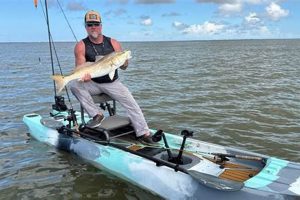
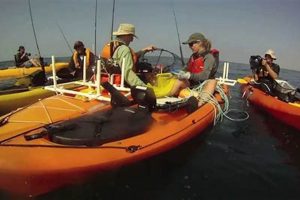
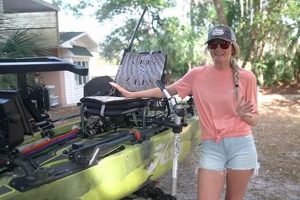
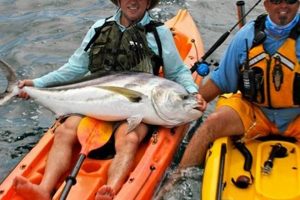
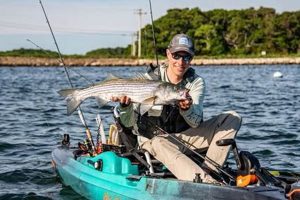
A collection of essential equipment designed specifically for beginners in the sport of kayak angling typically constitutes a foundational set of gear. This often includes a fishing kayak, paddle, personal flotation device, basic rod and reel combo, tackle box with lures and terminal tackle, and potentially additional accessories like a fish finder or anchor. An example might include a sit-on-top kayak chosen for stability, a paddle appropriate for the user’s height, a lightweight life vest, a spinning rod and reel suitable for common freshwater species, and a selection of hooks, weights, and artificial baits.
Such curated selections lower the barrier to entry for newcomers by offering a convenient and cost-effective way to acquire the necessary equipment. They also ensure a baseline level of quality and compatibility, minimizing the risk of purchasing unsuitable or mismatched items. Historically, assembling fishing gear involved piecing together individual components, often requiring significant research and expense. These curated packages streamline the process, enabling aspiring anglers to get on the water quickly and confidently.
The subsequent sections will delve into specific equipment recommendations, considerations for different fishing environments, and essential safety guidelines for kayak anglers.
Essential Tips for Beginning Kayak Anglers
Careful preparation contributes significantly to a safe and successful kayak fishing experience. The following tips offer guidance for novice anglers.
Tip 1: Prioritize Safety Equipment: A properly fitted personal flotation device (PFD) is paramount and should be worn at all times. A whistle, signaling device, and basic first-aid kit should also be included in essential safety gear.
Tip 2: Choose the Right Kayak: Kayak selection depends on individual needs and the intended fishing environment. Sit-on-top kayaks offer greater stability and ease of re-entry after a fall, making them ideal for beginners. Consider factors like weight capacity, storage space, and maneuverability.
Tip 3: Master Basic Paddling Techniques: Practice paddling in calm water before venturing into more challenging conditions. Learning efficient paddling strokes conserves energy and allows for greater control of the kayak.
Tip 4: Organize Tackle and Gear: A well-organized tackle box and readily accessible fishing gear streamlines the angling process. Consider using waterproof storage solutions to protect electronics and other sensitive items.
Tip 5: Start with Simple Fishing Techniques: Focus on fundamental fishing methods like casting and retrieving lures. Mastering these basics provides a foundation for more advanced techniques.
Tip 6: Respect the Environment: Practice catch-and-release whenever possible. Dispose of fishing line and other waste responsibly to preserve the natural environment.
Tip 7: Check Weather Conditions: Always check the weather forecast before heading out. Avoid fishing in strong winds, lightning storms, or other hazardous conditions.
Adherence to these guidelines enhances both safety and enjoyment on the water, contributing to a positive introduction to kayak angling.
By following these recommendations and prioritizing safety, anglers can embark on a rewarding journey into the world of kayak fishing.
1. Kayak

The kayak forms the cornerstone of a kayak fishing starter pack, representing the primary platform for this specialized angling pursuit. Its selection directly influences stability, maneuverability, and overall fishing experience. A stable hull design is crucial for casting lines and landing fish, while efficient maneuverability facilitates navigation through diverse water environments. The kayak’s capacity to accommodate essential fishing gear, such as rods, tackle boxes, and fish finders, also contributes significantly to its role within the starter pack. For instance, a shorter, wider kayak provides superior stability in calm lakes, while a longer, narrower kayak offers better tracking and speed for river fishing. Understanding these nuances allows for informed kayak selection, tailored to specific fishing environments and individual preferences.
Kayak features such as rod holders, storage compartments, and anchor trolleys further enhance its suitability for angling. These integrated elements streamline the fishing process, allowing for convenient rod placement, organized tackle storage, and controlled drift fishing. Moreover, the kayak’s inherent portability and ease of launching expand fishing opportunities to remote locations inaccessible by larger vessels. Consider a scenario where an angler chooses a kayak equipped with built-in rod holders and ample storage. This facilitates hands-free paddling, efficient tackle management, and ultimately, a more productive fishing experience.
Ultimately, the kayaks core function as the primary platform within the starter pack underscores its importance in shaping the overall fishing experience. Matching kayak characteristics to the intended fishing environment and individual needs proves essential for maximizing both safety and enjoyment. Challenges may include navigating the wide array of kayak designs available, but careful consideration of factors such as stability, maneuverability, and storage capacity ensures a suitable selection for any aspiring kayak angler. This foundation then allows for the strategic selection of other essential components within the starter pack.
2. Paddle
Within the context of a kayak fishing starter pack, the paddle functions as the primary means of propulsion and maneuverability, directly influencing the angler’s ability to navigate and position themselves effectively on the water. Proper paddle selection and technique contribute significantly to both fishing success and overall safety. This section explores key aspects of paddle relevance for novice kayak anglers.
- Paddle Length and Blade Shape
Paddle length should correspond to the user’s torso height and kayak width. Longer paddles generate more power per stroke, while shorter paddles offer increased maneuverability in tight spaces. Blade shape also affects performance, with wider blades providing more power and narrower blades prioritizing efficiency and speed. For a beginning angler in a standard recreational kayak, a paddle length appropriate for their height and a moderately wide blade offer a balanced approach.
- Paddle Materials and Construction
Paddles are constructed from various materials, each with distinct performance characteristics and price points. Aluminum paddles are durable and affordable, while fiberglass and carbon fiber options offer lighter weight and increased efficiency, albeit at a higher cost. Choosing a durable, lightweight paddle within a reasonable budget suits most novice anglers.
- Paddling Techniques for Kayak Fishing
Effective paddling technique maximizes efficiency and minimizes fatigue. Forward strokes propel the kayak, while reverse strokes provide braking and directional control. Sweep strokes facilitate turning, and draw strokes allow for lateral movement. Practicing these basic techniques contributes to precise boat control crucial for fishing success, particularly in challenging conditions such as wind or current.
- Paddle Maintenance and Care
Proper paddle maintenance ensures longevity and optimal performance. Rinsing the paddle with fresh water after each use prevents corrosion and damage from saltwater or other contaminants. Storing the paddle properly, avoiding exposure to extreme temperatures and direct sunlight, further preserves its integrity. These practices minimize the risk of paddle failure during critical moments, ensuring a safe and productive fishing experience.
Understanding the importance of paddle selection, utilizing proper paddling techniques, and implementing appropriate maintenance procedures ensures efficient propulsion, maneuverability, and overall safety on the water. These factors directly influence the effectiveness of a kayak fishing starter pack, enabling anglers to maximize their fishing potential while prioritizing safety and enjoyment. Choosing a suitable paddle and developing proficient paddling skills are foundational elements for a successful kayak angling experience.
3. PFD (Personal Flotation Device)
A Personal Flotation Device (PFD) stands as a non-negotiable component of any kayak fishing starter pack, representing the single most critical piece of safety equipment. Its inclusion directly addresses the inherent risks associated with on-water activities, safeguarding anglers against potential accidents and contributing significantly to survival in the event of capsizing or unexpected immersion. The causal link between PFD use and enhanced safety is well-established, demonstrably reducing drowning fatalities in boating and paddling accidents. For instance, statistics from relevant maritime authorities consistently demonstrate significantly higher survival rates among individuals wearing PFDs during water-related incidents.
The importance of a PFD within a kayak fishing starter pack extends beyond mere compliance with regulations. It represents a conscious prioritization of safety, enabling anglers to focus on the enjoyment and challenges of fishing without undue concern for potential hazards. Consider a scenario where an angler unexpectedly hooks a large fish, causing the kayak to become unstable. A properly fitted PFD provides immediate buoyancy and support, preventing submersion and potentially life-threatening consequences. Furthermore, PFDs often feature integrated pockets and attachment points, offering convenient storage for small tools, whistles, or other essential safety gear.
Selecting an appropriate PFD involves considerations of fit, comfort, and intended use. A snug-fitting PFD allows for unrestricted movement while paddling and casting, enhancing both comfort and fishing efficiency. Specific PFD designs cater to various on-water activities, with fishing-specific PFDs often incorporating specialized features such as high-back designs for compatibility with kayak seats and multiple pockets for tackle storage. Understanding these distinctions empowers anglers to choose a PFD that optimally balances safety, comfort, and functionality within the broader context of their kayak fishing starter pack. While the initial cost of a PFD represents an investment, its contribution to angler safety transforms it into an indispensable element of responsible kayak fishing practice.
4. Rod and Reel

The rod and reel combination forms a crucial part of the kayak fishing starter pack, serving as the primary tool for casting, retrieving lures, and ultimately, catching fish. Appropriate selection hinges on factors such as target species, fishing environment, and personal preference. Understanding the nuances of rod and reel combinations empowers anglers to make informed decisions, optimizing their fishing experience from the outset.
- Rod Action and Power
Rod action describes the rod’s flexibility, ranging from slow (bending significantly) to fast (bending primarily at the tip). Rod power refers to the rod’s strength and ability to handle different line weights and lure sizes. A medium-action, medium-power rod offers versatility for a range of fishing situations, making it a suitable starting point for novice kayak anglers. For example, a slow action rod might be ideal for smaller fish in calmer waters, while a fast action, heavy power rod suits larger fish and stronger currents.
- Reel Type and Features
Spinning reels are generally recommended for beginners due to their ease of use and versatility. Key features to consider include line capacity, drag system, and gear ratio. A reel with a smooth drag system allows for controlled line release when fighting larger fish, while an appropriate gear ratio balances retrieval speed and power. A spinning reel with a moderate line capacity and a smooth drag system provides a balanced approach for various fishing scenarios encountered by novice kayak anglers.
- Line and Lure Selection
Fishing line selection depends on target species and fishing conditions. Braided line offers high strength and sensitivity, while monofilament provides greater stretch and forgiveness. Lure choices vary widely, including jigs, crankbaits, and soft plastics, each designed to mimic different prey and attract specific fish species. Matching line and lure selection to the target species and environment maximizes fishing effectiveness. For instance, braided line paired with topwater lures might be effective for bass fishing in weedy areas.
- Rod and Reel Maintenance
Regular maintenance ensures optimal performance and longevity of the rod and reel. Rinsing the reel with fresh water after each use prevents corrosion, particularly in saltwater environments. Checking for and addressing any damage to the rod, such as cracks or frayed guides, prevents catastrophic failure during use. Proper maintenance contributes to consistent performance and extends the lifespan of this essential fishing equipment.
The selection and maintenance of a suitable rod and reel combination contribute significantly to the overall effectiveness of a kayak fishing starter pack. By understanding the interplay between rod action, reel type, line selection, and lure choice, novice anglers can approach their fishing excursions with confidence and maximize their chances of success on the water. These factors, combined with regular maintenance, ensure that the rod and reel remain reliable and effective tools in the pursuit of kayak angling enjoyment.
5. Basic Tackle

Basic tackle represents an essential component of a kayak fishing starter pack, providing the necessary tools for attracting and catching fish. Careful selection of essential tackle items contributes significantly to angling success, particularly for novice kayak anglers. This section explores key facets of basic tackle and their relevance within the broader context of kayak fishing.
- Hooks
Hooks serve as the primary connection point between angler and fish. Various hook types exist, each designed for specific applications and target species. Common hook types include J-hooks, circle hooks, and treble hooks. J-hooks are versatile and suitable for a range of fishing techniques, while circle hooks are designed to improve hook-up ratios and reduce fish mortality. Treble hooks, commonly found on lures, increase the chances of hooking fish but may also contribute to increased snagging. Selecting a variety of hook sizes and styles allows anglers to adapt to diverse fishing situations.
- Weights/Sinkers
Weights, or sinkers, are used to control the depth and presentation of bait or lures. Different weight types, such as split shot, egg sinkers, and bullet weights, cater to specific fishing techniques and conditions. Split shot weights allow for precise weight adjustments and are ideal for finesse fishing, while heavier egg sinkers or bullet weights are suitable for bottom fishing or fishing in stronger currents. Understanding weight selection and application contributes to effective bait presentation and increased fishing success.
- Line, Leader Material
Fishing line connects the hook to the reel and plays a crucial role in casting, retrieving, and fighting fish. Monofilament line offers versatility and affordability, while braided line provides greater strength and sensitivity. Fluorocarbon leader material, often used in conjunction with braided line, offers low visibility and abrasion resistance, improving the chances of fooling wary fish. Selecting appropriate line and leader material enhances fishing effectiveness and reduces the risk of line breakage.
- Swivels and Snaps
Swivels and snaps are small but essential components of basic tackle. Swivels prevent line twist, particularly when using spinning lures, while snaps provide a quick and easy way to change lures or rigs. These seemingly minor components contribute significantly to smooth line management and efficient lure changes, streamlining the fishing process and maximizing time on the water.
These basic tackle components form the foundation of a successful kayak fishing experience. Careful consideration of hook types, weight selection, line and leader material, and the inclusion of swivels and snaps streamlines the fishing process and increases the likelihood of success on the water. Combined with the other essential elements of a kayak fishing starter pack, basic tackle empowers novice anglers to confidently pursue their passion and enjoy the rewarding experience of kayak angling.
Frequently Asked Questions
This section addresses common inquiries regarding the acquisition and utilization of essential equipment for novice kayak anglers.
Question 1: What type of kayak is best suited for a beginner kayak angler?
Sit-on-top kayaks are generally recommended for beginners due to their inherent stability and ease of re-entry after a capsize. Their open design also simplifies water drainage and facilitates gear storage.
Question 2: What is the essential safety equipment for kayak fishing?
A properly fitted personal flotation device (PFD) is paramount. Additional safety equipment includes a whistle, signaling device, and a basic first-aid kit.
Question 3: What is a suitable rod and reel combination for a novice kayak angler?
A medium-action, medium-power spinning rod paired with a spinning reel offering a smooth drag system and moderate line capacity provides versatility for various fishing situations.
Question 4: What essential tackle items should be included in a kayak fishing starter pack?
Essential tackle includes a selection of hooks in various sizes and styles, weights or sinkers for depth control, fishing line appropriate for target species, a selection of lures, and essential tools like pliers and line cutters.
Question 5: How does one choose the appropriate paddle length for kayak fishing?
Paddle length depends on factors such as torso height and kayak width. Consult a kayak specialist or retailer for personalized recommendations.
Question 6: What are the key considerations for kayak fishing in different environments?
Environmental factors such as wind, current, and water temperature influence kayak and gear selection. Research specific locations and conditions before embarking on a fishing trip.
Careful consideration of these frequently asked questions facilitates informed decisions regarding equipment acquisition and safe kayak fishing practices. Prioritizing safety and selecting appropriate gear contributes significantly to a positive and productive on-water experience.
The next section will delve into advanced techniques for kayak anglers seeking to enhance their skills and expand their fishing horizons.
Conclusion
A kayak fishing starter pack represents a crucial entry point for individuals venturing into this specialized angling pursuit. Careful consideration of core components kayak, paddle, PFD, rod and reel, and basic tackle ensures a safe and productive foundation. Equipment selection should align with individual needs, target species, and anticipated fishing environments. Prioritizing safety and understanding fundamental techniques contribute significantly to a positive initial experience.
Mastery of fundamental equipment and techniques paves the way for refined skill development and broadened fishing horizons. Continued exploration of advanced techniques, informed equipment upgrades, and adherence to responsible angling practices foster a deeper appreciation for the sport. Kayak fishing offers a unique connection with nature, promoting both physical and mental well-being. Embracing responsible angling practices ensures the preservation of this rewarding pursuit for future generations.