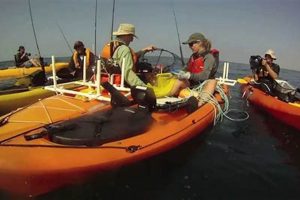
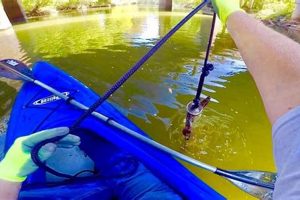
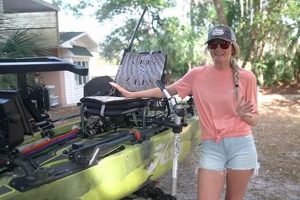
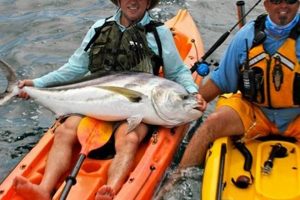
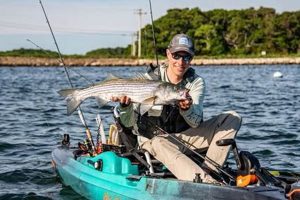
This specific type of small, human-powered watercraft is designed for angling. Generally characterized by stability, maneuverability, and specialized features such as rod holders, storage compartments, and anchor trolleys, these vessels offer anglers a unique approach to accessing various waterways. Examples include sit-on-top models favored for warm climates and sit-inside models preferred in colder conditions.
Anglers benefit from the quiet movement and shallow draft afforded by this mode of fishing transportation, enabling closer access to fish habitats often inaccessible to larger, motorized boats. Historically, small boats have been used for fishing in various cultures for centuries. The modern iteration provides specialized features catering specifically to the demands of sportfishing, promoting catch-and-release practices and environmental stewardship.
This article will delve into specific features, advantages, and popular models commonly used by anglers, along with important safety considerations and responsible usage guidelines. Further exploration will also cover topics such as essential accessories, maintenance tips, and techniques for successful angling from this type of watercraft.
Tips for Kayak Fishing
Effective angling from this type of watercraft requires careful planning and execution. These tips provide essential information for a safe and productive experience.
Tip 1: Prioritize Safety Equipment: Always wear a personal flotation device (PFD). Carry a whistle, signaling mirror, and waterproof communication device. Inform someone of the fishing location and expected return time. Check weather forecasts before departure and avoid navigating in hazardous conditions.
Tip 2: Choose the Right Vessel: Different hull designs offer varying stability and maneuverability. Consider the targeted fishing environment (calm lakes, rivers, or open ocean) when selecting a suitable craft.
Tip 3: Master Basic Paddling Techniques: Efficient paddling conserves energy and allows for precise boat control. Practice proper strokes and maneuvering techniques before venturing into challenging waters.
Tip 4: Organize and Secure Gear: Utilize storage compartments and deck rigging to keep essential equipment readily accessible and prevent loss or damage during navigation. Distribute weight evenly for optimal balance.
Tip 5: Employ Effective Anchoring Strategies: A properly set anchor maintains boat position in desired fishing locations, especially in currents or windy conditions. Understand different anchor types and deployment methods.
Tip 6: Practice Catch-and-Release Techniques: Proper handling and release minimize stress on fish populations. Use appropriate hooks, landing nets, and dehooking tools. Revive fish gently before releasing them.
Tip 7: Respect Wildlife and the Environment: Minimize disturbance to aquatic habitats and wildlife. Avoid littering and dispose of fishing line responsibly. Adhere to local fishing regulations.
Adhering to these guidelines enhances angler safety and promotes responsible fishing practices. Proper preparation contributes significantly to a successful and enjoyable experience on the water.
The following section will offer concluding remarks and further resources for expanding knowledge and skills in this rewarding pursuit.
1. Stability

Stability represents a critical performance characteristic in fishing kayaks, directly influencing angler safety and fishing effectiveness. A stable platform allows for comfortable casting, reeling, and landing fish, particularly in challenging conditions. This section explores key facets contributing to stability in these specialized watercraft.
- Hull Design
Hull design plays a pivotal role in determining stability. Wider, flatter hulls generally offer greater initial stability, resisting tipping during stationary activities. However, they may sacrifice maneuverability. Conversely, narrower, V-shaped hulls enhance tracking and speed but compromise initial stability. Pontoon hulls provide exceptional stability but can be less efficient for paddling. The “kaku” design likely refers to a specific hull configuration influencing its stability characteristics.
- Center of Gravity
Maintaining a low center of gravity significantly enhances stability. Anglers should distribute weight evenly within the kayak, avoiding excessive gear placement high on the deck. Sitting in a balanced position and avoiding sudden movements minimizes the risk of capsizing. The kayak’s inherent design and the angler’s weight distribution contribute to overall stability.
- Water Conditions
Water conditions directly impact stability. Calm, flat water presents fewer challenges compared to choppy or turbulent conditions. Wind, currents, and waves exert forces on the kayak, potentially compromising stability. Anglers should exercise caution and adapt their techniques to prevailing conditions. Choosing sheltered areas or adjusting fishing positions enhances stability in adverse conditions.
- Kayak Features
Specific features contribute to enhanced stability. Outriggers or stabilizers provide additional support, particularly beneficial for anglers standing to cast. Wider seating positions lower the center of gravity, improving balance. Understanding the impact of these design elements aids in selecting a kayak with appropriate stability characteristics for specific fishing environments and angler preferences.
A thorough understanding of these factors empowers anglers to select and operate fishing kayaks safely and efficiently. Prioritizing stability, alongside other essential performance characteristics, optimizes the angling experience and promotes confident on-water performance.
2. Maneuverability

Maneuverability in a fishing kayak directly impacts an angler’s ability to navigate various water environments and position the vessel effectively for fishing. Precise control and efficient movement contribute significantly to a successful angling experience. This characteristic becomes particularly crucial when navigating tight spaces, swift currents, or wind-exposed areas. The following facets explore key components of maneuverability relevant to the “kaku fishing kayak.”
- Hull Design
Hull design significantly influences a kayak’s maneuverability. Shorter kayaks with a more rounded hull generally turn more easily, while longer, narrower kayaks track straighter and offer increased speed. Specific design features, such as a pronounced keel or tracking fins, can enhance directional stability but may reduce turning responsiveness. The specific “kaku” design undoubtedly contributes to the kayak’s overall maneuverability profile.
- Paddling Dynamics
Efficient paddling technique plays a crucial role in maneuvering a kayak effectively. Proper stroke mechanics, including forward, reverse, and sweep strokes, provide precise control over direction and speed. Understanding how paddle placement and blade angle influence movement allows anglers to navigate efficiently in diverse water conditions. Practice and experience refine paddling proficiency, enhancing overall maneuverability.
- Water Conditions
Water conditions significantly influence kayak maneuverability. Calm, flat water provides optimal conditions for precise movement, while wind, currents, and waves can create challenges. Strong winds can push the kayak off course, requiring corrective strokes and adjustments. Currents can necessitate upstream or downstream paddling strategies. Adapting paddling techniques to prevailing conditions ensures effective maneuvering and maintains control.
- Rudder and Skeg Systems
Some fishing kayaks incorporate rudders or skegs to enhance directional stability and maneuverability. Rudders provide active control, allowing for precise course adjustments, while skegs offer passive tracking assistance, reducing the need for corrective strokes. These features can be particularly beneficial in windy conditions or when navigating strong currents. The presence and type of rudder or skeg system on a “kaku fishing kayak” influence its maneuverability characteristics.
The interplay of these factors ultimately determines the “kaku fishing kayak’s” maneuverability profile. Understanding these elements allows anglers to choose a kayak suited to their specific needs and environment, optimizing on-water performance and maximizing fishing opportunities.
3. Specialized Features
Specialized features distinguish fishing kayaks from recreational models, enhancing angler efficiency and overall experience. These purpose-built additions cater specifically to the demands of angling, providing essential functionality and convenience on the water. Understanding these features contributes significantly to informed kayak selection and optimal utilization. The following facets explore key specialized features commonly found in fishing kayaks, particularly within the context of “kaku fishing kayak.”
- Rod Holders
Rod holders secure fishing rods, freeing anglers’ hands for paddling, baiting hooks, or landing fish. Various types exist, including flush-mounted, adjustable, and rotating holders. Their placement and configuration impact accessibility and fishing style. The specific rod holder setup on a “kaku fishing kayak” influences its suitability for different fishing techniques.
- Storage Compartments
Storage compartments accommodate tackle boxes, gear, and personal items, ensuring organization and accessibility. Dry storage protects sensitive electronics and equipment from water damage. The size, location, and accessibility of storage compartments influence the kayak’s practicality for longer trips or specialized fishing gear. “Kaku fishing kayak” models likely offer specific storage solutions catering to angler needs.
- Anchor Trolleys
Anchor trolleys allow controlled anchor deployment and retrieval, facilitating precise boat positioning in current or wind. This system enables anglers to maintain desired fishing locations without constantly adjusting the anchor line. The presence and functionality of an anchor trolley system on a “kaku fishing kayak” enhance its suitability for specific fishing environments.
- Paddle Holders/Leashes
Paddle holders or leashes secure the paddle when not in use, preventing loss and minimizing interference during fishing. This feature allows anglers to focus on fishing without worrying about paddle management. The inclusion of paddle securing mechanisms on a “kaku fishing kayak” adds to its user-friendliness and overall practicality.
These specialized features contribute significantly to the functionality and effectiveness of a fishing kayak. Careful consideration of these elements within the context of the “kaku fishing kayak” allows anglers to select a model optimized for their specific fishing style, target species, and preferred environment. Understanding the interplay of these features enhances on-water performance and contributes to a more successful and enjoyable angling experience.
4. Targeted Fishing
The “kaku fishing kayak,” like other specialized fishing kayaks, plays a crucial role in targeted fishing approaches. The selection of a specific kayak model often directly correlates with the intended fishing environment and target species. This targeted approach optimizes angling effectiveness by aligning the kayak’s characteristics with the specific demands of the fishing scenario. For instance, a kayak designed for stability in calm lakes differs significantly from one built for maneuverability in rivers or the open ocean. A kayak intended for pursuing large game fish requires greater stability and robust construction compared to one designed for smaller species in protected waters.
Consider an angler targeting bass in a shallow, weedy lake. A “kaku fishing kayak” with a shallow draft, excellent maneuverability, and a stable platform for casting becomes advantageous. Conversely, an angler targeting offshore pelagic species requires a kayak with enhanced stability, speed, and storage capacity for heavier tackle and potential large catches. The kayak’s features, such as rod holders, storage compartments, and anchor trolley systems, further support targeted fishing strategies by providing specialized functionality tailored to specific fishing techniques. Understanding the interplay between kayak characteristics and targeted fishing objectives allows anglers to select the most appropriate vessel for maximizing success.
Effective targeted fishing necessitates careful consideration of kayak selection. Analyzing the target species’ habitat, preferred fishing techniques, and prevailing environmental conditions informs appropriate kayak choice. Aligning kayak characteristics with targeted fishing objectives optimizes on-water performance, enhances angling efficiency, and ultimately contributes to a more rewarding and successful fishing experience. The “kaku fishing kayak,” within this context, represents a specialized tool facilitating specific angling pursuits. Its suitability depends upon the alignment of its features and performance characteristics with the angler’s targeted fishing goals.
5. Material Construction
Material construction significantly influences a fishing kayak’s performance, durability, and overall cost. Understanding the properties of various construction materials allows informed decisions aligned with angler needs and budget. The “kaku fishing kayak,” like other kayaks, utilizes specific materials impacting its on-water characteristics and long-term resilience. Examining these materials provides valuable insights into the kayak’s suitability for specific fishing environments and usage patterns.
- Polyethylene (PE)
Polyethylene, a common thermoplastic polymer, offers durability, impact resistance, and affordability. Rotational molding creates a seamless, hollow hull. PE kayaks withstand impacts and abrasion, making them suitable for rocky shorelines or river environments. Varying densities influence weight and stiffness. The “kaku fishing kayak,” if constructed from PE, likely benefits from this material’s robust nature and cost-effectiveness.
- Fiberglass
Fiberglass, consisting of woven glass fibers embedded in a resin matrix, offers high strength, stiffness, and lighter weight compared to PE. Fiberglass kayaks provide enhanced performance and responsiveness, ideal for open water or long-distance paddling. However, fiberglass requires more careful handling and can be more expensive than PE. A “kaku fishing kayak” constructed from fiberglass potentially prioritizes performance and lighter weight.
- Thermoformed ABS/ASA
Thermoformed ABS/ASA (Acrylonitrile Butadiene Styrene/Acrylonitrile Styrene Acrylate) offers a balance between durability, stiffness, and affordability. This process involves heating a sheet of plastic and molding it over a mold. ABS/ASA kayaks provide good impact resistance and UV stability. A “kaku fishing kayak” using this construction method might represent a mid-range option balancing performance and cost-effectiveness.
- Composite Materials (Carbon Fiber/Kevlar)
Composite materials, like carbon fiber and Kevlar, offer exceptional strength, stiffness, and lightweight properties. These high-performance materials create kayaks with superior speed and efficiency but come at a premium cost. A “kaku fishing kayak” utilizing composite construction likely prioritizes top-tier performance and reduced weight, potentially appealing to serious anglers seeking optimal responsiveness on the water.
The material construction of the “kaku fishing kayak” directly influences its performance characteristics, durability, and price point. Understanding the properties of each material allows anglers to evaluate the kayak’s suitability for their specific needs and budget. Choosing the appropriate material ensures long-term satisfaction and optimal on-water performance. Further research into the specific material composition of the “kaku fishing kayak” provides a comprehensive understanding of its strengths and limitations.
6. Storage Capacity

Storage capacity in a fishing kayak directly impacts its practicality and the angler’s ability to carry essential gear and potential catches. The “kaku fishing kayak,” designed for angling, likely incorporates specific storage solutions catering to this need. Adequate storage facilitates organized transport of tackle boxes, rods, reels, safety equipment, personal items, and harvested fish. Insufficient storage can limit trip duration, fishing techniques employed, and overall comfort. For instance, an angler embarking on a multi-day fishing expedition requires significantly more storage than someone fishing for a few hours near the shoreline. Similarly, anglers targeting larger species necessitate space for larger tackle and potentially bulky catches. Understanding the storage capacity of the “kaku fishing kayak” allows anglers to assess its suitability for their specific fishing style and anticipated needs.
Practical examples illustrate the importance of storage capacity. Consider an angler targeting pelagic fish offshore. This scenario necessitates storage for heavier tackle, including large rods, reels, and specialized lures. Additionally, the potential for large catches requires ample space for storing harvested fish. Conversely, an angler fishing for panfish in a small pond might require less storage, prioritizing maneuverability and ease of access over large storage compartments. Examining the “kaku fishing kayak’s” storage solutions, such as dedicated compartments, tank wells, and bungee cord rigging, reveals its intended usage and target fishing applications. Evaluating storage capacity alongside other kayak features provides a comprehensive understanding of its practicality and suitability for various fishing scenarios.
In summary, storage capacity represents a crucial factor influencing a fishing kayak’s overall utility. The “kaku fishing kayak’s” specific storage solutions contribute significantly to its suitability for different fishing styles and environments. Careful consideration of storage needs, alongside other kayak characteristics, ensures informed purchasing decisions and maximizes on-water effectiveness. Further investigation into the “kaku fishing kayak’s” storage features provides valuable insights into its intended purpose and target audience, empowering anglers to select the most appropriate vessel for their individual fishing pursuits.
Frequently Asked Questions
This section addresses common inquiries regarding specialized fishing kayaks, providing concise and informative responses.
Question 1: What differentiates a fishing kayak from a recreational kayak?
Fishing kayaks incorporate specialized features such as rod holders, storage compartments for tackle and gear, anchor trolleys, and often a more stable hull design compared to recreational kayaks. These features cater specifically to the needs of anglers.
Question 2: How is stability determined in a fishing kayak?
Stability depends on factors such as hull design (width, shape), center of gravity (weight distribution), and water conditions. Wider, flatter hulls generally offer greater stability, while narrower hulls prioritize speed and maneuverability.
Question 3: What materials are commonly used in fishing kayak construction?
Common materials include polyethylene (PE), fiberglass, thermoformed ABS/ASA, and composite materials (carbon fiber/Kevlar). Each material offers different performance characteristics, durability, and price points.
Question 4: How important is storage capacity in a fishing kayak?
Storage capacity dictates the amount of gear and potential catches an angler can carry. Adequate storage is crucial for longer trips and specific fishing styles requiring specialized equipment or targeting larger species.
Question 5: What safety precautions should one take when fishing from a kayak?
Essential safety precautions include wearing a personal flotation device (PFD), carrying a whistle and signaling device, informing someone of the fishing location and expected return time, checking weather forecasts, and avoiding navigation in hazardous conditions.
Question 6: How does one choose the right fishing kayak?
Kayak selection depends on individual needs and preferences, including targeted fishing style, preferred environment (calm lakes, rivers, open ocean), budget, and desired features. Researching various models and considering these factors aids informed decision-making.
Understanding these key aspects empowers informed decisions regarding fishing kayak selection and safe, efficient usage. Thorough research and consideration of individual needs contribute significantly to a rewarding on-water angling experience.
The following section offers concluding remarks and additional resources for continued learning.
Conclusion
This exploration of specialized fishing kayaks has provided insights into key features impacting performance and angler experience. Hull design, material construction, stability, maneuverability, specialized features, and storage capacity contribute significantly to effective and enjoyable on-water angling. Understanding the interplay of these elements empowers informed decision-making regarding kayak selection and optimal utilization for targeted fishing pursuits.
The “kaku fishing kayak,” within this context, represents a specialized tool facilitating specific angling approaches. Its suitability depends upon careful consideration of individual needs, target species, and intended fishing environments. Further research into specific “kaku fishing kayak” models, alongside continuous refinement of angling skills and safety practices, enhances on-water performance and promotes responsible enjoyment of this rewarding pursuit.