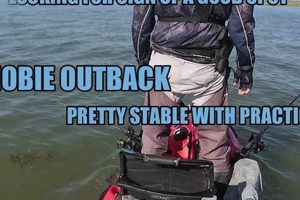
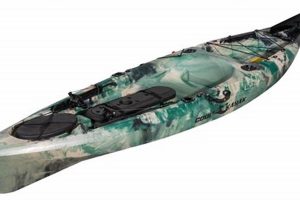
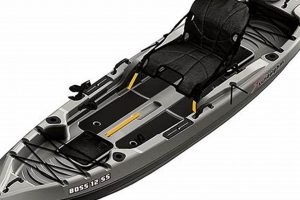
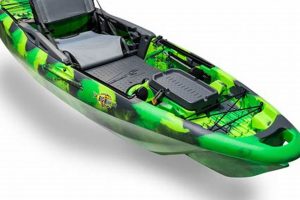
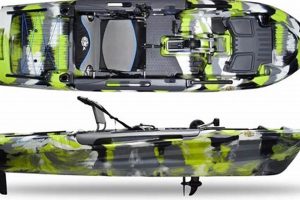
This specific model of watercraft is designed for anglers seeking a stable and efficient platform for fishing. It combines the sit-on-top design popularized by kayaks with features specifically tailored for angling activities, such as rod holders, storage compartments, and often specialized seating systems for comfort during long hours on the water. These vessels are often constructed from durable, lightweight materials like high-density polyethylene or composites to balance performance and durability.
The blend of stability, maneuverability, and specialized fishing features makes this type of watercraft an attractive option for anglers of varying skill levels. It allows access to shallower waters and tighter spaces often inaccessible to larger motorized boats, while still providing the stability and capacity needed for serious fishing pursuits. The evolution of these specialized kayaks mirrors the growing popularity of kayak fishing, offering a more direct connection with the water and a unique perspective on the sport.
The following sections will delve into specific aspects of this fishing platform, including its design features, performance characteristics, and suitability for different fishing environments. Further discussion will explore appropriate gear and techniques for maximizing its effectiveness on the water.
Tips for Kayak Fishing Success
Optimizing angling performance from a kayak requires attention to specific techniques and strategies. These tips focus on improving stability, efficiency, and overall fishing success from this unique platform.
Tip 1: Weight Distribution is Key: Maintaining proper balance is crucial for stability. Gear should be distributed evenly within the kayak, with heavier items positioned low and centrally. This prevents tipping and enhances maneuverability.
Tip 2: Practice Paddle Strokes: Efficient paddling conserves energy and allows for precise boat control. Mastering basic strokes like the forward stroke, reverse stroke, and sweep stroke enables anglers to navigate effectively and position themselves optimally for fishing.
Tip 3: Utilize Anchor or Stakeout Systems: Securing the kayak in a desired location prevents drifting and allows anglers to focus on fishing. Anchor trolleys provide additional control by allowing adjustments to positioning based on wind or current.
Tip 4: Choose the Right PFD: A properly fitted personal flotation device (PFD) is essential for safety. Select a PFD designed for paddling that allows for a full range of motion while casting and reeling.
Tip 5: Plan and Prepare: Before heading out, research fishing regulations, weather conditions, and potential hazards. Packing essential safety gear, navigation tools, and appropriate fishing tackle contributes to a safe and successful outing.
Tip 6: Respect Wildlife and the Environment: Practice Leave No Trace principles by packing out all trash, minimizing disturbance to wildlife, and respecting other anglers and boaters.
Tip 7: Master Kayak-Specific Fishing Techniques: Adapt fishing techniques to the kayak environment. Practice casting while seated and learn to manage fishing lines and gear within the confines of the kayak.
Tip 8: Dress for the Water, Not the Weather: Water temperatures can be significantly colder than air temperatures. Dressing in layers of quick-drying, insulating clothing allows for adjustments throughout the day and provides protection in case of accidental immersion.
By following these guidelines, anglers can significantly enhance their safety, comfort, and overall fishing success when using this specialized fishing platform.
The information provided in this article aims to equip anglers with the knowledge and strategies needed for a successful and enjoyable experience on the water. The final section will offer concluding remarks and reinforce the value of this distinct approach to fishing.
1. Stability

Stability forms a cornerstone of the fishing kayak’s design and function. A stable platform is paramount for anglers, enabling effective casting, retrieval, and fish fighting without compromising safety. This stability derives from a combination of factors, including hull design, width, and length. Wider hulls generally offer greater primary stability (resistance to initial tipping), while longer kayaks tend to have better secondary stability (resistance to capsizing once tilted). The specific hull design of this kayak likely incorporates features that enhance stability, such as a flatter bottom or strategically placed chines. This allows anglers to confidently stand, shift weight, and make dynamic movements while fishing.
The practical significance of this stability becomes readily apparent in various fishing scenarios. Consider an angler battling a strong fish in challenging conditions. A stable platform allows the angler to focus on the fight without the constant worry of capsizing. Similarly, standing to sight-fish or make longer casts becomes significantly safer and more effective with a stable base. Conversely, a less stable kayak could lead to difficulties in maintaining balance, hindering fishing performance and potentially creating dangerous situations. This stability translates to increased fishing success and a safer, more enjoyable experience on the water.
In summary, the stability offered contributes significantly to its suitability for fishing. This attribute, stemming from careful design and engineering, allows anglers to confidently engage in various fishing activities, ultimately enhancing performance and safety. While other factors contribute to the overall performance of the kayak, stability remains a foundational element for successful angling from this platform. Understanding the importance of stability allows anglers to make informed decisions and choose equipment best suited for their needs and fishing style.
2. Fishing Features

Specialized features distinguish a fishing kayak from recreational models. These integrated elements enhance angling efficiency and overall experience on the water. The following facets illustrate the importance of dedicated fishing features in the context of this specific kayak.
- Rod Holders:
Dedicated rod holders, typically flush-mounted or adjustable, provide secure storage and quick access to fishing rods. This frees hands for paddling, maneuvering, and other tasks. Multiple rod holders allow anglers to switch between different techniques or target multiple species. The positioning and type of rod holders influence fishing style and efficiency.
- Storage Compartments:
Ample storage is crucial for carrying tackle, gear, and personal items. Dry storage compartments protect sensitive electronics and gear from water damage. Tank wells or bungee systems provide additional storage for larger items like crates or coolers. Strategic placement and accessibility of storage influence organization and ease of retrieval.
- Gear Tracks and Mounting Points:
Gear tracks and mounting points provide versatile options for customizing the kayak with accessories such as fish finders, GPS units, cameras, and additional rod holders. These customizable features allow anglers to tailor their setup to specific needs and fishing styles.
- Specialized Seating Systems:
Comfortable seating enhances endurance during long hours on the water. Adjustable seats with proper lumbar support reduce fatigue and improve casting posture. Elevated seating positions provide better visibility and leverage for fighting fish. The seat design significantly impacts comfort and overall fishing experience.
The integration of these specialized features underscores the design focus on angling functionality. These elements contribute directly to improved efficiency, organization, and overall fishing success, differentiating this specialized fishing kayak from recreational models. The thoughtful inclusion of these features demonstrates an understanding of angler needs and the demands of the sport.
3. Maneuverability

Maneuverability represents a critical performance attribute, directly influencing its effectiveness in various fishing environments. The ability to navigate tight spaces, swiftly change direction, and efficiently cover water significantly impacts angling success. This section explores the key facets contributing to the kayak’s maneuverability.
- Hull Design:
The hull design plays a pivotal role in determining how the kayak responds to paddle input and water resistance. A shorter, slightly rockered hull (curved upwards at the bow and stern) typically enhances maneuverability in tight quarters and moving water, allowing for quick turns and adjustments. Conversely, a longer, flatter hull provides better tracking (straight-line movement) but may be less agile in confined spaces. The specific hull design balances maneuverability and stability, catering to the demands of fishing environments.
- Length and Width:
Shorter kayaks generally offer greater maneuverability, allowing for tighter turns and quicker directional changes. Conversely, longer kayaks often provide better tracking and glide but sacrifice some agility. Width also influences maneuverability; narrower kayaks tend to be more nimble, while wider kayaks offer increased stability but may require more effort to turn. The kayak’s dimensions likely reflect a balance between maneuverability, stability, and storage capacity.
- Paddle Type and Technique:
While not an inherent feature of the kayak itself, the paddle type and paddling technique significantly influence maneuverability. A shorter, wider paddle blade provides more power for quick acceleration and turning, while a longer, narrower blade offers greater efficiency for sustained paddling. Mastering paddling techniques like sweep strokes and reverse strokes enhances control and maneuverability.
- Water Conditions:
Maneuverability can be affected by prevailing water conditions. Currents, wind, and waves can impact the kayak’s tracking and responsiveness. Understanding how the kayak performs in different conditions allows anglers to adjust paddling techniques and maintain control. While the kayak’s design influences inherent maneuverability, adapting to varying water conditions is essential for effective navigation and positioning.
The interplay of these facets determines the overall maneuverability of the kayak, influencing its suitability for specific fishing environments. Anglers seeking access to shallow, vegetated areas, or navigating winding rivers benefit from enhanced maneuverability. Understanding the factors contributing to maneuverability allows anglers to make informed decisions based on their target fishing locations and personal preferences. This attribute, combined with stability and specialized fishing features, contributes to the overall effectiveness and versatility of the kayak as a fishing platform.
4. Durability

Durability represents a critical factor in the overall value and longevity of a fishing kayak, especially given the demanding conditions these vessels often endure. The ability to withstand impacts, abrasion, and exposure to the elements directly influences the kayak’s lifespan and long-term performance. This section explores the key facets contributing to the durability of the fishing kayak.
- Construction Material:
The choice of construction material plays a pivotal role in determining the kayak’s resistance to damage. High-density polyethylene (HDPE) is commonly used due to its impact resistance, UV stability, and affordability. Other materials, such as rotomolded polyethylene or composites, offer varying degrees of durability and performance characteristics. Understanding the properties of the construction material provides insight into the kayak’s ability to withstand impacts, abrasion, and long-term wear and tear.
- Manufacturing Process:
The manufacturing process influences the structural integrity and overall durability of the kayak. Rotomolding, a common manufacturing technique for polyethylene kayaks, creates a seamless, one-piece hull with uniform thickness, enhancing its resistance to leaks and structural damage. Other manufacturing methods, such as thermoforming or composite layup, offer different performance and durability characteristics. The manufacturing process impacts the kayak’s resilience and long-term performance.
- UV Resistance:
Exposure to sunlight and UV radiation can degrade certain materials over time, leading to discoloration, brittleness, and reduced structural integrity. UV-resistant additives and coatings incorporated into the kayak’s construction help mitigate the damaging effects of sunlight, prolonging its lifespan and maintaining its appearance. The level of UV resistance influences the kayak’s ability to withstand prolonged exposure to sunlight without significant degradation.
- Hardware and Fittings:
The quality and durability of hardware components, such as handles, latches, and deck fittings, contribute to the overall robustness of the kayak. Corrosion-resistant materials, such as stainless steel or marine-grade aluminum, ensure long-term functionality and prevent degradation in saltwater environments. The choice of hardware influences the kayak’s resistance to corrosion and overall lifespan.
The combination of these factors determines the overall durability of the fishing kayak, influencing its resistance to various stressors encountered during use. A durable kayak withstands the rigors of transport, launching, and retrieval, as well as impacts from rocks, logs, and other obstacles encountered on the water. This durability translates to a longer lifespan, reduced maintenance requirements, and a higher resale value, making it a worthwhile investment for serious anglers. The kayak’s durability contributes to its overall value and reliability as a fishing platform.
5. Open Deck Design
The open deck design, a defining characteristic of sit-on-top kayaks like the Perception Striker fishing kayak, significantly influences its functionality and suitability for angling. This design choice prioritizes ease of access, self-rescue, and specialized fishing adaptations. Unlike traditional sit-inside kayaks, the open deck allows anglers to easily enter and exit the kayak, even from the water. This feature proves crucial in fishing scenarios, particularly when dealing with unexpected situations or when fishing in challenging conditions. Consider an angler who hooks a large fish that pulls them off balance; the open deck allows for quick recovery and re-entry, minimizing the risk of capsizing and maximizing fishing time. Furthermore, the open deck design facilitates water drainage, preventing water accumulation and maintaining stability.
This design choice also allows for greater freedom of movement and facilitates specialized fishing adaptations. Anglers can easily shift positions, stand for casting, and access gear stored within the kayak’s hull. The open deck accommodates specialized seating systems designed for comfort and stability during long fishing sessions. Integrated features like rod holders, fish finders, and other accessories further enhance the angling experience, capitalizing on the open deck’s adaptability. For instance, an angler sight-fishing in shallow water benefits from the ability to stand and cast with greater precision, a maneuver easily accommodated by the open deck design. The absence of a confined cockpit enhances visibility and provides a more direct connection with the surrounding environment.
In summary, the open deck design of the Perception Striker fishing kayak directly contributes to its practicality and effectiveness as a fishing platform. Ease of access, enhanced stability in various water conditions, and the adaptability for specialized fishing equipment and techniques underscore the advantages of this design. While factors like hull design and maneuverability contribute to overall performance, the open deck remains a defining feature, enabling a unique and efficient approach to kayak fishing. Understanding the practical significance of this design element allows anglers to appreciate the specific advantages offered by this type of kayak and make informed choices based on individual needs and fishing preferences.
Frequently Asked Questions
This section addresses common inquiries regarding the Perception Striker fishing kayak, providing concise and informative responses to facilitate informed decision-making.
Question 1: What differentiates the Perception Striker from recreational kayaks?
Key distinctions include specialized features like rod holders, storage compartments designed for tackle, and often a more stable hull design optimized for fishing activities. These adaptations cater specifically to the needs of anglers.
Question 2: Is the Perception Striker suitable for beginners?
While stability varies across specific Striker models, many are considered beginner-friendly due to their inherent stability and user-friendly design. However, prior kayaking experience is always beneficial for any on-water activity.
Question 3: What is the weight capacity of a typical Perception Striker kayak?
Weight capacity varies depending on the specific model. Consulting manufacturer specifications for the chosen model is crucial to ensure safe and optimal performance. Exceeding weight limits can compromise stability and safety.
Question 4: What types of fishing environments are suitable for the Perception Striker?
The Striker series caters to diverse environments, from calm lakes and ponds to slow-moving rivers and protected coastal waters. Specific model characteristics may make certain models more suitable for particular environments.
Question 5: What essential accessories are recommended for fishing from a Perception Striker?
Essential accessories often include a personal flotation device (PFD), paddle, appropriate fishing rods and reels, tackle storage solutions, and a landing net. Additional accessories, such as fish finders and anchor systems, can enhance the fishing experience.
Question 6: How does one maintain and care for a Perception Striker kayak?
Routine maintenance includes rinsing the kayak with fresh water after each use, especially in saltwater environments. Proper storage, protected from direct sunlight and extreme temperatures, prolongs the kayak’s lifespan. Regular inspection of hardware and fittings ensures optimal performance and safety.
Addressing these common questions provides a foundation for a more comprehensive understanding of the Perception Striker fishing kayak. Consulting official manufacturer resources and authorized dealers provides further specific details and guidance.
The subsequent section will offer concluding remarks and summarize key takeaways regarding the Perception Striker fishing kayak.
Conclusion
This exploration of the Perception Striker fishing kayak encompassed key features contributing to its efficacy as a specialized angling platform. Stability, maneuverability, specialized fishing features, durability, and the open deck design were examined in detail, highlighting their respective contributions to on-the-water performance. The analysis emphasized the synergy between these elements, demonstrating how they collectively create a versatile and efficient fishing kayak suitable for diverse environments and angling styles. Addressing frequently asked questions provided practical insights for prospective users.
The Perception Striker fishing kayak represents a notable evolution in angling platforms, offering a unique blend of functionality, adaptability, and performance. Its design caters specifically to the needs of anglers, enabling enhanced access, improved stability, and efficient utilization of specialized fishing techniques. Continued innovation in kayak design and technology promises further advancements in on-the-water angling experiences, further solidifying the kayak’s role as a prominent tool for anglers seeking a closer connection with the aquatic environment.