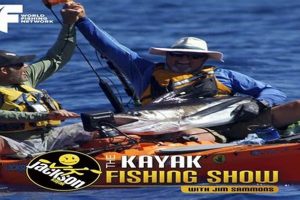
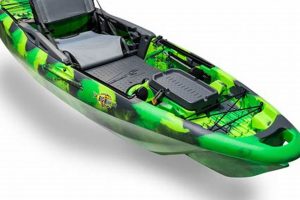
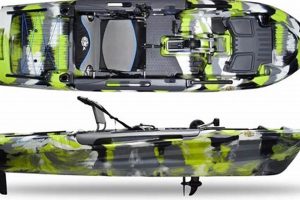
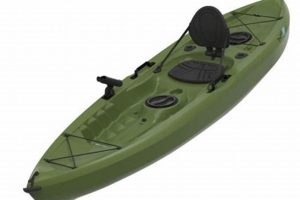
This specific model denotes a sit-on-top vessel designed for angling, manufactured by Boss Kayaks. The “12” likely refers to its length, approximately 12 feet, while “SS” could indicate a specific trim level or feature set. Such watercraft generally feature specialized components like rod holders, storage compartments, and comfortable seating arrangements optimized for extended fishing trips.
A well-designed fishing kayak offers stability, maneuverability, and ample space for gear. These features are crucial for anglers seeking access to calm waters, rivers, or even coastal areas. Historically, fishing from small, human-powered vessels has been a common practice, and modern kayaks represent a sophisticated evolution of this tradition, providing improved comfort, stability, and specialized functionality. They allow anglers to explore diverse aquatic environments, potentially reaching secluded fishing spots inaccessible to larger boats.
The following sections will delve into specific aspects of this particular model, covering its construction, performance characteristics, target audience, and potential competitors in the market.
Tips for Kayak Fishing Success
Proper preparation and technique enhance safety and fishing success. The following tips offer guidance for a productive and enjoyable experience on the water.
Tip 1: Pre-Trip Planning: Research potential fishing locations thoroughly. Check weather forecasts, water conditions, and local regulations. A float plan filed with a trusted individual ensures safety.
Tip 2: Essential Gear: Pack necessary safety equipment, including a personal flotation device (PFD), a whistle, and a first-aid kit. Fishing-specific gear should include appropriate rods, reels, tackle, and a landing net.
Tip 3: Balanced Loading: Distribute weight evenly within the kayak for optimal stability. Secure gear properly to prevent shifting during movement.
Tip 4: Paddling Technique: Utilize efficient paddling strokes to conserve energy and maximize maneuverability. Practice entering and exiting the kayak smoothly in shallow water before venturing into deeper areas.
Tip 5: Anchor Positioning: Learn proper anchoring techniques for various water conditions. A well-placed anchor keeps the kayak stable in the desired fishing location.
Tip 6: Respecting the Environment: Practice catch-and-release fishing whenever possible. Adhere to Leave No Trace principles, packing out all trash and minimizing disturbance to wildlife and natural habitats.
Tip 7: Weather Awareness: Continuously monitor weather conditions while on the water. Be prepared to return to shore promptly if conditions deteriorate.
Adherence to these guidelines promotes a safe, successful, and environmentally responsible fishing experience. Preparation and mindful practices contribute significantly to enjoyment on the water.
These tips provide a foundation for a rewarding kayak fishing adventure. The concluding section will summarize key takeaways and offer additional resources for continued learning.
1. Stability

Stability is a paramount consideration in fishing kayak design, directly impacting safety and angling effectiveness. The Boss 12 SS, with its sit-on-top configuration and likely substantial beam (width), aims to provide a stable platform. A stable kayak allows anglers to cast, retrieve, and land fish without compromising balance. It also contributes to confidence in various water conditions, reducing the risk of capsizing, particularly important when handling fish or navigating challenging currents. Consider an angler battling a strong fish; a stable kayak provides the necessary leverage and resistance to prevent an unintended roll. Similarly, navigating through choppy water requires a platform that can maintain equilibrium, preventing water ingress and maintaining a dry, secure environment for the angler and their gear.
Several factors contribute to kayak stability, including hull design, width, and weight distribution. A flatter hull generally enhances primary stability (initial resistance to tipping), while a slightly rounded or multi-chined hull can improve secondary stability (resistance to capsizing once tilted). The Boss 12 SS’s specific design influences its performance in these areas. Proper weight distribution further enhances stability; an evenly loaded kayak maintains its balance more effectively than one with uneven weight distribution. Understanding these principles allows anglers to optimize their kayak’s performance and maintain a secure and stable platform for fishing. For example, positioning heavier items lower in the hull and closer to the center improves overall stability.
In conclusion, stability is a crucial performance attribute of the Boss 12 SS. Its inherent stability contributes significantly to angler safety and effectiveness on the water. This characteristic, combined with other design features, positions the Boss 12 SS as a suitable option for anglers seeking a reliable and secure fishing platform in diverse aquatic environments. However, individual experiences may vary depending on factors such as water conditions, angler weight, and gear load. Potential buyers should consider these factors when evaluating whether this kayak meets their specific needs and preferences.
2. Maneuverability

Maneuverability is a critical performance attribute for fishing kayaks, directly influencing the angler’s ability to navigate various water conditions and access desired fishing locations. For the Boss 12 SS, maneuverability impacts its suitability for different fishing environments, from calm lakes to flowing rivers or coastal waters. A highly maneuverable kayak allows for precise adjustments in position, crucial for navigating tight spaces, approaching fish stealthily, and adapting to changing currents or wind conditions. This section will examine key facets of maneuverability specific to the Boss 12 SS.
- Hull Design and Length
The hull design and length are primary determinants of a kayak’s maneuverability. A shorter kayak generally turns more quickly than a longer one, while the hull shape influences tracking (ability to maintain a straight course) and turning responsiveness. The Boss 12 SS, with its 12-foot length, likely represents a balance between maneuverability and tracking performance. Shorter kayaks, while more agile in turns, may sacrifice tracking ability, requiring more frequent corrective strokes. Longer kayaks, conversely, excel in tracking but may require more effort and space to turn effectively. The specific hull design of the Boss 12 SS, whether flat-bottomed, rounded, or multi-chined, further influences its maneuverability characteristics. A flatter hull generally enhances maneuverability in shallow water and tight turns, while a more rounded hull may provide better tracking in open water.
- Water Conditions
The prevailing water conditions significantly influence a kayak’s maneuverability. Calm, flat water allows for predictable and responsive handling, while wind, currents, and waves can introduce challenges. The Boss 12 SS’s performance in varying conditions dictates its suitability for diverse environments. For instance, a kayak designed for calm lakes may struggle in strong currents or windy coastal areas. Factors like windage (surface area exposed to wind) and hull design affect how the kayak responds to external forces. A kayak with a higher profile or less streamlined design may be more susceptible to wind drift, requiring more effort to maintain course.
- Paddler Experience
The paddler’s skill and experience also play a crucial role in maximizing a kayak’s maneuverability potential. Efficient paddling techniques and an understanding of how the kayak responds to different strokes enable precise control and navigation. While the inherent design of the Boss 12 SS dictates its baseline maneuverability, the paddler’s ability to effectively utilize various paddling techniques, such as sweep strokes and rudder strokes, further refines its performance. A novice paddler may find a highly maneuverable kayak challenging to control initially, while an experienced paddler can leverage its responsiveness for precise maneuvering in complex environments.
- Rudder or Skeg
The presence of a rudder or skeg significantly impacts a kayak’s tracking and maneuverability. A rudder, controlled by foot pedals, provides active directional control, enabling precise adjustments to course and counteracting wind or current drift. A skeg, a fixed or retractable fin, enhances tracking performance, particularly in windy conditions, but may slightly reduce turning agility. If the Boss 12 SS includes a rudder or skeg, these features contribute significantly to its overall maneuverability characteristics. A rudder enhances maneuverability in windy or current-prone environments, while a skeg promotes efficient straight-line paddling.
These combined factors contribute to the overall maneuverability profile of the Boss 12 SS fishing kayak. Its design, intended for fishing applications, likely emphasizes stability and load capacity, potentially influencing its turning responsiveness compared to dedicated touring or whitewater kayaks. Understanding these characteristics allows anglers to make informed decisions regarding its suitability for their intended fishing environments and paddling styles.
3. Storage Capacity

Adequate storage capacity is a crucial feature differentiating recreational kayaks from those designed for fishing. Fishing necessitates carrying specialized equipment, including rods, reels, tackle boxes, and safety gear. Insufficient storage can hinder an angler’s effectiveness and compromise safety. The Boss 12 SS fishing kayak, designed specifically for angling, addresses this need with dedicated storage solutions. The practical significance of this is immediately apparent: ample storage allows anglers to organize essential gear, maximizing efficiency and minimizing clutter. For example, a dedicated rod holder secures rods while paddling or fighting a fish, preventing damage or loss. Similarly, readily accessible tackle storage facilitates quick lure changes and adjustments, crucial during active fishing. Secure compartments protect sensitive electronics and personal items from water damage.
Different fishing styles necessitate varying storage configurations. An angler targeting large pelagic species requires space for heavier tackle and larger landing nets, while a fly fisherman benefits from specialized fly box storage. The Boss 12 SS likely offers a combination of open storage wells, sealed hatches, and specialized compartments to cater to diverse angling needs. Consider a scenario where an angler needs to access a first-aid kit quickly in an emergency; well-organized and readily accessible storage can be crucial. The kayak’s storage design also impacts its overall balance and stability. Evenly distributed weight within designated storage areas improves handling and performance on the water. Overloading or improperly securing gear can compromise stability and create safety hazards.
In summary, the Boss 12 SS fishing kayak’s storage solutions directly impact its practicality and effectiveness as a fishing platform. A well-designed storage system enhances organization, accessibility, and safety, allowing anglers to focus on the task at hand. While specific storage features may vary depending on the kayak’s configuration and intended use, the fundamental principle remains: adequate and thoughtfully designed storage is essential for a successful and enjoyable fishing experience. Potential buyers should carefully evaluate their individual storage needs based on their preferred fishing styles and target species. Evaluating available storage options against these needs is a critical step in selecting the appropriate kayak for optimal performance and enjoyment on the water.
4. Comfort Features
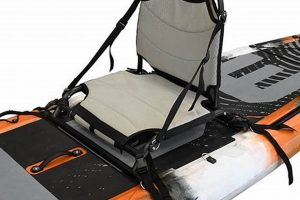
Comfort features significantly influence the overall fishing experience, particularly during extended trips. Discomfort can detract from focus and enjoyment, potentially shortening time on the water. The Boss 12 SS fishing kayak likely incorporates several design elements aimed at enhancing comfort and promoting prolonged angling sessions. A comfortable seating system, adjustable footrests, and strategically placed padding contribute to reduced fatigue and enhanced on-the-water endurance. Consider an angler spending hours casting and retrieving; an ergonomic seat with proper back support minimizes strain and allows for sustained focus. Similarly, adjustable footrests accommodate varying leg lengths, promoting proper posture and reducing lower back discomfort.
Specific comfort features vary among kayak models and influence suitability for different fishing styles. Kayaks designed for longer expeditions prioritize comfort and support, while those intended for shorter trips or specialized techniques may emphasize maneuverability over plush seating. For instance, a kayak intended for offshore fishing might feature a higher seat back for increased support in rougher waters, while a kayak designed for river fishing might prioritize a lower seat position for enhanced stability. The Boss 12 SS likely balances comfort with performance, catering to anglers seeking a combination of both. An uncomfortable seating position can restrict movement and hinder casting efficiency, while well-placed padding can prevent chafing and pressure points during long paddling sessions. The availability of aftermarket accessories, such as seat cushions or backrests, can further personalize comfort levels.
In summary, comfort features directly influence the overall enjoyment and effectiveness of kayak fishing. The Boss 12 SS kayak’s designers likely considered factors such as seating ergonomics, adjustability, and padding to enhance user comfort. The practical significance of these features is clear: a comfortable angler can focus on fishing rather than physical discomfort, maximizing time on the water and increasing the likelihood of a successful and enjoyable outing. Evaluating comfort features alongside performance characteristics provides a comprehensive understanding of the kayak’s suitability for individual needs and preferences. Potential buyers should consider factors like trip duration, fishing style, and personal physical requirements when assessing the importance of comfort features in their kayak selection process.
5. Durability

Durability is a critical factor influencing the lifespan and overall value of a fishing kayak. The Boss 12 SS, intended for use in diverse aquatic environments, must withstand exposure to various elements and potential impacts. A durable kayak resists damage from UV radiation, abrasion, and impacts, ensuring long-term performance and minimizing repair costs. This translates to extended usability and sustained value over the kayak’s lifespan. The following facets explore key aspects of durability related to the Boss 12 SS.
- Material Selection
The choice of construction material significantly impacts a kayak’s durability. Common materials include high-density polyethylene (HDPE), rotomolded plastic, and composites like fiberglass or carbon fiber. Each material offers a unique balance of durability, weight, and cost. HDPE is known for its impact resistance and affordability, while composites offer higher strength-to-weight ratios but may be more susceptible to cracking or puncture damage. The material used in the Boss 12 SS directly influences its ability to withstand impacts, abrasion, and UV degradation. For example, a kayak constructed from thicker HDPE might exhibit greater resistance to punctures from submerged rocks or debris.
- Construction Methods
Manufacturing methods contribute significantly to a kayak’s structural integrity and resistance to wear. Rotomolding, a common process for producing plastic kayaks, creates a seamless, one-piece hull with uniform thickness, enhancing durability and minimizing potential leak points. Other methods, such as thermoforming or hand-laid composites, offer varying degrees of strength and durability. The Boss 12 SS’s construction method directly influences its resistance to stress cracking, deformation, and long-term wear. A well-constructed kayak maintains its structural integrity even under demanding conditions.
- UV Resistance
Exposure to ultraviolet radiation from sunlight can degrade kayak materials over time, causing fading, brittleness, and reduced strength. UV-resistant additives and protective coatings mitigate this degradation, extending the kayak’s lifespan. The Boss 12 SS’s UV resistance dictates its ability to withstand prolonged sun exposure without significant material degradation, particularly important for kayaks stored outdoors or used frequently in sunny climates. A kayak with superior UV resistance maintains its structural integrity and aesthetic appeal for extended periods, even under intense sunlight.
- Hardware and Fittings
The quality of hardware components, such as handles, latches, and deck rigging, contributes to overall durability. Corrosion-resistant materials, like stainless steel or marine-grade aluminum, ensure long-term functionality and prevent failure due to rust or degradation. The durability of the Boss 12 SS’s hardware directly affects the kayak’s usability and lifespan. Robust hardware withstands repeated use and exposure to saltwater or freshwater environments without corroding or failing. For example, durable deck rigging provides secure attachment points for gear and accessories, while sturdy handles facilitate transport and handling.
These elements contribute significantly to the overall durability and longevity of the Boss 12 SS fishing kayak. A durable kayak withstands the rigors of regular use, minimizing maintenance and replacement costs. This long-term durability translates to sustained value and extended enjoyment on the water. Potential buyers should consider these factors in conjunction with performance characteristics and intended use when evaluating the suitability of the Boss 12 SS for their specific needs. A durable kayak represents a sound investment, providing reliable performance and extended service life in diverse fishing environments.
6. Target Angler

Understanding the target angler for the Boss 12 SS fishing kayak is crucial for evaluating its suitability for different fishing styles and experience levels. The kayak’s design, features, and performance characteristics cater to a specific angler profile. This analysis examines key facets defining the target angler for this particular model, providing insights into its intended use and potential limitations.
- Experience Level
The Boss 12 SS likely targets anglers with a range of experience, from beginners to intermediate paddlers. Its stability and ease of use make it accessible to novice kayakers, while its fishing-specific features appeal to more seasoned anglers. However, its design may not fully satisfy the demands of highly experienced kayak anglers seeking advanced performance characteristics or specialized features for extreme conditions or tournament-level fishing. A beginner might appreciate the kayak’s stability and straightforward design, while an intermediate angler could benefit from its specialized features like rod holders and storage compartments.
- Fishing Style
The Boss 12 SS caters to various fishing styles, including recreational angling, inshore saltwater fishing, and freshwater lake or river fishing. Its stability and storage capacity accommodate the gear required for these disciplines. However, it might not be ideal for specialized techniques like kayak trolling for large pelagic species or navigating challenging whitewater rapids while fishing. An angler targeting bass in a calm lake would find the kayak’s stability and maneuverability advantageous, while someone seeking to navigate fast-flowing rivers might require a different design.
- Budget Considerations
The Boss 12 SS likely occupies a mid-range price point within the fishing kayak market. Its features and construction offer good value for recreational and intermediate anglers, while its price remains accessible to a broader audience. However, anglers seeking premium materials, advanced features, or top-tier performance might consider higher-end models with correspondingly higher price tags. A budget-conscious angler would find the Boss 12 SS an attractive option, providing essential features without excessive cost.
- Physical Considerations
The Boss 12 SS accommodates anglers of varying sizes and physical abilities. Its weight capacity and cockpit dimensions influence its suitability for different users. Anglers exceeding the kayak’s weight capacity would compromise stability and performance. The cockpit dimensions should allow for comfortable entry and exit, as well as sufficient space for movement while fishing. Someone with limited mobility might require a kayak with specific features for easier entry and exit.
These factors collectively define the target angler for the Boss 12 SS fishing kayak. Understanding these characteristics enables prospective buyers to assess whether the kayak aligns with their individual needs, experience levels, and fishing preferences. While the Boss 12 SS caters to a broad range of anglers, its design and features prioritize stability, versatility, and affordability, making it a suitable choice for recreational and intermediate anglers seeking a reliable and practical fishing platform.
Frequently Asked Questions
This section addresses common inquiries regarding the Boss 12 SS fishing kayak, providing concise and informative responses.
Question 1: What is the weight capacity of the Boss 12 SS?
The weight capacity varies depending on the specific model year and configuration, but generally falls within the range of 400-500 lbs. Consult the manufacturer’s specifications for precise figures.
Question 2: Is the Boss 12 SS suitable for saltwater fishing?
While designed primarily for recreational use, the Boss 12 SS can be used in saltwater environments. However, thorough rinsing with fresh water after each use is crucial to prevent corrosion of hardware and fittings.
Question 3: Does the Boss 12 SS come with a paddle?
Some retailers offer package deals including a paddle, while others sell the kayak and paddle separately. Verify inclusion with the specific retailer before purchase.
Question 4: What is the warranty coverage for the Boss 12 SS?
Warranty terms vary depending on the manufacturer and retailer. Refer to the provided warranty documentation or contact the retailer for detailed information on coverage specifics.
Question 5: Can the Boss 12 SS accommodate aftermarket accessories?
The Boss 12 SS typically features multiple mounting points and accessory tracks for customization. However, compatibility with specific aftermarket accessories should be verified before purchase.
Question 6: How does the Boss 12 SS perform in windy conditions?
Due to its sit-on-top design and relatively high profile, the Boss 12 SS may be susceptible to wind drift. Use of a rudder or skeg, if available, can improve tracking performance in windy conditions.
Careful consideration of these frequently asked questions, coupled with thorough research, facilitates informed purchasing decisions and enhances overall satisfaction with the Boss 12 SS fishing kayak. Consulting the manufacturer’s website or contacting authorized dealers may provide additional clarification.
The concluding section summarizes the key features and benefits of the Boss 12 SS, providing a concise overview for potential buyers.
Boss 12 SS Fishing Kayak
This exploration of the Boss 12 SS fishing kayak encompassed key aspects of its design, features, and intended usage. Stability, maneuverability, storage capacity, comfort features, durability, and target angler profile were examined in detail. Emphasis was placed on the practical implications of each characteristic, demonstrating how these elements contribute to the kayak’s overall performance and suitability for diverse fishing applications. From material selection and construction methods impacting durability to the thoughtful integration of comfort and storage features, the analysis aimed to provide a comprehensive understanding of this specific model’s strengths and potential limitations within the broader context of kayak fishing.
The Boss 12 SS represents a balanced approach to kayak fishing, offering a blend of stability, features, and affordability. Its suitability for a given angler depends on individual needs, fishing style, and target environment. Thorough consideration of the information presented here, combined with personal research and on-the-water testing when possible, empowers informed purchasing decisions and contributes to a more rewarding kayak fishing experience. Ultimately, the selection of appropriate equipment significantly influences success and enjoyment on the water.