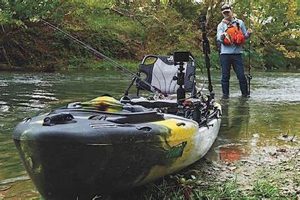
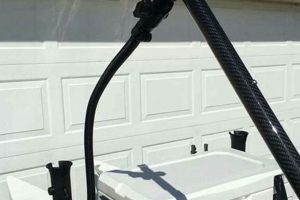
This term refers to a specific kayak model designed for diverse water conditions. “3 waters” suggests versatility across various environments, likely encompassing flatwater, rivers, and ocean conditions. “Big fish” implies its suitability for angling, likely featuring specialized design elements like rod holders and stability for larger catches. “108 pdl” designates a pedal-drive system with a 108-millimeter drive unit, offering hands-free propulsion and enhanced maneuverability compared to traditional paddling.
A pedal-driven kayak designed for multiple water types offers significant advantages to anglers. Hands-free propulsion allows for continuous fishing, increasing the chances of a successful catch. The stability inherent in these designs is crucial when battling larger fish, while the versatility to navigate different aquatic environments expands fishing opportunities. The specified drive unit size likely contributes to efficient and powerful propulsion, enhancing speed and range on the water. This combination of features represents a significant advancement in fishing kayak technology, catering to anglers seeking efficiency and performance.
This discussion will further explore the specific features and benefits of this type of kayak, including its construction, performance characteristics, target audience, and potential drawbacks. Additionally, comparisons with similar models and an overview of the evolving landscape of fishing kayak technology will be provided.
Tips for Utilizing Pedal-Driven Fishing Kayaks
Maximizing the advantages of a pedal-driven fishing kayak requires understanding its capabilities and employing appropriate techniques. The following tips offer guidance for leveraging this technology effectively.
Tip 1: Master Pedal Control: Familiarize oneself with the pedal drive system’s nuances. Practice adjusting speed and direction in controlled environments before venturing into challenging waters or fishing situations.
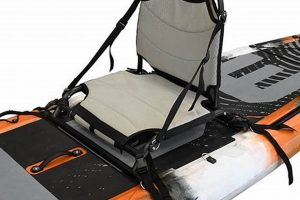
Tip 2: Optimize Seat Position: Proper seat adjustment is crucial for comfort and efficient pedaling. Ensure a comfortable posture that allows for extended periods on the water and effective power transfer to the drive system.
Tip 3: Plan Fishing Routes Strategically: Leverage the hands-free propulsion to cover more water efficiently. Pre-plan routes to target specific fishing areas and maximize time spent fishing, not paddling.
Tip 4: Utilize Rudder System Effectively: Coordinate rudder adjustments with pedaling to maintain precise control and navigate currents or windy conditions effectively.
Tip 5: Maintain and Inspect Regularly: Regularly inspect the pedal drive system, ensuring proper lubrication and addressing any potential issues promptly. Rinse with freshwater after each use, particularly in saltwater environments.
Tip 6: Understand Weight Capacity: Adhere to the kayak’s specified weight capacity, including gear and passengers, to maintain stability and prevent potential capsizing.
Tip 7: Practice Safety Precautions: Always wear a personal flotation device and carry essential safety equipment, including a whistle, signaling device, and first-aid kit.
By adhering to these guidelines, anglers can enhance their fishing experience and maximize the advantages offered by pedal-driven kayaks, leading to increased efficiency, comfort, and safety on the water.
This information serves as a starting point for optimizing the use of pedal-driven fishing kayaks. Further research and practical experience will contribute to a deeper understanding and mastery of these specialized vessels.
1. Versatility (3 Waters)

The “3 waters” designation within the “3 waters kayaks big fish 108 pdl” model signifies its adaptability across various aquatic environments. This versatility stems from a design that balances stability, maneuverability, and tracking performance. The kayak’s hull shape, typically featuring a moderate rocker profile, allows it to navigate calmer waters like lakes and ponds efficiently while also handling the chop and currents of rivers and coastal waters. This adaptability expands fishing opportunities, enabling anglers to target different species in diverse locations without requiring multiple specialized kayaks. For example, an angler could use the same kayak for pursuing bass in a still lake one day and then navigate coastal estuaries for redfish the next.
The practical significance of this versatility lies in its impact on angler efficiency and overall fishing experience. Reduced logistical challenges associated with owning and transporting multiple kayaks simplify travel and access to diverse fishing spots. Furthermore, the ability to adapt to changing water conditions mid-trip enhances responsiveness to fish behavior and expands fishing opportunities. Imagine encountering unexpected choppy water during a lake fishing trip; a versatile kayak allows continued fishing without compromising stability or safety. This adaptability offers a distinct advantage over specialized kayaks designed for a single water type.
In summary, “3 waters” versatility is a core attribute of the “3 waters kayaks big fish 108 pdl” model. This design characteristic directly influences functionality, enabling anglers to navigate and fish effectively across a spectrum of aquatic environments. The resulting expansion of fishing opportunities and enhanced on-the-water adaptability represents a significant advantage for anglers seeking a single, comprehensive fishing platform.
2. Fishing-focused design

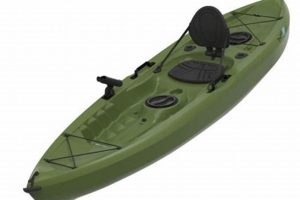
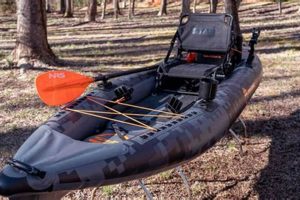
The “fishing-focused design” of the 3 waters kayaks big fish 108 pdl model is integral to its functionality and target audience. This design philosophy translates into specific features that enhance angling effectiveness and overall experience. Rod holders, strategically placed throughout the kayak, provide convenient access and secure storage for fishing rods. Tackle storage compartments offer organized storage for lures, lines, and other essential gear, minimizing clutter and maximizing efficiency. Often, these kayaks incorporate features like transducer mounts for fish finders and anchor trolleys for controlled drift fishing. Such specialized features differentiate these kayaks from recreational models, demonstrating a clear prioritization of angling needs.
The practical significance of this design philosophy is evident in its impact on angler performance. Hands-free fishing, facilitated by the pedal drive system, becomes more effective with readily accessible rods and organized tackle. Imagine quickly switching between different rods or lures without having to search through a cluttered storage area; the fishing-focused design makes this possible. This enhanced efficiency directly translates to increased time spent fishing and potentially higher catch rates. Furthermore, the design often considers stability as a key factor, particularly for anglers targeting larger fish. A stable platform is crucial for casting, reeling, and landing fish without compromising safety or balance.
In summary, the fishing-focused design of the 3 waters kayaks big fish 108 pdl model is not merely a collection of added features but a comprehensive approach that optimizes the kayak for angling. This specialization results in enhanced efficiency, improved organization, and increased fishing success. The dedicated design caters specifically to anglers’ needs, distinguishing these kayaks from general-purpose recreational models and solidifying their position within the fishing kayak market.
3. Pedal-driven propulsion

Pedal-driven propulsion forms a core component of the “3 waters kayaks big fish 108 pdl” model, significantly influencing its functionality and target audience. Unlike traditional paddle kayaks, this system utilizes a pedal-driven propeller, offering distinct advantages. Hands-free operation allows anglers to focus on fishing techniques, such as casting, retrieving lures, and battling fish, without the constant need to switch between paddling and fishing. This continuous engagement enhances fishing efficiency, particularly in situations requiring precise boat control, like trolling or maintaining position in currents. The 108 pdl component denotes a 108-millimeter pedal drive unit, a size contributing to efficient power transfer and propulsion in various water conditions. For instance, navigating against moderate currents or covering larger distances becomes more manageable compared to paddling. This enhanced maneuverability expands fishing opportunities, allowing anglers to explore diverse environments and target various species.
The practical implications of pedal-driven propulsion extend beyond simple hands-free fishing. Consider a scenario involving a hooked fish making a strong run; the angler can maintain tension and control using the pedals while simultaneously managing the rod and reel, a task significantly more challenging with a paddle. Furthermore, the increased efficiency translates into less physical exertion, enabling longer fishing trips and reduced fatigue. This advantage becomes particularly significant in challenging conditions like wind or currents. The ability to cover more water with less effort expands the range of potential fishing spots accessible within a given timeframe. This aspect contributes to the “3 waters” versatility of the kayak, enabling anglers to seamlessly transition between different aquatic environments without being limited by paddling fatigue.
In summary, pedal-driven propulsion, specifically the 108 pdl system, represents a significant advancement in fishing kayak technology. Its integration into the “3 waters kayaks big fish 108 pdl” model directly enhances fishing efficiency, maneuverability, and overall versatility. This feature differentiates the model from traditional paddle kayaks, catering to anglers who prioritize hands-free operation and seek to maximize their time on the water effectively exploring diverse fishing locations.
4. 108mm Pedal Drive

The 108mm pedal drive system is a defining feature of the “3 waters kayaks big fish 108 pdl” model, directly impacting its performance and suitability for diverse fishing environments. Understanding the specifics of this propulsion system is crucial for appreciating the kayak’s capabilities and advantages. The following facets explore the key aspects of the 108mm pedal drive.
- Propulsion Efficiency
The 108mm diameter of the pedal drive unit influences propulsion efficiency. This size balances speed and power, allowing for effective movement across various water conditions. A larger diameter generates more power per rotation, beneficial in currents or challenging environments, while still maintaining reasonable speed for covering distance. For example, an angler fishing in a tidal river can maintain position effectively against the current using the 108mm drive. This balance contributes to the kayak’s “3 waters” versatility, enabling efficient navigation across lakes, rivers, and coastal areas.
- Maneuverability
The 108mm pedal drive’s design often incorporates features that enhance maneuverability. The integration with a rudder system allows for precise directional control, crucial for navigating tight spaces, avoiding obstacles, or maintaining a specific course while fishing. Consider an angler navigating a mangrove-lined creek; the precise control offered by the pedal drive and rudder system is essential for avoiding submerged roots and reaching prime fishing spots. This maneuverability contributes significantly to the kayak’s adaptability in diverse environments.
- Maintenance and Durability
The 108mm pedal drive system’s durability and maintenance requirements are important considerations. Sealed bearings and corrosion-resistant materials contribute to longevity, particularly in saltwater environments. Regular rinsing with fresh water after use and periodic lubrication are typical maintenance tasks. Proper care ensures consistent performance and extends the lifespan of the drive system. This reliability contributes to the overall value and long-term usability of the kayak, particularly for anglers who frequently fish in harsh conditions.
- Impact on Fishing Experience
The 108mm pedal drive’s hands-free operation directly impacts the fishing experience. Anglers can maintain constant control of the kayak while simultaneously casting, retrieving, and fighting fish. This continuous engagement enhances fishing efficiency and allows for more active participation in the angling process. Imagine battling a strong fish near structure; the pedal drive enables precise boat control, preventing the fish from gaining leverage and increasing the chances of a successful landing. This aspect contributes significantly to the “big fish” aspect of the kayak, enabling anglers to confidently target larger species.
These interconnected facets of the 108mm pedal drive system contribute significantly to the overall performance and versatility of the “3 waters kayaks big fish 108 pdl” model. The system’s efficiency, maneuverability, durability, and impact on the fishing experience combine to create a kayak well-suited for diverse fishing environments and techniques. Understanding these aspects allows anglers to fully appreciate and effectively utilize the capabilities of this specialized fishing platform.
5. Stability (big fish)
Stability is a critical attribute of the “3 waters kayaks big fish 108 pdl” model, directly influencing its suitability for angling, particularly when targeting larger fish. This characteristic affects not only safety but also fishing effectiveness and overall on-the-water experience. The following facets explore the key components of stability in relation to this specific kayak model.
- Primary Stability
Primary stability refers to the kayak’s initial resistance to tipping. A wider hull and lower center of gravity contribute to higher primary stability. This is crucial for maintaining balance during activities like casting, retrieving, and landing fish. For example, a stable platform allows an angler to confidently cast a lure with a powerful overhead sweep without fear of capsizing. This characteristic is particularly relevant in the “big fish” context, as the forces exerted by a large fish during a fight can significantly challenge stability. A kayak with high primary stability minimizes the risk of tipping during these critical moments.
- Secondary Stability
Secondary stability refers to the kayak’s resistance to tipping when leaned. This characteristic becomes important when maneuvering in waves, currents, or during the fight with a strong fish. A kayak with good secondary stability provides a sense of security even when tilted, allowing the angler to maintain control and recover balance. For example, if a large fish pulls the kayak sideways, strong secondary stability prevents capsizing and allows the angler to regain an upright position. This feature is integral to the “3 waters” aspect of the kayak, enabling confident navigation in diverse and potentially challenging conditions.
- Hull Design and Stability
The hull design plays a significant role in determining both primary and secondary stability. Features like a flat bottom, rounded chines, or pontoon-style hulls enhance initial stability, while flared hulls contribute to secondary stability. The specific hull design of the “3 waters kayaks big fish 108 pdl” model aims to balance stability with maneuverability and tracking performance. This balance is essential for navigating various water types efficiently while maintaining a stable platform for fishing, particularly when encountering larger fish. The design prioritizes a blend of stability characteristics suitable for both calm and challenging conditions, aligning with the intended versatility of the kayak.
- Impact of Stability on Fishing Experience
Stability directly influences the overall fishing experience. A stable platform allows anglers to focus on fishing techniques rather than constantly correcting balance. This enhanced confidence translates to improved casting accuracy, more effective lure retrieval, and increased success in landing fish, especially larger ones. The stability features of the “3 waters kayaks big fish 108 pdl” model contribute to a comfortable and secure fishing platform, minimizing fatigue and maximizing enjoyment on the water. This attribute is particularly important for extended fishing trips or when navigating challenging conditions. The enhanced stability allows anglers to fish longer, explore further, and confidently engage with larger fish, aligning with the intended “big fish” capability of the kayak.
These interconnected facets of stability demonstrate its importance in the context of the “3 waters kayaks big fish 108 pdl” model. The kayak’s stability characteristics contribute significantly to its suitability for angling, particularly when targeting larger species in diverse environments. By prioritizing stability, the design ensures a safe, comfortable, and effective fishing platform, enabling anglers to fully utilize the kayak’s features and maximize their fishing potential.
Frequently Asked Questions
This section addresses common inquiries regarding kayaks designed for diverse water conditions, targeting larger fish, and utilizing a 108mm pedal-drive system. Clarity on these aspects assists potential users in making informed decisions.
Question 1: What specific water types are encompassed within the “3 waters” designation?
The “3 waters” typically refers to flatwater (lakes and ponds), rivers (flowing water with varying currents), and coastal waters (near-shore ocean environments). Specific suitability within these categories depends on the kayak’s design and individual model characteristics.
Question 2: How does the pedal-drive system contribute to fishing larger fish?
The pedal-drive system allows for hands-free operation, enabling anglers to maintain constant control of the kayak while simultaneously fighting a fish. This is crucial when battling larger, stronger species. Maintaining tension and maneuvering the kayak effectively becomes significantly easier with continuous propulsion and steering control.
Question 3: What are the advantages of a 108mm pedal drive unit compared to other sizes?
A 108mm pedal drive unit generally offers a balance of speed and power. This size is often considered versatile, providing sufficient power for navigating currents while maintaining efficient cruising speeds for covering larger distances. The specific performance characteristics may vary depending on the overall design and propeller configuration.
Question 4: What maintenance is required for a pedal-drive system in saltwater environments?
Thorough rinsing with fresh water after each use is essential to prevent saltwater corrosion. Periodic lubrication of moving parts and regular inspection for wear and tear are also recommended. Specific maintenance procedures may vary depending on the manufacturer’s recommendations.
Question 5: How does the stability of these kayaks compare to traditional paddle kayaks?
Kayaks designed for larger fish and diverse water conditions often prioritize stability. Wider hulls, lower centers of gravity, and specialized hull designs contribute to enhanced stability compared to some traditional paddle kayaks. However, stability characteristics vary among individual models, so specific comparisons are necessary.
Question 6: Are these kayaks suitable for beginners, or do they require prior kayaking experience?
While prior kayaking experience is always beneficial, these kayaks can be suitable for beginners with proper instruction and practice. The enhanced stability often provides a more secure and confidence-inspiring platform for novice paddlers. However, understanding basic paddling techniques and safety procedures remains essential.
Understanding these key aspects facilitates informed decision-making regarding the suitability of this type of kayak for individual needs and intended usage scenarios. Thorough research and consideration of specific model characteristics are recommended before purchase.
Further exploration of specific models, user reviews, and expert opinions can provide additional insights. Consult reputable retailers and manufacturers for detailed specifications and guidance.
Conclusion
Exploration of the “3 waters kayaks big fish 108 pdl” keyword reveals a specialized fishing kayak designed for versatility and performance. Key features include adaptability across diverse aquatic environments (lakes, rivers, coastal waters), a stable platform for angling larger fish, and efficient hands-free propulsion via a 108mm pedal-drive system. The confluence of these attributes caters to anglers seeking a comprehensive fishing platform capable of navigating various conditions while maximizing fishing efficiency.
The evolution of fishing kayak technology continues to refine designs and enhance on-the-water experiences. Careful consideration of individual needs, fishing styles, and target environments remains crucial for selecting the appropriate kayak. Further research and practical evaluation are recommended to fully appreciate the advantages and limitations of specific models within this evolving landscape.