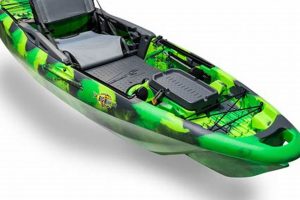
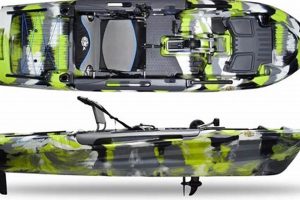
Budget-friendly kayaks designed for angling represent an accessible entry point into the sport of kayak fishing. These vessels typically feature simpler designs and materials than their premium counterparts, prioritizing affordability while still providing adequate stability and functionality for fishing in calm waters. An example would be a sit-on-top model made from high-density polyethylene, equipped with basic rod holders and storage compartments.
Affordable fishing kayaks democratize the sport, enabling a wider range of individuals to experience the joys of fishing from the water. This increased accessibility can lead to greater participation in outdoor recreation and promote conservation efforts. Historically, fishing kayaks were specialized and expensive pieces of equipment. Advancements in manufacturing and materials have made them significantly more affordable, opening up this activity to a much larger audience.
The following sections will explore key factors to consider when selecting an affordable fishing kayak, including construction materials, features, stability, and performance. Guidance will also be provided on outfitting and maintaining these kayaks to maximize their lifespan and enjoyment.
Tips for Selecting and Using a Budget-Friendly Fishing Kayak
Acquiring a budget-friendly fishing kayak requires careful consideration to ensure the vessel meets individual needs and provides adequate performance. The following tips offer guidance on selecting, outfitting, and maintaining an affordable fishing kayak.
Tip 1: Prioritize Stability over Speed. Wider, shorter kayaks generally offer greater stability, which is crucial for casting and reeling in fish. While speed may be sacrificed, stability enhances safety and comfort, particularly for beginners.
Tip 2: Consider Sit-on-Top vs. Sit-Inside Designs. Sit-on-top kayaks offer better stability and easier access for entering and exiting the water. Sit-inside kayaks provide better protection from the elements and may track better, but can be more challenging for beginners.
Tip 3: Evaluate Weight Capacity. Ensure the kayak’s weight capacity accommodates the angler’s weight, plus gear and any potential catch. Exceeding the weight capacity can compromise stability and performance.
Tip 4: Look for Essential Features. Rod holders, storage compartments, and paddle holders are crucial features for a fishing kayak. Consider the number and placement of these features based on individual fishing styles and needs.
Tip 5: Research Materials and Construction. High-density polyethylene (HDPE) is a common material for affordable kayaks, offering durability and impact resistance. Examine the kayak’s construction for signs of quality workmanship.
Tip 6: Test the Kayak Before Purchasing, If Possible. Testing a kayak allows one to assess its stability, comfort, and maneuverability. If testing isn’t feasible, research reviews and compare specifications.
Tip 7: Invest in Essential Safety Gear. A personal flotation device (PFD), a whistle, and a paddle leash are essential safety items for any kayaker, regardless of budget.
Tip 8: Properly Maintain the Kayak. Regularly rinse the kayak with fresh water after each use and store it out of direct sunlight to prolong its lifespan.
By considering these tips, individuals can select and maintain a budget-friendly fishing kayak that provides years of enjoyment on the water. Proper selection and maintenance maximize value and enhance the overall fishing experience.
This information provides a strong foundation for making informed decisions about acquiring and utilizing an affordable fishing kayak. The concluding section will summarize key takeaways and offer final recommendations.
1. Affordability

Affordability serves as a primary driver in the increasing popularity of kayak fishing, enabling broader participation in the sport. Access to reasonably priced equipment removes a significant barrier to entry, allowing more individuals to experience the benefits of fishing from a kayak. This discussion explores key facets of affordability related to budget-friendly fishing kayaks.
- Initial Purchase Price
The initial cost represents the most significant financial hurdle. Budget-friendly options often utilize less expensive materials like high-density polyethylene (HDPE) instead of fiberglass or composites. Simpler designs and fewer features also contribute to lower prices. For example, a basic sit-on-top kayak might retail for a few hundred dollars, while a high-end model can cost several thousand. This price difference makes entry-level kayaks accessible to a wider range of consumers.
- Ongoing Maintenance Costs
Maintenance costs are another important factor. HDPE kayaks require minimal upkeep, primarily involving rinsing and proper storage. This contrasts with fiberglass kayaks, which may require more specialized cleaning and occasional repairs. Lower maintenance translates to continued affordability over the lifespan of the kayak.
- Accessory Costs
While the kayak itself represents the primary expense, accessories like paddles, life vests, and rod holders also contribute to the overall cost. Budget-conscious anglers can prioritize essential accessories and gradually add more specialized gear as needed. Choosing less expensive alternatives, like aluminum paddles instead of carbon fiber, can further reduce costs.
- Transportation Costs
Transporting a kayak can also incur expenses. Smaller, lighter kayaks are easier to transport on a car roof rack, potentially eliminating the need for a trailer and reducing fuel consumption. This factor adds another layer to the overall affordability equation.
Understanding these facets of affordability empowers consumers to make informed decisions when selecting a fishing kayak. By prioritizing essential features and considering long-term costs, anglers can find a balance between budget and performance, maximizing the enjoyment and accessibility of this popular sport.
2. Stability

Stability stands as a critical performance attribute in low-cost fishing kayaks, directly influencing angler safety and fishing efficacy. A stable platform enables anglers to cast, reel, and land fish without compromising balance, reducing the risk of capsizing, especially in challenging conditions such as windy weather or choppy water. This stability stems primarily from the kayak’s hull design, specifically its width and shape. Wider hulls generally provide greater initial stability, meaning they resist tipping when static. However, they may sacrifice maneuverability. Conversely, narrower hulls offer better tracking and speed but can feel less stable, especially for beginners. Budget-friendly kayaks often prioritize stability through wider, flatter hull designs. This design choice may limit speed and performance in open water but enhances safety and confidence in calmer fishing environments, such as ponds, lakes, and slow-moving rivers.
The relationship between stability and cost involves trade-offs. Premium kayaks often achieve high stability through advanced hull designs and lightweight materials, enabling both stability and performance. However, these features come at a higher price point. Low-cost kayaks often utilize wider, simpler hull designs made from more affordable materials like high-density polyethylene (HDPE). While this approach delivers adequate stability for calmer waters, it may limit performance in rougher conditions or when greater maneuverability is required. For example, a wide, flat-bottomed budget kayak provides a stable platform for fishing in a small pond but may struggle to track straight in windy conditions or navigate through swift currents. Understanding this dynamic empowers informed decision-making, aligning kayak choice with intended fishing environments.
Prioritizing stability in a low-cost fishing kayak holds significant practical implications. Enhanced stability contributes directly to angler confidence, allowing for comfortable and focused fishing. It also improves safety by reducing the likelihood of capsizing, particularly for less experienced kayakers. While some performance trade-offs may exist compared to premium models, the enhanced stability of budget-friendly kayaks makes them a viable and safe option for many anglers, especially those fishing in calmer waters. Recognizing the interplay between stability, cost, and intended use allows for a strategic selection process, ensuring a satisfying and safe on-the-water experience.
3. Durability

Durability represents a critical factor in the value proposition of a low-cost fishing kayak. While affordability remains a primary purchase driver, a kayak’s ability to withstand regular use and environmental exposure directly impacts its lifespan and overall cost-effectiveness. A less durable kayak, though initially inexpensive, may require frequent repairs or replacement, ultimately negating the initial cost savings. Conversely, a durable, low-cost kayak offers sustained value, providing years of service with minimal maintenance expenses.
Several factors influence the durability of low-cost fishing kayaks. Material selection plays a prominent role. High-density polyethylene (HDPE) stands as a common material choice due to its impact resistance and UV stability. However, HDPE’s formulation and manufacturing process can vary, impacting its overall durability. Thicker HDPE sheets generally offer greater resistance to punctures and abrasion, enhancing long-term durability. Construction methods also influence durability. Rotational molding, a common manufacturing process for HDPE kayaks, creates a uniform, seamless hull, minimizing weak points susceptible to cracking or leaking. Reinforced areas, particularly in high-stress zones like the keel and seating area, further enhance durability. Consider a scenario where two low-cost kayaks are constructed from HDPE. One utilizes a thinner sheet with minimal reinforcement, while the other employs a thicker sheet and reinforced stress areas. The latter, though potentially slightly more expensive initially, likely exhibits superior long-term durability, resisting damage from impacts, UV exposure, and general wear and tear.
Understanding the relationship between durability and cost in low-cost fishing kayaks facilitates informed purchasing decisions. While initial price remains a factor, evaluating construction materials and methods provides insight into a kayak’s likely lifespan and long-term value. Prioritizing durability within a budget constraint ensures a kayak capable of withstanding regular use, minimizing repair costs and maximizing time on the water. This approach represents a strategic investment, balancing initial affordability with long-term cost-effectiveness.
4. Features
Features in low-cost fishing kayaks represent a critical intersection of functionality and affordability. While premium kayaks often boast a wide array of advanced features, budget-friendly options must balance functionality with cost-effectiveness. This necessitates careful consideration of essential features versus optional upgrades, impacting the overall fishing experience and value proposition.
- Rod Holders
Rod holders constitute an indispensable feature in any fishing kayak. Low-cost kayaks typically include flush-mounted or adjustable rod holders. Flush-mounted holders offer a simple, cost-effective solution, while adjustable holders provide greater versatility in rod placement and angling. The number and positioning of rod holders influence fishing techniques and overall convenience. For instance, two flush-mounted rod holders might suffice for a casual angler, while a serious angler might prefer multiple adjustable holders for trolling or diverse fishing styles.
- Storage
Storage capacity plays a crucial role in kayak fishing, accommodating tackle boxes, gear, and personal items. Low-cost kayaks often feature open storage wells or sealed hatches. Open wells provide easy access but offer limited protection from the elements, while sealed hatches offer better protection but may restrict storage space for larger items. The size, type, and accessibility of storage compartments influence organization and efficiency on the water. A larger open well might suit anglers carrying bulky gear, while smaller sealed hatches might suffice for those prioritizing waterproof storage.
- Seating
Seating comfort directly impacts the overall fishing experience, especially during longer outings. Low-cost kayaks often feature basic molded seats or adjustable padded seats. Molded seats offer a simple, integrated solution but may lack comfort for extended periods. Adjustable padded seats provide greater comfort and support but can add to the overall cost. Seat design influences ergonomics and fatigue, affecting fishing performance and enjoyment. An angler prioritizing comfort might opt for an adjustable padded seat, while a casual angler might find a basic molded seat sufficient.
- Paddle Holders/Leashes
Paddle holders or leashes provide secure storage and prevent paddle loss, crucial for safety and convenience. Low-cost kayaks may include integrated paddle holders or offer attachment points for aftermarket leashes. Integrated holders offer a streamlined solution, while aftermarket leashes provide flexibility in paddle placement. These features contribute to organization and prevent accidental paddle loss, especially in challenging conditions. An angler prioritizing convenience might prefer integrated paddle holders, while those seeking flexibility might opt for aftermarket leashes.
The selection of features in a low-cost fishing kayak requires careful consideration of individual fishing needs and budget constraints. Prioritizing essential features like rod holders and adequate storage ensures a functional and enjoyable fishing experience without exceeding budget limitations. Optional features like adjustable seating and paddle holders can enhance comfort and convenience but may increase cost. A strategic approach to feature selection balances functionality, comfort, and affordability, optimizing the value proposition of a low-cost fishing kayak.
5. Material

Material selection significantly influences the cost, performance, and durability of low-cost fishing kayaks. Balancing affordability with performance necessitates careful consideration of material properties, manufacturing processes, and their implications for the overall value proposition. Understanding the characteristics of common kayak materials empowers informed decision-making, aligning material choice with budget and intended use.
- High-Density Polyethylene (HDPE)
HDPE reigns as the dominant material in low-cost fishing kayaks due to its affordability, durability, and impact resistance. Manufacturing processes like rotational molding create seamless, UV-resistant hulls capable of withstanding typical on-the-water impacts. HDPE’s relatively low cost makes it an attractive option for budget-conscious anglers. For example, a rotationally molded HDPE kayak can withstand minor collisions with rocks or logs without sustaining significant damage, unlike fiberglass kayaks which might crack or puncture under similar impact. However, HDPE’s heavier weight compared to composite materials can impact portability and maneuverability.
- Fiberglass
Fiberglass kayaks, while generally more expensive than HDPE, offer advantages in performance and weight. Fiberglass construction allows for more complex hull designs, enhancing speed and tracking. The lighter weight improves portability and maneuverability but often comes at a premium. For example, a fiberglass kayak might track straighter and glide more efficiently than an HDPE kayak of similar dimensions, making it suitable for covering longer distances or paddling in challenging conditions. However, fiberglass is more susceptible to damage from impacts and requires greater care in handling and transport.
- Inflatable Kayaks (PVC, Hypalon, Nitrylon)
Inflatable kayaks constructed from materials like PVC, Hypalon, or Nitrylon represent another segment of the low-cost market. Their primary advantages include portability and ease of storage. While some inflatable kayaks offer surprisingly good performance for calmer waters, they generally lack the durability and tracking capabilities of rigid kayaks. For instance, an inflatable kayak can be easily packed into a car trunk and inflated at the launch site, ideal for anglers with limited storage space or transportation options. However, inflatable kayaks are more susceptible to punctures and abrasion and require careful inflation and maintenance.
- Composites (Carbon Fiber, Kevlar)
Composite materials like carbon fiber and Kevlar, while offering superior performance characteristics in terms of weight and stiffness, rarely feature in low-cost kayaks due to their high cost. These materials enable the construction of lightweight, high-performance kayaks, but their price point generally excludes them from the budget-friendly category. A carbon fiber kayak, for example, might offer exceptional speed and maneuverability due to its light weight and rigid construction. However, its high cost makes it an impractical choice for most budget-conscious anglers.
The choice of material in a low-cost fishing kayak significantly impacts its performance, durability, and overall value. HDPE offers a balance of affordability and durability, making it the prevalent choice in this segment. While other materials like fiberglass and inflatable fabrics offer specific advantages, they often involve trade-offs in cost or performance. Understanding these material characteristics empowers informed decisions, aligning material choice with individual needs, budget constraints, and intended fishing environments.
6. Target Species
Target species considerations play a crucial role in selecting a low-cost fishing kayak. Different species present unique challenges and require specific kayak characteristics for optimal fishing success. Aligning kayak choice with target species ensures efficient angling and maximizes the value proposition of a budget-friendly vessel.
- Species Size and Fighting Strength
Larger, stronger fish like salmon or striped bass require kayaks with greater stability and higher weight capacities. A smaller, less stable kayak risks capsizing when battling a powerful fish. Conversely, smaller species like panfish or trout can be comfortably targeted from smaller, lighter kayaks. For example, a wide, stable sit-on-top kayak provides a secure platform for battling larger game fish, while a smaller, more maneuverable kayak suffices for targeting smaller species in calmer waters. This consideration directly impacts kayak selection within a budget, ensuring adequate performance for the intended target species.
- Fishing Environment (Freshwater vs. Saltwater)
The fishing environment significantly influences kayak selection. Saltwater fishing typically requires kayaks with greater durability and corrosion resistance due to the harsh marine environment. Freshwater fishing offers more flexibility, with less demanding requirements for material robustness. A saltwater angler might prioritize a durable HDPE kayak with corrosion-resistant hardware, while a freshwater angler might choose a less expensive, lighter-weight option. Aligning kayak choice with the fishing environment ensures longevity and maximizes the value of a budget-friendly purchase.
- Fishing Style (Trolling vs. Casting)
Fishing style further refines kayak selection based on target species. Trolling for pelagic fish necessitates a kayak with good tracking and stability, while casting for inshore species requires maneuverability and a stable casting platform. A longer, narrower kayak might excel at trolling, while a shorter, wider kayak might prove more suitable for casting in tighter spaces. Matching kayak design to fishing style optimizes performance and enjoyment on the water.
- Storage and Gear Requirements
Target species also influence storage and gear requirements. Anglers targeting larger species might require more storage space for larger tackle boxes, rods, and other specialized gear. Smaller species require less specialized equipment and thus less storage space. A kayak with ample storage compartments suits anglers targeting larger species, while a smaller, simpler kayak might suffice for those pursuing smaller fish. Balancing storage capacity with kayak size and cost ensures a practical and efficient setup.
Considering target species when selecting a low-cost fishing kayak ensures a balanced approach to affordability and performance. Aligning kayak characteristics with target species and fishing style maximizes on-the-water efficiency and overall enjoyment. Understanding these relationships empowers informed decisions, resulting in a budget-friendly kayak well-suited to the angler’s specific needs and fishing goals. This targeted approach optimizes the value proposition of a low-cost fishing kayak, enhancing the overall fishing experience without exceeding budget constraints.
Frequently Asked Questions
This section addresses common inquiries regarding budget-friendly fishing kayaks, providing concise and informative responses to facilitate informed purchasing decisions.
Question 1: What constitutes a “low-cost” fishing kayak?
Price ranges vary based on features and materials, but generally, kayaks priced below $500 are considered budget-friendly. This price point often entails compromises on materials and features compared to higher-end models.
Question 2: Are low-cost fishing kayaks durable enough for regular use?
Durability depends largely on construction and materials. Kayaks constructed from high-density polyethylene (HDPE) using rotational molding techniques generally offer acceptable durability for recreational use. However, thinner HDPE or poorly constructed kayaks may exhibit reduced lifespan.
Question 3: Can one effectively fish from a low-cost kayak?
Yes, budget-friendly kayaks can provide effective fishing platforms, particularly in calmer waters. While they may lack the speed and features of premium models, they offer adequate stability and functionality for many fishing styles.
Question 4: What essential features should one seek in an affordable fishing kayak?
Essential features include rod holders, storage compartments, and a comfortable seat. Prioritizing these features ensures basic functionality without exceeding budget limitations.
Question 5: How does one choose between a sit-on-top and a sit-inside kayak at a lower price point?
Sit-on-top kayaks offer superior stability and ease of entry/exit, making them suitable for beginners and warmer climates. Sit-inside kayaks provide better protection from the elements but can be more challenging for beginners.
Question 6: How does the weight of a low-cost kayak impact transport and usage?
Heavier kayaks require more effort to transport and maneuver. Consider kayak weight relative to vehicle transport capabilities and physical limitations. Lighter kayaks often utilize more expensive materials, potentially increasing cost.
Careful consideration of these frequently asked questions allows for more informed decision-making regarding low-cost fishing kayaks. Balancing budget constraints with essential features and intended usage ensures a satisfying and productive fishing experience.
The subsequent section offers concluding thoughts and recommendations for prospective buyers of budget-friendly fishing kayaks.
Low-Cost Fishing Kayaks
Careful evaluation of factors influencing affordability, stability, durability, features, materials, and target species compatibility proves essential when selecting a budget-friendly fishing kayak. Prioritizing essential features while remaining mindful of budget constraints allows for informed decisions, maximizing value and ensuring a satisfying on-the-water experience. Understanding the inherent trade-offs between cost and performance empowers consumers to select a kayak aligned with individual needs and fishing goals. Balancing initial investment with long-term durability and functionality yields a cost-effective approach to kayak fishing.
The pursuit of angling from a kayak no longer necessitates significant financial investment. Strategic selection based on informed decision-making ensures accessible enjoyment of this popular sport. Further research and consideration of individual fishing styles and target species will refine kayak selection, contributing to positive experiences and promoting responsible engagement with the aquatic environment.