A small, human-powered watercraft designed for angling, often incorporating a sonar device to locate fish, represents a significant advancement in recreational fishing. This combination of maneuverability and technology allows anglers to access shallow or otherwise difficult-to-reach areas while gaining crucial underwater insights.
The integration of sonar technology into these vessels provides a significant advantage by offering real-time data about water depth, bottom structure, and fish location. This empowers anglers to make informed decisions about lure selection, casting locations, and retrieval techniques, ultimately increasing the likelihood of a successful fishing trip. Historically, anglers relied on experience and intuition to find fish, but this technological advancement has democratized access to information previously available only to those with extensive local knowledge or expensive equipment. This combination of a compact, agile vessel and sophisticated electronics opens up new possibilities for both novice and experienced anglers.
This discussion will further explore various aspects of these specialized watercraft, covering topics such as selecting the appropriate hull design, understanding different sonar features, and choosing essential accessories to enhance on-the-water experiences.
Tips for Effective Kayak Fishing with Sonar
Maximizing the benefits of a sonar-equipped fishing kayak requires careful consideration of several factors. These tips offer guidance for enhancing angling success and overall on-the-water experience.
Tip 1: Transducer Placement is Key: Proper transducer placement is crucial for accurate sonar readings. Mounting the transducer too close to the kayak’s hull or other obstructions can create interference. Follow manufacturer instructions carefully for optimal positioning.
Tip 2: Learn Sonar Interpretation: Understanding how to interpret sonar readings takes practice. Study the user manual and experiment with different settings to learn how to distinguish between fish, vegetation, and bottom structure. Online resources and tutorials can also be valuable learning tools.
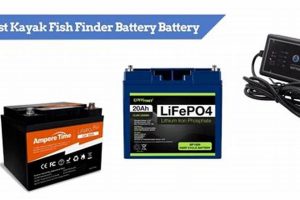
Tip 3: Battery Management: Sonar units consume power. Ensure adequate battery capacity for the planned fishing duration. Carry a spare battery or consider a solar charging solution for extended trips.
Tip 4: Kayak Stability Considerations: Consider the kayak’s stability when choosing a sonar unit and mounting location. Larger units or awkward placements can negatively impact balance, especially in rough water or when fighting a fish.
Tip 5: Safety First: Always prioritize safety. Wear a personal flotation device and inform someone of fishing plans, including location and expected return time. Carry essential safety equipment, such as a whistle, signaling device, and first-aid kit.
Tip 6: Respect the Environment: Practice responsible angling by adhering to catch and release guidelines where appropriate. Minimize environmental impact by properly disposing of fishing line and other waste.
Tip 7: Regular Maintenance: Regularly inspect and clean the sonar unit and transducer. Check connections for corrosion and ensure all components are functioning correctly. Proper maintenance ensures reliable performance and extends the life of the equipment.
By following these guidelines, anglers can significantly enhance their experience and success using a sonar-equipped fishing kayak. Preparation and understanding contribute to both enjoyable outings and responsible angling practices.
This information provides a foundational understanding for successful kayak fishing with sonar. The subsequent conclusion will offer final thoughts and reiterate key takeaways.
1. Kayak Selection
Appropriate kayak selection is fundamental to a successful fishing experience when utilizing a fish finder. The kayak’s characteristics significantly influence maneuverability, stability, and the effective deployment of sonar technology. Choosing the right kayak model is crucial for optimizing angling potential.
- Hull Design:
Hull design directly impacts stability and tracking. A wider, flatter hull, like a pontoon or barge style, offers enhanced stability, beneficial for stationary fishing and fighting larger fish. A narrower, V-shaped hull provides better tracking and speed, advantageous for covering larger distances. Consider the target fishing environment and preferred angling style when selecting a hull design. A stable platform is essential for accurate sonar readings and safe operation.
- Length and Weight Capacity:
Kayak length and weight capacity influence maneuverability and storage space. Longer kayaks track better in open water but are less agile in tight spaces. Weight capacity should accommodate the angler, fishing gear, and electronics, including the fish finder and battery. Selecting a kayak with adequate capacity ensures stability and safety. Overloading a kayak can compromise performance and create hazardous conditions.
- Storage and Mounting Options:
Ample storage and convenient mounting options are crucial for organizing fishing gear and securing electronics. Dedicated compartments and mounting points facilitate easy access to equipment and ensure the fish finder’s transducer is positioned correctly. A well-organized kayak improves efficiency and allows anglers to focus on fishing. Secure mounting prevents damage to the fish finder and ensures accurate sonar readings.
- Sit-on-Top vs. Sit-Inside:
Sit-on-top kayaks offer greater stability and easier access to the water, making them popular for fishing. Sit-inside kayaks offer better protection from the elements and are often preferred for colder conditions. Consider the typical fishing environment and personal preferences when deciding between these two styles. Each design presents distinct advantages and disadvantages relevant to comfort, maneuverability, and overall fishing experience.
These facets of kayak selection significantly impact the effectiveness of a fishing kayak equipped with a fish finder. Careful consideration of hull design, length, storage, and seating style contributes to a stable, efficient, and productive fishing platform. A well-chosen kayak enhances the angler’s ability to utilize sonar technology and maximize their chances of success.
2. Transducer Compatibility

Transducer compatibility is paramount for optimal fish finder performance in a fishing kayak setup. The transducer acts as the sonar system’s eyes, transmitting and receiving sound waves to generate underwater images. Compatibility between the transducer and fish finder unit ensures seamless communication and accurate data representation. Incompatibility can lead to inaccurate readings, limited functionality, or complete system failure. For instance, a CHIRP sonar unit requires a CHIRP-compatible transducer to utilize its full potential. Attempting to use a conventional transducer with a CHIRP unit would restrict the system to conventional sonar functionality, negating the benefits of CHIRP technology.
Several factors govern transducer compatibility, including frequency, power output, and connector type. Fish finders operate within specific frequency ranges, impacting the detail and depth penetration of sonar readings. The transducer’s frequency must align with the fish finder’s capabilities. Similarly, the transducer’s power handling capacity needs to match or exceed the fish finder’s output. Mismatched power ratings can damage the transducer or limit performance. Finally, the physical connector type must be compatible between the transducer and the fish finder head unit. Connecting a transducer with an incompatible connector is physically impossible or can lead to connection failure. For example, some transducers utilize a proprietary connector specific to the manufacturer, while others employ a more standardized connection.
Understanding transducer compatibility is critical for maximizing the effectiveness of a fishing kayak with a fish finder. Careful consideration of frequency, power, and connector type ensures seamless integration and optimal performance. Ignoring compatibility issues can lead to suboptimal sonar readings, hindering the angler’s ability to locate fish and understand underwater structure. Selecting a compatible transducer allows for full utilization of the fish finder’s capabilities, contributing significantly to a successful and informed fishing experience.
3. Fish Finder Display
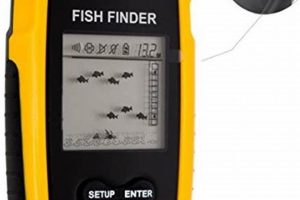
The fish finder display serves as the crucial interface between angler and underwater environment in a fishing kayak equipped with sonar. Display characteristics significantly influence the angler’s ability to interpret sonar data effectively, impacting decision-making and fishing success. Screen size, resolution, and color palette contribute to the clarity and comprehensibility of underwater information. A larger display with higher resolution allows for greater detail and easier identification of fish, structure, and bottom composition. Color displays differentiate various underwater features, enhancing interpretation and target identification. For example, a high-resolution color display can differentiate between a school of baitfish and a larger predatory fish lurking beneath, informing the angler’s lure choice and retrieval technique.
Display features, such as adjustable brightness and contrast, further enhance visibility in varying light conditions. Direct sunlight or overcast skies necessitate adjustable settings to maintain optimal image clarity. Some displays offer advanced features like split-screen functionality, allowing simultaneous viewing of different sonar frequencies or mapping data. This provides a comprehensive view of the underwater environment, aiding navigation and fish location. For instance, an angler could view down-imaging sonar on one side of the screen, providing detailed imagery of the bottom structure, while simultaneously viewing traditional 2D sonar on the other side, revealing fish arches and depth readings. This multifaceted perspective empowers informed decision-making. Screen durability and water resistance are crucial factors, particularly in the challenging environment of a fishing kayak. A rugged, waterproof display withstands splashes, rain, and accidental submersion, ensuring consistent functionality throughout the fishing trip.
Effective utilization of a fish finder display translates directly to improved angling outcomes. Accurate interpretation of sonar data informs strategic decisions about lure selection, retrieval speed, and fishing location. Understanding the nuances of the display its size, resolution, color capabilities, and features empowers anglers to maximize their fishing potential. Challenges may include glare on the screen in bright sunlight, requiring adjustments or screen shields. Ultimately, the fish finder display, as the primary interface with the underwater world, plays a pivotal role in the success and enjoyment of kayak fishing with sonar.
4. Power Management

Effective power management is crucial for maximizing the duration and enjoyment of fishing kayak excursions that utilize fish finders. These electronic devices, while enhancing angling capabilities, demand a reliable power source for consistent operation. Insufficient power can curtail fishing trips and limit the benefits of sonar technology. Understanding power consumption, battery options, and conservation strategies ensures uninterrupted operation of essential electronics throughout the fishing expedition.
- Battery Selection:
Selecting an appropriate battery is paramount for powering a fish finder on a fishing kayak. Battery capacity, measured in ampere-hours (Ah), determines the duration of use before requiring recharge. Higher capacity batteries provide longer run times but may be heavier and more expensive. Deep-cycle marine batteries are designed specifically for sustained power delivery and are well-suited for fish finder applications. Consider the anticipated fishing duration and the fish finder’s power requirements when selecting a battery. For instance, a smaller fish finder might operate effectively on a 12V 7Ah battery for a shorter trip, while a larger unit with higher power demands might necessitate a 12V 12Ah battery or larger for extended use.
- Power Consumption:
Fish finder power consumption varies depending on screen size, sonar frequency, and features used. Larger displays and higher frequencies generally demand more power. Understanding the fish finder’s power draw allows anglers to estimate battery life and plan accordingly. Consulting the fish finder’s specifications provides crucial information regarding power consumption. For example, a fish finder might draw 0.5 amps while operating, meaning a 12V 7Ah battery could theoretically power the unit for approximately 14 hours, though real-world conditions and other factors can affect this estimate.
- Conservation Strategies:
Employing power conservation strategies extends battery life and maximizes fishing time. Reducing screen brightness, minimizing the use of power-intensive features, and powering down the unit when not actively fishing can significantly prolong battery life. For instance, reducing the screen brightness by half can noticeably decrease power consumption. Utilizing a sonar transducer with a lower frequency when feasible also helps conserve power.
- Charging Options:
Planning for battery charging is essential for multi-day fishing trips. Portable solar chargers offer a convenient way to replenish battery power during extended excursions. Shore power access, if available, allows for traditional battery charging. Understanding charging options ensures uninterrupted fish finder operation throughout the fishing adventure. Maintaining a second, fully charged battery provides a reliable backup power source.
Effective power management is inextricably linked to the successful deployment of fish finders on fishing kayaks. Understanding battery options, power consumption characteristics, and conservation strategies ensures consistent sonar operation, maximizing the angler’s ability to locate fish and explore underwater structure. Neglecting power management can prematurely curtail fishing trips, limiting the benefits of valuable sonar technology. Careful planning and power-conscious practices contribute to more enjoyable and productive fishing experiences.
5. Mounting & Positioning

Optimal mounting and positioning of the transducer and fish finder display are critical for maximizing the effectiveness of sonar technology in a fishing kayak. Incorrect placement can lead to inaccurate readings, interference, and reduced functionality, hindering the angler’s ability to interpret underwater data accurately. Careful consideration of transducer location, display visibility, and cable management contributes significantly to a productive and informative fishing experience. A well-planned setup minimizes disruptions and allows for seamless integration of technology and angling techniques.
- Transducer Placement:
Correct transducer placement is paramount for accurate sonar readings. The transducer should be submerged in water, clear of obstructions, and positioned to minimize interference from the kayak’s hull or motor. Common mounting locations include inside the hull (for in-hull transducers), on the transom (for transom-mount transducers), or through-hull (for specialized transducers). Each method offers distinct advantages and disadvantages related to performance, installation complexity, and kayak suitability. For instance, an in-hull transducer avoids drag and potential damage but may sacrifice some sensitivity compared to a transom-mount or through-hull transducer. Incorrect placement can result in turbulent water flow disrupting sonar signals, leading to inaccurate depth readings or distorted bottom structure representation. Optimal placement ensures clean sonar readings and accurate underwater mapping.
- Display Visibility and Accessibility:
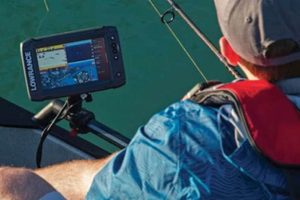
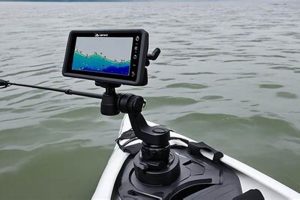
The fish finder display should be positioned within easy view and reach of the angler. Mounting the display on the kayak’s deck or console allows for quick glances and adjustments without compromising paddling or fishing activities. Adjustable mounts offer flexibility in positioning the display for optimal viewing angles and minimizing glare. Positioning the display too far from the angler’s natural line of sight can lead to distractions and difficulties interpreting sonar data during critical fishing moments. Ergonomic placement enhances situational awareness and allows for efficient integration of sonar information into angling strategies.
- Cable Management:
Proper cable management is essential for maintaining a clean and organized kayak, minimizing tripping hazards, and protecting electronic components. Securing cables with clips or ties prevents tangling and ensures they remain clear of paddling strokes and fishing gear. Exposed or poorly managed cables can lead to damage from snags, water intrusion, or accidental disconnection, disrupting sonar functionality. Organized cable routing contributes to an efficient and safe fishing environment.
- Adjustability and Stability:
Consider mounts that offer adjustability for fine-tuning transducer angle and display position. Secure mounting ensures stability, minimizing vibrations and movement that can negatively impact sonar readings. Loose or unstable mounts can lead to inconsistent readings and difficulty interpreting data, particularly in rough water conditions. Stable and adjustable mounting solutions provide consistent performance and adaptability to various fishing environments and kayak configurations. Ensuring the chosen mounting hardware is compatible with the kayak’s material and structure is also essential for long-term reliability.
Strategic mounting and positioning of the transducer and fish finder display are integral to realizing the full potential of sonar technology in a fishing kayak. Careful attention to these factors ensures accurate readings, enhances usability, and promotes a safe and organized fishing experience. Optimal setup allows anglers to focus on interpreting underwater data and making informed fishing decisions without distractions or technical difficulties, ultimately increasing the likelihood of angling success. A well-integrated system contributes to a seamless blend of technology and angling expertise.
6. Sonar Interpretation
Effective sonar interpretation is fundamental to maximizing the benefits of a fish finder integrated into a fishing kayak. The ability to decipher the information displayed on the fish finder screen directly influences angling success. Understanding sonar returns allows anglers to identify fish, discern bottom structure, and navigate effectively. This skill transforms raw data into actionable intelligence, guiding strategic decisions related to lure selection, fishing location, and retrieval techniques.
- Distinguishing Fish from Structure:
Differentiating fish from underwater structures, vegetation, or debris is a cornerstone of sonar interpretation. Fish typically appear as arches or distinct shapes on the display, while structures often manifest as irregular lines or solid masses. Understanding these visual cues allows anglers to focus their efforts on promising areas and avoid wasting time on unproductive locations. For instance, a clearly defined arch suspended mid-water likely represents a fish, whereas a dense, irregular shape on the bottom may indicate a rock formation or submerged vegetation.
- Understanding Depth and Bottom Contour:
Interpreting depth readings and bottom contours is essential for effective navigation and fish location. The fish finder displays water depth numerically and graphically, allowing anglers to identify drop-offs, ledges, humps, and other underwater features that often attract fish. Changes in depth or bottom hardness can signify transitions between different habitats, providing clues about potential fish-holding areas. For example, a sudden drop-off from a shallow flat to a deeper channel can be a prime location for ambush predators.
- Interpreting Water Column Activity:
Observing water column activity reveals valuable information about baitfish presence, water temperature gradients, and thermoclines. Baitfish often appear as clouds or scattered dots on the display. Thermoclines, or distinct temperature changes in the water column, can create boundaries where fish congregate. Recognizing these patterns informs lure selection and retrieval depth, increasing the chances of enticing a strike. For instance, observing baitfish activity near the surface suggests using topwater lures or shallow-running crankbaits.
- Utilizing Sonar Settings Effectively:
Adjusting sonar settings, such as sensitivity, frequency, and chart speed, optimizes the display for specific fishing conditions and target species. Higher sensitivity enhances the detection of smaller fish or subtle changes in bottom structure, while lower sensitivity filters out noise and focuses on larger targets. Adjusting the sonar frequency influences depth penetration and target resolution. Experimenting with these settings allows anglers to fine-tune the display for maximum clarity and information retrieval. For instance, increasing the chart speed provides a more detailed view of the bottom as the kayak moves across the water, while a slower chart speed shows a broader historical view of the area.
Proficient sonar interpretation transforms a fish finder from a simple depth gauge into a powerful tool for understanding the underwater environment and targeting fish effectively. The ability to distinguish fish from structure, interpret depth and bottom contours, observe water column activity, and utilize sonar settings effectively significantly enhances angling success from a fishing kayak. This acquired knowledge, combined with practical experience, empowers anglers to make informed decisions, locate productive fishing areas, and increase their chances of landing the target species.
7. Safety Considerations
Safety considerations are paramount when using a fishing kayak equipped with a fish finder, as the integration of technology can introduce specific hazards if not addressed proactively. Focusing on locating fish using electronic displays can divert attention from potential navigational hazards, increasing the risk of collisions or capsizing. Furthermore, the presence of electronics and wiring adds complexity to emergency procedures, particularly in the event of a capsize or water entry. For example, an angler engrossed in studying the fish finder display might not notice a rapidly approaching powerboat or a submerged log, leading to a dangerous collision. Similarly, tangled transducer cables can impede quick exits from the kayak in an emergency.
Addressing these safety concerns requires a multi-pronged approach. Maintaining situational awareness beyond the fish finder screen is crucial. Regular visual scans of the surrounding environment help identify potential hazards and prevent accidents. Proper cable management minimizes entanglement risks, allowing for swift reactions in emergencies. Carrying essential safety equipment, such as a personal flotation device (PFD), a signaling whistle, and a waterproof communication device, is vital. A float plan, shared with a responsible individual on shore, detailing the intended fishing area and expected return time, adds another layer of safety. For instance, if an angler fails to return as scheduled, the designated contact can alert authorities and provide crucial information for search and rescue operations. These precautions mitigate the potential risks associated with integrating electronics into the kayaking experience.
The integration of technology enhances the fishing experience but requires careful consideration of potential safety implications. Balancing the benefits of electronics with a proactive approach to safety ensures enjoyable and incident-free fishing excursions. Failure to address these safety concerns can transform a technologically advanced fishing trip into a hazardous situation. Prioritizing safety, alongside the effective use of a fish finder, contributes to responsible and successful kayak fishing.
Frequently Asked Questions
This section addresses common inquiries regarding fishing kayaks equipped with fish finders, providing concise and informative responses to facilitate informed decision-making and enhance user experience.
Question 1: What are the primary advantages of using a fish finder on a fishing kayak?
Fish finders provide real-time underwater insights, enabling anglers to locate fish, identify bottom structure, and navigate effectively. This technology enhances angling success by providing critical information previously unavailable without specialized equipment.
Question 2: How does transducer selection impact fish finder performance?
Transducer selection significantly influences data accuracy and sonar functionality. Compatibility between the transducer and fish finder unit, considering factors like frequency and power, is crucial for optimal performance. Incompatible transducers can result in inaccurate readings or limited functionality.
Question 3: What power source options are available for fish finders on kayaks?
Common power sources include dedicated 12V marine batteries, smaller rechargeable lithium-ion batteries, or even kayak-specific power systems. Battery capacity and fish finder power consumption determine operational duration. Portable solar chargers offer recharging capabilities for extended trips.
Question 4: What safety precautions should one consider when using a fish finder on a kayak?
Maintaining situational awareness beyond the fish finder display is crucial. Regularly scanning the surrounding environment prevents collisions and other hazards. Proper cable management minimizes entanglement risks. Carrying essential safety gear, like a PFD and signaling device, remains paramount.
Question 5: How does kayak stability affect the use of a fish finder?
Kayak stability is essential for effective fish finder operation. A stable platform minimizes interference with sonar readings and enhances safety, particularly when operating in rough water or fighting fish. Kayak design and weight capacity influence overall stability.
Question 6: Can one install a fish finder on any type of kayak?
While most kayaks can be adapted to accommodate a fish finder, some designs offer greater ease of installation due to pre-existing mounting points or transducer recesses. Compatibility considerations include kayak material, hull design, and available storage space for batteries and electronics.
Careful consideration of these frequently asked questions equips individuals with the knowledge to make informed choices regarding fish finder integration into their fishing kayak setups. Understanding these aspects maximizes both angling success and overall safety on the water.
This FAQ section provides a comprehensive overview of key considerations related to fishing kayaks with integrated fish finders. The following conclusion summarizes key takeaways and offers final recommendations.
Conclusion
Exploration of fishing kayaks equipped with fish finders reveals significant advantages for anglers. Integrating sonar technology into these versatile vessels enhances angling effectiveness through improved fish location, bottom structure identification, and navigational capabilities. Careful consideration of kayak selection, transducer compatibility, power management, mounting strategies, and sonar interpretation maximizes the benefits of this technology. Prioritizing safety remains paramount, balancing the advantages of electronics with responsible on-the-water practices. Understanding these interconnected elements contributes significantly to a productive and enjoyable fishing experience.
Effective utilization of a fishing kayak with a fish finder requires a comprehensive understanding of both vessel and electronics. Continuous learning and adaptation to evolving technology will further refine angling practices. The synergy of a well-equipped kayak and informed angler promises exciting advancements in recreational fishing, fostering a deeper connection with the aquatic environment while promoting responsible resource management. This mindful approach ensures the sustainability of this rewarding pursuit for future generations.