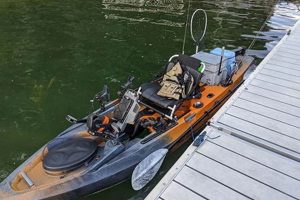
A specialized trailer designed for transporting kayaks equipped for angling offers convenient and safe conveyance of these vessels. Typically lightweight and compact, these trailers often accommodate one or more kayaks and may feature specialized cradles or supports to secure the watercraft during transport. Some models incorporate loading assists, such as rollers or ramps, to facilitate easier handling.
The ability to easily move a fishing kayak expands angling opportunities, allowing access to remote waterways and reducing the physical strain of manual handling. This can be particularly advantageous for longer kayaks or those outfitted with heavier fishing gear. Historically, transporting kayaks often relied on roof racks or cumbersome methods, limiting accessibility for some anglers. The development of purpose-built trailers specifically for kayaks simplifies logistics and has broadened the horizons of recreational and competitive fishing.
This discussion will further examine key aspects of selecting and utilizing these specialized trailers, covering topics such as construction materials, weight capacities, loading procedures, and maintenance requirements. Further exploration will also encompass relevant safety considerations and legal regulations pertaining to trailer operation.
Tips for Kayak Trailer Usage
Proper utilization of a kayak trailer ensures safe and efficient transport, minimizing potential damage to the watercraft and maximizing longevity of the trailer itself.
Tip 1: Weight Distribution: Ensure even weight distribution across the trailer’s axle. Uneven loading can negatively impact towing stability and potentially damage the trailer’s structure. Centering the kayak’s weight over the axle is crucial.
Tip 2: Secure Fastening: Employ appropriate tie-down straps and ensure they are securely fastened to designated anchor points on the trailer. Straps should be tight enough to prevent movement during transit but not so tight as to deform the kayak’s hull. Regularly inspect straps for wear and tear.
Tip 3: Proper Tire Inflation: Maintain correct tire pressure as specified by the trailer manufacturer. Improper inflation can lead to decreased fuel efficiency, tire blowouts, and compromised handling.
Tip 4: Regular Maintenance: Regular maintenance is essential for optimal trailer performance. This includes inspecting wheel bearings, lubricating moving parts, and checking lights and wiring connections. Addressing minor issues promptly can prevent more significant problems.
Tip 5: Adherence to Towing Regulations: Observe all local and regional regulations regarding trailer towing, including licensing, registration, and lighting requirements. Ensure the towing vehicle possesses adequate towing capacity.
Tip 6: Launching and Retrieval: Practice proper launching and retrieval techniques to minimize stress on both the kayak and the trailer. Utilize ramps or rollers when available and enlist assistance if necessary, particularly with heavier kayaks.
Tip 7: Storage Considerations: Store the trailer in a protected environment when not in use, ideally under cover or utilizing a trailer cover. This protects against weather damage and extends the trailer’s lifespan.
Adhering to these guidelines contributes significantly to safe and efficient transport, minimizing potential risks and maximizing the lifespan of the trailer and kayak. Proper trailer usage enables anglers to expand their fishing horizons safely and efficiently.
By understanding and implementing these recommendations, anglers can fully realize the benefits of owning a specialized kayak trailer, allowing for more convenient access to a wider range of fishing locations.
1. Capacity and Size

Capacity and size are fundamental considerations when selecting a trailer designed for transporting fishing kayaks. Capacity refers to the number of vessels the trailer can accommodate, directly influencing its overall size and design. A trailer designed for a single kayak will naturally be smaller and lighter than one intended for multiple kayaks. This interrelation affects not only the trailer’s physical dimensions but also its weight capacity, towing requirements, and storage footprint. A smaller, single-kayak trailer might be ideal for anglers frequently fishing solo in easily accessible locations. Conversely, a larger trailer capable of transporting multiple kayaks and associated gear becomes essential for group outings or expeditions to remote areas.
Matching trailer capacity and size to specific needs is crucial for efficient and safe transport. Overloading a small trailer compromises stability and handling, potentially leading to accidents or damage. Conversely, an oversized trailer for a single small kayak represents unnecessary bulk and expense. Consider a scenario where an angler regularly fishes with a partner. A double-kayak trailer with sufficient capacity and appropriately sized bunks or cradles offers a practical solution, eliminating the need for multiple vehicles or trips. Alternatively, an angler focused on solo expeditions in remote locations might benefit from a compact, lightweight trailer easily maneuvered on unpaved roads and stored in limited spaces.
Careful assessment of capacity and size requirements ensures efficient and safe transportation, optimizing the overall fishing experience. Understanding this relationship empowers informed decisions, matching trailer specifications to individual angling needs and preferences, whether transporting a single lightweight kayak or multiple larger, fully equipped vessels. The appropriate choice streamlines logistics, minimizes potential risks, and maximizes enjoyment on the water.
2. Construction Materials

The selection of construction materials significantly influences a fishing kayak trailer’s durability, performance, and maintenance requirements. Material choice impacts resistance to corrosion, overall weight, and load-bearing capacity, making it a critical factor in trailer longevity and user experience. Understanding the properties of various materials allows for informed decisions aligned with specific needs and environmental conditions.
- Galvanized Steel:
Galvanized steel offers excellent strength and corrosion resistance, making it a popular choice for trailer frames. The zinc coating protects the underlying steel from rust, enhancing durability, especially in saltwater environments. However, galvanized steel is heavier than aluminum, potentially impacting fuel efficiency. A heavily loaded galvanized steel trailer might require a more robust towing vehicle.
- Aluminum:
Aluminum provides a lightweight alternative to steel, contributing to improved fuel economy and easier handling. While generally corrosion-resistant, aluminum can be susceptible to oxidation in certain environments. Aluminum trailers are often favored for their lighter weight, making them easier to maneuver and launch, particularly when dealing with smaller watercraft. However, they may not be as robust as steel when carrying heavier loads.
- Composite Materials:
Composite materials, such as fiberglass or reinforced plastics, offer a blend of strength, lightweight characteristics, and corrosion resistance. These materials can be molded into complex shapes, allowing for innovative trailer designs. However, composite materials can be more expensive than traditional metals. A composite trailer might be chosen for its resistance to saltwater corrosion and its lighter weight, particularly beneficial for those frequently launching in harsh marine environments.
- Stainless Steel:
Stainless steel offers superior corrosion resistance compared to galvanized steel and is often used in components exposed to harsh marine environments, such as hardware and fasteners. While highly durable, stainless steel is also more expensive. Choosing stainless steel components ensures longevity and minimizes maintenance, particularly in saltwater applications where corrosion is a significant concern. Its use in critical components, such as fasteners and winch assemblies, extends the trailer’s lifespan.
The chosen construction materials directly influence a fishing kayak trailer’s performance and lifespan. Evaluating the trade-offs between weight, corrosion resistance, and cost is essential for selecting a trailer suited to individual needs and intended usage. For instance, an angler primarily fishing in freshwater might prioritize a lightweight aluminum trailer for its ease of handling, while someone frequently launching in saltwater might opt for the superior corrosion resistance of a galvanized or composite trailer with stainless steel hardware. Choosing appropriate materials ensures long-term durability and enhances the overall kayaking experience.
3. Loading Mechanisms

Loading mechanisms are integral components of fishing kayak trailers, directly influencing ease of use and the safety of both the kayak and the user. Efficient loading mechanisms minimize the physical strain associated with loading and unloading, particularly important with heavier kayaks or for individuals with physical limitations. These mechanisms also protect the kayak from damage during the loading process and secure it firmly for transport. A well-designed loading system streamlines the entire process, allowing for quick and efficient transitions between transport and water.
Several types of loading mechanisms are commonly employed on fishing kayak trailers, each offering distinct advantages and disadvantages. Rollers utilize low-friction surfaces to facilitate sliding the kayak onto the trailer bed. This method is generally suitable for lighter kayaks and requires less lifting. However, proper alignment and control are essential to prevent the kayak from slipping sideways. Cradles provide support for the kayak’s hull, distributing weight evenly and offering increased stability during transport. Cradles are often preferred for heavier kayaks or those with more complex hull designs. Some trailers utilize a combination of rollers and cradles to optimize loading and support. A kayak equipped with outriggers, for example, might benefit from a cradle system designed to accommodate its wider profile. Alternatively, a lightweight recreational kayak might be easily loaded using a simple roller system.
Effective loading mechanisms significantly enhance the practicality and safety of fishing kayak trailers. Choosing an appropriate system depends on the specific kayak’s characteristics, the user’s physical capabilities, and the typical launching environment. Understanding the functionality and limitations of various loading mechanisms enables informed decisions, contributing to an efficient and enjoyable kayaking experience. Moreover, proper usage and maintenance of these mechanisms ensure long-term reliability and minimize the risk of damage to both the kayak and the trailer during loading and transport. A well-maintained loading system contributes significantly to the overall efficiency and safety of kayak transport, allowing anglers to focus on their fishing experience rather than the logistics of getting on the water.
4. Safety Features
Safety features are paramount in fishing kayak trailer design and usage, mitigating potential risks associated with transporting watercraft. These features protect not only the kayak itself but also other road users. A comprehensive approach to safety considers various aspects, from the trailer’s construction and components to user practices and adherence to regulations. Neglecting safety features can lead to accidents, equipment damage, and potential injuries. For example, inadequate tie-down straps could result in a kayak detaching during transit, posing a hazard to surrounding vehicles. Similarly, faulty trailer lights increase the risk of nighttime collisions. Integrating robust safety features minimizes these risks and promotes responsible trailer operation.
Several key safety features contribute significantly to secure and reliable kayak transport. Durable, corrosion-resistant frames provide a stable platform, minimizing the risk of structural failure. Properly sized and positioned bunks or cradles secure the kayak during transit, preventing shifting or damage. Reliable winch systems and sturdy tie-down straps ensure the kayak remains firmly attached to the trailer. Functioning lights and reflectors enhance visibility, particularly during low-light conditions, alerting other drivers to the trailer’s presence. Safety chains provide a secondary connection between the trailer and the towing vehicle, acting as a fail-safe in case of hitch failure. Regular inspection and maintenance of these features are crucial for ensuring optimal performance and preventing potential safety hazards. For instance, worn-out straps should be replaced promptly, and lights should be checked regularly for proper function.
Prioritizing safety features in fishing kayak trailer selection and usage is essential for responsible and accident-free operation. Investing in a well-designed trailer equipped with robust safety components significantly reduces the risk of incidents. Coupled with diligent maintenance and adherence to safe towing practices, these features enhance the overall safety and enjoyment of kayak fishing. Understanding the function and importance of each safety feature contributes to a safer and more enjoyable kayaking experience, enabling anglers to focus on their passion with peace of mind. Neglecting these aspects can have significant consequences, jeopardizing not only equipment but also the safety of oneself and others on the road.
5. Storage Solutions
Storage solutions play a crucial role in maximizing the lifespan and maintaining the condition of fishing kayak trailers. Proper storage mitigates the detrimental effects of weather exposure, minimizes the risk of damage, and contributes to the overall organization of equipment. Failing to address storage needs can lead to premature wear and tear, impacting the trailer’s structural integrity and functionality over time. For example, consistent exposure to sunlight and rain can degrade trailer components, particularly those made of susceptible materials like untreated steel. Similarly, improper storage can result in damage to wiring, lights, and other essential parts. Conversely, a well-defined storage strategy preserves the trailer’s value and ensures reliable performance.
Several storage solutions cater specifically to the needs of fishing kayak trailer owners. Dedicated trailer covers shield the trailer from the elements, protecting against UV damage, rain, and snow accumulation. These covers range from basic fitted options to more elaborate designs incorporating features like reinforced seams and breathable fabrics to prevent moisture buildup. Indoor storage in a garage or shed offers the most comprehensive protection, shielding the trailer from all weather conditions and minimizing the risk of theft or vandalism. When indoor storage isn’t feasible, designated outdoor storage areas, coupled with a high-quality trailer cover, can provide adequate protection. For instance, storing the trailer on a level surface with the tires properly inflated helps prevent premature wear and maintains the trailer’s structural integrity. Further, utilizing wheel chocks adds an extra layer of security, preventing unintended movement. Additionally, disconnecting the trailer’s wiring harness when not in use safeguards against electrical issues.
Implementing appropriate storage solutions is essential for preserving a fishing kayak trailer’s condition and extending its operational life. Choosing a suitable strategy depends on individual circumstances, including available space, budget, and local climate conditions. However, regardless of the chosen approach, addressing storage needs proactively safeguards the trailer against premature wear, minimizes maintenance requirements, and ensures reliable performance for years to come. Failure to do so can lead to costly repairs, decreased functionality, and a diminished overall kayaking experience.
6. Maintenance Requirements

Regular maintenance is crucial for preserving the functionality and extending the lifespan of a fishing kayak trailer. Neglecting these requirements can lead to decreased performance, safety hazards, and costly repairs. A well-maintained trailer ensures safe and reliable transport, allowing for uninterrupted enjoyment of kayaking activities. Conversely, deferred maintenance can result in component failure, jeopardizing both the kayak and the safety of those on the road. For instance, neglecting wheel bearing maintenance can lead to overheating and eventual failure, potentially causing a loss of control during towing. Similarly, ignoring rust or corrosion on the frame can compromise structural integrity, increasing the risk of trailer collapse. Consistent upkeep mitigates these risks and ensures the trailer remains in optimal operating condition.
Several key maintenance tasks contribute significantly to a fishing kayak trailer’s longevity and safe operation. Regularly inspecting and repacking wheel bearings prevents overheating and ensures smooth operation. Checking and lubricating the winch mechanism maintains its efficiency and prevents binding. Inspecting and tightening bolts and fasteners addresses potential loosening due to vibration during transit. Cleaning the trailer frame and applying a protective coating, especially in saltwater environments, mitigates corrosion and rust formation. Verifying proper function of lights and electrical connections ensures visibility and compliance with safety regulations. Additionally, inspecting tires for proper inflation and wear patterns is crucial for safe towing and fuel efficiency. Adhering to a preventative maintenance schedule, including these tasks, minimizes the likelihood of unexpected breakdowns and costly repairs. For example, regularly rinsing the trailer with freshwater after saltwater exposure significantly reduces the corrosive effects of salt, preserving the trailer’s structural integrity. Similarly, periodic lubrication of moving parts minimizes friction and wear, extending their operational life.
A proactive approach to maintenance is essential for maximizing the lifespan and ensuring the safe operation of a fishing kayak trailer. Regular inspections, timely repairs, and adherence to manufacturer recommendations contribute significantly to reliable performance and accident-free transport. Understanding the specific maintenance requirements of different trailer components, such as the braking system, suspension, and electrical wiring, empowers owners to address potential issues promptly and prevent more significant problems from developing. Ultimately, a well-maintained trailer enhances the overall kayaking experience, allowing anglers to focus on their passion rather than the logistics of equipment upkeep.
7. Legal Compliance

Legal compliance is essential for the safe and responsible operation of a fishing kayak trailer. Adhering to regulations ensures the safety of all road users and minimizes potential legal repercussions. Ignoring these requirements can lead to fines, penalties, and even the impoundment of the trailer. Moreover, non-compliance can invalidate insurance coverage, leaving owners financially liable in case of accidents. Understanding and adhering to relevant laws and regulations is crucial for all fishing kayak trailer owners.
- Registration and Licensing:
Many jurisdictions require trailers exceeding a certain weight or size to be registered and licensed, similar to motor vehicles. This process typically involves providing proof of ownership, completing necessary paperwork, and paying associated fees. Failure to register and license a trailer can result in fines and legal penalties. For example, some states require an annual inspection for registered trailers, ensuring they meet minimum safety standards. Operating an unregistered trailer is a violation that can lead to citations and potential impoundment.
- Lighting and Reflectors:
Trailers are required to have functioning lights, including brake lights, turn signals, and tail lights, to ensure visibility on the road, especially during nighttime and inclement weather. Reflectors are also mandatory to enhance visibility from other angles. Malfunctioning or missing lights pose a significant safety hazard and can result in fines. For instance, a trailer without functioning brake lights increases the risk of rear-end collisions, especially during nighttime driving. Regularly inspecting and maintaining trailer lights is crucial for compliance and safety.
- Towing Capacity and Hitch Requirements:
Towing a trailer exceeding the towing vehicle’s specified capacity is illegal and dangerous. Exceeding capacity can strain the towing vehicle’s engine and transmission, compromise braking performance, and lead to loss of control. Furthermore, proper hitch installation and usage are essential for safe towing. Using an inadequate hitch can result in trailer detachment, posing a serious hazard to other road users. Adhering to manufacturer recommendations for towing capacity and hitch usage is paramount for safe and legal operation.
- Load Security and Weight Distribution:
Regulations often dictate how kayaks and other equipment must be secured on a trailer during transport. Improperly secured loads can shift or detach, creating hazardous road conditions. Even weight distribution is also crucial for maintaining trailer stability and preventing sway. Overloading the trailer or concentrating weight unevenly can compromise handling and increase the risk of accidents. Adhering to guidelines for load security and weight distribution ensures safe and compliant operation.
Understanding and complying with these legal requirements is essential for all fishing kayak trailer owners. These regulations are designed to ensure the safety of all road users and protect kayak owners from legal and financial liabilities. Ignoring these requirements jeopardizes safety and exposes owners to potential penalties. Responsible trailer operation requires proactive adherence to these guidelines, contributing to a safer and more enjoyable kayaking experience for everyone.
Frequently Asked Questions
This section addresses common inquiries regarding the selection, usage, and maintenance of trailers designed for transporting fishing kayaks. Clarity on these points facilitates informed decisions and promotes safe and responsible trailer operation.
Question 1: What size trailer is required for a standard fishing kayak?
Trailer size depends on kayak length and width. Measure the kayak’s dimensions and consult manufacturer specifications for appropriate trailer size and weight capacity. A trailer slightly longer than the kayak is recommended to accommodate overhang and potential accessories.
Question 2: Are specialized trailers necessary for transporting fishing kayaks, or can utility trailers suffice?
While utility trailers can transport kayaks, specialized trailers offer features like kayak cradles or rollers designed to support and secure the hull properly, minimizing potential damage during transport. Specialized trailers often incorporate loading assists, simplifying the process, especially for heavier kayaks.
Question 3: What are the typical maintenance requirements for a kayak trailer?
Regular maintenance includes inspecting and repacking wheel bearings, lubricating moving parts, checking tire pressure and condition, verifying light functionality, and inspecting the frame for corrosion or damage. Adherence to a maintenance schedule prolongs trailer lifespan and ensures safe operation.
Question 4: What safety precautions should be observed when towing a fishing kayak trailer?
Observe posted speed limits, maintain safe following distances, ensure proper weight distribution on the trailer, and use appropriate tie-down straps to secure the kayak. Always verify proper lighting functionality before towing, especially at night or in inclement weather. Adhere to all local and regional towing regulations.
Question 5: How does one choose between a roller and a cradle system for loading a kayak onto a trailer?
Roller systems facilitate sliding the kayak onto the trailer, suitable for lighter kayaks and users comfortable with maneuvering the vessel. Cradle systems offer more support and stability during transport, often preferred for heavier kayaks or those with specialized hull designs.
Question 6: What are the legal requirements for towing a fishing kayak trailer?
Legal requirements vary by jurisdiction but often include trailer registration and licensing, mandated lighting and reflectors, adherence to towing capacity limits, and proper load security during transport. Research and comply with local regulations to ensure legal operation.
Understanding these frequently asked questions facilitates informed decisions and contributes to the safe and efficient use of fishing kayak trailers. Diligent research and adherence to best practices maximize the enjoyment and minimize potential risks associated with transporting kayaks.
For further information or clarification on specific aspects of fishing kayak trailers, consulting manufacturer guidelines and seeking expert advice are recommended.
Conclusion
Careful selection and utilization of a purpose-built trailer designed for fishing kayaks significantly enhances angling pursuits. Consideration of factors such as construction materials, loading mechanisms, safety features, storage solutions, maintenance requirements, and legal compliance contributes to efficient and safe transport. Understanding trailer capacity and size relative to specific kayak dimensions optimizes performance and minimizes potential risks. Prioritizing appropriate construction materials ensures durability and longevity, while efficient loading mechanisms simplify transport logistics. Implementing robust safety features and adhering to best practices promotes secure operation. Proactive maintenance and appropriate storage solutions protect the trailer’s value and ensure long-term reliability. Finally, strict adherence to legal requirements guarantees compliance and fosters responsible trailer usage.
Investing in a suitable trailer specifically engineered for fishing kayaks empowers anglers to explore diverse waterways, expanding fishing opportunities. This dedicated equipment enables efficient and secure transport, minimizing potential damage and maximizing the lifespan of valuable fishing gear. Ultimately, a well-chosen and properly maintained trailer becomes an invaluable asset, contributing significantly to a more rewarding and fulfilling angling experience.