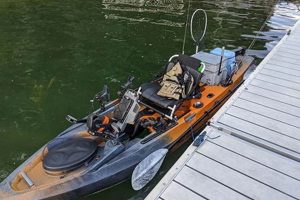
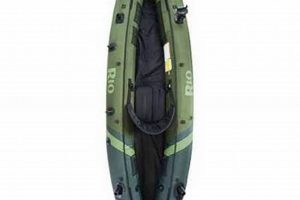
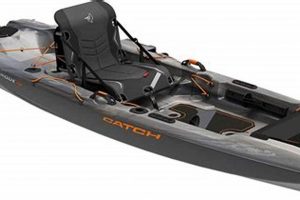
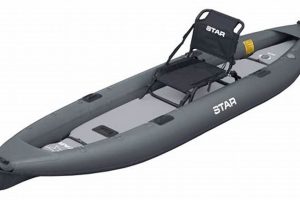
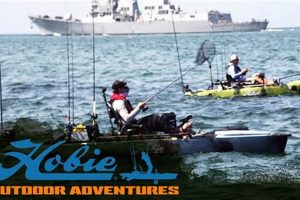
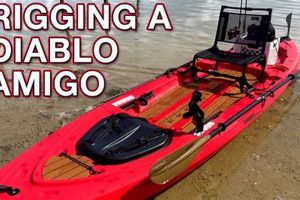
A kayak designed specifically for angling, typically measuring approximately ten feet in length, offers a stable and maneuverable platform for casting lines and reeling in catches. These vessels often feature specialized accessories such as rod holders, tackle storage, and even livewells for keeping bait or captured fish. Their compact size allows for easy transport and navigation through shallow waters, back bays, and smaller rivers or lakes, inaccessible to larger boats. The ten-foot length represents a balance between stability and portability, making them a popular choice for anglers.
The advantages of these smaller fishing vessels are numerous. Their lightweight nature allows for easier car-topping and launching from various locations, including unimproved shorelines. The shorter length enhances maneuverability, enabling anglers to navigate tight spaces and access hard-to-reach fishing spots. Furthermore, these kayaks are generally more affordable than larger boats, making them an attractive option for budget-conscious fishing enthusiasts. The increasing popularity reflects a growing trend towards more personalized and accessible outdoor recreation, enabling anglers to connect more directly with nature and their chosen sport.
This discussion will further explore various aspects of angling from small, specialized watercraft, including popular models, essential gear, and effective fishing techniques. Considerations such as hull design, propulsion systems, and safety equipment will also be examined to provide a complete guide for anglers interested in utilizing these versatile vessels.
Tips for Fishing from a 10-Foot Kayak
Optimizing angling experiences from a smaller kayak requires careful consideration of various factors. These tips offer guidance for maximizing efficiency and enjoyment on the water.
Tip 1: Prioritize Stability: Weight distribution is crucial in a compact vessel. Keep the center of gravity low by storing heavier items near the center and distributing weight evenly. Consider adding outriggers for increased stability, especially in rougher waters.
Tip 2: Choose the Right Paddle: Paddle length should be appropriate for body size and kayak width. A paddle that is too long or too short can lead to inefficient paddling and fatigue. A lightweight paddle with a comfortable grip is recommended for extended periods on the water.
Tip 3: Plan Fishing Locations Strategically: Research potential fishing spots beforehand, considering factors like water depth, currents, and accessibility. Focus on areas that are easily reachable and offer suitable habitat for target species. Utilize online maps and local fishing reports to identify promising locations.
Tip 4: Organize Tackle Efficiently: Limited space necessitates meticulous tackle organization. Utilize tackle boxes with compartments to store lures, hooks, and other essentials. Keep frequently used items within easy reach to minimize movement and maintain balance.
Tip 5: Practice Kayak Control: Develop proficiency in maneuvering the kayak before venturing into open water. Practice basic paddling strokes, turning techniques, and positioning the kayak effectively for casting. This will enhance fishing efficiency and ensure safety.
Tip 6: Prioritize Safety: Always wear a personal flotation device (PFD). Carry a whistle, signaling device, and communication tools for emergencies. Check weather conditions before embarking and inform someone of your fishing plans and expected return time.
Tip 7: Respect the Environment: Practice catch-and-release whenever possible, especially for sensitive species. Properly dispose of fishing line and other waste to preserve the aquatic environment. Adhere to local fishing regulations and respect wildlife.
By adhering to these guidelines, anglers can significantly enhance their fishing experience from a compact kayak. Preparation and mindful practices contribute to both safety and enjoyment on the water.
This advice provides a foundation for successful angling from a ten-foot kayak. The following sections will detail specific techniques and equipment recommendations for various fishing styles and target species.
1. Stability

Stability represents a critical factor in fishing kayak design, particularly for vessels measuring approximately ten feet. A stable platform enables anglers to cast lines, reel in fish, and make adjustments without compromising balance or risking capsize. This is particularly crucial in dynamic fishing scenarios, such as battling strong currents or landing larger fish. A stable hull design minimizes rocking and tipping, allowing anglers to focus on fishing rather than maintaining equilibrium. The relatively shorter length of a 10-foot kayak can present inherent stability challenges compared to longer models. Therefore, design features like wider beams, flatter hulls, and strategically placed seating contribute significantly to enhancing stability.
Consider an angler casting in windy conditions from a 10-foot kayak. A stable kayak enables the angler to maintain balance during the casting motion and retrieve, even when the kayak is subjected to gusts or waves. Conversely, an unstable kayak may rock excessively, hindering casting accuracy and potentially leading to a lost balance. Furthermore, landing a fish from a stable platform is significantly easier and safer. The angler can maneuver the rod and reel without excessive concern for tipping, increasing the likelihood of a successful landing and minimizing the risk of equipment loss or personal injury.
Understanding the relationship between stability and kayak dimensions is crucial for anglers. While shorter kayaks offer advantages in maneuverability and portability, stability considerations become paramount, especially for less experienced paddlers. Careful evaluation of hull design, weight capacity, and intended fishing environment should guide kayak selection. Prioritizing stability contributes significantly to safety and overall fishing success in a 10-foot kayak, allowing anglers to enjoy the experience with confidence and focus on the task at hand.
2. Maneuverability
Maneuverability represents a crucial attribute for fishing kayaks, particularly in the 10-foot size class. Efficient navigation through diverse water environments, including narrow creeks, shallows, and areas with obstacles, directly impacts angling success. The ability to precisely position the kayak for optimal casting and fish retrieval contributes significantly to the overall fishing experience. Understanding the factors influencing maneuverability empowers anglers to make informed decisions regarding kayak selection and utilization.
- Hull Design:
Hull design significantly influences maneuverability. A shorter, flatter hull generally allows for quicker turns and greater responsiveness, enabling navigation through tight spaces and complex waterways. Conversely, longer, more streamlined hulls excel in tracking and maintaining speed in open water but may sacrifice maneuverability in confined areas. A 10-foot kayak often employs a hull design that balances tracking and turning capabilities, catering to the needs of anglers navigating diverse environments.
- Water Conditions:
Prevailing water conditions, such as current strength and wind, directly impact kayak maneuverability. Strong currents can challenge directional control, necessitating precise paddling and positioning. Wind can also significantly influence tracking, requiring adjustments to paddling technique. A 10-foot kayak’s smaller size makes it susceptible to these external forces, emphasizing the importance of assessing conditions and adjusting navigation strategies accordingly.
- Paddle Length and Technique:
Appropriate paddle length and efficient paddling technique contribute significantly to maneuvering a 10-foot kayak. A paddle that is too long or too short can hinder control and efficiency. Proper paddling strokes, including sweep strokes and draws, facilitate precise turns and adjustments, enabling anglers to position the kayak effectively for casting and fish retrieval.
- Weight Distribution:
Weight distribution within the kayak also influences maneuverability. An unevenly loaded kayak may exhibit sluggish responsiveness and reduced turning efficiency. Distributing weight evenly enhances balance and control, facilitating precise movements within the water. Careful consideration of weight distribution is particularly important in a 10-foot kayak due to its relatively smaller size and lower overall weight capacity.
The interplay of these factors determines the overall maneuverability of a 10-foot fishing kayak. Understanding these dynamics enables anglers to select appropriate kayaks for their intended fishing environments and effectively navigate diverse water conditions. The ability to precisely control and position the kayak enhances fishing success and contributes to a more enjoyable and productive experience on the water.
3. Portability

Portability represents a significant advantage of 10-foot fishing kayaks, directly influencing accessibility and ease of transport. Their relatively compact size and lighter weight, compared to larger kayaks or boats, simplify transportation and launching. This characteristic expands fishing location options, allowing access to remote or difficult-to-reach waters often inaccessible to larger vessels. The practical implications of portability extend from reduced reliance on specialized trailers to expanded possibilities for exploring diverse fishing environments.
Consider, for instance, an angler residing in an urban environment with limited storage space. A 10-foot kayak can often be easily stored in a garage, apartment, or even on a balcony, eliminating the need for dedicated off-site storage or large trailers. Transporting the kayak can be accomplished with roof racks on a standard vehicle, eliminating the need for a larger tow vehicle and simplifying travel logistics. This ease of transport allows anglers to quickly and efficiently access a wider range of fishing locations, from urban waterways to remote mountain lakes. Furthermore, the lighter weight of these kayaks simplifies launching and landing, often allowing solo launching from unimproved shorelines or shallow-water access points.
The portability of a 10-foot fishing kayak significantly expands fishing opportunities. Anglers can explore smaller streams, secluded ponds, or protected coastal areas inaccessible to larger boats. This accessibility unlocks diverse fishing experiences, from targeting specific species in shallow-water habitats to exploring pristine environments far from crowded boat ramps. The reduced logistical burden associated with transport and launching allows anglers to focus on the fishing experience itself, maximizing time on the water and minimizing the complexities often associated with larger vessels. This portability factor significantly contributes to the increasing popularity of 10-foot fishing kayaks, offering a versatile and accessible approach to angling.
4. Storage Capacity

Storage capacity represents a critical consideration in the design and utilization of a 10-foot fishing kayak. The inherent size limitations necessitate careful planning and efficient organization of essential gear. Adequate storage facilitates access to tackle, safety equipment, and personal items, contributing directly to a successful and enjoyable fishing experience. Insufficient storage can lead to clutter, reduced efficiency, and potential safety hazards, hindering angling effectiveness and overall enjoyment.
Consider the practical implications of limited storage. An angler venturing onto the water requires essential gear, including tackle boxes, rods, reels, safety equipment such as a personal flotation device (PFD) and signaling devices, and potentially additional items like food, water, and weather protection. A well-designed 10-foot fishing kayak incorporates features like dedicated storage compartments, hatches, bungee cords, and rod holders to accommodate these items securely and efficiently. Easy access to tackle boxes allows for quick lure changes, minimizing disruption to the fishing process. Secure storage for rods and reels prevents entanglement and potential damage. readily available safety equipment ensures preparedness for unexpected situations. Efficient organization maximizes available space, reducing clutter and enhancing overall safety and comfort.
Evaluating storage capacity involves considering both the volume and accessibility of storage spaces. Ample storage volume allows for carrying all necessary gear for a given fishing trip. Well-designed access points, such as conveniently located hatches and readily accessible compartments, enable efficient retrieval of items without compromising balance or requiring excessive movement within the kayak. The strategic placement of storage features plays a significant role in maintaining stability and minimizing disruptions during casting and retrieval. Understanding the relationship between storage capacity, organization, and fishing effectiveness contributes significantly to selecting and utilizing a 10-foot fishing kayak successfully. Prioritizing efficient storage solutions optimizes fishing time, enhances safety, and contributes to a more enjoyable and productive experience on the water.
5. Fishing Features
Specialized features distinguish fishing kayaks from recreational models, enhancing angling effectiveness and overall experience. These features, specifically designed for anglers, contribute significantly to efficient tackle management, improved casting, and enhanced fish-fighting capabilities. In a 10-foot fishing kayak, where space is at a premium, the strategic incorporation of these features plays a crucial role in maximizing functionality and optimizing the angling experience. Careful consideration of these specialized features enables informed selection based on individual fishing styles and target species.
- Rod Holders
Rod holders secure fishing rods, freeing hands for other tasks like paddling, adjusting tackle, or landing fish. Different types of rod holders, including flush-mounted, adjustable, and rotating models, cater to various fishing techniques and rod types. Integrated rod holders contribute significantly to a streamlined and efficient fishing experience, minimizing clutter and maximizing fishing time. In a 10-foot kayak, strategically placed rod holders maximize available space and minimize interference during paddling or casting.
- Tackle Storage
Dedicated tackle storage compartments, often integrated within the kayak’s hull or deck, organize lures, hooks, lines, and other essential fishing accessories. Well-designed tackle storage facilitates efficient retrieval of items, minimizing disruptions and maximizing fishing time. In a 10-foot kayak, where space is limited, efficiently organized tackle storage is paramount, keeping essential gear within easy reach and maximizing usable deck space.
- Anchor Systems
Anchor systems, including anchor trolleys and integrated anchor mounts, enable anglers to maintain position in specific fishing locations, particularly in currents or windy conditions. This is crucial for techniques like still fishing or targeting specific structures. In a 10-foot kayak, a well-designed anchor system provides stability and control, enhancing fishing precision and minimizing drift. Compact and easily deployable anchor systems are particularly valuable in smaller kayaks, maximizing efficiency and minimizing space requirements.
- Livewells and Bait Tanks
Livewells or bait tanks provide onboard storage for live bait or caught fish, enhancing fishing success and facilitating catch-and-release practices. These integrated systems maintain bait viability and provide a humane environment for temporarily holding captured fish. While larger livewells might be impractical in a 10-foot kayak, smaller, strategically placed bait tanks offer valuable functionality for anglers utilizing live bait. Careful consideration of size and placement optimizes space utilization and weight distribution.
The integration of these fishing-specific features transforms a 10-foot kayak from a simple paddling vessel into a dedicated fishing platform. The strategic selection and utilization of these features significantly enhance angling efficiency, comfort, and overall success. Anglers selecting a 10-foot fishing kayak should carefully evaluate the available features, considering their individual fishing styles, target species, and desired level of on-the-water functionality. The thoughtful integration of these specialized features contributes significantly to a productive and enjoyable fishing experience.
Frequently Asked Questions
This section addresses common inquiries regarding 10-foot fishing kayaks, providing concise and informative responses to facilitate informed decision-making.
Question 1: What are the advantages of a 10-foot kayak for fishing?
Ten-foot kayaks offer a balance of portability, maneuverability, and stability suitable for various fishing environments. Their compact size simplifies transport and storage, while their lighter weight enhances maneuverability in tight spaces and shallow waters. These kayaks are generally more affordable than larger models, making them an accessible option for anglers.
Question 2: Are 10-foot kayaks suitable for ocean fishing?
While some 10-foot kayaks are designed for protected coastal waters and calmer bays, they are generally not recommended for open ocean conditions. Longer kayaks with enhanced stability and tracking capabilities are typically preferred for offshore fishing due to increased safety and performance in rougher waters. Careful consideration of water conditions and kayak design is crucial for safe and successful ocean angling.
Question 3: What weight capacity should one consider in a 10-foot fishing kayak?
Weight capacity directly impacts stability and performance. Anglers should consider their body weight, combined with the weight of gear and potential catches, when selecting a kayak. Exceeding the recommended weight capacity compromises stability and can lead to safety risks. Manufacturers provide weight capacity specifications for each model, which should be carefully considered during the selection process.
Question 4: What essential features should one look for in a 10-foot fishing kayak?
Essential features include rod holders, ample storage compartments for tackle and gear, a comfortable seat with adequate back support for extended fishing trips, and strategically placed footrests for stability and control. Additional features like anchor systems, livewells, and paddle holders enhance functionality and convenience based on individual angling preferences.
Question 5: How does one choose between a sit-on-top and a sit-inside 10-foot fishing kayak?
Sit-on-top kayaks offer enhanced stability and ease of entry and exit, making them suitable for warmer climates and calmer waters. Sit-inside kayaks provide greater protection from the elements and offer a drier ride in colder conditions but can be more challenging to re-enter after a capsize. The choice depends on individual preferences, intended fishing environments, and prevailing weather conditions.
Question 6: What safety precautions should be taken when fishing from a 10-foot kayak?
Always wear a personal flotation device (PFD). Inform someone of fishing plans, including location and expected return time. Check weather conditions before embarking and carry essential safety equipment, such as a whistle, signaling device, and communication tools. Understanding basic paddling and self-rescue techniques enhances safety on the water.
Careful consideration of these frequently asked questions empowers informed decision-making regarding the selection, utilization, and safe operation of 10-foot fishing kayaks. Understanding the capabilities and limitations of these vessels contributes significantly to a safe and enjoyable angling experience.
The next section will explore popular 10-foot fishing kayak models currently available on the market, providing further insights for potential buyers.
Conclusion
Ten-foot fishing kayaks represent a compelling option for anglers seeking a balance of portability, maneuverability, and specialized functionality. Their compact size facilitates transport and storage, while design features prioritize stability and efficient navigation in diverse aquatic environments. From integrated rod holders and tackle storage to specialized hull designs optimized for tracking and maneuverability, these kayaks offer a dedicated platform for angling pursuits. Careful consideration of individual needs, target species, and intended fishing locations informs appropriate kayak selection and enhances the overall angling experience.
The evolving landscape of kayak design and technology continues to refine the capabilities of these versatile vessels. Further advancements in materials, construction techniques, and integrated features promise to enhance performance, comfort, and overall fishing effectiveness. As anglers seek increasingly specialized and accessible approaches to their sport, the 10-foot fishing kayak remains a compelling option, empowering exploration of diverse waterways and connection with the natural world.