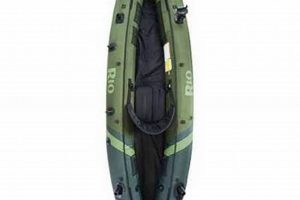
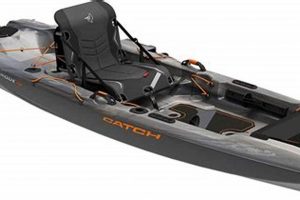
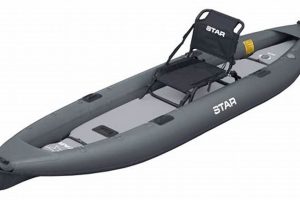
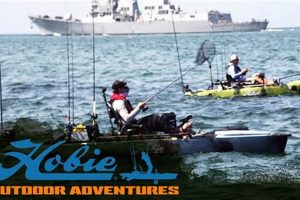
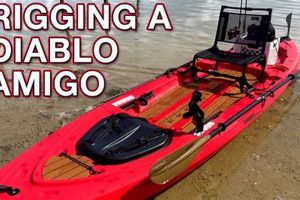
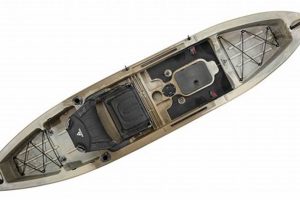
Improving angling experiences from a kayak involves optimizing equipment and techniques for efficiency and effectiveness. This includes modifications to the kayak itself, specialized gear choices, and strategic approaches to casting, retrieving, and landing fish. For example, mounting rod holders or incorporating a fish finder setup streamlines the process, allowing anglers to focus on fishing rather than managing their equipment.
Optimizing a kayak for fishing offers several advantages. It can significantly improve an angler’s success rate by providing better access to hard-to-reach fishing spots and enabling more stealthy approaches. Additionally, it promotes a more comfortable and enjoyable experience on the water. While kayak fishing has ancient roots, the modern iteration, with its specialized equipment and techniques, has evolved alongside the development of advanced materials and technologies.
This article will delve into specific modifications, equipment choices, and strategies that can elevate one’s kayak fishing endeavors. Topics covered will include customizing kayak setups, essential gear recommendations, and effective fishing techniques from a kayak.
Tips for Enhanced Kayak Angling
These practical tips offer valuable insights into optimizing kayak setups and techniques for a more productive and enjoyable fishing experience.
Tip 1: Prioritize Stability: Kayak stability is paramount, especially when fishing. Consider wider, flatter-hulled kayaks for enhanced stability, particularly in challenging conditions or when handling larger fish. Adding outriggers can further improve stability.
Tip 2: Optimize Gear Placement: Strategic placement of rods, tackle boxes, and other essential gear maximizes efficiency and minimizes clutter. Utilize readily available storage compartments and consider mounting rod holders and fish finders within easy reach.
Tip 3: Employ Anchor Systems Effectively: Anchoring allows anglers to maintain position in desired fishing spots, particularly in currents or windy conditions. Employ a lightweight, easily deployable anchor system suited for kayak fishing.
Tip 4: Master Paddle or Pedal Propulsion: Choose a propulsion method appropriate for the fishing environment. Paddles offer versatility and maneuverability in shallow waters, while pedal drives provide hands-free fishing and greater speed over longer distances.
Tip 5: Select Appropriate Fishing Gear: Opt for shorter rods and lighter tackle specifically designed for kayak fishing. Consider techniques likely to be employed and choose lures and baits accordingly.
Tip 6: Practice Catch and Release Techniques: Conservation-minded anglers should familiarize themselves with proper catch and release techniques to minimize stress on fish populations. Use appropriate tools, handle fish gently, and revive them thoroughly before release.
Tip 7: Prioritize Safety Precautions: Always wear a personal flotation device (PFD) and carry essential safety equipment, including a whistle, signaling device, and first-aid kit. Inform someone of fishing plans and estimated return time.
By implementing these strategies, anglers can enhance their kayak fishing experience, improving both efficiency and enjoyment on the water.
These enhancements contribute to a more rewarding experience, allowing anglers to connect with nature and pursue their passion effectively and responsibly.
1. Stability Enhancements

Stability is a critical factor in kayak fishing, directly impacting safety and effectiveness. Enhancements that improve stability allow anglers to focus on fishing rather than constantly correcting balance, particularly in challenging conditions or when battling larger fish. These enhancements range from inherent hull design features to add-on accessories.
- Hull Design:
Wider, flatter hulls provide greater inherent stability than narrower, V-shaped hulls. A wider base reduces the likelihood of tipping, especially in choppy water or when shifting weight. Pontoon-style hulls offer exceptional stability, making them popular choices for fishing kayaks.
- Outriggers:
Outriggers are detachable floats mounted on either side of the kayak, significantly increasing stability. They provide additional buoyancy and widen the kayak’s overall beam, making it extremely difficult to capsize. Deployable outriggers offer flexibility, allowing anglers to retract them when not needed.
- Stabilizer Fins:
Stabilizer fins, mounted beneath the hull, enhance stability by providing additional resistance against rolling and tipping. These fins are particularly effective in reducing side-to-side rocking, improving tracking and making casting more comfortable.
- Weight Distribution:
Proper weight distribution within the kayak plays a crucial role in stability. Distributing gear evenly and keeping heavier items low in the hull lowers the center of gravity, reducing the tendency to tip. Securing loose items prevents shifting weight that could compromise balance.
These stability enhancements are crucial “hacks” for kayak fishing, transforming the experience from potentially precarious to confidently stable. Improved stability translates to increased angler confidence, enabling more effective casting, retrieval, and fish handling, ultimately leading to a more successful and enjoyable fishing experience.
2. Gear Organization
Efficient gear organization is paramount in kayak fishing, directly impacting both safety and fishing success. A cluttered kayak presents safety hazards, obstructing movement and potentially interfering with paddling or casting. Furthermore, disorganized gear wastes valuable fishing time, as anglers search for necessary items. Effective organization, conversely, streamlines the fishing process, allowing anglers to focus on the task at hand.
Several organizational strategies enhance kayak fishing experiences. Utilizing specialized tackle boxes designed for kayak fishing, with compartments for various lures and accessories, maintains order and accessibility. Mounting rod holders keeps rods secure and readily available, preventing tangling and damage. Employing dry bags protects essential items, such as phones and wallets, from water damage. Strategic placement of frequently used items within easy reach minimizes disruptive movements and maintains a balanced kayak.
For example, an angler targeting bass might organize their tackle box with compartments dedicated to soft plastic baits, topwater lures, and jigs. Rod holders mounted near the cockpit provide quick access to different rod setups, while a dry bag secured within a storage hatch safeguards electronic devices. This level of organization allows for smooth transitions between fishing techniques and minimizes time spent searching for specific items.
Effective gear organization contributes significantly to a positive kayak fishing experience. It minimizes safety risks, maximizes fishing time, and reduces frustration. This seemingly simple aspect of kayak fishing significantly impacts overall efficiency and enjoyment, allowing anglers to focus on the pursuit of fish rather than managing a chaotic environment. The ability to quickly locate and deploy the necessary gear can be the difference between landing a trophy fish and missing a crucial opportunity.
3. Anchor Systems

Effective anchoring is a crucial aspect of successful kayak fishing, enabling anglers to maintain position in desired locations, especially in currents, wind, or near structure. A well-chosen and properly deployed anchor system maximizes fishing efficiency by preventing unwanted drift and allowing anglers to focus on presenting their lures or bait effectively. Understanding the nuances of various anchor types and deployment techniques is essential for optimizing the kayak fishing experience.
- Anchor Types:
Several anchor types suit kayak fishing, each with its advantages and disadvantages. Folding grapnel anchors are popular choices due to their compact size and strong holding power in various bottom conditions. Lightweight fluke or claw anchors excel in rocky or weedy environments, while mushroom anchors provide reliable holding in softer substrates like mud or sand. The choice of anchor depends on the typical fishing environment and bottom composition.
- Anchor Deployment:
Proper deployment technique maximizes anchor effectiveness and prevents entanglement. Lowering the anchor slowly and allowing it to set firmly avoids dragging. Using an anchor trolley system allows anglers to adjust the anchor position and control drift, optimizing presentation based on wind or current conditions. Understanding how to set and retrieve an anchor efficiently minimizes disruption to the fishing process.
- Anchor Lines and Accessories:
Choosing appropriate anchor line material and length is crucial. Braided nylon rope offers strength and durability, while floating anchor lines facilitate retrieval and prevent entanglement. A quick-release mechanism allows for rapid anchor deployment and retrieval in emergencies or changing conditions. Carrying a spare anchor and line provides redundancy in case of equipment failure.
- Anchor Positioning Strategies:
Strategic anchor placement maximizes fishing effectiveness. Positioning the kayak upstream of a target area allows natural drift to present bait or lures effectively. Anchoring near structure, such as submerged logs or weed beds, concentrates fish and provides ambush points. Understanding how wind, current, and bottom structure interact informs optimal anchor placement decisions.
Mastering anchor systems is an essential “hack” for kayak anglers. The ability to maintain position and control drift optimizes fishing presentations, enhances effectiveness, and ultimately increases the likelihood of success. A properly chosen and deployed anchor system transforms the kayak into a stable fishing platform, allowing anglers to focus on the nuances of fishing technique rather than constantly battling wind or current.
4. Propulsion Choices
Propulsion choice significantly impacts kayak fishing effectiveness and efficiency. Selecting an appropriate propulsion system influences maneuverability, speed, and hands-free fishing capabilities, all crucial elements for optimizing angling success. Different propulsion methods offer distinct advantages and disadvantages depending on the fishing environment and target species.
Paddle propulsion provides excellent maneuverability in shallow water, tight quarters, and areas with dense vegetation. Kayaks designed for paddle propulsion are often lighter and easier to transport than those with other systems. However, paddling requires physical exertion, which can limit fishing time and create fatigue, particularly in challenging conditions or during long expeditions. While paddling allows for stealthy approaches, it also occupies both hands, requiring anglers to pause paddling to cast or retrieve.
Pedal-powered kayaks offer hands-free fishing, enabling anglers to maintain precise positioning and make adjustments without interrupting their fishing technique. Pedal drives provide greater speed and range than paddling, allowing anglers to cover more water and access distant fishing spots. However, pedal kayaks are typically heavier and more expensive than paddle kayaks, and the pedal drive system can limit maneuverability in very shallow water or around obstacles. Furthermore, pedal drives may produce more noise and vibration than paddling, potentially spooking fish in extremely clear or shallow water.
Motorized kayaks offer the greatest speed and range, allowing anglers to access distant fishing grounds quickly and efficiently. Electric motors provide quiet operation, minimizing disturbance to fish and the environment. However, motorized kayaks require battery management and charging, adding complexity to the fishing experience. Regulations regarding motorized kayaks vary by location, requiring anglers to understand and comply with local laws.
The choice of propulsion directly influences kayak fishing success. Selecting the appropriate system requires careful consideration of the fishing environment, target species, physical capabilities, and desired fishing style. Understanding the trade-offs between maneuverability, speed, hands-free operation, cost, and complexity allows anglers to optimize their propulsion choice, ultimately enhancing their fishing experience and increasing their chances of success.
5. Specialized Tackle

Specialized tackle plays a crucial role in optimizing kayak fishing effectiveness. Standard fishing gear, designed for use from shore or larger boats, often proves cumbersome and inefficient in the confined space of a kayak. Shorter rods, typically ranging from 6 to 7 feet, offer improved cast control and maneuverability within the kayak’s limited confines. These shorter rods facilitate accurate casts around overhanging branches or tight to shoreline structures, maximizing fishing opportunities. A shorter rod’s reduced length also minimizes the risk of tangling lines with other gear or the kayak itself, a common frustration in close-quarters fishing.
Lighter lures and tackle are also essential components of a specialized kayak fishing setup. These lighter offerings allow for more delicate presentations, crucial for enticing wary fish in shallow or clear water. For example, finesse techniques, employing lighter lines, smaller hooks, and subtle presentations, are often highly effective from a kayak, especially when targeting species like panfish or trout. Furthermore, specialized kayak fishing tackle often incorporates features designed for specific techniques or target species. For instance, weedless lures, with protective guards around the hook, prevent snags in heavy vegetation, a common scenario in kayak fishing. Similarly, topwater lures designed for low-impact presentations minimize disturbance on the surface, maximizing effectiveness when targeting surface-feeding fish.
The strategic selection and application of specialized tackle represents a significant advantage in kayak fishing. Adapting gear to the unique demands of kayak angling maximizes efficiency, improves casting accuracy, and enhances presentation finesse. This optimized approach translates directly to increased fishing success and a more rewarding experience on the water. The choice of specialized tackle reflects an understanding of the specific challenges and opportunities presented by kayak fishing, demonstrating a commitment to maximizing efficiency and effectiveness in this unique angling environment.
6. Safety Procedures

Safety procedures are integral to successful kayak fishing, forming a foundation upon which effective techniques and modifications can be built. Overlooking safety compromises the efficacy of even the most ingenious “hacks,” turning potential advantages into significant risks. A safe kayaking experience allows for focused fishing, maximizing the benefits of specialized equipment and strategies. Conversely, neglecting safety undermines efficiency and enjoyment, potentially leading to dangerous situations that outweigh any perceived gains from equipment modifications or clever techniques.
Consider an angler who has meticulously outfitted their kayak with advanced fish-finding technology and customized rod holders. These modifications offer potential advantages, but if the angler neglects to wear a personal flotation device (PFD), a sudden capsize could transform these assets into liabilities. The fish finder becomes submerged, and the specialized rod holders offer no assistance in a precarious situation. Similarly, an angler utilizing an efficient anchor system in strong currents gains a strategic advantage, but this advantage is negated if they fail to attach a leash to the anchor, risking entanglement or equipment loss in the event of a capsize. Real-world examples like these underscore the critical link between safety procedures and effective kayak fishing.
Integrating safety procedures into every aspect of kayak fishing ensures that modifications and techniques enhance, rather than detract from, the experience. This includes wearing a PFD, carrying essential safety equipment like a whistle and signaling device, informing someone of fishing plans, and understanding weather conditions and water currents. Prioritizing safety allows anglers to confidently explore advanced techniques and modifications, maximizing the potential of “kayak hacks” while mitigating inherent risks. A comprehensive understanding of safety protocols transforms “kayak hacks fishing” from a potentially hazardous pursuit into a rewarding and secure experience, ensuring that anglers can fully enjoy the benefits of their ingenuity and preparation.
7. Catch & Release Methods
Effective catch and release methods are integral to responsible kayak fishing, representing a crucial intersection between maximizing angling enjoyment and ensuring sustainable fish populations. Kayak fishing often provides access to remote and less-pressured fisheries, making proper catch and release practices even more critical for conservation. Minimizing stress on fish during the release process contributes directly to the long-term health and viability of these valuable resources.
Specific adaptations of catch and release techniques are necessary within the context of kayak fishing. The limited space and unique challenges of a kayak environment necessitate specialized tools and approaches. For instance, using a lip grip or dehooking tool minimizes handling time and reduces stress on the fish. Keeping fish submerged in water as much as possible, especially during hook removal and handling, helps maintain their oxygen levels and reduces the risk of injury. These tailored approaches recognize the specific vulnerabilities of fish within the kayak fishing context and prioritize their well-being.
Consider a scenario where an angler hooks a large fish from a kayak. Utilizing a specialized landing net designed for kayak use, with a rubberized mesh to protect the fish’s slime coat, demonstrates a commitment to minimizing harm. Quickly and efficiently removing the hook with a dehooking tool, while keeping the fish submerged, further reduces stress. Reviving the fish alongside the kayak in calm water, ensuring it has fully recovered before release, completes the process, maximizing the fish’s chances of survival and contributing to the sustainability of the fishery. This practical application highlights the direct connection between responsible angling practices and the long-term viability of kayak fishing opportunities.
Integrating effective catch and release methods into kayak fishing practices reflects a commitment to responsible angling. This commitment ensures the continued health of fish populations and preserves the enjoyment of kayak fishing for future generations. Adapting catch and release techniques to the specific challenges of a kayak environment optimizes the process, minimizing stress on fish and maximizing their chances of survival. Understanding and applying these principles transforms “kayak hacks fishing” from a purely self-serving pursuit into a sustainable and ethical approach to enjoying the sport.
Frequently Asked Questions
This section addresses common inquiries regarding optimizing kayak fishing experiences, offering practical insights and clarifying potential misconceptions.
Question 1: How does kayak stability impact fishing success?
Stability is paramount for effective kayak fishing. A stable platform allows for comfortable casting, accurate retrieves, and safe fish handling, maximizing angling opportunities and minimizing the risk of capsizing.
Question 2: What are the key advantages of specialized kayak fishing tackle?
Specialized tackle, such as shorter rods and lighter lures, enhances casting accuracy and presentation finesse within the confined space of a kayak, improving fishing effectiveness in various environments.
Question 3: Why is proper gear organization essential in kayak fishing?
Efficient gear organization maximizes fishing time by ensuring quick access to necessary equipment, minimizing clutter, and reducing safety hazards within the limited space of a kayak.
Question 4: What factors should influence propulsion choices for kayak fishing?
Propulsion choice depends on factors such as fishing environment, target species, physical capabilities, and desired fishing style. Paddles offer maneuverability, while pedal drives and motors provide speed and hands-free operation.
Question 5: How do effective anchor systems enhance kayak fishing?
Anchor systems maintain position in desired locations, optimizing fishing presentations, particularly in currents, wind, or near structure, maximizing fishing effectiveness and efficiency.
Question 6: Why are catch and release methods crucial in kayak fishing?
Responsible catch and release practices ensure the long-term health of fish populations, particularly in remote or less-pressured fisheries often accessed by kayak anglers, contributing to sustainable angling opportunities.
Understanding these fundamental aspects of kayak fishing allows anglers to make informed decisions, optimize their approach, and enhance their overall experience.
For further exploration of specific techniques and modifications, consult the detailed sections provided within this comprehensive guide to kayak fishing enhancements.
Kayak Hacks Fishing
Optimizing kayak angling involves a multifaceted approach encompassing stability enhancements, strategic gear organization, effective anchor systems, appropriate propulsion choices, specialized tackle selection, adherence to safety procedures, and responsible catch and release methods. Each of these components contributes significantly to transforming a standard kayak into a highly effective fishing platform, maximizing efficiency, and enhancing the overall angling experience.
Strategic modifications and informed choices empower anglers to navigate diverse fishing environments effectively, target specific species with precision, and contribute to the sustainability of aquatic ecosystems. Continual refinement of techniques and thoughtful adaptation of equipment promise further advancements in kayak angling, expanding opportunities and enhancing the pursuit of this dynamic and rewarding sport.