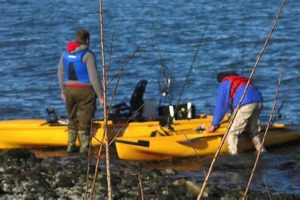
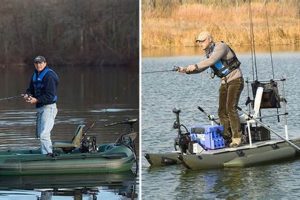
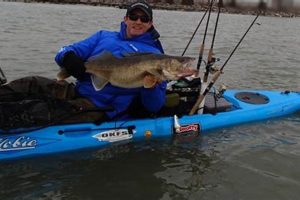
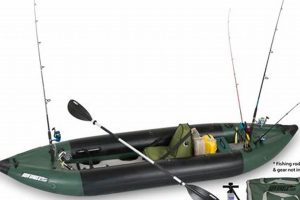
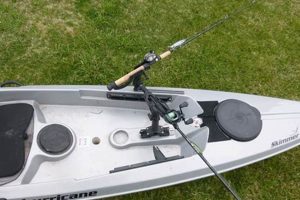
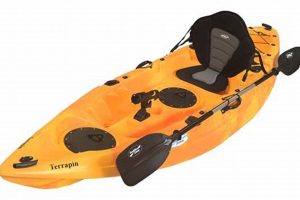
Kayaks designed specifically for angling with increased beam (width) offer enhanced stability, a crucial factor for anglers who often need to stand, cast, and reel in fish. These vessels provide a stable platform, reducing the likelihood of capsizing, especially in challenging conditions or when engaging with larger catches. This added stability also allows for more comfortable seating and movement within the kayak.
The increased deck space afforded by broader hulls provides ample room for fishing gear, tackle boxes, and other necessary equipment. This feature contributes significantly to improved organization and accessibility, allowing anglers to focus on fishing rather than managing their gear. Historically, fishing from kayaks required significant adaptation and compromise. Modern designs, with their focus on stability and capacity, represent a significant evolution in the sport, making it more accessible and enjoyable for a wider range of individuals.
This discussion will further explore the advantages and disadvantages of these specialized vessels, delve into key features to consider during selection, and examine the different types available to cater to diverse fishing styles and environments.
Tips for Selecting and Utilizing Stable Fishing Kayaks
Choosing and effectively utilizing a kayak designed for stability significantly enhances the fishing experience. The following tips provide guidance for maximizing performance and safety on the water.
Tip 1: Consider Hull Design: A flatter hull provides superior primary stability (initial resistance to tipping), beneficial for calm waters and stand-up fishing. A more rounded or pontoon-style hull offers greater secondary stability (resistance to capsizing once tilted), suitable for rougher conditions.
Tip 2: Evaluate Weight Capacity: Ensure the kayak’s weight capacity accommodates the angler’s weight, plus gear, and potential catches. Exceeding the limit compromises stability and performance.
Tip 3: Assess Seating Comfort: A comfortable and adjustable seat promotes better posture and reduces fatigue during long fishing trips. Look for features like adjustable backrests and padding.
Tip 4: Prioritize Storage Options: Ample storage space is essential for organizing tackle, rods, and other fishing essentials. Consider built-in compartments, rod holders, and mounting options for accessories.
Tip 5: Practice Paddling and Maneuvering: Before venturing into open water, practice paddling and maneuvering in a controlled environment to familiarize oneself with the kayak’s handling characteristics.
Tip 6: Understand Water Conditions: Always check weather forecasts and water conditions before heading out. Choose locations appropriate for the kayak’s stability and the angler’s skill level.
Tip 7: Wear a Personal Flotation Device: Safety should always be paramount. Wearing a personal flotation device (PFD) is crucial for any kayaking excursion.
By considering these factors, anglers can select a vessel optimized for stability and tailored to their specific needs and fishing style. This careful consideration contributes significantly to a safer and more productive fishing experience.
These tips offer a starting point for making informed decisions about stable fishing kayaks. Further research and consultation with experienced anglers can provide additional valuable insights.
1. Stability

Stability is a defining characteristic of extra wide fishing kayaks and a primary reason for their popularity. The increased beam (width) of these vessels creates a larger contact area with the water, resulting in enhanced primary and secondary stability. Primary stability refers to the initial resistance to tipping, while secondary stability dictates how difficult it is to capsize the kayak completely once it’s tilted. This inherent stability is crucial for anglers who frequently shift their weight, cast lines, and reel in fish. A stable platform allows anglers to stand comfortably, significantly improving casting range and visibility. For instance, an angler sight fishing in shallow flats benefits greatly from the elevated perspective provided by standing in a stable kayak. Furthermore, the added stability reduces the likelihood of capsizing, especially when dealing with larger fish or unexpected waves.
The impact of stability extends beyond mere convenience; it directly influences safety and fishing success. In challenging conditions, such as windy days or choppy water, a stable platform ensures angler safety and confidence. Consider an angler landing a large, active fish. In a less stable kayak, the struggle could lead to capsizing, losing both the catch and potentially endangering the angler. However, a wider hull provides the necessary platform to manage the fight effectively and safely land the fish. This enhanced stability also allows anglers to fish in more demanding environments, expanding their access to prime fishing locations.
In summary, stability is an essential attribute of extra wide fishing kayaks. The increased beam directly correlates with improved balance and resistance to tipping, crucial for both safety and fishing effectiveness. While other factors, such as maneuverability and speed, are relevant, the inherent stability of these kayaks provides a distinct advantage, particularly for anglers prioritizing comfort and security on the water. Understanding this connection allows for informed decisions during kayak selection, ensuring a vessel matched to individual needs and intended fishing styles.
2. Capacity

Capacity, often directly related to hull volume, is a significant advantage of extra wide fishing kayaks. The increased beam and overall size create a larger platform and storage area compared to narrower counterparts. This added capacity translates to more space for essential fishing gear, including tackle boxes, rods, electronic equipment, and even coolers for storing catches. Consider a fly fisherman who requires multiple rod setups for different conditions. A wider kayak offers ample storage for these rods, keeping them organized and readily accessible. Similarly, an angler targeting large game fish needs space for heavier tackle and equipment. The increased capacity of these kayaks accommodates these needs, enhancing both efficiency and overall fishing success.
Beyond gear storage, the enhanced capacity also contributes to comfort and stability. The wider deck provides more room for movement and adjustments, reducing fatigue during long hours on the water. This added space allows anglers to shift positions, stretch, and maintain comfort throughout the fishing trip. Furthermore, the larger platform improves stability, especially when carrying heavier loads. The increased buoyancy provided by the greater hull volume helps to counterbalance the weight of gear and anglers, further enhancing stability and safety. For example, an angler navigating through shallow, weedy areas benefits from the extra stability provided by the increased capacity, reducing the risk of tipping when maneuvering through challenging terrain.
In conclusion, the enhanced capacity of extra wide fishing kayaks offers tangible benefits in terms of gear storage, comfort, and stability. This added space enables anglers to carry more equipment, maintain comfort during extended trips, and fish with greater stability. While maneuverability might be slightly impacted compared to narrower kayaks, the trade-off is often worthwhile for the enhanced functionality and comfort provided by the increased capacity. Understanding this connection between capacity and kayak performance allows anglers to select vessels tailored to their specific needs and fishing styles.
3. Comfort
Comfort is a critical factor influencing fishing kayak selection, significantly impacting endurance and overall enjoyment on the water. Extra wide fishing kayaks offer distinct advantages in this regard, primarily due to their increased deck space and enhanced stability. The wider hull provides more room for anglers to adjust their seating position, stretch their legs, and move around, reducing fatigue during long fishing trips. This added space is particularly beneficial for larger individuals or those with physical limitations. Consider an angler with back problems. A wider kayak allows for more comfortable seating positions and reduces strain on the back, enabling longer fishing sessions without discomfort. Furthermore, the enhanced stability of these kayaks reduces the need for constant adjustments and bracing, contributing to a more relaxed and enjoyable experience. For example, an angler fishing in choppy water experiences less fatigue and discomfort in a wider, more stable kayak compared to a narrower model that requires constant effort to maintain balance.
The design and features of extra wide fishing kayaks also contribute to enhanced comfort. Adjustable seating systems with lumbar support and padded cushions provide customized comfort and reduce pressure points. Elevated seating positions improve visibility and reduce strain on the lower back. Integrated footrests offer additional support and allow for efficient paddling. Recessed rod holders and strategically placed storage compartments keep essential gear within easy reach, minimizing awkward movements and maximizing fishing efficiency. These features contribute to a more ergonomic and user-friendly experience, allowing anglers to focus on fishing rather than managing discomfort. For instance, an angler spending hours sight-fishing benefits from an elevated, adjustable seat that minimizes strain and maximizes visibility.
In conclusion, comfort is a key consideration for anglers, directly influencing endurance and enjoyment on the water. Extra wide fishing kayaks offer several advantages in terms of comfort, including increased deck space, enhanced stability, and ergonomic design features. These factors contribute to a more relaxed and enjoyable fishing experience, allowing anglers to spend more time on the water and focus on their passion. Selecting a kayak that prioritizes comfort can significantly enhance the overall fishing experience, leading to greater satisfaction and success. Understanding this connection between comfort and kayak design empowers anglers to make informed decisions based on their individual needs and preferences.
4. Fishing Features
Specialized features designed for angling significantly enhance the functionality and effectiveness of extra wide fishing kayaks. These integrated features cater specifically to the needs of anglers, optimizing performance and overall fishing success. Understanding these features is crucial for selecting a kayak tailored to specific fishing styles and preferences.
- Rod Holders:
Multiple rod holders, strategically positioned throughout the kayak, allow anglers to keep rods organized and readily accessible. Flush-mounted rod holders minimize line tangling and interference while trolling or paddling. Adjustable rod holders accommodate different rod lengths and fishing techniques. For example, a kayak configured with multiple rod holders enables an angler to switch quickly between different lures or bait presentations when targeting various species. This feature streamlines the fishing process and maximizes efficiency on the water.
- Tackle Storage:
Integrated tackle storage compartments provide dedicated space for organizing lures, hooks, weights, and other essential fishing accessories. Dry storage compartments protect sensitive electronics and gear from water damage. Easy-access storage compartments allow anglers to quickly retrieve needed items without disrupting their fishing rhythm. For instance, a well-organized tackle storage system allows an angler to quickly change lures or rigs based on changing fish behavior or water conditions, maximizing their chances of success. This efficient storage system minimizes clutter and maximizes fishing time.
- Fish Finders and Electronics:
Many extra wide fishing kayaks are designed to accommodate fish finders, GPS units, and other electronic devices. Pre-installed transducer mounts and wiring channels simplify installation and maintain a clean deck layout. Integrated battery compartments provide power for electronics and accessories. For example, a kayak equipped with a fish finder allows anglers to identify underwater structures, locate fish concentrations, and determine water depth, significantly improving fishing strategy and success. These integrated features enhance the angler’s ability to target specific areas and species.
- Anchor Trolleys and Stake-Out Systems:
Anchor trolleys and stake-out systems enable anglers to position their kayaks precisely in desired locations, crucial for fishing in current or wind. These systems offer greater control over kayak positioning compared to traditional anchors, allowing for precise adjustments and maintaining optimal fishing angles. For instance, an angler fishing in a river can use a stake-out system to hold their position in a specific eddy or current seam, maximizing their exposure to targeted fish. This precise positioning enhances fishing effectiveness and minimizes disruption from changing environmental conditions.
These specialized fishing features, integrated into extra wide kayak designs, significantly enhance functionality and on-the-water performance. The combination of stability, capacity, and dedicated fishing features makes these kayaks ideal platforms for anglers seeking to maximize their fishing experience. Considering these features alongside other essential factors like hull design, weight capacity, and comfort ensures a well-informed selection process, ultimately leading to a more productive and enjoyable time on the water.
5. Maneuverability

Maneuverability, the ability to efficiently change direction and navigate through the water, is an important consideration when evaluating extra wide fishing kayaks. The increased beam, which provides enhanced stability, inherently impacts maneuverability. Wider hulls experience greater resistance against the water, requiring more effort to turn and navigate tight spaces. This characteristic presents a trade-off between stability and maneuverability. Anglers prioritizing stability for activities like stand-up fishing might accept reduced maneuverability. Conversely, anglers frequently navigating narrow creeks or rivers might prioritize a narrower, more agile kayak, despite sacrificing some stability. For example, navigating through dense mangrove forests or tight river bends requires a higher degree of maneuverability than open-water fishing. Understanding this relationship allows anglers to select a kayak aligned with their specific fishing environment and style.
Several factors influence the maneuverability of extra wide fishing kayaks beyond hull width. Hull design, including the shape of the keel and the presence of tracking fins, significantly impacts directional stability and turning performance. Shorter kayaks generally offer enhanced maneuverability compared to longer models, although at the expense of tracking performance and speed. Paddle length and technique also play a crucial role. Longer paddles provide more leverage and power for turning, while proper paddling techniques minimize wasted effort and maximize efficiency. Experienced anglers often employ specialized paddling strokes to enhance maneuverability in tight spaces. For instance, a skilled angler can utilize sweep strokes and ruddering techniques to precisely control kayak movement, even in challenging conditions. Consider an angler attempting to position their kayak upstream of a submerged log. Effective paddle strokes are essential for maneuvering into the desired position and maintaining control against the current.
In summary, maneuverability is an important aspect of kayak performance, particularly for fishing applications. While extra wide fishing kayaks inherently exhibit reduced maneuverability compared to narrower designs, understanding the factors influencing maneuverability allows anglers to make informed decisions. Considering hull design, length, paddling technique, and the intended fishing environment enables anglers to select a kayak that balances stability and maneuverability effectively. This balanced approach ensures optimal performance and enhances the overall fishing experience. Prioritizing maneuverability in certain situations, such as navigating tight waterways, might necessitate compromising some stability, while open-water fishing often prioritizes stability over nimble handling.
6. Transportation

Transporting extra wide fishing kayaks presents unique logistical challenges due to their increased size and weight. Unlike narrower kayaks, which can often be easily car-topped, wider models frequently require specialized transportation solutions. This consideration significantly impacts the overall practicality and accessibility of these kayaks, influencing purchase decisions and fishing trip planning. The increased width often necessitates the use of trailers, roof racks designed for wider loads, or dedicated kayak cradles. For example, an angler with a compact car might find transporting an extra wide kayak impractical without investing in a trailer. Conversely, an angler with a truck and suitable loading ramps might find transportation relatively straightforward. Understanding these transportation requirements is crucial for avoiding frustration and ensuring safe and efficient kayak transport.
Several factors influence the ease of transporting extra wide fishing kayaks. Kayak weight, hull material, and the availability of appropriate transportation equipment all play a role. Lighter kayaks constructed from materials like polyethylene are generally easier to manage than heavier fiberglass or composite models. The presence of integrated carrying handles or scupper holes designed for trolley wheels can significantly aid in loading and unloading. Securing the kayak properly during transport is paramount for safety and preventing damage. Using high-quality tie-down straps and appropriate padding protects both the kayak and the vehicle. For instance, an angler transporting a kayak over long distances benefits from investing in specialized kayak cradles that distribute weight evenly and minimize stress on the hull. Failing to secure the kayak properly can result in damage during transit, potentially rendering the kayak unusable and creating a safety hazard.
In conclusion, transportation is a critical factor influencing the practicality of owning and using an extra wide fishing kayak. The increased width and weight necessitate careful planning and often require specialized equipment. Understanding the logistical challenges associated with transportation, along with available solutions, empowers anglers to make informed decisions. Considering transportation requirements alongside other factors like stability, capacity, and fishing features ensures a well-rounded evaluation process. Ultimately, addressing transportation logistics proactively enhances the overall fishing experience, minimizing frustration and maximizing time spent on the water. This understanding allows anglers to choose a kayak that aligns with their transportation capabilities and fishing goals.
7. Cost

Cost represents a significant factor influencing purchasing decisions within the specialized fishing kayak market. Extra wide fishing kayaks, due to their increased size, material requirements, and specialized features, often command higher prices compared to narrower, more basic models. This price difference stems from several factors, including manufacturing costs, research and development expenses, and the inclusion of premium features like integrated rod holders, advanced seating systems, and specialized storage compartments. For example, a high-end extra wide fishing kayak constructed from premium materials with advanced features might cost significantly more than a basic, entry-level model. This cost disparity reflects differences in materials, construction techniques, and included features. Understanding this relationship between cost and features allows anglers to make informed decisions based on their budget and desired level of performance.
The cost of extra wide fishing kayaks varies significantly based on factors like brand reputation, construction materials, included features, and retailer pricing strategies. Entry-level models constructed from durable polyethylene typically offer a more affordable entry point into the market. Higher-end models constructed from lightweight composites or incorporating advanced features like pedal-driven propulsion systems command premium prices. For instance, an angler seeking a basic, stable platform for recreational fishing might choose a less expensive polyethylene model. Conversely, a serious angler seeking optimal performance and advanced features might invest in a more expensive, feature-rich model. Evaluating the long-term value proposition, considering durability, performance, and resale potential, is essential for making informed purchasing decisions. Comparing prices across different brands and retailers, considering online marketplaces and seasonal sales, can lead to significant cost savings. Investing time in research and comparison shopping empowers anglers to find the best value within their budget constraints.
In conclusion, cost is a crucial consideration in the extra wide fishing kayak market. The increased price often associated with these specialized vessels reflects the added value derived from enhanced stability, increased capacity, and specialized fishing features. Careful consideration of individual needs, budget constraints, and long-term value is essential for making informed purchasing decisions. By weighing the benefits of extra width against the increased cost, and by thoroughly researching available options, anglers can select a kayak that balances performance, features, and affordability. This informed approach maximizes the return on investment and ensures a satisfying fishing experience without exceeding budgetary limitations.
Frequently Asked Questions
This FAQ section addresses common inquiries regarding extra wide fishing kayaks, providing concise and informative responses to assist in decision-making.
Question 1: How does the width of a fishing kayak affect its stability?
Increased width directly correlates with enhanced stability. A wider hull provides a larger base, increasing resistance to tipping and improving balance, especially beneficial for stand-up fishing.
Question 2: Are extra wide kayaks more difficult to paddle and maneuver?
Wider kayaks generally require more effort to paddle and maneuver compared to narrower models due to increased water resistance. However, this trade-off is often offset by the significant gains in stability.
Question 3: What are the key advantages of extra wide fishing kayaks beyond stability?
Key advantages include increased carrying capacity for gear and anglers, enhanced comfort due to greater deck space, and the ability to incorporate more fishing-specific features.
Question 4: What are the primary considerations for transporting an extra wide kayak?
Transportation often requires specialized equipment like wider roof racks, trailers, or dedicated kayak cradles due to the increased width and weight. Careful planning and securement are essential for safe transport.
Question 5: Do extra wide kayaks compromise speed compared to narrower models?
Wider kayaks typically exhibit slightly reduced speeds due to increased water resistance. However, the focus on stability often prioritizes fishing effectiveness over rapid transit.
Question 6: Are extra wide fishing kayaks suitable for all fishing environments?
While excellent for calm waters and open areas, their reduced maneuverability might present challenges in narrow creeks, rivers with strong currents, or areas with dense vegetation.
Careful consideration of these frequently asked questions, alongside individual fishing needs and preferences, ensures informed decision-making and a satisfying kayaking experience.
For further inquiries or specialized information, consulting with experienced kayak anglers or retailers is recommended.
Extra Wide Fishing Kayaks
Extra wide fishing kayaks represent a specialized segment within the broader kayaking market, catering specifically to anglers prioritizing stability and capacity. This exploration has highlighted the inherent advantages and disadvantages associated with these specialized vessels. Enhanced stability, increased deck space, and the ability to integrate fishing-specific features significantly contribute to improved angling performance and comfort. Conversely, reduced maneuverability and increased transportation challenges represent potential drawbacks requiring careful consideration. Understanding the trade-offs inherent in prioritizing stability and capacity empowers informed decision-making aligned with individual angling styles, target species, and fishing environments.
The evolution of kayak design continues to refine the balance between stability, maneuverability, and performance. Careful consideration of individual needs, alongside a thorough evaluation of available models, remains essential for selecting the optimal fishing kayak. The pursuit of enhanced stability and capacity will likely continue to drive innovation within this specialized segment, further refining the angling experience and expanding opportunities on the water.