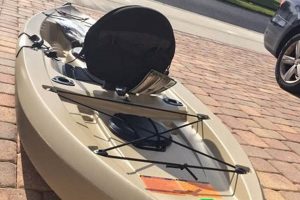
Rotationally molded (roto-molded) fishing kayaks offer a unique blend of durability, affordability, and performance. These watercraft are created by pouring molten plastic into a mold and rotating it, resulting in a seamless, single-piece hull. This process yields kayaks that are exceptionally resistant to impact and UV damage compared to other construction methods. They are frequently outfitted with features specific to angling, such as rod holders, gear tracks, and livewells.
The popularity of this type of kayak stems from its relatively low cost compared to composite or thermoformed alternatives, coupled with impressive durability. This manufacturing process allows for intricate designs and integrated features, enhancing both comfort and functionality on the water. The inherent stability of roto-molded kayaks also contributes to their widespread appeal among anglers, particularly those new to the sport. This stability makes them ideal platforms for casting and retrieving, even in challenging conditions.
Further exploration will delve into specific features, materials, and popular models available, helping individuals choose the perfect vessel for their fishing needs. Other topics will address essential accessories, paddling techniques specific to angling, and guidance on maintaining these craft for years of reliable service.
Tips for Selecting and Using Rotomolded Fishing Kayaks
Choosing and utilizing a roto-molded fishing kayak effectively requires careful consideration of several factors. These tips offer guidance for maximizing performance and enjoyment on the water.
Tip 1: Consider Hull Design: Different hull designs offer varying degrees of stability and maneuverability. A wider, flatter hull provides greater initial stability, while a longer, narrower hull tracks better and achieves higher speeds. Anglers fishing in calm, open water may prioritize stability, whereas those navigating rivers or covering greater distances might opt for a more streamlined design.
Tip 2: Evaluate Weight Capacity: The kayak’s weight capacity should accommodate the angler’s weight, plus all gear and equipment. Exceeding the capacity can compromise stability and performance. Careful consideration of anticipated loads is essential.
Tip 3: Assess Storage Options: Ample storage space is crucial for carrying fishing tackle, safety gear, and personal items. Consider the size, accessibility, and water resistance of storage compartments. Integrated features such as rod holders and tackle trays enhance organization and convenience.
Tip 4: Prioritize Comfort and Ergonomics: Seat comfort is paramount, especially for longer fishing trips. Adjustable seating systems and supportive backrests contribute to a more enjoyable experience. Pay attention to footrest placement and adjustability to ensure proper posture and paddling efficiency.
Tip 5: Factor in Transportation and Storage: The kayak’s size and weight will influence transportation and storage logistics. Roof racks, trailers, or specialized kayak carts can facilitate transport. Consider storage space at home or access to secure facilities.
Tip 6: Practice Paddling Techniques: Mastering efficient paddling strokes conserves energy and enhances maneuverability. Research and practice different strokes tailored to fishing situations, such as maintaining position in current or approaching fish stealthily.
Tip 7: Prioritize Safety Equipment: Always wear a personal flotation device (PFD) and carry essential safety gear, including a whistle, signaling device, and first-aid kit. Inform someone of your fishing plans, including location and estimated return time.
By carefully considering these factors, individuals can select a roto-molded fishing kayak well-suited to their specific needs and enhance their overall angling experience. Careful planning and preparation contribute to both safety and success on the water.
The following section will delve into specific models and manufacturers, providing a comprehensive overview of available options.
1. Durable Construction

Durable construction represents a defining characteristic of rotationally molded fishing kayaks. The rotomolding process, involving the slow rotation of a mold containing heated plastic, creates a seamless, single-piece hull. This lack of seams eliminates potential weak points susceptible to leaks and stress fractures, contributing significantly to the kayak’s overall robustness. The uniform thickness of the hull, achievable through rotational molding, further enhances impact resistance. This inherent durability translates to a longer lifespan, reducing the need for frequent repairs and replacements, a significant advantage in demanding fishing environments. For instance, impacts against rocks, submerged logs, or accidental drops during transport are less likely to cause catastrophic damage to a roto-molded hull compared to kayaks constructed with multiple joined pieces.
The robust nature of rotationally molded kayaks extends beyond mere impact resistance. The polyethylene plastic commonly used in these kayaks exhibits high resistance to ultraviolet degradation. This UV resistance prevents the hull from becoming brittle and weakened over time due to prolonged sun exposure. This factor contributes to the kayak’s longevity, especially in regions with intense sunlight. Furthermore, polyethylene’s inherent resistance to most chemicals and solvents reduces the risk of damage from accidental spills or exposure to harsh cleaning agents. This resilience simplifies maintenance and cleaning procedures, allowing owners to focus on fishing rather than repairs.
In conclusion, the durable construction inherent to rotomolded fishing kayaks provides tangible benefits to anglers. The seamless, single-piece hull, combined with the resilient properties of polyethylene, results in a craft capable of withstanding the rigors of diverse fishing environments. This durability translates to a reliable, long-lasting investment, enabling anglers to confidently explore various waterways without excessive concern for damage or premature wear. Understanding this connection between construction and performance is crucial for informed decision-making when selecting fishing equipment.
2. Affordable Pricing

Affordability represents a key advantage of rotationally molded fishing kayaks, contributing significantly to their popularity among anglers. The manufacturing process, while requiring specialized equipment, offers cost efficiencies compared to other kayak construction methods. This cost-effectiveness translates to a lower price point for consumers, making kayak fishing accessible to a broader audience. Understanding the factors contributing to this affordability provides valuable context for evaluating the overall value proposition of these kayaks.
- Lower Material Costs:
Polyethylene, the primary material used in rotomolded kayaks, is relatively inexpensive compared to composites like fiberglass or Kevlar. This lower raw material cost contributes directly to the final product’s affordability. While specialized grades of polyethylene exist with enhanced properties, even these remain cost-competitive compared to alternative construction materials. This allows manufacturers to offer feature-rich kayaks without a substantial price increase, benefiting budget-conscious consumers.
- Efficient Manufacturing Process:
The rotomolding process itself contributes to cost savings. While the initial investment in molds can be significant, the process requires less manual labor compared to hand-laid composite construction. This reduced labor cost translates to lower production expenses, ultimately reflected in the final retail price. Furthermore, the automated nature of rotomolding minimizes material waste, further enhancing cost efficiency. This streamlined process allows manufacturers to produce kayaks at scale, contributing to greater affordability.
- Simplified Tooling:
Rotomolding utilizes relatively simple tooling compared to other methods. The molds, while requiring precision engineering, are generally less complex and costly than those used in injection molding or thermoforming. This simplified tooling reduces upfront investment and ongoing maintenance expenses. These cost savings contribute to the overall affordability of roto-molded kayaks, making them an attractive option for both manufacturers and consumers.
- Competitive Market:
The robust competition within the roto-molded kayak market further drives down prices. Numerous manufacturers vying for market share create a competitive landscape where price plays a significant role in consumer purchasing decisions. This competition benefits consumers by providing a wider selection of affordable options, encouraging manufacturers to innovate and improve product quality while maintaining competitive pricing. This dynamic market ensures consumers receive excellent value for their investment.
The convergence of these factors lower material costs, efficient manufacturing, simplified tooling, and a competitive market establishes the affordability of rotationally molded fishing kayaks. This affordability, combined with the inherent durability and fishing-specific features, positions these kayaks as an attractive entry point into the sport, expanding access to on-the-water angling experiences for a wider audience. This accessibility fosters growth within the sport and provides diverse options for anglers seeking value and performance.
3. Stability

Stability constitutes a critical performance attribute in rotationally molded fishing kayaks, directly influencing angler comfort, safety, and fishing effectiveness. A stable platform facilitates various angling activities, from casting and retrieving to landing fish and maneuvering in challenging conditions. Understanding the factors contributing to kayak stability provides a foundation for informed decision-making and enhances on-the-water confidence.
- Hull Design and Stability:
Hull design plays a pivotal role in kayak stability. Wider, flatter hulls generally offer greater primary stability, resisting initial tipping and providing a secure feeling for anglers. This design excels in calm waters and provides a stable platform for casting. Conversely, narrower hulls, often found in touring or performance-oriented kayaks, prioritize speed and tracking over initial stability. However, these designs can exhibit greater secondary stability, the ability to resist capsizing when leaned. Anglers frequently prioritize primary stability for fishing, allowing comfortable movement and secure casting positions.
- Center of Gravity and Stability:
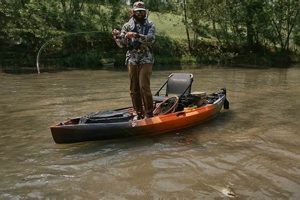
The center of gravity significantly influences kayak stability. A lower center of gravity enhances stability, while a higher center of gravity increases the risk of tipping. Anglers and their gear contribute to the overall center of gravity. Distributing weight evenly and keeping heavy items low within the kayak improves stability. Standing up in a kayak raises the center of gravity, decreasing stability and requiring careful balance. Understanding center of gravity principles allows anglers to optimize kayak stability through proper weight distribution and mindful movement.
- Water Conditions and Stability:
Prevailing water conditions significantly impact kayak stability. Calm, flat water presents minimal stability challenges. However, wind, waves, and currents can compromise stability, requiring greater vigilance and control. Kayak stability also influences maneuverability in various water conditions. Wider, more stable hulls might feel less responsive in currents, while narrower hulls track more efficiently but require greater balance. Assessing anticipated water conditions informs kayak selection and on-the-water strategies for maintaining stability.
- Stability Enhancements:
Various features and accessories can enhance kayak stability. Outriggers, essentially pontoons attached to the sides of the kayak, provide exceptional stability, particularly valuable for anglers with mobility limitations or those fishing in rough conditions. Stabilizer fins or keels, mounted beneath the hull, improve tracking and reduce the tendency to yaw or sway in wind or currents. Understanding these stability enhancements allows anglers to customize their kayaks for specific needs and conditions, further optimizing on-the-water performance and safety.
The interplay of these factorshull design, center of gravity, water conditions, and stability enhancementsdetermines the overall stability of a rotationally molded fishing kayak. Careful consideration of these elements allows anglers to select kayaks suited to their individual needs and anticipated fishing environments. Prioritizing stability enhances comfort, safety, and fishing effectiveness, contributing to a more positive and productive on-the-water experience. Understanding these principles empowers anglers to make informed decisions and optimize their kayak’s performance in diverse conditions.
4. Customization Options

Customization options represent a significant advantage of rotationally molded fishing kayaks, allowing anglers to tailor their vessels to specific needs and fishing styles. The inherent adaptability of these kayaks stems from the rotomolding process, which facilitates the integration of various features and accessories directly into the hull during manufacturing. This inherent flexibility empowers anglers to create highly personalized and efficient fishing platforms. Understanding the range of customization options available is crucial for maximizing on-the-water performance and comfort.
- Rod Holders:
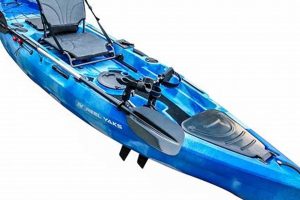
Rod holders are essential for any fishing kayak, providing secure storage and convenient access to fishing rods. Flush-mounted rod holders offer a streamlined profile, minimizing interference with paddling and casting. Adjustable rod holders allow anglers to position rods at various angles, accommodating different fishing techniques. Track-mounted rod holders offer the greatest flexibility, allowing anglers to reposition holders along the gunwales to optimize spacing and access. The number and placement of rod holders depend on individual fishing styles and preferences.
- Gear Tracks:
Gear tracks, typically installed along the gunwales of the kayak, offer unparalleled versatility for mounting accessories. These tracks consist of channels or rails that accept a wide range of compatible mounts, enabling anglers to customize their setup with fish finders, GPS units, camera mounts, and other essential gear. The modular nature of gear tracks allows for easy reconfiguration and adjustment, adapting to evolving fishing needs. This adaptability enhances organizational efficiency and maximizes deck space utilization.
- Storage Compartments:
Ample and well-designed storage compartments are crucial for stowing tackle, safety gear, and personal items. Hatches, located throughout the kayak’s deck and hull, provide access to internal storage areas. Tank wells, typically located behind the seat, offer open storage for larger items like tackle crates or coolers. Dry storage compartments, often sealed with waterproof hatches, protect sensitive items from moisture. The size, location, and accessibility of storage compartments influence overall organization and convenience on the water.
- Seating and Footrests:
Comfort is paramount during long fishing trips. Adjustable seating systems allow anglers to fine-tune their position for optimal comfort and paddling efficiency. High-back seats with lumbar support enhance comfort and reduce fatigue. Adjustable footrests accommodate varying leg lengths, ensuring proper posture and efficient paddling. Customizing seating and footrests contributes significantly to overall comfort and reduces the risk of strain during extended fishing excursions.
These customization options, combined with the inherent durability and stability of rotationally molded fishing kayaks, empower anglers to create personalized fishing platforms tailored to specific needs and preferences. Selecting appropriate customization features enhances efficiency, comfort, and overall fishing success. By understanding the available options and their implications, anglers can optimize their kayaks for diverse fishing environments and techniques, maximizing their time on the water.
5. Fishing Features
Specialized fishing features distinguish rotationally molded fishing kayaks from recreational models, enhancing angling effectiveness and overall on-the-water experience. These integrated features cater specifically to the needs of anglers, optimizing functionality and convenience. Understanding these features and their implications is crucial for selecting the ideal kayak for specific fishing styles and target species.
- Rod Holders:
Securely holding fishing rods while paddling, drifting, or trolling is paramount. Rotationally molded fishing kayaks frequently incorporate multiple rod holders, strategically positioned for easy access and minimal interference with paddling. Flush-mounted rod holders offer a streamlined profile, while adjustable rod holders accommodate various fishing techniques. Specialized rod holders, such as those designed for trolling or fly fishing, further enhance versatility. The number, type, and placement of rod holders contribute significantly to angling efficiency.
- Tackle Storage:
Efficient tackle organization is essential for productive fishing. Dedicated tackle storage compartments within the kayak provide convenient access to lures, hooks, lines, and other essential gear. These compartments may include trays, dividers, and sealed containers to protect sensitive items from moisture. Easy access to tackle streamlines lure changes and minimizes disruptions during fishing. Well-designed tackle storage contributes significantly to an organized and efficient fishing experience.
- Livewells:
Keeping caught fish alive and healthy is essential for conservation and tournament fishing. Integrated livewells, typically located within the kayak’s hull, provide a controlled environment for storing fish. These wells often feature recirculating pumps, aerators, and drain plugs for easy water changes. Livewells allow anglers to comply with regulations regarding live bait and ensure the humane treatment of caught fish. The size and capacity of the livewell depend on target species and fishing regulations.
- Transducer Mounts:
Fish finders and depth sounders rely on transducers to gather underwater data. Rotationally molded fishing kayaks often include dedicated transducer mounts, facilitating the installation and positioning of these devices. Recessed transducer mounts protect the transducer from impact and ensure accurate readings. Proper transducer placement optimizes sonar performance, providing crucial information about water depth, bottom structure, and fish location. This information enhances fishing strategy and increases the likelihood of success.
These specialized fishing features, seamlessly integrated into rotationally molded fishing kayaks, elevate the angling experience. From rod holders and tackle storage to livewells and transducer mounts, these features contribute directly to fishing efficiency, convenience, and success. The integration of these features within the rotomolding process reinforces the inherent value and purpose-driven design of these specialized fishing platforms.
Frequently Asked Questions about Rotationally Molded Fishing Kayaks
This section addresses common inquiries regarding rotationally molded fishing kayaks, providing concise and informative responses to facilitate informed decision-making.
Question 1: How durable are rotationally molded kayaks, especially in rocky or shallow environments?
Rotationally molded kayaks exhibit exceptional durability due to their seamless, single-piece construction. The polyethylene used in their construction resists impacts, abrasion, and UV degradation, making them well-suited for challenging environments, including rocky or shallow waters. While minor scratches or scuffs may occur, the structural integrity of the kayak remains generally uncompromised.
Question 2: Are these kayaks heavy and difficult to transport?
Weight varies depending on the kayak’s size and features. While generally heavier than inflatable or composite kayaks, manageable weight and specialized kayak carts or roof racks facilitate transportation. Proper lifting techniques and appropriate equipment minimize transport challenges.
Question 3: Can these kayaks be used in saltwater environments?
Polyethylene’s inherent corrosion resistance makes these kayaks suitable for saltwater use. Regular rinsing with fresh water after saltwater exposure prolongs the kayak’s lifespan and prevents salt buildup. Proper maintenance ensures optimal performance in marine environments.
Question 4: Are rotationally molded kayaks stable enough for standing and fishing?
Stability depends on the specific hull design. Wider, flatter hulls offer greater initial stability, making them suitable for standing and fishing. However, caution and proper weight distribution remain essential, especially in challenging conditions. Anglers should consider their individual balance and experience before attempting to stand.
Question 5: How do these kayaks compare to other kayak types in terms of speed and tracking?
Compared to longer, narrower kayaks designed for touring or racing, rotationally molded fishing kayaks generally prioritize stability over speed. While not as fast as some specialized designs, they offer acceptable tracking performance for general fishing applications. Hull design influences tracking and maneuverability.
Question 6: What maintenance is required for a rotationally molded fishing kayak?
Minimal maintenance is required. Rinsing with fresh water after each use, especially after saltwater exposure, prevents dirt and salt buildup. Periodic inspection for damage and occasional application of UV protectant prolong the kayak’s lifespan. Simple maintenance preserves the kayak’s appearance and performance.
Understanding these key aspects of rotationally molded fishing kayaks empowers informed purchasing decisions and ensures a positive on-the-water experience. Careful consideration of individual needs and preferences, combined with knowledge of these kayaks’ capabilities, facilitates optimal selection and utilization.
The following section will explore popular models and manufacturers of rotationally molded fishing kayaks, providing further guidance in the selection process.
Conclusion
Rotationally molded fishing kayaks offer a compelling blend of durability, affordability, and specialized features, positioning them as a popular choice among anglers. The rotomolding process yields a seamless, impact-resistant hull capable of withstanding diverse fishing environments. Affordability expands access to the sport, while customization options and integrated fishing features enhance on-the-water performance. Understanding hull design considerations, stability principles, and available features empowers informed decision-making. Addressing common concerns regarding weight, transportation, and maintenance further clarifies the advantages of these versatile vessels.
The continued evolution of rotational molding technology promises further refinement of fishing kayak design and functionality. Advancements in materials, manufacturing processes, and integration of electronics offer exciting possibilities for enhanced performance, comfort, and angling success. Careful consideration of individual needs and preferences, combined with a thorough understanding of available options, ensures selection of the ideal rotationally molded fishing kayak, enabling anglers to confidently explore and enjoy diverse aquatic environments.