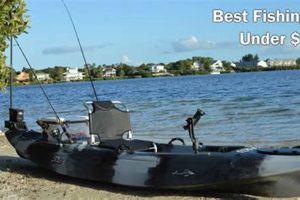
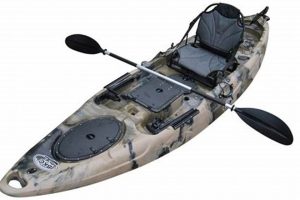
A high-quality tandem kayak designed for angling offers features like rod holders, ample storage for tackle and gear, and stability for casting and reeling. These kayaks are typically longer and wider than recreational models, providing increased capacity and a stable platform. An example might include a sit-on-top design with adjustable seating for comfort during long fishing trips.
Choosing the right tandem fishing kayak enhances the angling experience. Increased stability allows anglers to stand and cast, improving sight lines and casting accuracy. Dedicated storage keeps equipment organized and accessible, minimizing disruptions. Furthermore, sharing a kayak fosters camaraderie and teamwork on the water, creating memorable fishing experiences. The evolution of these specialized vessels reflects the growing popularity of kayak fishing, providing anglers with dedicated platforms for pursuing their sport.
This discussion will explore key factors in selecting a suitable tandem fishing kayak, including hull design, material construction, features, and popular models available on the market.
Tips for Selecting a Tandem Fishing Kayak
Choosing a tandem fishing kayak requires careful consideration of various factors to ensure optimal performance and enjoyment on the water. The following tips offer guidance for selecting the ideal vessel.
Tip 1: Consider Hull Design: Hull design significantly impacts stability and maneuverability. A wider, flatter hull provides greater stability, ideal for calmer waters and stand-up fishing. A longer, V-shaped hull offers better tracking and speed, suitable for covering larger distances or paddling in currents.
Tip 2: Evaluate Material Construction: Common materials include polyethylene, fiberglass, and composites. Polyethylene kayaks are durable and affordable, while fiberglass and composite options offer lighter weight and improved performance but often come at a higher price.
Tip 3: Prioritize Seating and Comfort: Adjustable and comfortable seating is crucial for long fishing trips. Look for features like padded seats, adjustable backrests, and ample legroom.
Tip 4: Assess Storage Capacity: Adequate storage is essential for carrying fishing gear, tackle boxes, and personal items. Consider dedicated compartments, hatches, and bungee cords for securing equipment.
Tip 5: Examine Rod Holders and Fishing Features: Built-in rod holders, fish finders, and other fishing-specific features enhance the angling experience. Evaluate the placement and type of rod holders to ensure they suit individual fishing styles.
Tip 6: Factor in Weight Capacity: Ensure the kayak’s weight capacity accommodates the combined weight of anglers, gear, and potential catches.
Tip 7: Test Paddle Before Purchasing: If possible, test paddle different models to assess stability, maneuverability, and comfort before making a final decision.
By carefully considering these factors, anglers can select a tandem fishing kayak that meets their specific needs and enhances their fishing experience, ensuring comfort, stability, and efficient organization on the water.
With a thorough understanding of these key elements, anglers can confidently choose a tandem kayak optimized for their fishing adventures, maximizing enjoyment and success on the water.
1. Stability

Stability stands as a critical factor in evaluating tandem fishing kayaks. A stable platform allows anglers to cast, reel, and land fish without compromising balance, particularly crucial when handling larger fish or fishing in challenging conditions. This stability also contributes significantly to safety, reducing the risk of capsizing, especially in unpredictable waters or when encountering wakes from other vessels. For example, a wide, flat-bottomed hull design inherently offers greater primary stability, making it less prone to tipping, while a kayak with a lower center of gravity enhances secondary stability, aiding recovery from tilting. This distinction influences performance in different water conditions; a wider hull excels in calm lakes, while a lower center of gravity benefits maneuvering in rivers or choppy waters.
The practical significance of stability becomes evident during various fishing scenarios. Standing to cast provides better visibility and leverage, but requires a highly stable platform. Similarly, maneuvering within the kayak to access gear or adjust seating requires stability to prevent tipping. Furthermore, landing a fish, especially a larger one, can shift weight distribution significantly, emphasizing the importance of a stable platform to maintain balance throughout the process. Consider the scenario of two anglers fishing in a tandem kayak; the movements of one angler can impact the stability of the other, underscoring the necessity of a kayak designed for stability under dynamic weight distribution.
In summary, prioritizing stability ensures a safer and more effective fishing experience. Understanding the nuances of primary and secondary stability informs kayak selection based on intended fishing environments. Ultimately, a stable platform allows anglers to focus on the task at handfishingrather than constantly managing balance, thus optimizing both safety and enjoyment on the water. This focus on stability is integral to the broader concept of a “best” tandem fishing kayak, where performance and safety converge for an optimal angling experience.
2. Storage Capacity

Ample storage capacity is a defining characteristic of a high-performing two-person fishing kayak. Effective organization and accessibility of essential gear directly influence fishing success and overall enjoyment on the water. Insufficient storage leads to cluttered decks, hindering movement and potentially compromising safety. Evaluating storage options is, therefore, crucial in selecting a suitable vessel.
- Dedicated Tackle Storage:
Designated compartments for tackle boxes, trays, and smaller items maintain organization and prevent gear from shifting during paddling or maneuvering. Examples include waterproof hatches, recessed trays within the hull, and removable tackle storage units. Dedicated tackle storage allows anglers to quickly locate and access necessary equipment, optimizing fishing time and minimizing disruptions.
- Rod Holders and Management Systems:
Secure and accessible rod storage is essential for transport and efficient fishing. Flush-mounted rod holders keep lines in the water while paddling, while vertical holders offer convenient storage during transport or when switching techniques. Examples include adjustable rod holders, rotating mounts, and integrated rod management systems. These features facilitate various fishing styles and prevent rod entanglement or damage.
- Dry Storage for Personal Items:
Protecting personal items from water damage is crucial, especially in challenging conditions. Dry storage compartments, often located within the hull or in sealed hatches, offer safe storage for electronics, wallets, and other valuables. These compartments provide peace of mind and preserve essential equipment from the elements. Examples include waterproof bags, sealed hatches with gaskets, and dedicated dry storage compartments within the kayak’s structure.
- On-Deck Storage and Bungee Systems:
Open storage areas with bungee cords provide readily accessible storage for frequently used items like paddles, landing nets, and extra gear. These systems offer convenient storage for items not requiring waterproof protection, while keeping them secure during transit. Examples include recessed cargo wells with bungee tie-downs, strategically placed D-rings for attaching gear, and mesh netting for securing smaller items.
The strategic integration of these storage features contributes significantly to the overall performance and usability of a two-person fishing kayak. Prioritizing storage capacity ensures efficient organization, facilitates access to essential equipment, and maximizes fishing time. Ultimately, a well-designed storage system elevates the fishing experience from one of frustration and clutter to one of seamless functionality and enjoyment, directly contributing to the definition of a “best” tandem fishing kayak.
3. Comfort and Seating

Comfort and seating directly influence the overall fishing experience, particularly during longer outings. An uncomfortable seating arrangement can lead to fatigue, back pain, and reduced focus, ultimately detracting from fishing effectiveness and enjoyment. Optimal seating design and adjustability are, therefore, essential considerations when selecting a two-person fishing kayak. Adequate cushioning, lumbar support, and adjustable backrests contribute significantly to angler comfort and endurance. For example, high-back seats with adjustable straps and breathable padding provide superior support and ventilation, enabling anglers to maintain focus and comfort throughout extended fishing sessions. Multiple seating positions, including adjustable footrests, further enhance comfort and accommodate individual preferences.
The impact of comfortable seating extends beyond physical well-being. Ergonomic design and adjustability contribute to efficient paddling and casting, promoting proper posture and reducing strain. This translates to improved performance and reduced risk of injury, allowing anglers to focus on technique and strategy rather than discomfort. Consider the scenario of two anglers fishing in rough waters; proper seating and support enable them to maintain balance and control, enhancing safety and fishing effectiveness. Furthermore, adjustable seating accommodates varying body types and preferences, ensuring both anglers can maintain comfortable positions throughout the trip. This inclusivity is particularly important in tandem kayaks, where compatibility and shared comfort contribute significantly to a positive experience.
In conclusion, prioritizing comfort and seating is paramount in the selection of a two-person fishing kayak. Ergonomic design, adjustability, and adequate cushioning contribute significantly to angler comfort, endurance, and overall performance. This translates to a more enjoyable and productive fishing experience, allowing individuals to fully appreciate the sport without the limitations of physical discomfort. The connection between comfortable seating and a positive fishing experience is undeniable, reinforcing its importance as a key component in the definition of a “best” tandem fishing kayak.
4. Fishing Features
Specialized features distinguish fishing kayaks from recreational models, optimizing performance and enhancing the angling experience. These features directly contribute to the definition of a “best” two-person fishing kayak, transforming a standard vessel into a dedicated fishing platform. The following facets explore key fishing-specific features and their impact on functionality and overall effectiveness.
- Rod Holders
Integrated rod holders secure fishing rods, allowing anglers to troll, manage multiple lines, or keep rods readily accessible while paddling or attending to other tasks. Various types exist, including flush-mounted, adjustable, and rotating rod holders. For example, adjustable rod holders accommodate different fishing styles and rod lengths, while flush-mounted holders minimize line interference during paddling. The presence and placement of rod holders significantly influence fishing efficiency and overall convenience.
- Fish Finder Mounts and Transducer Scuppers
Fish finders provide crucial underwater insights, assisting anglers in locating fish, identifying structures, and understanding bottom contours. Dedicated mounts and transducer scuppers facilitate seamless fish finder integration. A well-designed transducer scupper, for example, protects the transducer while providing accurate readings. Similarly, a stable mounting platform ensures clear visibility and convenient operation of the fish finder unit. These features enhance fishing strategy and improve catch rates.
- Tackle Storage and Organization
Efficient tackle management is crucial for maintaining order and maximizing fishing time. Dedicated tackle storage compartments, trays, and boxes keep lures, hooks, and other small items organized and readily accessible. Examples include waterproof tackle boxes, removable trays, and integrated storage compartments within the kayak’s hull. Effective tackle organization minimizes time spent searching for equipment, allowing anglers to focus on fishing.
- Anchor Trolley Systems
Anchor trolley systems provide precise boat control, allowing anglers to position the kayak effectively in currents or wind. This control is crucial for maintaining position over fishing hotspots or presenting bait effectively in specific locations. A well-designed anchor trolley system allows for easy adjustment and secure anchoring, maximizing fishing effectiveness in various conditions.
The integration of these fishing-specific features elevates a tandem kayak from a simple vessel to a specialized fishing platform. By carefully considering these features, anglers can select a kayak that optimizes their fishing experience, enhancing efficiency, convenience, and ultimately, success on the water. The presence and quality of these features directly contribute to the definition of a “best” two-person fishing kayak, reflecting a design focused on maximizing angling performance and enjoyment.
5. Durability and Materials

Durability is paramount in fishing kayaks, given their exposure to various environmental factors and the potential for impact with underwater structures or during transport. Material selection directly influences a kayak’s longevity and resistance to damage. A “best” two-person fishing kayak necessitates robust construction using materials capable of withstanding rigorous use. Common materials include high-density polyethylene (HDPE), fiberglass, and composites. HDPE offers excellent impact resistance and UV protection, making it suitable for demanding environments. Fiberglass provides a balance of durability and lighter weight, while composites offer superior strength-to-weight ratios, albeit at a higher cost. For example, a kayak constructed from rotomolded HDPE can withstand impacts against rocks or submerged logs, essential for navigating shallow or rocky waters. Conversely, a fiberglass kayak might offer better performance in terms of speed and maneuverability but requires greater care to avoid damage from impacts. The material choice impacts not only durability but also performance characteristics like weight and stiffness, influencing paddling efficiency and responsiveness.
The long-term cost-effectiveness of a fishing kayak is intrinsically linked to material durability. A kayak built with robust, UV-resistant materials requires less frequent repairs and replacements, reducing overall ownership costs. For instance, a well-maintained HDPE kayak can last for many years, even with regular use in harsh environments, whereas a kayak constructed from less durable materials might require more frequent repairs or replacement, increasing long-term expenses. Furthermore, the choice of material influences maintenance requirements. HDPE kayaks require minimal maintenance, while fiberglass kayaks might necessitate occasional gelcoat repairs to maintain their appearance and protect against water intrusion. Understanding these nuances enables informed decisions aligning with long-term budgetary considerations. Practical examples include comparing the cost of repairing a deep scratch in a fiberglass kayak versus minor cosmetic damage to an HDPE kayak. This cost comparison highlights the practical implications of material choice on long-term ownership expenses.
In summary, material selection significantly impacts the durability and longevity of a two-person fishing kayak. Choosing a robust material like HDPE or considering the trade-offs between durability, performance, and cost in fiberglass and composite options is crucial for informed decision-making. A durable kayak translates to fewer repairs, lower long-term costs, and more time spent fishing. This understanding underscores the critical connection between material durability and the definition of a “best” two-person fishing kayak, where long-term performance and reliability are essential components of an optimal angling experience.
6. Maneuverability and Tracking
Maneuverability and tracking are critical performance attributes influencing the suitability of a two-person kayak for fishing. Maneuverability describes a kayak’s responsiveness to paddle input, enabling quick turns and adjustments in position. Tracking refers to a kayak’s ability to maintain a straight course with minimal corrective strokes. The interplay of these two characteristics significantly impacts fishing effectiveness and overall on-the-water experience. A highly maneuverable kayak allows anglers to navigate tight spaces, such as narrow creeks or areas with submerged obstacles, and quickly reposition for optimal casting angles. Excellent tracking, conversely, is advantageous when paddling longer distances across open water or when maintaining a specific course against wind or current. For example, a kayak designed for river fishing benefits from high maneuverability to navigate around rocks and rapids, while a kayak intended for trolling in a lake prioritizes tracking to maintain a consistent speed and direction. The balance between these two attributes depends on the intended fishing environment and techniques employed.
Consider a scenario where anglers need to navigate through dense vegetation or quickly reposition to target a rising fish. A highly maneuverable kayak excels in these situations, enabling precise adjustments and efficient navigation. Conversely, when paddling across a large lake to reach a distant fishing spot, a kayak with superior tracking conserves energy and minimizes course deviations caused by wind or waves. Furthermore, the length and hull design of a kayak influence both maneuverability and tracking. Longer kayaks generally track better, while shorter kayaks offer greater maneuverability. Hull shape also plays a significant role; a V-shaped hull enhances tracking, whereas a flatter hull improves maneuverability. Understanding these design influences allows anglers to select a kayak optimized for their specific fishing needs. For instance, a shorter, flatter-hulled kayak might be ideal for maneuvering in mangrove forests, whereas a longer, V-hulled kayak is better suited for open-water trolling.
In conclusion, the balance between maneuverability and tracking is a key consideration when selecting a two-person fishing kayak. Analyzing the intended fishing environment and techniques employed informs the optimal balance of these attributes. A kayak’s ability to respond precisely to paddle input and maintain a desired course directly impacts fishing efficiency, safety, and overall enjoyment on the water. Understanding the relationship between design, maneuverability, and tracking empowers informed decision-making, aligning kayak selection with specific fishing requirements and contributing significantly to the definition of a “best” two-person fishing kayak.
Frequently Asked Questions
This section addresses common inquiries regarding the selection and use of tandem fishing kayaks, providing concise and informative responses to assist in informed decision-making.
Question 1: What are the primary advantages of a tandem fishing kayak over two solo kayaks?
Tandem kayaks offer increased storage capacity for shared gear and often provide a more stable platform, especially for activities like stand-up fishing. They can also be more cost-effective than purchasing two individual kayaks.
Question 2: How does hull design impact the performance of a tandem fishing kayak?
Hull design significantly affects stability and tracking. Wider, flatter hulls offer greater stability, while longer, V-shaped hulls improve tracking and speed. The choice depends on intended fishing environments and preferences.
Question 3: What materials are commonly used in the construction of tandem fishing kayaks, and what are their respective advantages?
Common materials include high-density polyethylene (HDPE), fiberglass, and composites. HDPE offers excellent durability and impact resistance. Fiberglass provides a balance of durability and lighter weight, while composites maximize strength-to-weight ratios but typically come at a premium cost.
Question 4: What key features should one look for in a tandem fishing kayak specifically designed for angling?
Essential features include rod holders, ample storage compartments for tackle and gear, comfortable and adjustable seating, and potentially features like anchor trolleys, fish finder mounts, and livewells.
Question 5: What safety precautions should be taken when using a tandem fishing kayak?
Essential safety measures include wearing personal flotation devices (PFDs), carrying a whistle or other signaling device, informing someone of the fishing plan and estimated return time, and checking weather conditions before embarking.
Question 6: How does one properly maintain a tandem fishing kayak to ensure its longevity?
Proper maintenance includes rinsing the kayak with fresh water after each use, especially after exposure to saltwater, storing the kayak out of direct sunlight, and regularly inspecting and addressing any damage or wear to components like hatches, seats, and hull fittings. Specific maintenance requirements may vary based on the kayak’s material.
Careful consideration of these frequently asked questions empowers informed decision-making when selecting and utilizing a tandem fishing kayak, ensuring a safe, enjoyable, and productive fishing experience.
This concludes the FAQ section. The subsequent sections will delve into specific model recommendations and comparisons, offering further guidance in the selection process.
Conclusion
Selecting a high-quality tandem kayak designed for angling requires careful evaluation of various factors. Prioritizing stability ensures safety and efficient fishing, particularly in challenging conditions or when employing techniques like stand-up fishing. Ample storage capacity accommodates essential gear and tackle, optimizing organization and accessibility. Comfortable and adjustable seating enhances endurance, allowing for extended fishing trips without compromising physical well-being. Integrated fishing features, such as rod holders, fish finder mounts, and anchor trolleys, maximize angling effectiveness and convenience. Durability, influenced by material selection and construction quality, ensures long-term performance and resistance to wear and tear. Finally, the balance between maneuverability and tracking dictates performance in specific environments, allowing anglers to navigate efficiently and maintain desired courses.
Ultimately, the “best” two-person fishing kayak represents a convergence of these key attributes, tailored to individual fishing styles, target species, and preferred environments. Careful consideration of these factors empowers informed decisions, leading to a rewarding and productive fishing experience, fostering a deeper connection with the sport and the natural world.