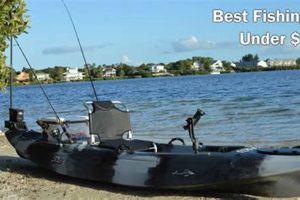
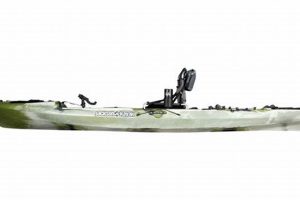
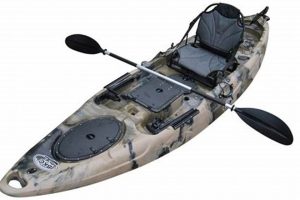
A top-tier vessel designed for angling excels in both paddling efficiency and fishing functionality. Such watercraft typically feature specialized designs, including a stable hull for casting and fighting fish, ample storage for gear, and comfortable seating for extended trips. A high-quality example might include features like rod holders, a rudder system for maneuverability, and even a fish finder mount.
Choosing the right watercraft for fishing from a seated position is paramount for a successful and enjoyable angling experience. A well-designed hull ensures stability, reducing the chance of capsizing while reeling in a catch. Integrated storage and accessory mounts minimize clutter and maximize fishing efficiency. Comfort features, like adjustable seating and footrests, allow anglers to spend longer hours on the water. The evolution of these specialized boats has significantly enhanced the sport, providing anglers with greater access to fishing grounds and improving their overall experience.
This discussion will further explore key features to consider when selecting a fishing kayak optimized for paddling, including hull design, propulsion systems, materials, and essential accessories. It will also address factors such as budget, intended fishing environment, and angler experience level.
Tips for Selecting a Top-Tier Kayak for Paddle Fishing
Choosing a suitable vessel for paddle fishing requires careful consideration of several key factors. These tips offer guidance for selecting a craft optimized for both paddling performance and fishing functionality.
Tip 1: Prioritize Stability: Hull design significantly impacts stability. Wider, flatter hulls offer greater initial stability, beneficial for casting and reeling. Consider a pontoon-style hull for maximum stability.
Tip 2: Evaluate Propulsion: Paddle kayaks utilize human power for propulsion. Choose a paddle length appropriate for body size and kayak width. Consider a rudder system for enhanced maneuverability, especially in windy conditions.
Tip 3: Assess Storage Capacity: Ample storage is essential for fishing gear, safety equipment, and personal items. Look for dedicated compartments and bungee systems for securing cargo.
Tip 4: Consider Comfort and Adjustability: Comfortable seating and adjustable footrests are crucial for extended fishing trips. Look for ergonomic designs that provide adequate support and allow for customization.
Tip 5: Factor in Fishing Features: Essential fishing features include rod holders, fish finder mounts, and tackle storage compartments. Consider the type of fishing pursued when selecting these features.
Tip 6: Choose Durable Materials: Kayak materials impact durability and weight. Polyethylene is a popular choice for its durability, while lighter materials like fiberglass or composites offer enhanced performance.
Tip 7: Match Kayak to Environment: Consider the intended fishing environment. Longer kayaks are suitable for open water, while shorter, more maneuverable kayaks are better suited for rivers and creeks.
By considering these factors, anglers can select a watercraft that enhances both paddling efficiency and fishing success. A well-chosen vessel provides a stable, comfortable, and functional platform for enjoying time on the water and maximizing angling opportunities.
This information provides a foundation for making informed decisions when selecting a top-performing paddle fishing kayak. Further research and in-person evaluation are recommended before making a final purchase.
1. Stability

Stability is a paramount consideration when selecting a top-performing fishing kayak designed for paddling. A stable platform is essential for casting, reeling, and landing fish, as well as for general safety and comfort on the water. Compromised stability can lead to capsizing, gear loss, and potentially dangerous situations. This section explores the key facets contributing to stability in these specialized vessels.
- Hull Design:
Hull design plays a critical role in determining a kayak’s stability. Wider hulls generally provide greater initial stability, making them less prone to tipping. Flatter hulls also enhance stability, especially in calm water conditions. Conversely, narrower hulls, while offering greater speed and maneuverability, can be less stable. Pontoon-style hulls represent an extreme in stability, offering a remarkably stable platform ideal for stand-up fishing but sacrificing maneuverability. The choice of hull design should align with the intended fishing environment and angler experience level.
- Center of Gravity:
A lower center of gravity contributes to enhanced stability. Kayak design, angler weight, and gear distribution all influence the center of gravity. Keeping weight low and centered within the kayak maximizes stability. High-seated kayaks tend to have a higher center of gravity, potentially compromising stability compared to lower-seated designs. Careful gear placement and weight distribution are crucial for maintaining optimal balance and stability.
- Water Conditions:
Water conditions significantly impact stability. Calm, flat water presents fewer stability challenges compared to choppy or rough conditions. Wind, currents, and waves can all destabilize a kayak. Understanding the intended fishing environment and selecting a kayak with appropriate stability characteristics for those conditions is vital. Anglers fishing in rougher waters should prioritize stability over speed and maneuverability.
- Angler Experience:
An angler’s experience level also influences stability perceptions. Experienced kayakers often develop a better sense of balance and can handle less stable kayaks. Novice paddlers, however, should prioritize stability until they gain more experience and confidence on the water. Choosing a highly stable platform allows novice anglers to focus on fishing rather than maintaining balance.
Understanding these facets of stability empowers anglers to make informed decisions when selecting a paddling fishing kayak. Prioritizing stability ensures a safer, more comfortable, and ultimately more productive fishing experience, allowing anglers to focus on the task at hand and enjoy their time on the water.
2. Maneuverability
Maneuverability is a crucial aspect of a best paddling fishing kayak, directly influencing its effectiveness in various fishing environments. A highly maneuverable vessel allows anglers to navigate tight spaces, swiftly change directions, and precisely position themselves for optimal casting. This agility is particularly valuable in complex waterways such as rivers, creeks, and mangrove forests. This section explores the key factors contributing to maneuverability in these specialized kayaks.
- Hull Design:
Hull design significantly impacts maneuverability. Shorter kayaks with a more rounded or V-shaped hull tend to turn more easily than longer, flatter-hulled kayaks. A shorter turning radius allows for quick adjustments in direction and precise navigation through obstacles. While longer kayaks excel in tracking and speed in open water, they may be less responsive in confined spaces.
- Rudder System:
A rudder system enhances maneuverability, especially in windy conditions or strong currents. The rudder assists in maintaining course and making precise turns, reducing the need for constant paddle adjustments. This feature is particularly valuable in larger bodies of water or challenging environments. While not essential, a rudder system significantly improves control and directional stability.
- Kayak Length and Width:
Shorter kayaks are inherently more maneuverable than longer ones. Width also plays a role; narrower kayaks tend to turn more quickly. The optimal length and width depend on the intended fishing environment and angler preference. Anglers fishing in tight quarters will prioritize maneuverability over straight-line tracking, while those fishing in open water may favor a longer, faster design.
- Water Conditions:
Water conditions influence maneuverability. Calm, flat water allows for greater control and responsiveness, while wind, currents, and waves can make maneuvering more challenging. Kayaks designed for rougher conditions often prioritize stability over extreme maneuverability, representing a compromise between performance characteristics.
The interplay of these factors determines a fishing kayak’s maneuverability. Selecting a kayak with appropriate maneuverability characteristics for the intended fishing environment significantly enhances angling effectiveness. The ability to precisely position the kayak and navigate complex waterways maximizes fishing opportunities and overall on-the-water experience.
3. Storage Capacity

Ample storage capacity is a defining characteristic of a top-tier paddling fishing kayak. The ability to transport essential gear, including rods, reels, tackle boxes, safety equipment, and personal items, directly impacts fishing success and overall comfort on the water. Insufficient storage can lead to a cluttered cockpit, hindering casting and maneuverability, and potentially compromising safety. This section examines the crucial facets of storage capacity in these specialized vessels.
- Types of Storage:
Fishing kayaks offer various storage solutions, including front and rear hatches, tank wells, side pockets, and specialized compartments for tackle boxes and other fishing-specific gear. Hatches provide secure, waterproof storage for larger items, while tank wells accommodate coolers or dry bags. Smaller items like tools, lures, and personal belongings can be stored in side pockets or dedicated compartments. The diversity and accessibility of storage options contribute to a well-organized and efficient fishing experience.
- Capacity and Weight Limits:
Kayak manufacturers specify weight capacities, encompassing both the angler’s weight and gear. Exceeding these limits can compromise stability and performance. Understanding the kayak’s weight capacity and the anticipated weight of gear is essential for safe and efficient operation. Distributing weight evenly throughout the kayak also contributes to optimal balance and stability.
- Accessibility and Organization:
Convenient access to stored gear is crucial for efficient fishing. Well-designed storage compartments with easy-to-open hatches and strategically placed pockets allow anglers to quickly retrieve needed items without disrupting their fishing flow. Features like integrated organizers within compartments further enhance efficiency by keeping gear neatly arranged and readily accessible.
- Material and Durability:
Storage compartments should be constructed from durable, weather-resistant materials. Hatches should provide a secure seal to prevent water ingress, protecting valuable gear from damage. Robust construction ensures that storage compartments can withstand the rigors of use in various environments, including exposure to saltwater, sun, and impacts.
Adequate and well-designed storage contributes significantly to the overall functionality and enjoyment of a paddling fishing kayak. Efficient storage solutions allow anglers to carry all essential gear comfortably and safely, maximizing fishing effectiveness and promoting a positive on-the-water experience. The ability to organize and quickly access equipment enhances efficiency, allowing anglers to focus on the task at hand and enjoy their time on the water.
4. Comfort

Comfort is a critical factor influencing the overall enjoyment and effectiveness of extended paddling fishing trips. Discomfort can detract from the angling experience, leading to fatigue, reduced focus, and a shortened time on the water. A comfortable kayak enables anglers to concentrate on fishing, maximizing their time and enjoyment. This section explores key facets contributing to comfort in top-tier paddling fishing kayaks.
- Seat Design and Adjustability:
Seat design plays a pivotal role in overall comfort. Ergonomically designed seats with adjustable backrests, lumbar support, and breathable fabrics provide crucial support and minimize pressure points. Adjustable features allow anglers to customize the seat to their body type and preferred posture, promoting proper alignment and reducing strain. High-quality seating promotes comfort during long hours on the water.
- Footrest System:
An adjustable footrest system is essential for maintaining proper posture and leg support. Secure and customizable footrests allow anglers to brace themselves while paddling and fishing, reducing fatigue and improving stability. Proper leg positioning contributes to overall body comfort and efficient power transfer during paddling.
- Cockpit Design and Layout:
A well-designed cockpit provides ample space and easy access to essential gear. Sufficient legroom and a comfortable seating position allow for freedom of movement and reduce the feeling of confinement. A clutter-free cockpit enhances both comfort and fishing efficiency. The layout should facilitate easy entry and exit, enhancing safety and convenience.
- Padding and Accessories:
Additional padding, such as thigh braces and seat cushions, can further enhance comfort. These features provide extra support and cushioning, reducing pressure points and enhancing overall comfort, especially during long paddling sessions. Accessories like backrests and lumbar supports further contribute to a comfortable and supportive seating experience.
Prioritizing comfort in a paddling fishing kayak significantly enhances the overall angling experience. A comfortable and supportive kayak allows anglers to focus on fishing, maximizing their time on the water and increasing their enjoyment. Investing in a comfortable vessel contributes to a more productive and fulfilling fishing experience.
5. Fishing Features
Specialized fishing features distinguish a top-tier paddling fishing kayak from a standard recreational model. These integrated elements enhance angling effectiveness and overall on-the-water experience. Optimized fishing features streamline essential tasks, improve catch rates, and contribute to a more productive and enjoyable fishing trip. Understanding these features is crucial for selecting the best vessel for individual angling needs.
- Rod Holders:
Rod holders are fundamental components of a fishing kayak, providing secure storage for fishing rods while paddling, trolling, or at rest. Multiple rod holders, including flush-mounted, adjustable, and rotating options, allow anglers to carry various rod setups and quickly switch between techniques. Securely held rods prevent loss or damage and allow anglers to keep their hands free for other tasks, such as paddling or landing fish.
- Fish Finder Mounts:
Fish finder mounts provide a dedicated location for mounting electronic fish finders, crucial tools for locating fish and understanding underwater structure. Stable and strategically positioned mounts ensure clear transducer readings and easy access to fish finder controls. Integrated cable management systems keep wiring organized and prevent interference with other fishing activities. Utilizing a fish finder significantly enhances angling success by providing real-time information about fish location and habitat.
- Tackle Storage:
Dedicated tackle storage solutions keep essential fishing gear organized and readily accessible. Tackle boxes, trays, and compartments within the kayak provide designated spaces for lures, hooks, weights, and other small items. Easy access to tackle enhances fishing efficiency and minimizes time spent searching for specific items. Well-organized tackle storage promotes a clutter-free cockpit and allows anglers to focus on fishing.
- Livewell Systems:
Livewell systems are integrated tanks designed to keep caught fish alive and healthy during a fishing trip. These systems typically include aeration and water circulation features to maintain optimal conditions for fish survival. Livewells are particularly important for anglers participating in tournaments or those who intend to release their catch. Maintaining fish in a healthy state ensures their survival upon release and promotes responsible angling practices.
These integrated fishing features transform a standard paddling kayak into a specialized fishing platform. The presence and quality of these features directly impact angling efficiency, success, and overall enjoyment. Selecting a kayak with optimized fishing features tailored to individual angling needs enhances the overall fishing experience and contributes to a more productive and rewarding time on the water. Careful consideration of these features is crucial for selecting a top-tier paddling fishing kayak.
Frequently Asked Questions
This section addresses common inquiries regarding the selection and use of top-tier kayaks designed for fishing while paddling.
Question 1: How does hull design impact both stability and maneuverability in a paddling fishing kayak?
Wider, flatter hulls generally offer increased stability but may sacrifice maneuverability. Conversely, narrower, V-shaped hulls enhance maneuverability but can be less stable. The optimal balance depends on intended fishing environment and angler experience.
Question 2: What are the key features to consider when choosing a paddling fishing kayak for different fishing environments (e.g., rivers, lakes, oceans)?
River fishing necessitates maneuverability and shorter lengths. Lake fishing benefits from stability and moderate length. Ocean fishing requires stability, tracking, and potentially longer lengths for handling rougher conditions. Feature considerations include rudder systems, storage capacity, and specialized fishing accessories.
Question 3: How does one determine the appropriate weight capacity for a fishing kayak, considering both angler weight and gear?
Manufacturers specify maximum weight capacities. Total weight, including angler, gear, and any potential catch, should remain well within this limit to ensure safe and optimal performance. Exceeding weight capacity compromises stability and can lead to unsafe conditions.
Question 4: What are the advantages and disadvantages of different kayak materials, such as polyethylene, fiberglass, and composites, for fishing applications?
Polyethylene offers durability and affordability but is heavier. Fiberglass and composites provide lighter weight and enhanced performance but typically come at a higher cost. Material selection depends on budget, performance needs, and transportation considerations.
Question 5: What essential safety equipment should be included when paddling a fishing kayak, and what safety precautions should be observed?
Essential safety gear includes a personal flotation device (PFD), a whistle, a signaling device, and a first-aid kit. Safety precautions encompass checking weather conditions, informing someone of the fishing plan, and understanding navigational markers and rules.
Question 6: How does proper paddle length and technique contribute to efficient paddling and reduced fatigue during long fishing trips?
Paddle length should be appropriate for angler height and kayak width. Proper paddling technique maximizes power transfer, minimizes energy expenditure, and reduces strain on joints. Efficient paddling technique enhances both speed and endurance.
Addressing these common questions provides a comprehensive understanding of key factors influencing kayak selection and safe operation. Further research and consultation with experienced anglers or retailers are recommended before making a purchase.
The following section will offer an in-depth analysis of specific top-rated paddling fishing kayak models available on the market.
Conclusion
Optimal selection hinges on a comprehensive understanding of key features, including hull design, stability, maneuverability, storage capacity, comfort, and specialized fishing features. Careful evaluation of these elements, in conjunction with an assessment of intended fishing environment and individual angler needs, is paramount. Prioritizing these factors ensures a harmonious balance between paddling performance and fishing functionality, maximizing both efficiency and enjoyment on the water.
Investing in a premium vessel specifically engineered for paddle fishing represents a significant commitment to enhancing the angling experience. This investment yields substantial returns in the form of improved fishing success, increased comfort, and a deeper connection with the aquatic environment. The selection process represents a crucial step towards unlocking the full potential of paddle fishing and experiencing the profound rewards of this immersive and engaging pursuit.