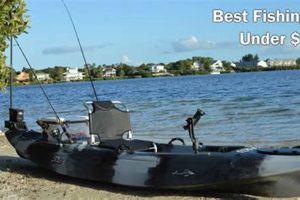
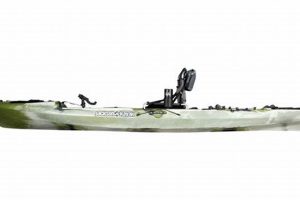
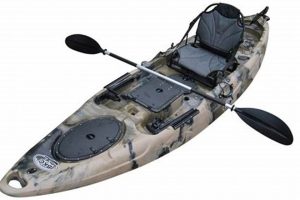
Larger paddlers require kayaks designed with higher weight capacities and ample cockpit space for comfort and stability. These specialized watercraft offer enhanced buoyancy and stability to accommodate heavier individuals and their gear, ensuring a safe and enjoyable fishing experience. Features like reinforced seating and wider hulls are often incorporated to provide additional support and prevent tipping.
Selecting a suitable kayak is crucial for larger individuals to maximize performance and safety on the water. A properly sized vessel improves stability, maneuverability, and overall comfort, allowing for longer and more productive fishing trips. Historically, kayak design often overlooked the needs of larger paddlers, but the market now offers a wide variety of specialized options recognizing this important segment. This evolution has opened up kayaking and kayak fishing to a wider audience.
Key factors to consider when choosing a kayak include weight capacity, cockpit dimensions, hull design, and storage options. Subsequent sections will explore these features in detail, providing readers with the knowledge necessary to make informed decisions based on individual needs and preferences.
Tips for Selecting a Fishing Kayak for Larger Paddlers
Choosing the right fishing kayak is essential for larger individuals to ensure comfort, stability, and a successful fishing experience. The following tips offer guidance through the selection process.
Tip 1: Prioritize Weight Capacity: Never exceed the manufacturer’s stated weight limit. Consider the combined weight of the paddler, fishing gear, and any potential catch. A generous safety margin is recommended.
Tip 2: Evaluate Cockpit Dimensions: A larger cockpit opening provides easier entry and exit, as well as more room for movement. Consider leg length and overall body size when assessing cockpit dimensions. A longer kayak generally offers more legroom.
Tip 3: Consider Hull Design: Wider, flatter hulls offer greater stability, while longer, narrower hulls provide better tracking and speed. A sit-on-top kayak is often preferred for its stability and ease of entry and exit.
Tip 4: Assess Storage Options: Ample storage is crucial for carrying fishing gear, tackle boxes, and personal items. Consider the number and size of storage compartments, as well as their accessibility.
Tip 5: Check Seat Comfort and Adjustability: A comfortable and supportive seat is essential for longer fishing trips. Look for adjustable features, such as backrests and foot braces, to customize the fit.
Tip 6: Test Before Purchasing: Whenever possible, test paddle a potential kayak before making a purchase. This allows for an assessment of comfort, stability, and maneuverability in the water.
Tip 7: Consider Propulsion Options: Traditional paddle kayaks offer a good workout and are generally more affordable. Pedal-drive kayaks and motorized kayaks offer hands-free fishing and increased speed, but come at a higher price point.
By carefully considering these factors, larger individuals can select a fishing kayak that offers optimal performance, comfort, and safety on the water. This careful consideration contributes to a more enjoyable and productive fishing experience.
With a thorough understanding of the key selection criteria, potential buyers can confidently move towards choosing the best kayak for their individual needs. The final section will offer concluding remarks and summarize key takeaways.
1. Stability

Stability is a paramount concern for all kayakers, but it holds particular significance for larger individuals. A stable platform is essential for casting, reeling, and landing fish, as well as for overall safety and comfort on the water. Compromised stability can lead to capsizing, especially when dealing with the added weight of fishing gear and the movement involved in angling.
- Primary Stability:
Primary stability refers to a kayak’s initial resistance to tipping. A wider hull and lower center of gravity contribute to higher primary stability. This is crucial for larger paddlers, providing a secure feeling while seated and at rest. Kayaks designed for big guys often feature wider beams and flatter bottoms to maximize primary stability.
- Secondary Stability:
Secondary stability describes a kayak’s ability to resist tipping further once it’s leaned. This comes into play when making turns or encountering waves. While a wider kayak might offer excellent primary stability, it might lack secondary stability. Kayaks designed for larger individuals often strive for a balance between these two types of stability, offering a secure platform that also allows for maneuverability.
- Contributing Factors to Stability:
Beyond hull design, several factors contribute to kayak stability. These include the paddler’s center of gravity, the distribution of weight within the kayak, and external forces such as wind and waves. Understanding these factors empowers larger paddlers to enhance stability through proper weight distribution and paddling techniques.
- Impact of Stability on Fishing Performance:
Enhanced stability translates directly to improved fishing performance. A stable kayak allows for confident casting and retrieving, reduces the risk of losing balance when fighting a fish, and provides a more comfortable and enjoyable experience overall. This is particularly important for sight fishing or fishing in challenging conditions.
Ultimately, prioritizing stability is crucial when selecting a fishing kayak for a larger individual. Understanding the nuances of primary and secondary stability, as well as the contributing factors, allows for informed decision-making and contributes to a safer and more successful fishing experience. Finding the right balance of stability and maneuverability is key to optimizing performance on the water.
2. Weight Capacity
Weight capacity is a critical factor when selecting a kayak, particularly for larger individuals. It directly impacts safety, stability, and performance on the water. Insufficient weight capacity can lead to instability, decreased maneuverability, and potentially even capsizing. Understanding weight capacity and its implications is essential for making informed purchasing decisions.
- Total Weight Capacity:
This specification, provided by the manufacturer, indicates the maximum weight a kayak can safely support. This includes the weight of the paddler, all gear, and any potential catch. Exceeding this limit compromises stability and safety. For larger individuals, kayaks with higher weight capacities are essential. For example, a kayak with a total weight capacity of 350 lbs. might be suitable for a smaller paddler with minimal gear, but a larger individual with fishing equipment might require a kayak with a capacity of 450 lbs. or more.
- Calculating Actual Load:
Accurately estimating the total weight to be carried is crucial. This involves considering not only body weight but also the weight of fishing rods, tackle boxes, coolers, safety gear, and any other items brought onboard. Underestimating this weight can lead to exceeding the kayak’s capacity, resulting in a less stable and potentially unsafe experience. Digital scales can be useful for accurately weighing gear.
- Impact on Performance:
Weight capacity affects performance beyond stability. A kayak loaded near its maximum capacity will sit lower in the water, increasing drag and reducing maneuverability. This can make paddling more strenuous and impact tracking. Choosing a kayak with ample weight capacity ensures optimal performance and efficient movement through the water.
- Legal and Safety Considerations:
Operating an overloaded kayak can be unsafe and may even have legal ramifications in certain areas. Respecting the manufacturer’s stated weight limit is crucial for personal safety and adhering to regulations. Choosing a kayak with a sufficient safety margin ensures a secure and enjoyable experience.
For larger individuals, selecting a kayak with appropriate weight capacity is not merely a matter of comfort, but a crucial safety consideration. A properly sized kayak provides the necessary stability and performance for a positive on-the-water experience. Prioritizing weight capacity ensures safe and effective kayak fishing, enabling anglers to focus on the sport rather than struggling with an overloaded and unstable vessel.
3. Cockpit Size

Cockpit size is a crucial factor influencing kayak selection for larger paddlers. A cramped cockpit can restrict movement, making entry and exit difficult and hindering paddling comfort, especially during longer fishing trips. Adequate cockpit dimensions allow for comfortable leg extension, ease of movement when casting and reeling, and overall freedom from restriction. This directly impacts not only comfort but also fishing performance and safety. A larger cockpit opening facilitates quicker entry and exit in the event of a capsize, a critical safety consideration. For instance, a kayak with a smaller cockpit opening, designed for smaller paddlers, might feel restrictive for a larger individual, potentially causing discomfort and limiting mobility. Conversely, a kayak with a larger cockpit, often found in models designed for “big guys”, allows for easier movement and a more comfortable fishing experience. The difference can be significant, particularly during longer outings.
The relationship between cockpit size and kayak stability also warrants consideration. While a larger cockpit can provide more freedom of movement, it can also slightly reduce a kayak’s primary stability. This is because a larger opening reduces the kayak’s overall structural rigidity. However, manufacturers often compensate for this by incorporating design features such as wider hulls and strategically placed bulkheads. This trade-off highlights the importance of finding a balance between cockpit size and stability, especially for larger paddlers who benefit from both increased space and a secure platform. The practical significance lies in selecting a kayak with a cockpit large enough for comfortable movement without compromising overall stability.
In summary, cockpit size is not simply a matter of comfort but a significant factor affecting safety, performance, and the overall fishing experience, particularly for larger individuals. Evaluating cockpit dimensions alongside other key features, such as weight capacity and hull design, ensures a well-informed choice aligned with individual needs and preferences. Understanding the interplay between cockpit size and stability allows for informed decision-making, ultimately contributing to a safer and more enjoyable kayak fishing experience. Selecting a kayak with the appropriate cockpit size is an essential step towards ensuring both comfort and safety on the water.
4. Storage Space

Ample storage space is a defining characteristic of suitable fishing kayaks, especially for larger individuals. Kayak fishing necessitates carrying various equipment, including rods, reels, tackle boxes, safety gear, and personal items. Sufficient storage ensures these items are readily accessible, organized, and protected from the elements, contributing significantly to a successful and enjoyable fishing experience. Inadequate storage can lead to cluttered decks, tangled lines, and difficulty locating essential gear, ultimately hindering fishing performance and potentially compromising safety.
- Types of Storage:
Fishing kayaks typically offer various storage options, including front and rear tank wells, hatches, side pockets, and integrated rod holders. Tank wells, often secured with bungee cords, are suitable for larger items like coolers and tackle crates. Hatches provide dry storage for sensitive electronics and personal belongings. Side pockets offer quick access to frequently used items like pliers and lures. Integrated rod holders secure fishing rods while paddling or when not in use. The specific combination of storage options influences a kayak’s suitability for individual fishing styles and preferences.
- Capacity and Accessibility:
Storage capacity should align with the anticipated gear load. Larger individuals often carry more equipment, requiring kayaks with greater storage volume. Accessibility is equally crucial. Well-placed hatches and readily accessible compartments streamline gear retrieval and minimize disruption during fishing. A kayak with ample storage but difficult-to-access compartments compromises efficiency and convenience.
- Weight Distribution and Stability:
Proper weight distribution within storage compartments influences kayak stability. Evenly distributing gear throughout the kayak prevents imbalance and enhances performance. Concentrating weight at either end can negatively impact tracking and maneuverability. For larger individuals, careful weight distribution is particularly critical for maintaining stability and responsiveness.
- Material and Durability:
Storage compartments should be constructed from durable, weather-resistant materials. Exposure to water, sun, and impacts can degrade inferior materials over time. Robust construction ensures long-term functionality and protection of stored gear. Reinforced hatches and durable latches contribute to the overall reliability and longevity of the kayak’s storage system.
The availability and design of storage space directly influence the practicality and effectiveness of a fishing kayak, particularly for larger individuals. A well-designed storage system, offering a combination of storage types, sufficient capacity, easy accessibility, and durable construction, significantly enhances the overall fishing experience. Considering these factors ensures that gear remains organized, protected, and readily available, contributing to a more productive and enjoyable time on the water. Ultimately, the right storage solution allows larger anglers to focus on fishing rather than managing gear.
5. Comfort Features

Comfort features significantly influence the overall kayak fishing experience, especially for larger individuals. Extended time on the water necessitates a comfortable and supportive environment to minimize fatigue and maximize enjoyment. A well-designed kayak caters to the specific needs of larger paddlers, addressing comfort in key areas to enhance performance and endurance. Ignoring comfort can lead to discomfort, reduced fishing effectiveness, and potentially even physical strain or injury.
- Seat Design and Adjustability:
Seat design plays a pivotal role in overall comfort. Larger paddlers require seats with ample width and depth, providing adequate support and weight distribution. Adjustable backrests and foot braces allow for customized positioning, accommodating individual body types and preferences. High-quality padding and breathable materials enhance comfort during long hours on the water. A poorly designed seat can lead to back pain, leg cramps, and overall discomfort, significantly detracting from the fishing experience. Examples include adjustable high-back seats with lumbar support and breathable mesh fabric, offering customized comfort and ventilation.
- Legroom and Cockpit Space:
Adequate legroom and cockpit space are crucial for larger individuals. Restricted legroom can cause discomfort and hinder movement, making casting and reeling difficult. A spacious cockpit allows for comfortable leg extension and freedom of movement, enhancing both comfort and fishing performance. Kayaks designed for larger paddlers often feature wider beams and larger cockpit openings to accommodate longer legs and broader frames. This allows for greater comfort and ease of movement while fishing.
- Paddle Ergonomics and Adjustability:
Paddle ergonomics significantly impact paddling comfort and efficiency. Properly sized and shaped paddles reduce strain on wrists, arms, and shoulders, particularly during extended paddling sessions. Adjustable-length paddles accommodate varying arm lengths and paddling styles. Lightweight paddles minimize fatigue, allowing for longer periods on the water. Features like feathered blades and ergonomic grips further enhance comfort and control. A comfortable and efficient paddle contributes to a more enjoyable and less strenuous paddling experience, especially for larger individuals covering greater distances or facing challenging conditions.
- Deck Padding and Footrests:
Deck padding provides cushioning and traction, enhancing comfort and stability while standing or moving around the kayak. Non-slip surfaces minimize the risk of slips and falls, particularly in wet conditions. Adjustable footrests allow for proper leg positioning and leverage while paddling, reducing fatigue and maximizing power transfer. Well-placed footrests contribute to a more comfortable and efficient paddling posture, enhancing overall comfort and control.
Prioritizing comfort features contributes significantly to a positive kayak fishing experience for larger individuals. A comfortable and supportive kayak allows for longer hours on the water, enhanced fishing performance, and reduced risk of fatigue or injury. Investing in a kayak designed with comfort in mind ultimately leads to a more enjoyable and productive fishing experience. Selecting a kayak that addresses these comfort considerations directly correlates with increased enjoyment and success on the water, especially for larger anglers. The interplay of these comfort features ensures that physical limitations do not detract from the overall fishing experience, enabling larger individuals to fully enjoy their time on the water.
6. Durability
Durability is a paramount consideration when selecting a fishing kayak, especially for larger individuals. Kayaks endure significant stress from factors such as UV exposure, saltwater corrosion, impacts with rocks and other obstacles, and the weight of the paddler and gear. Heavier paddlers exert greater stress on the kayak’s structure, underscoring the importance of robust construction. A durable kayak withstands these challenges, ensuring longevity and minimizing the risk of damage or failure during use. For example, a kayak constructed from high-density polyethylene (HDPE) offers greater impact resistance compared to a kayak made from lower-grade plastic, which might crack or deform under stress. Similarly, reinforced seams and high-quality hardware contribute to overall durability, ensuring the kayak can withstand the rigors of regular use, especially by larger individuals.
The practical significance of durability extends beyond the kayak’s lifespan. A durable kayak provides a safer and more reliable platform for fishing. Structural failures can lead to leaks, instability, and potentially dangerous situations on the water. Investing in a durable kayak minimizes these risks, providing peace of mind and allowing anglers to focus on fishing rather than worrying about equipment failure. For larger individuals, this translates to a more secure and confident experience, knowing their kayak can handle the added weight and stress. The ability to withstand impacts and abrasion is particularly important in rocky or shallow environments, where contact with obstacles is more likely. In such situations, a durable kayak minimizes the risk of damage and ensures the angler’s safety.
In conclusion, durability directly influences the long-term value and safety of a fishing kayak, especially for larger individuals. Selecting a kayak constructed from robust materials and featuring reinforced components ensures longevity and minimizes the risk of damage. This translates to a safer, more reliable, and ultimately more enjoyable fishing experience. Understanding the importance of durability empowers larger anglers to make informed decisions, choosing kayaks that can withstand the demands of their size and fishing style, ensuring years of reliable performance on the water. The initial investment in a durable kayak ultimately pays dividends in terms of longevity, reduced maintenance, and enhanced safety, contributing to a more fulfilling and worry-free experience for larger kayak anglers.
7. Propulsion Type
Propulsion type significantly influences kayak fishing effectiveness and is a crucial consideration for larger individuals. Different propulsion methods offer varying advantages and disadvantages regarding speed, maneuverability, fatigue, and overall fishing experience. Selecting the appropriate propulsion system depends on individual preferences, fishing style, and the specific demands of the fishing environment. For larger kayakers, factors like physical exertion and maintaining stability play a significant role in propulsion choice.
- Paddle Propulsion:
Traditional paddle kayaks offer excellent exercise and affordability. However, paddling requires upper body strength and can lead to fatigue, particularly for larger individuals during long fishing trips or in challenging conditions. Paddle kayaks offer greater maneuverability in tight spaces and shallow water, beneficial for navigating complex shorelines or accessing secluded fishing spots. This traditional method provides a direct connection with the water and allows for silent movement, advantageous for stealthy approaches to fishing areas. The physical demands of paddling, however, can be a limiting factor for some larger individuals.
- Pedal Propulsion:
Pedal kayaks utilize leg power, allowing for hands-free fishing and reducing upper body fatigue. This is particularly advantageous for larger individuals, allowing them to conserve energy for casting and reeling. Pedal kayaks generally offer higher speeds compared to paddling, enabling anglers to cover more water and reach distant fishing locations more quickly. However, pedal kayaks are typically heavier and less maneuverable than paddle kayaks, which can be a disadvantage in tight spaces or shallow water. The added weight and complexity of the pedal drive system also contribute to a higher purchase price.
- Motorized Propulsion:
Motorized kayaks offer the greatest speed and range, minimizing physical exertion and enabling anglers to access distant fishing grounds quickly. This can be particularly beneficial for larger individuals who may find paddling or pedaling long distances challenging. Electric motors offer quiet operation and environmental friendliness, while gas motors provide greater power and range. However, motorized kayaks are typically the heaviest and most expensive option. Regulations regarding motorized watercraft vary by location and should be considered before purchasing. The added weight of the motor can also affect stability, a crucial factor for larger kayakers. Additionally, battery life or fuel capacity can limit fishing range, requiring careful planning for longer trips.
The choice of propulsion directly impacts the overall kayak fishing experience for larger individuals. Careful consideration of factors such as physical capabilities, fishing style, and target fishing environment informs the decision-making process. Balancing the need for speed and range with considerations of maneuverability, weight, and cost allows larger anglers to select the propulsion system best suited to their individual needs and preferences, ultimately maximizing their enjoyment and success on the water. Choosing the right propulsion type empowers larger anglers to fish more efficiently and comfortably, enhancing their ability to explore diverse fishing locations and pursue their targeted species effectively.
Frequently Asked Questions
This section addresses common inquiries regarding kayak selection for larger individuals, providing concise and informative responses to facilitate informed decision-making.
Question 1: What is the most important factor to consider when choosing a fishing kayak for a larger person?
Weight capacity is paramount. It must accommodate the combined weight of the individual, all fishing gear, and any potential catch. Exceeding the manufacturer’s stated limit compromises stability and safety.
Question 2: Are sit-on-top kayaks more suitable for larger individuals than sit-inside kayaks?
Sit-on-top kayaks generally offer greater stability and easier entry/exit, making them a popular choice for larger paddlers. Sit-inside kayaks can offer better protection from the elements but may feel more restrictive.
Question 3: How does kayak length affect stability and maneuverability for larger paddlers?
Longer kayaks generally track better in a straight line but can be less maneuverable. Shorter kayaks offer greater maneuverability but may be less stable. Finding a balance between length, stability, and maneuverability is crucial.
Question 4: What are the benefits of a pedal-drive kayak for a larger person?
Pedal-drive kayaks allow hands-free fishing and utilize leg muscles, potentially reducing upper body fatigue. This can be advantageous for larger individuals during long fishing trips.
Question 5: How does kayak width influence stability for larger individuals?
Wider kayaks generally offer greater initial stability, which is beneficial for larger paddlers. However, excessive width can compromise maneuverability and tracking.
Question 6: What features should larger individuals look for in a kayak seat?
A comfortable and supportive seat is essential. Look for adjustable features, ample padding, and breathable materials. A high back and lumbar support can enhance comfort during long fishing trips.
Careful consideration of these frequently asked questions provides a foundation for informed decision-making, enabling larger individuals to select kayaks suited to their specific needs and preferences.
The following section offers concluding remarks and summarizes key takeaways for selecting the best fishing kayak for larger individuals.
Best Fishing Kayaks for Big Guys
Finding optimal fishing kayaks for larger individuals necessitates careful evaluation of several key factors. Weight capacity, stability, cockpit size, storage, comfort, durability, and propulsion type significantly influence on-the-water performance and overall fishing experience. Prioritizing these elements ensures selection of a kayak that balances comfort, stability, and functionality. Understanding the interplay of these factors empowers informed decision-making, leading to a safer and more productive fishing experience.
Investing in a suitable kayak unlocks the full potential of kayak fishing, providing larger individuals with a comfortable and effective platform to explore diverse waterways. Appropriate kayak selection translates directly to enhanced fishing success and enjoyment, fostering a deeper connection with the sport and the natural world. Through informed choices based on individual needs and preferences, kayak fishing becomes an accessible and rewarding pursuit for anglers of all sizes.