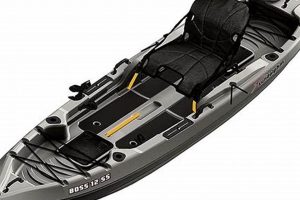
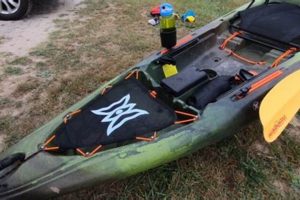
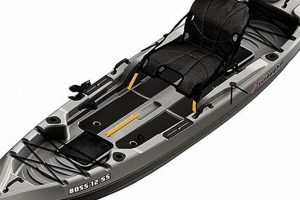
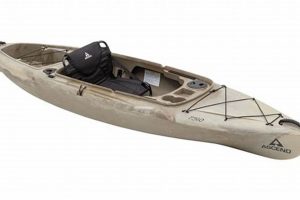
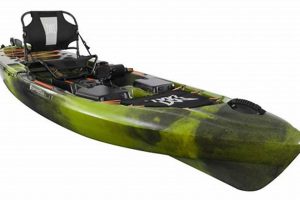
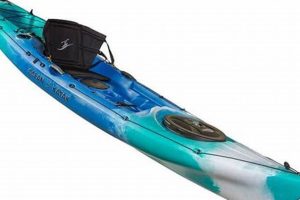
This style of kayak, characterized by an open-deck design and elevated seating position, offers anglers enhanced stability, visibility, and ease of entry and exit compared to traditional, closed-deck kayaks. The elevated vantage point facilitates casting and sight fishing, while the open design allows for greater freedom of movement and easier re-entry after an accidental immersion. This type of watercraft is commonly equipped with specialized features like rod holders, gear tracks, and storage compartments, further enhancing its suitability for fishing.
The development of these specialized kayaks has significantly impacted recreational fishing. They provide a stable and accessible platform, opening up the sport to a wider range of participants, including those with physical limitations or concerns about confined spaces. The ability to stand and fish, often a feature of these designs, further enhances the angling experience. Their popularity has spurred innovation in design and materials, leading to lighter, more durable, and feature-rich models.
This exploration will delve further into the specific characteristics, advantages, and various applications of this increasingly popular fishing platform, covering topics such as hull design, material selection, essential features, and safety considerations.
Tips for Utilizing Open-Deck Fishing Kayaks
Proper utilization of open-deck fishing kayaks maximizes angler safety and success. These tips offer guidance for both novice and experienced anglers.
Tip 1: Prioritize Stability: Weight distribution is crucial. Keep the center of gravity low and centered to maintain balance, especially in rough waters or when standing. Practice entering, exiting, and standing in calm water before venturing into challenging conditions.
Tip 2: Master Paddle Strokes: Efficient paddling conserves energy and enhances maneuverability. Learn basic forward, reverse, and turning strokes. Consider a longer, more powerful paddle designed specifically for kayak fishing.
Tip 3: Secure Equipment: Utilize onboard storage and secure loose items to prevent loss or interference during casting and retrieval. Implement leashing systems for essential gear like paddles and rods.
Tip 4: Dress Appropriately: Wear quick-drying clothing suitable for varying weather conditions. Layering allows for adaptation to temperature fluctuations. Personal flotation devices (PFDs) are essential safety equipment and should be worn at all times.
Tip 5: Understand Water Conditions: Check weather forecasts and tidal charts before embarking. Be aware of potential hazards such as currents, wind, and submerged obstacles. Carry a communication device and inform someone of your planned route and return time.
Tip 6: Respect the Environment: Practice Leave No Trace principles. Dispose of waste properly and avoid disturbing wildlife or sensitive habitats. Adhere to local fishing regulations and licensing requirements.
Tip 7: Plan for Emergencies: Carry a first-aid kit, signaling devices, and a bilge pump or bailing device. Develop a self-rescue plan and practice essential safety drills, such as re-entering the kayak from the water.
Adherence to these guidelines ensures a safe and productive fishing experience, maximizing enjoyment and minimizing potential risks. These foundational principles contribute to responsible and successful kayak angling.
The following section will delve into specific techniques and strategies for enhancing fishing success from an open-deck kayak platform.
1. Stability

Stability forms a cornerstone of the sit-on-top kayak fishing experience. A stable platform is essential for casting accuracy, comfortable fishing, and, critically, safety. The inherent design of these kayaks, with their wider beams and open decks, contributes significantly to stability. However, factors such as hull design (e.g., pontoon vs. tunnel hull), weight distribution, and water conditions also play crucial roles. Consider a scenario where an angler attempts to stand for sight fishing: a stable kayak provides a secure base, minimizing the risk of capsizing, whereas an unstable platform jeopardizes both angler and equipment. The relationship between stability and angler confidence cannot be overstated; enhanced stability fosters confidence, allowing anglers to focus on fishing rather than balance.
The practical significance of stability becomes particularly apparent in dynamic fishing situations. Landing a large fish, navigating through choppy water, or encountering unexpected wakes from passing vessels all present stability challenges. Kayak stability directly impacts an angler’s ability to manage these situations effectively and safely. For instance, a stable kayak allows an angler to maintain balance while reeling in a powerful fish, while an unstable platform could lead to capsizing. Understanding the factors influencing stability allows anglers to make informed decisions about kayak selection, equipment placement, and on-water behavior. This knowledge is vital for maximizing both fishing success and personal safety.
In conclusion, stability is paramount for successful and safe sit-on-top kayak fishing. It affects all aspects of the angling experience, from casting accuracy to emergency preparedness. Recognizing the interplay of design, weight distribution, and environmental factors allows anglers to optimize stability and confidently navigate the challenges of on-water angling. This understanding empowers anglers to fully leverage the advantages of these specialized kayaks, enhancing both enjoyment and safety on the water.
2. Open Design

The open design inherent in these kayaks represents a significant departure from traditional closed-cockpit designs. This structural characteristic fundamentally alters the user experience, offering distinct advantages and influencing various aspects of kayak fishing. The absence of a closed deck facilitates ease of entry and exit, a critical factor for anglers of varying physical abilities. Furthermore, the open design simplifies re-entry after an accidental immersion, a crucial safety consideration. Consider a scenario where an angler encounters unexpected rough water or a sudden obstacle: the open design allows for quick recovery, minimizing the risk of prolonged submersion. This feature provides a significant safety advantage, particularly for solo anglers or those fishing in remote locations.
Beyond safety, the open design contributes to the versatility of these kayaks. The unobstructed deck space allows for greater freedom of movement, enabling anglers to shift positions, stand for casting, and easily access gear. This adaptability is particularly valuable in active fishing scenarios, such as sight fishing or fly fishing, where agility and quick reactions are essential. The open design also simplifies customization, enabling anglers to mount specialized equipment, like fish finders or camera mounts, directly to the deck. This adaptability extends the functionality of the kayak, transforming it into a versatile fishing platform tailored to individual needs. For example, an angler specializing in trolling might equip their kayak with rod holders and outriggers, leveraging the open deck space for optimal equipment placement.
In summary, the open design of these kayaks is not merely a structural feature but a defining element that influences performance, safety, and versatility. This design choice directly addresses practical challenges associated with kayak fishing, offering solutions for accessibility, recovery, and adaptability. The resulting platform empowers anglers to navigate diverse fishing environments and pursue various angling techniques with enhanced confidence and efficiency. The practical implications of this design element are significant, contributing to the growing popularity of these kayaks among anglers seeking a stable, accessible, and versatile fishing platform.
3. Elevated Seating
Elevated seating distinguishes this kayak style and contributes significantly to its fishing utility. The higher vantage point provides several key advantages, primarily improved visibility and casting leverage. Enhanced visibility allows anglers to spot fish, structure, and potential hazards more easily. Improved casting leverage facilitates longer casts and more precise presentations. Consider sight fishing in shallow water: an elevated seating position allows the angler to spot fish before they are spooked, offering a crucial tactical advantage. Similarly, when casting into wind, the elevated position provides additional leverage to counter air resistance and achieve greater distance.
The practical implications of elevated seating extend beyond improved fishing performance. The higher position promotes better posture, reducing strain on the back and legs during long fishing sessions. This ergonomic benefit contributes to overall comfort and reduces fatigue, allowing anglers to remain focused and effective on the water. Furthermore, the elevated position facilitates easier entry and exit, a significant advantage for individuals with mobility challenges. The elevated seating simplifies transitions, reducing the risk of slips or falls. For example, an angler with knee problems would find the higher seating position less strenuous when entering or exiting the kayak.
In summary, elevated seating is a defining feature of this specific kayak type. Its practical benefits extend beyond improved visibility and casting, encompassing ergonomic advantages and enhanced accessibility. These factors collectively contribute to a more comfortable, efficient, and safer fishing experience. Understanding the advantages of elevated seating allows anglers to fully appreciate the design rationale behind these kayaks and make informed choices based on individual needs and fishing styles. This design element demonstrates the careful consideration given to optimizing the angling experience, enhancing both performance and overall enjoyment on the water.
4. Fishing Features
Specialized fishing features distinguish these kayaks from recreational models, transforming them into dedicated angling platforms. These integrated features are designed to enhance functionality, efficiency, and overall fishing success. Rod holders, strategically positioned for easy access and secure rod storage, exemplify this specialized design. Similarly, gear tracks provide modular mounting points for accessories like fish finders, GPS units, and camera mounts, allowing anglers to customize their setup according to specific needs. Consider a fly fisherman needing quick access to multiple rods: integrated rod holders allow for efficient switching between different fly patterns, optimizing fishing effectiveness. Conversely, a trolling angler might prioritize mounting rod holders angled for optimal lure presentation, maximizing catch potential.
The practical significance of these specialized features becomes apparent during actual fishing scenarios. Integrated storage compartments keep tackle organized and accessible, minimizing time spent searching for essential gear. This organizational efficiency allows anglers to focus on fishing, maximizing time spent with lines in the water. Built-in anchor trolleys simplify anchor deployment and retrieval, crucial for maintaining position in current or wind. For instance, an angler targeting specific structure can utilize the anchor trolley system to precisely position the kayak for optimal presentation. These purpose-built features demonstrate the thoughtful design considerations incorporated into these kayaks, transforming them from simple watercraft into efficient fishing platforms. Livewells, present in certain models, offer a humane solution for keeping caught fish alive and healthy, allowing for catch-and-release practices or preserving freshness for later consumption.
In conclusion, the inclusion of specialized fishing features significantly impacts the overall angling experience. These features are not mere add-ons but integral components that enhance functionality, efficiency, and fishing success. From rod holders and gear tracks to integrated storage and anchor systems, each feature plays a specific role in optimizing the kayak’s performance as a dedicated fishing platform. Understanding the practical implications of these features empowers anglers to select the most appropriate kayak for their specific fishing style and maximize their potential on the water. The thoughtful integration of these features underscores the dedication to creating a truly specialized and effective platform for kayak angling.
5. Accessibility

Accessibility, in the context of sit-on-top kayaks designed for fishing, refers to the ease with which individuals can utilize these vessels, regardless of physical limitations or experience levels. This characteristic is a significant advantage of the design, broadening participation in the sport and contributing to its growing popularity. Examining the various facets of accessibility reveals its practical implications and underscores the inclusive nature of this kayak style.
- Ease of Entry and Exit
The open deck design eliminates the need to squeeze into a confined cockpit, simplifying entry and exit significantly. This design element benefits individuals with limited mobility, such as those with back or knee problems, making the transition to and from the water considerably less challenging. Consider an angler with arthritis: the open design allows them to enter and exit the kayak with minimal strain, fostering independence and comfort on the water. This contrasts sharply with traditional closed-deck kayaks, which can present significant challenges for individuals with physical limitations.
- Stability and Balance
The inherent stability of these kayaks, due to their wider beam and lower center of gravity, provides a secure and confidence-inspiring platform. This characteristic benefits both novice and experienced anglers, minimizing the risk of capsizing and promoting a sense of security on the water. Anglers with balance concerns, perhaps due to inner ear issues, find the stable platform reassuring, allowing them to focus on fishing rather than maintaining precarious balance. This enhanced stability significantly reduces anxiety and promotes enjoyment, particularly for individuals new to kayaking or those with pre-existing balance challenges.
- Adaptability and Customization
The open deck allows for customization and adaptation to individual needs. Anglers can easily add specialized equipment, such as adaptive seating or outriggers, to further enhance stability and comfort. Consider an angler with a disability requiring specialized seating: the open deck accommodates modifications, allowing for personalized comfort and support. This adaptability extends to equipment placement, enabling anglers to configure rod holders, fish finders, and other accessories according to individual preferences and physical requirements. This customization potential empowers anglers to create a truly personalized fishing platform tailored to their specific needs.
- Simplified Water Re-entry
The open design also simplifies re-entry after an accidental fall. This feature is a critical safety consideration, particularly for solo anglers. The process of re-boarding is significantly easier compared to closed-deck kayaks, requiring less strength and flexibility. Consider an older angler experiencing an unexpected capsize: the open design allows for a relatively easy re-entry, minimizing the risk of prolonged immersion and potential hypothermia. This ease of re-entry enhances safety and instills confidence, particularly for anglers venturing out alone or in challenging conditions.
These facets of accessibility collectively contribute to the inclusive nature of sit-on-top fishing kayaks. By removing barriers to entry and prioritizing stability and adaptability, these kayaks open up the sport of kayak fishing to a wider audience. This emphasis on accessibility not only benefits individuals with physical limitations but also enhances the overall experience for all anglers, promoting confidence, comfort, and enjoyment on the water. This design philosophy fosters inclusivity and encourages participation, contributing to the continued growth and evolution of kayak fishing as a recreational activity.
Frequently Asked Questions
This section addresses common inquiries regarding kayaks designed specifically for fishing, offering concise and informative responses.
Question 1: What are the primary advantages of this kayak style over traditional sit-inside kayaks for fishing?
Key advantages include enhanced stability, improved visibility for spotting fish and casting, easier entry and exit, simplified recovery after capsizing, and greater freedom of movement for casting and fighting fish. The open design also facilitates customization with fishing-specific accessories.
Question 2: Are these kayaks suitable for all water conditions?
While generally stable, their suitability depends on specific hull designs and prevailing conditions. Wider, flatter hulls excel in calm waters, while longer, V-shaped hulls handle chop and waves more effectively. Caution is advised in extreme conditions such as strong currents, high winds, or large waves.
Question 3: How is storage managed on these kayaks given their open design?
These kayaks typically feature integrated storage compartments, including hatches, tank wells, and bungee cord systems, designed specifically to secure gear and keep it dry. Dry bags are also recommended for sensitive items like electronics or personal belongings.
Question 4: What safety precautions should one take when using this type of kayak for fishing?
Essential safety measures include wearing a personal flotation device (PFD), carrying a whistle or other signaling device, informing someone of the planned fishing location and estimated return time, checking weather forecasts before embarking, and carrying a basic first-aid kit.
Question 5: What factors should be considered when selecting a fishing kayak of this design?
Key considerations include intended fishing style, water conditions typically encountered, storage capacity requirements, desired features (e.g., rod holders, livewell), angler weight and size, budget, and transportation logistics.
Question 6: Are these kayaks difficult to transport and store?
Transportation and storage depend on the kayak’s size and material. Roof racks or trailers are commonly used for transport. Storage options include garages, sheds, or specialized vertical storage systems. Lighter materials like polyethylene simplify handling, while heavier materials may require assistance.
Understanding these key aspects facilitates informed decision-making regarding selection, utilization, and safe operation of fishing kayaks. Careful consideration of these factors enhances the overall fishing experience and promotes responsible enjoyment of the sport.
The next section provides a comprehensive guide to essential accessories that enhance the functionality and safety of fishing kayaks.
Conclusion
This exploration has provided a comprehensive overview of kayaks specifically designed for fishing from an elevated, open-deck position. Key features, including enhanced stability, improved visibility, specialized fishing features, and accessibility, contribute to the increasing popularity of this kayak style. The discussion encompassed practical aspects such as safety considerations, essential accessories, and factors influencing kayak selection. Stability and open design promote confidence and security on the water, while the elevated seating position enhances visibility and casting range. Integrated fishing features, like rod holders and gear tracks, transform these kayaks into dedicated angling platforms, optimizing functionality and efficiency on the water.
The evolution of fishing kayak design reflects a growing understanding of angler needs and a commitment to enhancing the on-water experience. Continued innovation in materials, design, and features promises further advancements in performance, comfort, and accessibility. Careful consideration of individual needs, fishing styles, and prevailing water conditions remains crucial for selecting the appropriate kayak and maximizing its potential. Ultimately, these specialized kayaks empower anglers to explore diverse waterways, pursue a variety of fishing techniques, and experience the unique rewards of angling from a stable, accessible, and feature-rich platform.