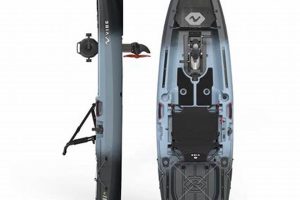
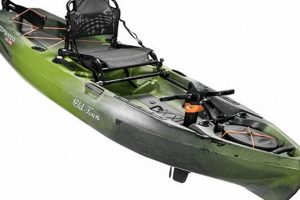
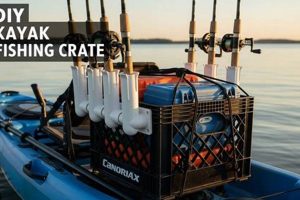
Small, specialized watercraft designed for angling in rivers and lakes using artificial flies represent a niche within the broader kayaking market. These vessels are typically shorter and wider than recreational kayaks, providing enhanced stability crucial for casting and landing fish. They often feature specialized seating, gear mounting systems, and shallow drafts allowing access to shallow waters where fish frequently congregate.
The stability and specialized features of these angling platforms offer significant advantages. Anglers gain improved casting accuracy and line control, leading to increased catch rates. Furthermore, the compact design and shallow draft permit access to secluded fishing spots often inaccessible by larger boats. This specialized design evolved from traditional fishing methods, merging the stealth and maneuverability of kayaks with the precision of fly fishing. The resulting synergy creates a highly effective and enjoyable angling experience.
Further exploration will cover key design elements, selection criteria, essential gear, and popular fishing locations. Understanding these aspects will empower anglers to make informed decisions and maximize their success on the water.
Tips for Selecting and Using Specialized Fishing Kayaks
Choosing and effectively utilizing a specialized fishing kayak requires careful consideration of several factors. The following tips offer guidance for maximizing on-the-water success and safety.
Tip 1: Consider Stability: Prioritize stability, especially for beginners. Wider hulls generally provide greater stability, crucial for casting and landing fish. Test various models to find the optimal balance between stability and maneuverability.
Tip 2: Evaluate Propulsion Systems: Choose a propulsion system suited to individual needs and fishing environments. Paddle kayaks offer excellent exercise and control, while pedal-powered versions allow hands-free fishing and faster travel. Motorized options provide access to distant fishing grounds.
Tip 3: Assess Storage Capacity: Ample storage is essential for carrying tackle, safety gear, and personal items. Consider waterproof compartments and integrated storage solutions for optimal organization and protection.
Tip 4: Select Appropriate Seating: Comfortable seating is paramount for long fishing trips. Look for adjustable seating systems with adequate lumbar support and breathable materials.
Tip 5: Prioritize Safety Features: Safety should always be a primary concern. Choose kayaks with bright colors for enhanced visibility and ensure proper safety equipment such as a personal flotation device, whistle, and signaling devices are readily accessible.
Tip 6: Practice Casting Techniques: Practice casting techniques from the seated position before venturing onto the water. This will improve accuracy and prevent accidental entanglement.
Tip 7: Research Fishing Locations: Thoroughly research potential fishing locations and understand local regulations. Consider factors such as water depth, current, and potential hazards.
By adhering to these guidelines, anglers can significantly enhance their experience, ensuring safety, efficiency, and ultimately, greater success on the water.
Careful consideration of these factors ensures not only a productive fishing experience but also promotes safety and responsible enjoyment of the sport. These insights provide a strong foundation for successful angling from specialized kayaks.
1. Stability

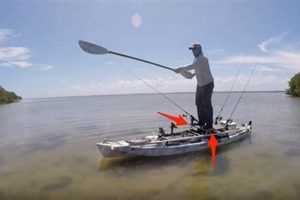
Stability represents a critical performance characteristic in fly fishing kayaks, directly influencing angling success and safety. A stable platform allows anglers to cast accurately, maintain balance during retrieves and fights, and safely land fish. Without adequate stability, the act of casting, particularly in challenging conditions such as wind or current, can compromise balance and potentially lead to capsizing. A stable kayak also permits anglers to focus on fishing techniques rather than maintaining equilibrium. For example, an angler sight-fishing in a shallow estuary requires a stable platform to stand and cast accurately to wary fish. Similarly, landing a large fish alongside a kayak necessitates stability to prevent tipping during the retrieval process.
The design features contributing to kayak stability include hull width, hull shape, and center of gravity. Wider hulls generally offer greater initial stability, resisting tipping more effectively. A flat-bottomed hull provides enhanced primary stability, suitable for calm waters, while a rounded or V-shaped hull, though less initially stable, offers greater secondary stability, performing better in rough conditions. Keeping the center of gravity low further enhances stability. Specialized features like outriggers or stabilizers can augment stability, particularly beneficial for anglers who prefer to stand while fishing. Understanding the interplay of these factors enables informed decisions when selecting a kayak appropriate for specific fishing environments and angler preferences.
Ultimately, prioritizing stability in a fly fishing kayak translates to increased angling effectiveness and a safer on-the-water experience. Compromising stability can hinder casting accuracy, limit fishing locations, and increase the risk of capsizing. Therefore, anglers should carefully evaluate stability characteristics when choosing a kayak, considering the intended fishing environment and personal preferences. This informed approach contributes significantly to a more successful and enjoyable fly fishing experience.
2. Maneuverability

Maneuverability represents a crucial performance attribute in fly fishing kayaks, significantly impacting an angler’s ability to navigate diverse water environments and effectively target fish. Precise and responsive handling allows for efficient positioning in tight quarters, such as navigating through narrow creeks, around submerged obstacles, or approaching fish in shallow water without disturbing them. Restricted maneuverability can hinder access to prime fishing spots and limit angling opportunities.
- Hull Design and Length
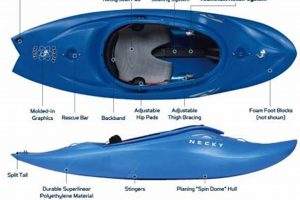
Hull design significantly influences a kayak’s turning responsiveness. Shorter kayaks generally turn more quickly than longer ones, making them ideal for navigating tight spaces and complex waterways. Longer kayaks, while less agile, offer superior tracking and speed, advantageous in open water environments. Hull shape also plays a role; kayaks with a more pronounced rocker (upward curve at the bow and stern) turn more easily than those with flatter hulls. For example, a short, rockered kayak proves highly maneuverable in a winding stream filled with fallen logs, while a longer kayak with a less pronounced rocker excels in larger lakes or rivers. The selection of hull design and length should align with the intended fishing environment.
- Water Conditions
Water conditions, including current and wind, significantly impact maneuverability. Strong currents can challenge a kayak’s tracking and responsiveness, requiring greater effort to maintain desired positioning. Wind can also affect tracking and create drift, necessitating adjustments in paddling technique or the use of an anchor or drift sock. For example, a kayak navigating a fast-flowing river requires precise paddling and maneuvering to hold position near a promising eddy. Understanding how water conditions influence maneuverability allows for appropriate adjustments and enhances angling effectiveness.
- Propulsion System
The chosen propulsion system influences maneuverability. Paddle kayaks offer excellent control and maneuverability in tight spaces, enabling precise adjustments in direction and speed. Pedal-powered kayaks, while offering hands-free fishing, may have a slightly larger turning radius. Motorized kayaks provide greater speed and range but may sacrifice some maneuverability in confined areas. For example, a paddle kayak offers superior maneuverability when navigating through dense vegetation compared to a motorized kayak. Selecting the appropriate propulsion system should consider the specific fishing environment and personal preferences.
- Weight Capacity and Load Distribution
Weight capacity and load distribution impact a kayak’s responsiveness and maneuverability. Exceeding the recommended weight capacity can reduce freeboard and increase drag, hindering maneuverability. Uneven load distribution can also negatively impact tracking and responsiveness. For instance, a heavily loaded kayak with gear concentrated in the stern will be less responsive and more difficult to turn than a properly balanced kayak. Careful attention to weight distribution enhances maneuverability and overall performance.
The interplay of these factors determines a kayak’s maneuverability, a critical aspect influencing angling effectiveness and access to prime fishing locations. Choosing a kayak with appropriate maneuverability characteristics for the intended fishing environment significantly contributes to a more successful and enjoyable fly fishing experience.
3. Specialized Features
Specialized features distinguish fly fishing kayaks from recreational models, optimizing them for the unique demands of angling. These features enhance efficiency, comfort, and overall fishing success. Understanding their function and benefits is crucial for selecting the right kayak and maximizing on-the-water performance.
- Rod Holders
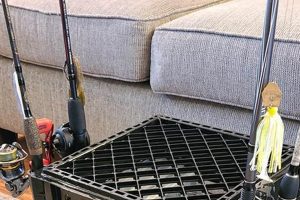
Rod holders secure fishing rods, freeing hands for paddling, navigating, and other tasks. Various types exist, including flush-mounted, adjustable, and rotating holders. A fly angler drifting a river can position rods securely in holders, ready for immediate action when a fish rises. Multiple rod holders allow anglers to carry rods rigged with different flies or lines, adapting quickly to changing conditions.
- Anchor Systems
Anchor systems provide stationary positioning, crucial for fishing specific locations or controlling drift in current. Anchor trolleys allow adjustment of anchor position from the seated position, optimizing boat angle and presentation. An angler fishing a deep pool can deploy an anchor to maintain position and effectively cover the target area. Deploying an anchor up-current allows precise drift control and consistent fly presentation.
- Gear Tracks and Mounting Points
Gear tracks and mounting points provide versatile platforms for attaching accessories like fish finders, GPS units, camera mounts, and other specialized equipment. These customizable options allow anglers to tailor their kayaks to specific needs and preferences. Mounting a fish finder allows anglers to locate underwater structures and fish concentrations, increasing angling efficiency. A camera mount captures memorable moments on the water.
- Specialized Seating and Footrests
Elevated seating and adjustable footrests enhance comfort and stability, particularly important during long fishing trips. Ergonomic designs reduce fatigue and improve casting performance. Adjustable footrests accommodate anglers of different heights, ensuring proper paddling posture and leverage. Elevated seating improves visibility and casting range, allowing anglers to spot fish more easily and cover more water.
These specialized features, integral to fly fishing kayaks, contribute significantly to improved angling efficiency, comfort, and overall success. Selecting a kayak equipped with the appropriate features tailored to individual needs and fishing style enhances the overall on-the-water experience. While these features add to the cost of a specialized fishing kayak, their benefits in terms of improved angling performance and enjoyment often outweigh the initial investment.
4. Shallow Water Access
Shallow water zones often harbor abundant insect life and baitfish, attracting game fish seeking food. Consequently, these areas represent prime targets for fly anglers. Specialized kayaks, with their shallow draft design, provide unparalleled access to these productive fishing grounds, a distinct advantage over deeper-draft vessels. The ability to navigate shallows effectively opens up a wider range of fishing opportunities and significantly enhances angling success.
- Reduced Draft
The minimal draft of specialized fishing kayaks allows navigation in mere inches of water, granting access to areas inaccessible to larger boats. This advantage enables anglers to approach fish discreetly in their shallow-water habitats. For instance, exploring the shallow margins of a lake teeming with vegetation, where larger boats cannot venture, opens opportunities to target fish feeding on insects emerging from the aquatic plants.
- Stealth and Approach
The quiet operation and low profile of kayaks minimize disturbance to shallow-water environments. This stealthy approach prevents spooking wary fish, particularly in clear, shallow water. Consider a scenario where an angler quietly paddles a kayak into a shallow cove, casting to bonefish tailing in inches of water. The kayaks minimal disturbance increases the likelihood of a successful hookup.
- Exploring Diverse Habitats
Shallow water environments encompass diverse habitats, including flats, estuaries, backwaters, and small streams. Each habitat harbors unique fish species and requires specific angling techniques. Kayaks provide the versatility to navigate these diverse environments effectively. An angler can seamlessly transition from fishing a shallow saltwater flat for bonefish to exploring the shallows of a freshwater stream for trout, maximizing fishing opportunities.
- Sight Fishing Advantages
Shallow water clarity often allows sight fishing, a highly engaging and effective technique. The elevated seating position in many fishing kayaks enhances visibility, enabling anglers to spot fish and present flies with precision. In the clear shallows of a tropical flat, an angler can sight-cast to cruising permit, offering a precise fly presentation for a higher chance of success.
The shallow water access provided by specialized fishing kayaks unlocks a world of angling possibilities, significantly expanding the range of fishable waters and enhancing the overall experience. This capability differentiates these kayaks from other fishing platforms, highlighting their value for anglers targeting shallow-water species and seeking a close connection with their environment. The ability to navigate these areas quietly and effectively translates directly to increased fishing success and a deeper appreciation of aquatic ecosystems.
5. Gear Storage

Effective gear storage is paramount in fly fishing kayaks, directly impacting organization, efficiency, and safety on the water. Unlike larger fishing vessels, kayaks have limited space, necessitating efficient storage solutions to accommodate essential fishing tackle, safety equipment, and personal items. Proper gear organization ensures quick access to necessary items, minimizes clutter, and maximizes available space, contributing to a more productive and enjoyable fishing experience.
- Waterproof Compartments
Waterproof compartments safeguard sensitive items like phones, wallets, and cameras from water damage. These compartments, typically integrated into the kayak’s hull, offer secure storage for essential gear, providing peace of mind in wet conditions. For example, an angler wading a river can confidently store a phone and car keys in a waterproof compartment, knowing they will remain dry even if the kayak capsizes. This protection allows anglers to focus on fishing without worrying about gear damage.
- Tackle Storage Solutions
Dedicated tackle storage solutions, such as tackle boxes, trays, and fly patches, maintain order and accessibility for fishing gear. These specialized compartments or attachments keep flies, lines, leaders, and other small items organized and readily available, streamlining the fishing process. An angler changing flies can quickly locate the desired pattern in a well-organized fly box, minimizing disruption to the fishing rhythm.
- Rod and Paddle Storage
Secure rod and paddle storage systems keep these essential items readily accessible while preventing loss or damage during transport and on the water. Dedicated rod holders and paddle clips keep gear organized and prevent entanglement with other equipment. An angler navigating through dense vegetation can secure spare rods and paddles, preventing them from snagging on branches and ensuring they are readily available when needed.
- Dry Bags and Gear Bags
Dry bags and gear bags offer flexible storage options for clothing, food, and other items. These waterproof bags protect gear from splashes and rain, maintaining dryness and functionality. An angler embarking on a multi-day fishing trip can store clothing and camping gear in dry bags, ensuring they remain dry and usable throughout the journey.
Efficient gear storage in fly fishing kayaks is essential for a streamlined and productive fishing experience. Proper organization not only maximizes available space but also enhances safety by reducing clutter and ensuring quick access to essential items. Investing in appropriate storage solutions contributes significantly to a more enjoyable and successful time on the water. Consideration of these factors allows anglers to select a kayak and storage solutions that meet their specific needs and fishing style.
6. Propulsion Options
Propulsion systems significantly influence a fly fishing kayak’s performance, impacting accessibility, fishing techniques, and overall experience. Choosing the right propulsion system depends on individual needs, fishing environment, and target species. Understanding the advantages and limitations of each option is crucial for optimizing on-the-water effectiveness.
- Paddle Power
Traditional paddle kayaks offer excellent maneuverability and control, ideal for navigating tight spaces and complex waterways. Paddle propulsion provides a quiet, non-intrusive approach, minimizing disturbance to fish, particularly in shallow water. However, paddling requires physical exertion, which can limit fishing time and range, especially in challenging conditions like strong currents or wind. A paddle kayak excels in small streams and protected estuaries where stealth and precise maneuvering are paramount.
- Pedal Power
Pedal-powered kayaks offer hands-free fishing, allowing anglers to focus on casting and retrieving. The use of leg muscles for propulsion reduces fatigue compared to paddling, enabling longer fishing sessions. Pedal kayaks often achieve higher speeds than paddle kayaks, facilitating quicker travel between fishing spots. However, pedal drives can limit maneuverability in extremely shallow water or dense vegetation. They are well-suited for larger lakes and rivers where hands-free fishing and increased range are advantageous.
- Motorized Kayaks
Motorized kayaks provide access to distant fishing grounds and offer significant advantages in challenging conditions like strong currents or headwinds. Electric motors offer quiet operation, minimizing disturbance to fish and preserving the tranquility of the environment. Gas-powered motors provide greater speed and range but introduce noise and potential environmental concerns. Motorized kayaks excel in large bodies of water, allowing anglers to cover vast distances efficiently. However, their size and weight can limit portability and access to shallow or confined areas. Regulations regarding motorized watercraft should also be considered.
- Combination Systems
Some kayaks offer hybrid propulsion systems, combining paddle power with either pedal drives or electric motors. This versatility allows anglers to adapt to changing conditions and fishing locations. An angler might use an electric motor to cover long distances and then switch to paddle power for quiet, precise maneuvering in shallow water near a target area. This adaptability enhances fishing effectiveness in diverse environments.
Matching propulsion type to fishing style and environment significantly enhances angling effectiveness and enjoyment. Careful consideration of factors such as fishing location, target species, physical capabilities, and budget guides the selection of the optimal propulsion system for a fly fishing kayak. A well-chosen propulsion system seamlessly integrates with the overall kayak design and fishing approach, contributing to a more successful and rewarding experience on the water.
Frequently Asked Questions
Addressing common inquiries regarding specialized fishing kayaks provides clarity for prospective buyers and enhances understanding of key considerations.
Question 1: What are the primary advantages of using a specialized fishing kayak compared to a traditional recreational kayak?
Specialized fishing kayaks offer enhanced stability, specialized features for angling (rod holders, anchor systems, gear tracks), and shallow-water access, all crucial for optimizing fishing success. Recreational kayaks prioritize general-purpose use and may lack these specific features.
Question 2: How important is stability in a fishing kayak, and how is it affected by hull design?
Stability is paramount for casting, fighting fish, and overall safety. Hull width, shape (flat bottom, rounded, or V-shaped), and the kayak’s center of gravity significantly influence stability. Wider, flatter hulls generally offer greater initial stability.
Question 3: What propulsion options are available, and how do they influence fishing style and location accessibility?
Propulsion options include paddles, pedals, and motors. Paddles offer maneuverability and stealth, pedals provide hands-free fishing, and motors extend range. Selection depends on fishing environment, target species, and personal preference.
Question 4: How does one choose the right size and weight capacity for individual needs?
Kayak size and weight capacity should accommodate the angler’s weight, gear, and intended fishing environment. Longer kayaks track better in open water, while shorter kayaks enhance maneuverability in tight spaces. Weight capacity dictates the maximum load the kayak can safely carry.
Question 5: What safety precautions should one take when using a fishing kayak?
Essential safety precautions include wearing a personal flotation device, carrying a whistle and signaling devices, informing someone of fishing plans, checking weather conditions, and being aware of local regulations.
Question 6: What essential gear and accessories enhance the fishing kayak experience?
Essential gear includes a paddle or appropriate propulsion system, personal flotation device, fishing rods and reels, tackle, appropriate clothing, and safety equipment. Accessories such as rod holders, anchor systems, and fish finders further enhance fishing effectiveness.
Careful consideration of these frequently asked questions provides a comprehensive understanding of key factors influencing kayak selection and safe, effective usage. This knowledge empowers informed decisions, enhancing angling success and overall enjoyment on the water.
Further sections will delve into specific kayak models, popular fishing locations, and advanced angling techniques.
Conclusion
Specialized watercraft designed for fly fishing represent a significant advancement in angling technology. This exploration has highlighted the crucial role of stability, maneuverability, specialized features, shallow-water access, gear storage, and propulsion options in optimizing angling effectiveness and overall experience. Careful consideration of these interconnected elements empowers informed decisions regarding kayak selection and utilization.
Mastery of these specialized vessels opens doors to previously inaccessible fishing grounds and elevates angling pursuits. Continued exploration of advanced techniques and emerging technologies promises further refinement of the fly fishing kayak experience, fostering deeper connections between anglers and the aquatic environments they cherish.