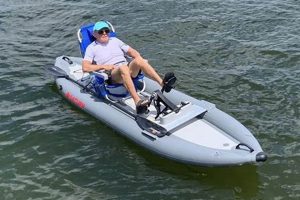
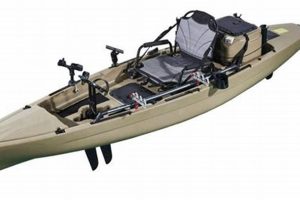
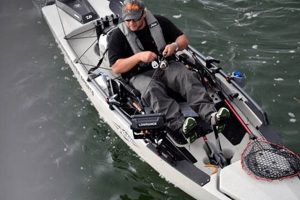
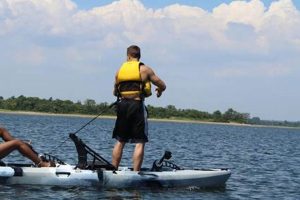
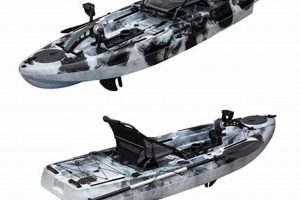
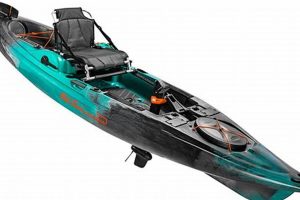
Budget-friendly kayaks equipped with pedal-powered propulsion systems offer an affordable entry point into hands-free fishing. These vessels combine the stability and utility of a fishing kayak with the efficiency of a pedal drive, allowing anglers to cover more water and position themselves precisely without paddling. This combination provides an advantage for various fishing styles, from trolling to casting in moving water.
The affordability of these kayaks opens up kayak fishing to a wider audience. Previously, the cost of pedal-driven kayaks could be prohibitive, limiting access to this technology. The emergence of more economical options has broadened participation in the sport. This development allows more anglers to experience the benefits of hands-free fishing, such as increased casting opportunities and reduced fatigue. This accessibility also contributes to the growing popularity of kayak fishing overall.
This article will explore the key features to consider when selecting an economical pedal-powered fishing kayak. Topics will include drive mechanisms, hull design, weight capacity, essential fishing features, and a comparison of leading brands and models within this budget-friendly category.
Tips for Selecting a Budget-Friendly Pedal Kayak
Finding a balance between cost and performance is key when selecting a less expensive pedal-powered fishing kayak. Careful consideration of several factors can ensure a satisfactory purchase.
Tip 1: Research Drive Mechanisms: Different pedal systems offer varying levels of efficiency, durability, and maintenance requirements. Understanding the pros and cons of fin-based systems versus propeller systems is crucial.
Tip 2: Consider Hull Design: Hull shape impacts stability, maneuverability, and tracking. Pontoon hulls offer excellent stability, while V-shaped hulls track better in open water. Consider fishing conditions and personal preferences.
Tip 3: Evaluate Weight Capacity: Ensure the kayak’s weight capacity accommodates the angler’s weight, gear, and potential catch. Exceeding the capacity compromises stability and performance.
Tip 4: Prioritize Essential Fishing Features: Look for features such as rod holders, storage compartments, and mounting points for fish finders or other accessories. These features enhance the fishing experience.
Tip 5: Compare Brands and Models: Research various manufacturers and models, comparing specifications, features, and user reviews. This comparative analysis helps identify the best value within a given budget.
Tip 6: Inspect Used Options: Consider exploring the used kayak market. Pre-owned kayaks can offer significant cost savings, but careful inspection is essential to ensure structural integrity and functionality.
Tip 7: Factor in Transportation and Storage: Account for the kayak’s size and weight, along with available transportation and storage solutions. A larger, heavier kayak might require a specialized trailer or roof rack.
By considering these factors, anglers can make informed decisions and select a budget-friendly pedal fishing kayak that meets individual needs and enhances their fishing experience.
Equipped with this knowledge, the next step is to explore specific models and make a final purchasing decision.
1. Price Point

Price point serves as a critical factor when selecting a pedal-driven fishing kayak, particularly when seeking the most economical option. Understanding how price influences features, materials, and overall performance is essential for making informed purchasing decisions.
- Initial Investment vs. Long-Term Costs
The initial purchase price represents only one aspect of the overall cost. Lower-priced kayaks may utilize less durable materials or components, potentially leading to higher maintenance or repair costs over time. Evaluating long-term expenses alongside the initial investment provides a more comprehensive understanding of affordability.
- Features and Functionality
Price often dictates the features included in a kayak. Less expensive models may offer fewer rod holders, smaller storage compartments, or simpler pedal drive systems. Anglers must prioritize essential features based on individual fishing styles and needs while balancing cost considerations.
- Materials and Construction
Kayak construction significantly impacts durability, weight, and performance. Lower price points may correlate with less robust materials or simpler construction methods. Understanding the trade-offs between cost and construction quality is vital for selecting a kayak that meets durability requirements.
- Brand Recognition and Reputation
While less-established brands may offer competitive pricing, established manufacturers often provide better warranties, customer support, and readily available replacement parts. Balancing brand reputation with budget constraints requires careful consideration.
Careful evaluation of these price-related factors empowers informed decision-making. Prioritizing long-term value over the lowest initial price point often results in a more satisfactory ownership experience, balancing affordability with essential features and performance expectations.
2. Pedal System Durability

Pedal system durability represents a critical consideration when evaluating budget-friendly pedal-driven fishing kayaks. While cost savings are attractive, compromises in drive system quality can lead to premature failure, diminished performance, and increased repair expenses. A less durable system may utilize lower-grade materials, simpler designs, or less robust construction, increasing susceptibility to wear, breakage, and corrosion, especially in saltwater environments. For example, a cheaper chain-driven system might be more prone to rust or stretching compared to a higher-quality belt-driven system. Similarly, plastic components in a budget drive might break more easily than comparable metal components in a more expensive model.
The practical significance of a durable pedal system extends beyond mere longevity. A reliable drive system ensures consistent performance, allowing anglers to focus on fishing rather than troubleshooting mechanical issues. A robust system also contributes to safety, reducing the risk of failure in challenging conditions. For instance, a kayak angler relying on a fin-driven system in shallow water may face considerable difficulty if the fins become damaged or bent due to impact. A stronger fin material and more robust design would mitigate such risks. Ultimately, investing in a kayak with a durable, even if slightly more expensive, pedal system often translates to lower long-term costs and a more enjoyable fishing experience.
Balancing cost with pedal system durability requires careful evaluation. Researching different drive mechanisms, reading user reviews, and comparing materials and construction can help anglers make informed decisions. Prioritizing a more robust pedal system within a budget-friendly range can significantly impact the overall ownership experience, minimizing downtime and maximizing time on the water.
3. Hull Stability and Tracking

Hull stability and tracking are crucial factors influencing the performance of budget-friendly pedal-driven fishing kayaks. Stability refers to a kayak’s resistance to tipping, while tracking describes its ability to maintain a straight course. These characteristics are intertwined and significantly impact the angler’s fishing experience. Kayak manufacturers often balance these two attributes based on the intended use of the vessel.
Budget-friendly kayaks often prioritize stability due to cost constraints related to design and materials. Wider, flatter hulls provide inherent stability but may sacrifice tracking performance. This design choice can result in a kayak that feels more secure for anglers, especially in calmer waters, but requires more effort to maintain a straight course. Conversely, kayaks with a narrower, V-shaped hull design may track more efficiently but compromise stability. This hull shape is often preferred for paddling longer distances or in open water but can feel less stable, particularly when an angler is standing or casting. For example, a wide, flat-bottomed kayak might be ideal for fishing in sheltered bays or ponds, offering a stable platform for casting and reeling. However, it might require more frequent course corrections when paddling against wind or current. A narrower, V-shaped hull might be preferred for trolling in a lake, offering better tracking but potentially requiring more attention to balance.
Understanding the interplay between hull stability and tracking is essential for selecting a budget-friendly pedal kayak. Anglers should consider their primary fishing environment and style. Those fishing in calm waters or prioritizing stability for stand-up fishing might prefer a wider, flatter hull. Those covering longer distances or fishing in open water might favor a narrower, V-shaped hull that tracks more efficiently. Balancing these characteristics within a specific budget requires careful consideration of design trade-offs and their practical implications for on-the-water performance.
4. Essential Fishing Features
Essential fishing features significantly influence the practicality and overall value proposition of a cheapest pedal drive fishing kayak. While cost remains a primary concern, compromising on key features can negatively impact the fishing experience, potentially offsetting any initial price savings. These features directly affect an angler’s efficiency, comfort, and ability to target fish effectively. For example, inadequate rod holders may limit an angler’s ability to troll or present multiple lines, while insufficient storage can hinder organization and access to tackle. A missing anchor trolley system can make precise boat positioning in current challenging, while a lack of mounting points for fish finders or other electronics restricts access to valuable underwater information.
Consider a scenario where an angler purchases the absolute cheapest pedal kayak, foregoing integrated rod holders. This angler might then need to purchase aftermarket rod holders and install them, potentially compromising the kayak’s stability or creating an inconvenient setup. The added cost and hassle could negate the initial savings. Similarly, a kayak lacking sufficient storage might necessitate the purchase of additional dry bags or tackle boxes, further increasing expenses and complexity. The absence of a built-in transducer mount might limit the angler’s ability to utilize a fish finder effectively, hindering their ability to locate fish and structure. Conversely, a budget-friendly kayak that incorporates essential features, even in simpler forms, can provide a much more effective and enjoyable fishing experience.
Integrating essential fishing features into a budget-friendly pedal kayak requires thoughtful design and prioritization. Manufacturers must balance cost considerations with practical functionality. Anglers, in turn, benefit from carefully evaluating these features to ensure they align with their fishing style and needs. Understanding the trade-offs between cost and functionality empowers informed decision-making, ultimately leading to a more rewarding fishing experience. Prioritizing key features like rod holders, storage, and mounting points, even in basic configurations, significantly enhances the value and usability of a cheapest pedal drive fishing kayak. Ignoring these core components can undermine the overall fishing experience, emphasizing the importance of evaluating features alongside price.
5. Weight Capacity and Size

Weight capacity and size are fundamental considerations when selecting a cheapest pedal drive fishing kayak. These factors directly influence stability, performance, and the overall fishing experience. Understanding the relationship between these elements and cost is crucial for informed decision-making.
- Maximum Load Capacity
Maximum load capacity dictates the total weight a kayak can safely support, encompassing the angler’s weight, gear, and any potential catch. Exceeding this limit compromises stability, reduces freeboard (the distance between the waterline and the top edge of the hull), and increases the risk of capsizing. Cheaper kayaks may utilize lighter materials or construction methods, potentially resulting in lower weight capacities compared to more expensive models. An angler weighing 200 lbs with 50 lbs of gear requires a kayak with a minimum capacity of 250 lbs.
- Kayak Length and Width
Length and width influence a kayak’s stability, maneuverability, and tracking. Longer kayaks generally track straighter but are less maneuverable. Wider kayaks offer greater stability but sacrifice speed and efficiency. Budget-friendly kayaks may prioritize stability over other performance characteristics by employing wider, shorter hull designs. For instance, a shorter, wider kayak offers excellent stability for fishing in calm ponds or rivers but might be difficult to maneuver in tight spaces. A longer, narrower kayak might track better in open water but provide less initial stability.
- Transportation and Storage
Kayak size and weight directly impact transportation and storage requirements. Larger, heavier kayaks necessitate specialized roof racks, trailers, or ample storage space. Budget-conscious anglers must consider these logistical aspects alongside purchase price. A 12-foot kayak might fit easily in a pickup truck bed, while a 14-foot kayak could require a trailer or specialized roof rack system. Storage space in a garage or shed also dictates feasible kayak dimensions.
- Material and Construction Impact on Weight
Material selection influences a kayak’s overall weight. Less expensive kayaks might utilize heavier, less durable materials to reduce costs. This added weight can impact transportation, handling, and on-water performance. For example, a kayak made from rotomolded polyethylene is generally heavier than one constructed from higher-grade, lighter-weight polyethylene. This weight difference impacts portability and paddling effort.
Careful consideration of weight capacity and size within the context of budget constraints is crucial for selecting a suitable pedal drive fishing kayak. Balancing load requirements, performance characteristics, and logistical limitations ensures a safe, efficient, and enjoyable on-the-water experience. Compromising on these aspects for the sake of cost savings can negatively impact functionality and long-term satisfaction.
6. Maintenance Requirements

Maintenance requirements are a crucial factor influencing the long-term cost and performance of a cheapest pedal drive fishing kayak. While the initial purchase price may be attractive, overlooking potential maintenance demands can lead to unforeseen expenses and diminished functionality. Budget-friendly kayaks may utilize less durable components or simpler designs, potentially requiring more frequent maintenance compared to higher-end models. For example, a less expensive pedal drive system with exposed chains or simpler bearings may require more frequent cleaning, lubrication, and potential replacement than a sealed, high-end system. Similarly, a kayak constructed with lower-grade hardware might be more susceptible to corrosion in saltwater environments, necessitating regular rinsing and protective treatments. Neglecting these maintenance tasks could result in premature wear, component failure, and costly repairs.
The practical implications of neglecting maintenance extend beyond financial considerations. A poorly maintained pedal drive system can become inefficient, reducing speed and maneuverability. Corroded hardware can compromise structural integrity, affecting safety and longevity. For instance, a saltwater angler who fails to rinse their kayak and pedal drive after each use might experience rapid corrosion of metallic components, potentially leading to drive system failure or hull damage. Similarly, neglecting to lubricate moving parts in the pedal drive can lead to increased friction and wear, ultimately requiring premature replacement of components like chains, bearings, or cables. These issues can significantly detract from the fishing experience, leading to frustration, lost fishing time, and unexpected expenses.
Minimizing maintenance requirements and associated costs often involves careful material selection, design considerations, and diligent upkeep. Budget-friendly kayaks can benefit from design choices that prioritize simplicity and durability. Anglers can mitigate maintenance demands by adhering to recommended cleaning and lubrication schedules. Understanding the potential maintenance needs of different components and materials empowers informed purchasing decisions and facilitates proactive care, ensuring optimal performance and longevity of the cheapest pedal drive fishing kayak. Ultimately, balancing initial cost with long-term maintenance requirements ensures a sustainable and rewarding fishing experience.
7. Warranty and Customer Support
Warranty and customer support are critical considerations when evaluating a cheapest pedal drive fishing kayak. While price remains a primary motivator for budget-conscious buyers, a comprehensive warranty and responsive customer support can significantly influence long-term satisfaction and minimize potential risks associated with purchasing a less expensive product.
- Warranty Coverage and Duration
Warranty coverage and duration directly impact long-term ownership costs. A longer warranty period, particularly one covering the pedal drive system and hull, provides valuable protection against manufacturing defects or premature component failures. A comprehensive warranty demonstrates manufacturer confidence in product quality. Conversely, a limited warranty or lack thereof may signal potential quality issues or increased risk of out-of-pocket repair expenses. For example, a five-year hull warranty offers greater peace of mind than a one-year warranty, especially given the potential for hull damage from impacts or UV exposure. Similarly, a two-year warranty on the pedal drive system is more valuable than a 90-day warranty, protecting against potential mechanical failures that can disrupt fishing trips and incur costly repairs.
- Customer Support Responsiveness and Accessibility
Responsive and accessible customer support is essential for addressing potential issues, troubleshooting problems, and obtaining replacement parts. Efficient customer service minimizes downtime and frustration. Manufacturers with readily available contact information, online resources, and knowledgeable support staff enhance the ownership experience. Conversely, unresponsive or difficult-to-reach customer support can exacerbate problems, leaving owners feeling stranded with a defective product. A company with readily available online FAQs, troubleshooting guides, and responsive email or phone support provides a significant advantage over a company with limited contact options and slow response times.
- Parts Availability and Cost
Ready access to reasonably priced replacement parts simplifies repairs and minimizes downtime. Manufacturers with established distribution networks and readily available parts ensure timely repairs. Conversely, difficulty obtaining parts or exorbitant replacement costs can significantly increase long-term ownership expenses. For instance, a readily available replacement propeller for a pedal drive system is far more convenient and less expensive than having to wait weeks for a special-order part or resorting to costly third-party alternatives. Easy access to common replacement parts like cables, bearings, or hardware streamlines maintenance and repairs, reducing the impact of wear and tear on the fishing experience.
- Online Resources and Community Support
Online resources, such as forums, user groups, and manufacturer websites, provide valuable information, troubleshooting tips, and community support. Access to these resources enhances product knowledge and facilitates problem-solving. A strong online community can offer advice, share experiences, and provide valuable insights into maintaining and repairing budget-friendly kayaks. For example, online forums can offer valuable tips on maintaining specific pedal drive systems, identifying potential issues, and sourcing replacement parts. User reviews and product comparisons can also inform purchasing decisions and provide real-world perspectives on the performance and durability of cheapest pedal drive kayaks.
Evaluating warranty and customer support alongside price provides a more comprehensive understanding of a cheapest pedal drive fishing kayak’s true value. While initial cost savings are attractive, a robust warranty, responsive customer service, accessible parts, and a supportive online community enhance the ownership experience, minimize potential risks, and contribute to long-term satisfaction. Neglecting these aspects can lead to unforeseen expenses, frustration, and ultimately, a less rewarding fishing experience.
Frequently Asked Questions (FAQ)
This FAQ section addresses common inquiries regarding budget-friendly, pedal-powered fishing kayaks. Clear, concise answers provide practical information for informed purchasing decisions.
Question 1: Do lower-priced pedal kayaks sacrifice performance?
While some performance trade-offs may exist in less expensive models, advancements in manufacturing and design allow for a balance between affordability and functionality. Focusing on essential features helps prioritize performance within a budget.
Question 2: How durable are pedal drive systems in cheaper kayaks?
Pedal drive system durability in less expensive kayaks varies depending on the manufacturer and specific components used. Researching specific models, reading user reviews, and comparing materials helps assess long-term durability expectations.
Question 3: Are less expensive pedal kayaks suitable for saltwater fishing?
Suitability for saltwater depends on the kayak’s construction materials and the pedal drive system’s corrosion resistance. Aluminum or composite hulls and sealed drive systems offer better saltwater performance compared to some lower-cost materials. Regular rinsing and maintenance are essential in saltwater environments.
Question 4: What essential features should one prioritize in a budget-friendly pedal fishing kayak?
Essential features to prioritize within a budget include a stable hull design, sufficient rod holders, adequate storage, and a comfortable seating system. Prioritizing these features enhances the fishing experience without necessarily requiring a significant price increase.
Question 5: How does weight capacity affect performance in cheaper pedal kayaks?
Weight capacity directly influences stability and performance. Exceeding the specified weight limit compromises stability, reduces freeboard, and negatively impacts paddling efficiency. Adhering to manufacturer recommendations regarding weight capacity is crucial for safety and optimal performance.
Question 6: What are the long-term maintenance considerations for budget-friendly pedal kayaks?
Long-term maintenance includes regular cleaning, lubrication of moving parts, inspection for wear and tear, and timely replacement of worn components. Diligent maintenance practices extend the lifespan of the pedal drive system and maintain optimal performance. Frequency and complexity of maintenance vary depending on materials, usage, and environmental conditions.
Understanding these key aspects of budget-friendly pedal-powered fishing kayaks empowers informed purchasing decisions, balancing cost considerations with essential features, performance expectations, and long-term ownership implications.
The next section will explore specific models and brands within the budget-friendly category.
Conclusion
Careful evaluation of price, features, performance, and long-term ownership costs is essential when selecting a budget-friendly pedal-driven fishing kayak. Balancing affordability with essential features like a durable pedal drive system, stable hull design, sufficient storage, and appropriate weight capacity ensures a functional and enjoyable fishing platform. Understanding maintenance requirements, warranty coverage, and customer support resources further informs purchasing decisions and contributes to a positive ownership experience. Prioritizing these factors optimizes resource allocation and maximizes long-term value within budget constraints.
The evolving landscape of kayak fishing technology continuously presents opportunities for improved affordability and accessibility. As manufacturing processes advance and designs become more refined, anglers can expect continued innovation in the budget-friendly pedal kayak segment. This ongoing development promises increased access to hands-free kayak fishing, allowing a wider audience to experience the benefits of this evolving and increasingly popular pursuit. Diligent research and careful consideration of individual needs and priorities remain crucial for navigating the available options and selecting the optimal kayak for a fulfilling and sustainable fishing experience.