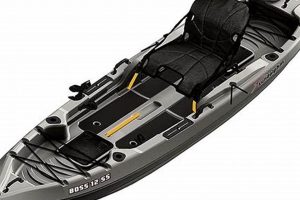
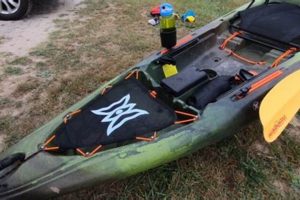
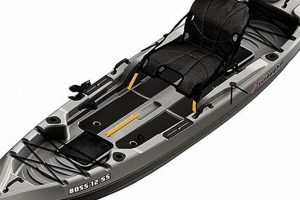
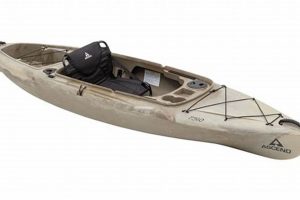
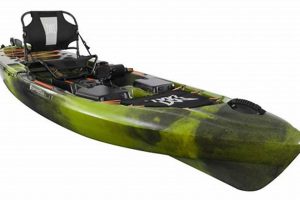
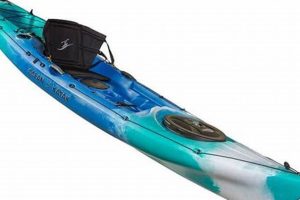
Tandem, sit-on-top kayaks designed for angling offer a stable and efficient platform for two individuals to enjoy the sport. These vessels typically feature open decks, facilitating easy entry and exit, along with specialized storage and mounting options for rods, tackle, and other fishing gear. A common example includes molded-in rod holders and recessed areas for tackle trays.
Shared paddling experiences enhance camaraderie and can be more economical than purchasing two single kayaks. The sit-on-top design contributes to stability, making them suitable for various skill levels and reducing anxiety for less experienced anglers. Furthermore, their open design allows for greater freedom of movement and easier recovery in the event of a capsize. Historically, fishing kayaks have evolved from traditional closed-deck designs to the now-dominant sit-on-top configuration, directly reflecting the increasing demand for stability and practicality in fishing-specific watercraft.
This article will delve deeper into specific features to consider when selecting such a kayak, encompassing hull design, weight capacity, storage options, and propulsion systems. Subsequent sections will also address essential safety precautions and best practices for a successful and enjoyable tandem fishing excursion.
Tips for Tandem Kayak Fishing
Successful tandem kayak fishing expeditions require careful planning and coordination. These tips offer guidance for maximizing enjoyment and efficiency on the water.
Tip 1: Coordinate Paddling Strokes: Synchronized paddling is crucial for efficient movement and maintaining a straight course. Practice paddling together on flat water before venturing into challenging conditions. One paddler should establish the pace and communicate changes to the other.
Tip 2: Distribute Weight Evenly: Proper weight distribution ensures stability. Gear and anglers should be positioned to maintain balance and prevent tipping. Consider the kayak’s specified weight capacity.
Tip 3: Designate Roles and Responsibilities: Decide who will navigate, manage fishing gear, and control the anchor. Clear roles prevent confusion and optimize teamwork.
Tip 4: Communicate Effectively: Open communication is vital, particularly in challenging conditions. Discuss fishing strategies, potential hazards, and any adjustments needed during the trip.
Tip 5: Practice Re-Entry Techniques: Capsizing, while unlikely, is a possibility. Practicing re-entry in a controlled environment prepares anglers for unexpected situations and increases confidence on the water.
Tip 6: Respect Each Other’s Space and Fishing Techniques: Maintaining a respectful and collaborative environment enhances the experience. Avoid casting lines across each other and be mindful of personal space.
Tip 7: Prioritize Safety: Wear personal flotation devices and carry essential safety equipment, including a whistle, signaling device, and first-aid kit. Check weather conditions before embarking and be aware of potential hazards such as changing tides or currents.
By adhering to these guidelines, anglers can significantly improve their tandem kayaking experience, fostering teamwork, efficiency, and safety on the water.
These preparatory steps are vital for a rewarding fishing trip. The following section will offer insights into selecting appropriate gear and equipment.
1. Stability

Stability is a paramount consideration in tandem sit-on-top fishing kayaks, directly impacting safety and angling effectiveness. A stable platform allows anglers to cast, reel, and land fish without compromising balance. The wider beam and flatter hull design characteristic of many fishing kayaks contribute significantly to primary stabilityresistance to initial tipping. Secondary stability, the ability to recover from a significant lean, is equally crucial, particularly when encountering unexpected waves or currents. A kayak with poor secondary stability risks capsizing, posing a safety threat and potentially jeopardizing valuable equipment. For example, anglers fishing in choppy coastal waters require a kayak with greater stability than those fishing calm inland lakes. Choosing a kayak with ample stability allows for comfortable and confident movement, facilitating a more enjoyable and productive fishing experience.
Several factors influence a kayak’s stability. Hull design plays a crucial role, with wider, flatter hulls generally offering greater stability than narrower, more V-shaped designs. Weight capacity also contributes; exceeding the manufacturer’s specified weight limit can negatively impact stability. Weight distribution within the kayak is equally important; uneven loading can create instability. Furthermore, external factors such as wind and waves can influence stability. Anglers should consider these variables when evaluating stability and select a kayak appropriate for their intended use and environmental conditions. Features such as outriggers can enhance stability for individuals seeking additional assurance.
Understanding the nuances of stability is essential for safe and effective tandem kayak fishing. Prioritizing stability in kayak selection minimizes the risk of capsizing and allows anglers to focus on fishing rather than maintaining balance. Recognizing the interplay between hull design, weight capacity, weight distribution, and environmental factors empowers informed decision-making. Ultimately, a stable kayak contributes significantly to a more enjoyable, productive, and safe fishing experience.
2. Weight Capacity

Weight capacity represents a critical factor influencing the performance and safety of a tandem sit-on-top fishing kayak. Ignoring this specification can lead to instability, reduced maneuverability, and potentially dangerous situations on the water. Careful consideration of weight capacity ensures the vessel performs as intended, providing a stable and efficient platform for fishing.
- Combined Weight of Passengers:
The combined weight of both anglers represents a significant portion of the total load. Individuals exceeding average weight should pay particular attention to this specification. For example, two anglers weighing 200 lbs each require a kayak with a capacity of at least 400 lbs. Disregarding this can lead to a dangerously low freeboard, increasing the risk of swamping.
- Fishing Gear and Equipment:
Rods, reels, tackle boxes, coolers, and other fishing accessories contribute significantly to the overall weight. The weight of these items must be factored into the total load calculation. For instance, a fully loaded tackle box can weigh upwards of 20 lbs, and a cooler filled with ice and drinks can add considerable weight. Underestimating gear weight compromises stability and performance.
- Impact on Performance:
Exceeding the recommended weight capacity negatively impacts performance. The kayak will sit lower in the water, increasing drag and reducing maneuverability. Tracking becomes more challenging, and paddling efficiency decreases. Furthermore, stability is compromised, increasing the risk of capsizing. Maintaining appropriate loading ensures optimal performance characteristics.
- Safety Implications:
Overloading a kayak presents significant safety risks. Reduced freeboard increases susceptibility to swamping, particularly in rough conditions. Instability makes casting and reeling challenging, increasing the likelihood of accidental falls. Adhering to weight capacity guidelines minimizes these risks, promoting a safer and more enjoyable fishing experience. Choosing a kayak with a higher weight capacity than anticipated provides a margin of safety for unexpected situations.
Careful evaluation of weight capacity, encompassing passenger weight, gear weight, and its impact on performance and safety, ensures appropriate kayak selection. A properly loaded kayak enhances stability, maneuverability, and overall fishing experience, while neglecting weight considerations can lead to compromised performance and potentially dangerous situations. Prioritizing weight capacity safeguards both anglers and equipment, contributing to a successful and safe outing on the water.
3. Storage Solutions

Effective storage solutions are integral to the functionality and enjoyment of tandem sit-on-top fishing kayaks. These vessels, designed for angling excursions, require designated spaces for rods, reels, tackle boxes, and other essential gear. Inadequate storage leads to clutter, disorganization, and compromised safety, hindering fishing effectiveness and overall experience. Conversely, well-designed storage facilitates easy access to equipment, maximizing fishing time and enhancing on-the-water efficiency. For instance, dedicated rod holders prevent tangling and damage, while readily accessible tackle storage streamlines lure changes and adjustments. Kayaks lacking sufficient storage may necessitate leaving essential gear behind, limiting angling versatility.
Storage solutions in tandem fishing kayaks vary widely, ranging from molded-in rod holders and recessed tackle compartments to bungee cord rigging and dry storage hatches. The choice of storage features depends on individual fishing styles and preferences. Anglers targeting larger species require robust rod holders capable of securing heavy tackle, while those practicing fly fishing benefit from specialized fly line management systems. Furthermore, dry storage compartments protect sensitive electronics and personal items from water damage. Kayaks designed for longer expeditions often incorporate larger storage wells capable of accommodating camping gear and provisions. The availability and configuration of storage features significantly influence the practicality and versatility of the kayak.
Careful consideration of storage solutions is paramount when selecting a tandem sit-on-top fishing kayak. Adequate and well-designed storage contributes directly to fishing efficiency, safety, and overall enjoyment. Evaluating individual fishing needs and preferences, alongside available storage options, ensures selection of a kayak optimized for specific angling pursuits. Prioritizing effective storage solutions allows anglers to focus on the task at hand, enhancing their chances of success and maximizing time on the water.
4. Propulsion Options (Paddle/Pedal)

Propulsion choice significantly impacts the performance and fishing experience within tandem sit-on-top kayaks. Traditional paddle propulsion relies on upper body strength and coordinated effort between paddlers. While offering exercise and affordability, paddling can detract from fishing focus, particularly in challenging conditions or covering longer distances. Conversely, pedal-driven systems, utilizing leg power, allow for hands-free fishing and more efficient long-distance travel. This propulsion method allows anglers to maintain position and focus on fishing technique, even in currents or wind. For example, a pedal-driven kayak offers significant advantages when trolling or maintaining position near structure. Consider a fishing scenario requiring frequent repositioning; paddle propulsion necessitates interrupting fishing activity, while pedal propulsion allows continuous angling while maneuvering.
Each propulsion method presents distinct advantages and disadvantages within the context of tandem fishing kayaks. Paddle propulsion remains economical and offers exercise benefits, but can prove tiring during long trips or challenging conditions, potentially impacting fishing effectiveness. Moreover, coordinating paddling between two individuals requires practice and communication. Pedal systems facilitate hands-free fishing and enhanced maneuverability, but typically increase kayak cost and complexity. Furthermore, pedal-driven kayaks can be heavier and more difficult to transport. Choosing between paddle and pedal propulsion requires careful consideration of fishing style, physical capabilities, and budgetary constraints. For instance, anglers prioritizing stability and affordability might opt for a paddle-powered vessel, while those seeking speed, efficiency, and hands-free fishing would likely favor a pedal-driven option. The distance typically covered and the prevailing water conditions also influence propulsion choice. Anglers frequently navigating long distances or challenging currents might find pedal drive more suitable.
Optimal propulsion selection hinges upon a comprehensive assessment of individual needs and priorities. Understanding the inherent trade-offs between paddle and pedal propulsion, considering factors such as fishing style, physical condition, budget, and intended fishing environment, enables informed decision-making. Ultimately, the choice impacts not only on-the-water efficiency but also overall fishing experience. Selecting the appropriate propulsion system enhances fishing success and enjoyment, aligning with the specific demands of tandem kayak angling.
5. Comfort and Ergonomics (Seats)

Comfort and ergonomic design, particularly regarding seating, represent crucial factors influencing the overall experience in a tandem sit-on-top fishing kayak. Extended periods on the water, inherent in fishing excursions, necessitate supportive and adjustable seating to mitigate fatigue and discomfort. Inadequate seat design can lead to back pain, stiffness, and reduced fishing effectiveness. Conversely, well-designed seating systems enhance endurance, allowing anglers to remain comfortable and focused on fishing for extended durations. Consider, for example, an angler experiencing back pain due to a poorly designed seat; their focus shifts from fishing to discomfort, diminishing the overall experience. Ergonomic seating, featuring adjustable backrests, lumbar support, and breathable fabrics, contributes significantly to on-the-water comfort, particularly during long fishing trips.
The importance of comfortable and ergonomic seating is amplified in tandem kayaks due to the shared space and extended periods of relatively static positioning. Anglers often spend hours seated while casting, reeling, and waiting for a bite. Proper posture and support become essential for preventing fatigue and discomfort. Adjustable seating systems allow individual customization based on body type and preferences, further enhancing comfort. Moreover, features like padded seating and breathable fabrics contribute to a more pleasant experience, particularly in warm weather. Imagine two anglers of differing heights sharing a tandem kayak; adjustable seating ensures both individuals maintain a comfortable and ergonomic paddling position, regardless of their physical differences. This adaptability is crucial for promoting long-term comfort and preventing physical strain during extended fishing trips.
In conclusion, prioritizing comfort and ergonomics, particularly concerning seating, significantly enhances the tandem fishing kayak experience. Properly designed seating systems mitigate fatigue, prevent discomfort, and contribute to overall fishing effectiveness. Adjustable features and supportive designs cater to individual needs, ensuring a comfortable and enjoyable experience for both anglers. Recognizing the importance of ergonomic seating in tandem kayaks allows informed purchasing decisions and ultimately leads to more productive and satisfying fishing excursions.
6. Material Durability (Polyethylene)
Material durability is paramount in tandem sit-on-top fishing kayaks, dictating vessel lifespan and resilience against environmental stressors. Polyethylene, the dominant material in kayak construction, offers a balance of durability, affordability, and impact resistance crucial for navigating diverse water conditions. Understanding polyethylene’s properties informs appropriate kayak selection and maintenance, ensuring long-term performance and enjoyment.
- Impact Resistance:
Polyethylene exhibits excellent impact resistance, crucial for withstanding collisions with rocks, submerged debris, or accidental impacts during transport and storage. This resilience minimizes the risk of cracks or punctures, maintaining hull integrity and preventing leaks. Consider, for instance, a kayak striking a submerged log; polyethylene’s impact resistance reduces the likelihood of significant damage. This robust characteristic is particularly beneficial in rocky river environments or coastal areas with potential hazards.
- UV Resistance:
Ultraviolet radiation from sunlight degrades many plastics over time. Polyethylene kayaks incorporate UV stabilizers to mitigate sun damage, preserving material integrity and color. However, prolonged exposure to intense sunlight can still lead to fading and material weakening. Storage in shaded areas or utilizing UV-resistant covers extends kayak lifespan. Visualize two identical kayaks, one stored indoors and one exposed continuously to direct sunlight; the latter will exhibit greater wear and fading due to UV degradation.
- Density and Rigidity:
Polyethylene’s density influences kayak weight, rigidity, and durability. High-density polyethylene (HDPE) provides greater rigidity and impact resistance than low-density polyethylene (LDPE), albeit with increased weight. HDPE kayaks typically offer superior tracking and durability, while LDPE kayaks are lighter and more affordable. This distinction is relevant when considering transport and storage; a heavier HDPE kayak may require assistance for loading and unloading.
- Maintenance and Repair:
Polyethylene’s repairability contributes to its longevity. Minor scratches and abrasions are easily repaired using readily available polyethylene welding kits or marine-grade adhesives. This repairability extends the lifespan of the kayak, even after encountering minor damage. Envision a shallow scrape on a rocky riverbed; a polyethylene kayak can be easily repaired, maintaining its structural integrity and preventing further damage.
The durability of polyethylene directly impacts the long-term value and performance of tandem sit-on-top fishing kayaks. Understanding the material’s properties, specifically its impact resistance, UV resistance, density variations, and repairability, empowers informed decision-making and facilitates appropriate care and maintenance. Selecting a well-constructed polyethylene kayak ensures resilience against environmental challenges and prolonged enjoyment on the water. Ultimately, material durability contributes significantly to the overall investment value and long-term satisfaction derived from tandem kayak fishing experiences.
7. Special Features
Specialized features distinguish tandem sit-on-top fishing kayaks from recreational models, optimizing them for angling pursuits. These features enhance functionality, efficiency, and overall fishing experience. Cause and effect relationships exist between specific features and their impact on angling success. For example, integrated rod holders directly impact an angler’s ability to manage multiple lines, increasing catch potential. Similarly, strategically placed mounting points for fish finders enhance locational awareness, directly influencing fishing strategy and outcome. These features are not merely add-ons; they represent integral components contributing to the overall effectiveness and enjoyment of tandem fishing kayaks.
Real-world examples illustrate the practical significance of specialized features. Consider a scenario involving trolling. Adjustable rod holders allow precise positioning of lines, maximizing lure presentation and minimizing tangles. Integrated track systems enable customization with accessories like GPS mounts and camera booms, enhancing navigation and documentation capabilities. Furthermore, built-in live wells maintain catch freshness, crucial for tournament fishing or preserving bait. These features transition a standard kayak into a dedicated fishing platform, directly impacting angling success and overall enjoyment.
Understanding the connection between specialized features and tandem fishing kayak functionality is crucial for informed purchasing decisions. Evaluating individual fishing styles and target species informs feature prioritization. Anglers targeting specific species benefit from specialized rod holders and mounting systems tailored to their needs. Furthermore, considerations like storage capacity, seating comfort, and propulsion systems influence feature selection. Ultimately, aligning specialized features with specific angling goals maximizes on-the-water efficiency and enjoyment, transforming a recreational vessel into a purpose-built fishing machine. This understanding empowers informed choices, ensuring the selected kayak meets the unique demands of tandem angling pursuits.
Frequently Asked Questions
This section addresses common inquiries regarding tandem sit-on-top fishing kayaks, providing concise and informative responses to facilitate informed decision-making and enhance understanding.
Question 1: What are the key advantages of a tandem fishing kayak over two single kayaks?
Tandem kayaks often offer cost-effectiveness compared to purchasing two singles. They can also enhance camaraderie through shared paddling and fishing experiences. Depending on design, some tandem kayaks offer increased stability beneficial for less experienced paddlers.
Question 2: How is stability affected in a tandem kayak designed for fishing?
Stability is influenced by hull design, weight capacity, and weight distribution. Wider beams and flatter hulls generally provide greater initial stability. Proper weight distribution is crucial; uneven loading can compromise stability. Exceeding the manufacturer’s specified weight capacity negatively impacts both primary and secondary stability.
Question 3: What storage features should one look for in a tandem fishing kayak?
Essential storage features include rod holders, tackle storage compartments, and dry storage hatches. Anglers should consider their specific needs; those carrying more gear require larger storage capacities. Specialized features, like dedicated tackle trays and integrated live wells, enhance organization and fishing efficiency.
Question 4: What are the primary differences between paddle and pedal propulsion in tandem fishing kayaks?
Paddle propulsion utilizes upper body strength and requires coordinated paddling. Pedal propulsion utilizes leg power, allowing hands-free fishing. Paddle propulsion is generally more affordable, while pedal drive offers increased speed and maneuverability, particularly in wind or current. Weight and complexity often increase with pedal-driven systems.
Question 5: How does seating impact long-term comfort during tandem kayak fishing trips?
Ergonomic seating with adjustable backrests and lumbar support is crucial for extended comfort. Features like breathable fabrics and padded cushions further enhance comfort, especially in warm weather. Proper seating mitigates fatigue and allows anglers to remain focused on fishing, maximizing enjoyment and minimizing discomfort.
Question 6: Why is polyethylene a popular material choice for tandem fishing kayaks?
Polyethylene offers a balance of durability, affordability, and impact resistance. Its resilience against impacts protects against damage from rocks and debris. UV resistance, enhanced by stabilizers, mitigates sun damage. Polyethylene’s repairability allows for easy mending of minor scratches and abrasions, extending kayak lifespan.
Careful consideration of these frequently asked questions provides a foundation for informed decision-making when selecting a tandem sit-on-top fishing kayak. Understanding these key aspects ensures the chosen vessel aligns with individual needs and preferences, maximizing on-the-water enjoyment and fishing success.
The next section provides a comprehensive guide to essential gear and accessories for enhancing tandem kayak fishing excursions.
Conclusion
Tandem sit-on-top fishing kayaks offer a unique platform for shared angling experiences. Careful consideration of factors like stability, weight capacity, storage solutions, propulsion options, comfort, material durability, and specialized features ensures selection of a suitable vessel. Understanding these elements empowers informed purchasing decisions, optimizing on-the-water performance and enjoyment. Prioritizing safety considerations and practicing appropriate paddling techniques further contribute to successful and rewarding fishing excursions.
Choosing a tandem sit-on-top fishing kayak represents an investment in shared experiences and enhanced angling opportunities. Thorough research and informed decision-making maximize the long-term value and enjoyment derived from these specialized vessels. Appropriate selection and utilization of these kayaks unlock new avenues for exploring waterways and pursuing angling passions, fostering camaraderie and creating lasting memories on the water.