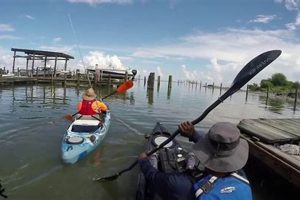
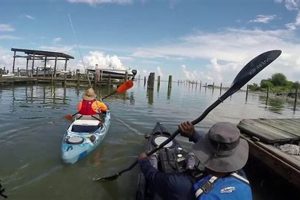
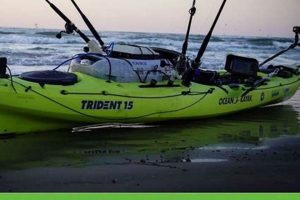
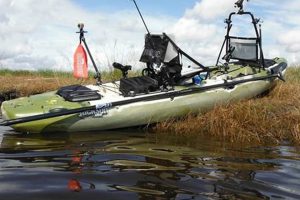
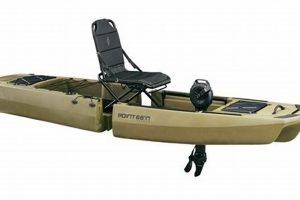
Stability is a critical factor in kayak fishing. A stable platform allows anglers to cast, reel, and land fish effectively, and contributes significantly to safety on the water. A kayak designed for fishing will often incorporate features that enhance stability, such as a wider hull, outriggers, or a lower center of gravity.
Enhanced stability contributes directly to angler confidence and enjoyment on the water. It permits anglers to focus on fishing rather than constantly correcting balance, particularly in challenging conditions such as wind, waves, or current. Historically, specialized fishing kayaks have evolved to prioritize stability, reflecting the unique demands of the sport. This evolution has led to designs that provide a secure and comfortable platform even when handling larger fish or navigating complex waterways.
The following sections will explore various aspects of kayak design and features that influence stability, offering guidance for selecting the right kayak based on individual fishing styles and water conditions. Factors such as hull design, material construction, and weight capacity will be discussed in detail.
Tips for Kayak Stability
Maintaining balance and stability is crucial for a safe and enjoyable fishing experience. Selecting the right kayak and understanding its characteristics contribute significantly to on-water confidence. The following tips offer guidance on maximizing stability while kayak fishing.
Tip 1: Consider Hull Design: Kayak hull design significantly influences stability. Wider, flatter hulls generally provide greater primary stability (initial resistance to tipping), while longer, narrower hulls offer superior secondary stability (resistance to capsizing once tipped).
Tip 2: Evaluate Weight Capacity: Adhering to the manufacturer’s specified weight capacity is essential. Overloading a kayak compromises stability and maneuverability. Factor in body weight, gear, and potential catch when assessing capacity.
Tip 3: Distribute Weight Evenly: Even weight distribution is key to maintaining balance. Distribute gear evenly throughout the kayak, avoiding concentrated weight in the bow or stern.
Tip 4: Practice Entering and Exiting: Practicing entering and exiting the kayak in shallow, calm water builds confidence and reduces the risk of capsizing. Use a stable entry point, such as a dock or shallow shoreline.
Tip 5: Understand Water Conditions: Water conditions significantly impact stability. Exercise caution in windy, choppy, or fast-flowing water. Choose locations appropriate for skill level and kayak type.
Tip 6: Consider Additional Stability Aids: Outriggers or stabilizers can enhance stability, particularly for anglers new to kayaking or those fishing in challenging conditions.
Tip 7: Maintain a Low Center of Gravity: Keeping movements smooth and controlled and avoiding sudden shifts in weight contributes to stability. Sitting lower in the kayak lowers the center of gravity, further enhancing balance.
By understanding these factors and choosing appropriate equipment, anglers can significantly enhance on-water stability, leading to a safer and more productive fishing experience. These principles contribute not only to success on the water but also to overall enjoyment of the sport.
Following these guidelines will help ensure a stable and successful fishing trip, allowing focus to shift to the enjoyment of the sport and the pursuit of the catch.
1. Hull Design

Hull design is a critical determinant of fishing kayak stability. Different hull shapes offer varying degrees of primary and secondary stability, impacting performance and angler experience. Primary stability, the initial resistance to tipping, is generally greater in wider, flatter hulls, often favored in calmer waters where stand-up fishing is desired. Conversely, longer, narrower hulls, like those found in touring kayaks, prioritize secondary stability resistance to capsizing after tipping beneficial in rougher conditions but less stable initially. Pontoon hulls offer exceptional primary stability due to their wide base, while tunnel hulls sacrifice some stability for increased speed and maneuverability. Consider a wide, flat-bottomed kayak for enhanced stability while casting in calm lakes, versus a longer, V-shaped hull for improved tracking and handling in choppy coastal waters. Choosing the appropriate hull design is crucial for balancing stability needs with performance preferences.
The interplay between hull design and stability influences not only comfort and safety but also fishing effectiveness. A stable platform allows anglers to cast, fight, and land fish with confidence, particularly in dynamic fishing scenarios. Imagine sight-fishing from a stand-up position: a wide, stable hull provides the necessary platform, whereas a narrower hull might compromise balance. Furthermore, the hull design interacts with water conditions. A flat-bottomed hull performs admirably in calm waters but can feel less stable in windy conditions, while a V-shaped hull cuts through waves more efficiently, enhancing stability in rougher waters. Understanding this relationship allows anglers to select the appropriate hull for their target fishing environment, maximizing both safety and fishing success.
Selecting the right hull design is essential for maximizing stability and optimizing the fishing experience. Consider the target fishing environment, desired fishing style, and experience level when evaluating hull options. While a wider hull provides excellent initial stability, it may sacrifice speed and maneuverability. A narrower hull offers enhanced tracking and performance in rougher conditions but requires more experience to manage. Understanding these trade-offs allows anglers to choose a kayak that balances stability with performance characteristics, contributing to a safe, enjoyable, and successful fishing outing.
2. Weight Capacity

Weight capacity is a critical factor influencing fishing kayak stability. Exceeding the manufacturer’s specified limit significantly compromises stability, increasing the risk of capsizing. Understanding and adhering to weight capacity guidelines is essential for maintaining balance and ensuring a safe fishing experience.
- Total Weight vs. Kayak Capacity
Total weight includes the combined weight of the angler, gear, and any potential catch. This combined weight must remain within the kayak’s specified capacity. For example, a kayak with a 350-pound capacity requires the combined weight of the angler (e.g., 175 pounds), gear (e.g., 50 pounds), and potential catch to remain below 350 pounds. Exceeding this limit reduces freeboard, making the kayak more susceptible to swamping and significantly impacting stability.
- Impact of Weight Distribution
Evenly distributing weight within the kayak is crucial for maintaining balance and stability. Concentrated weight in the bow or stern can create instability, making the kayak difficult to control. Distributing gear evenly throughout the kayak, utilizing storage compartments effectively, and avoiding overloading one area enhances overall stability. Consider the impact of weight shifts during fishing activities, such as casting or reeling, and adjust weight distribution accordingly.
- Freeboard and Stability
Freeboard, the distance between the waterline and the top edge of the kayak’s hull, directly relates to weight capacity and stability. As weight increases, freeboard decreases, making the kayak more susceptible to taking on water, particularly in waves or rough conditions. Reduced freeboard compromises stability, increasing the risk of capsizing. Selecting a kayak with ample freeboard for the anticipated load ensures greater stability and safety.
- Manufacturer’s Specifications
Consulting the manufacturer’s specified weight capacity is paramount. This specification reflects the kayak’s designed stability parameters. Exceeding this limit compromises performance and safety. Different kayak models have varying weight capacities; choosing a kayak with adequate capacity for the intended use, considering angler weight, gear, and potential catch, is critical for ensuring stability and a safe fishing experience.
Adhering to weight capacity guidelines and understanding the interplay between weight, distribution, and freeboard are essential for maintaining kayak stability. Respecting these principles ensures a safer and more enjoyable fishing experience, allowing anglers to focus on the sport rather than constantly managing balance. Ignoring weight capacity can lead to instability, increasing the risk of capsizing and potentially compromising safety.
3. Center of Gravity

Center of gravity (CG) plays a crucial role in kayak stability. A lower CG enhances stability, while a higher CG increases the risk of capsizing. Understanding how CG affects stability is fundamental for safe and effective kayak fishing. A kayak’s inherent design influences its CG, but angler position and gear distribution also significantly impact overall stability. Sitting lower in the kayak lowers the CG, improving balance. Similarly, distributing weight evenly across the kayak, rather than concentrating it in one area, maintains a lower and more stable CG.
Consider the example of an angler standing in a kayak. Standing elevates the CG, making the kayak significantly less stable. Conversely, sitting low in the seat lowers the CG, enhancing stability. Similarly, storing heavy gear low in the kayak, rather than on the deck, contributes to a lower CG and improved balance. These principles become particularly crucial in challenging conditions such as wind or waves. A lower CG provides greater resistance to external forces, reducing the likelihood of capsizing. Practical applications include distributing tackle boxes evenly throughout the kayak, placing heavier items closer to the bottom, and avoiding sudden movements or shifts in weight that could elevate the CG.
Managing CG is essential for maintaining kayak stability, especially in dynamic fishing situations. Understanding the relationship between CG and stability allows anglers to make informed decisions about gear placement and body positioning. By keeping the CG low and centered, anglers enhance their safety and improve their ability to handle varied water conditions and fishing scenarios. This understanding translates to a more confident and enjoyable fishing experience, allowing for greater focus on the sport itself.
4. Water Conditions
Water conditions significantly influence fishing kayak stability. Calm, flat water presents minimal challenges, allowing for greater freedom of movement and even stand-up fishing in some stable kayak designs. However, as conditions change, stability becomes increasingly critical. Wind, waves, and currents introduce destabilizing forces that require careful consideration. Wind can create significant drag and push a kayak off course, necessitating corrective strokes that can compromise balance. Waves, particularly those approaching from the side (beam waves), can cause rocking or even capsizing if not handled correctly. Currents, especially in rivers or tidal zones, introduce an additional element of complexity, requiring constant adjustments to maintain position and stability.
Consider the example of fishing in a protected cove versus fishing in open ocean conditions. The calm waters of the cove allow for greater stability, enabling anglers to focus on fishing techniques rather than balance. Conversely, open ocean conditions demand heightened awareness of water conditions and their impact on stability. Strong winds and swells require constant adjustments and a deeper understanding of kayak handling to maintain balance and avoid capsizing. Similarly, fishing in a fast-flowing river necessitates careful maneuvering and precise paddle strokes to maintain position and stability against the current. Choosing a kayak appropriate for the intended water conditions is crucial for ensuring safety and maximizing fishing success. A stable, wide-hulled kayak might be ideal for calm lakes, while a longer, more seaworthy kayak is better suited for challenging coastal conditions.
Assessing water conditions before and during a fishing trip is essential for safe and effective kayak angling. Understanding how wind, waves, and currents affect stability allows anglers to make informed decisions about location selection, kayak choice, and on-water behavior. Such considerations contribute significantly to angler safety and enhance the overall fishing experience. Ignoring water conditions can lead to dangerous situations, while acknowledging and adapting to them empowers anglers to enjoy the sport safely and productively.
5. Added Stability Systems

While inherent kayak design features like hull shape and weight capacity significantly influence stability, added stability systems offer further enhancements, particularly for anglers seeking increased confidence or facing challenging conditions. These systems provide additional support, reducing the risk of capsizing and enhancing the overall fishing experience.
- Outriggers/Stabilizers
Outriggers, also known as stabilizers, are buoyant arms that extend outward from the kayak’s hull, providing additional lateral support. They significantly enhance primary stability, making them beneficial for anglers new to kayaking, those fishing in rough conditions, or those who prefer to stand while fishing. Deployable outriggers offer the flexibility of added stability when needed while maintaining maneuverability when retracted. Examples include inflatable outriggers, rigid aluminum outriggers, and stabilizing floats. These systems create a wider base, significantly reducing the likelihood of tipping, especially in situations like landing a large fish or encountering unexpected waves.
- Sidekicks/Pontoon Attachments
Similar to outriggers, sidekicks or pontoon attachments provide added buoyancy and stability. These inflatable or rigid attachments attach to the sides of the kayak, increasing the overall width and enhancing primary stability. They offer a less intrusive option than full outriggers, maintaining a relatively compact profile while significantly improving balance. This added stability is particularly advantageous in shallow water fishing or when navigating tight spaces where maneuverability is key. Several manufacturers offer kayak-specific pontoon systems designed for seamless integration and optimal performance.
- Weight Distribution Systems
Strategic weight distribution further enhances stability. Utilizing ballast bags or strategically placing gear within the kayak lowers the center of gravity, improving balance. Ballast bags, filled with water or sand, can be placed low in the hull to create a more stable platform. Similarly, distributing gear evenly throughout the kayak, rather than concentrating weight in one area, contributes to overall stability. This proactive approach to weight management complements other added stability systems, optimizing balance and performance.
- Rudders and Skegs
Though primarily used for directional control, rudders and skegs indirectly contribute to stability by improving tracking and reducing the need for corrective strokes. A rudder, controlled by foot pedals, provides precise steering, minimizing the destabilizing effects of wind or current. A skeg, a fixed fin deployed beneath the hull, enhances tracking, keeping the kayak on course and reducing the need for frequent adjustments. While not direct stability aids, these systems contribute to a more stable and predictable paddling experience, particularly in challenging conditions.
These added stability systems enhance inherent kayak stability, offering increased confidence and safety, particularly in challenging conditions. Choosing the right system depends on individual fishing styles, water conditions, and personal preferences. While outriggers provide maximum stability, they can impact maneuverability. Sidekicks offer a compromise between stability and maneuverability, while weight management systems and directional aids indirectly contribute to a more stable and controlled fishing experience. By carefully considering these options, anglers can customize their kayaks to achieve optimal stability and maximize their enjoyment on the water.
Frequently Asked Questions
Addressing common concerns regarding fishing kayak stability is essential for informed decision-making and ensuring a safe and enjoyable on-water experience. The following questions and answers provide clarity on key aspects of stability in fishing kayaks.
Question 1: Are all fishing kayaks equally stable?
Stability varies significantly among fishing kayak models. Hull design, width, length, and weight capacity all contribute to overall stability. Wider, shorter kayaks generally offer greater initial stability, while longer, narrower kayaks prioritize tracking and secondary stability. Choosing a kayak appropriate for intended use and water conditions is crucial.
Question 2: How is stability affected by weight capacity?
Exceeding a kayak’s specified weight capacity significantly compromises stability. The combined weight of the angler, gear, and potential catch must remain within the manufacturer’s stated limit. Overloading reduces freeboard, making the kayak more susceptible to swamping and impacting stability.
Question 3: Can one stand up in a fishing kayak?
The ability to stand depends on the kayak’s design and the angler’s experience. Kayaks designed for stand-up fishing typically feature wider, flatter hulls and enhanced stability features. Practicing in calm, shallow water is crucial before attempting to stand in any kayak.
Question 4: Do added stability systems improve safety?
Added stability systems, such as outriggers or stabilizers, can significantly enhance stability, particularly for anglers new to kayaking or those fishing in challenging conditions. These systems provide additional support, reducing the risk of capsizing.
Question 5: How do water conditions affect stability?
Water conditions play a crucial role in kayak stability. Calm water generally presents fewer challenges, while wind, waves, and currents can significantly impact balance. Choosing a kayak appropriate for the intended water conditions is essential for safety.
Question 6: What role does the kayak’s center of gravity play in stability?
A lower center of gravity enhances stability. Distributing weight evenly and keeping heavier items low in the kayak contributes to a lower center of gravity and improves balance. Avoiding sudden movements or weight shifts also helps maintain stability.
Understanding these factors allows for informed decisions regarding kayak selection and safe on-water practices. Prioritizing stability ensures a more enjoyable and confident fishing experience.
For further information on specific kayak models and stability features, consult manufacturer specifications and reputable kayak retailers.
Fishing Kayak Stability
Stability in fishing kayaks is not a monolithic concept but rather a complex interplay of design, features, and environmental factors. Hull design, weight capacity, center of gravity, water conditions, and added stability systems all contribute significantly to a kayak’s on-water performance and angler safety. Wider hulls offer increased initial stability, while longer hulls excel in tracking and secondary stability. Adhering to weight capacity limits is crucial for preventing instability, and managing the center of gravity through proper weight distribution enhances balance. Water conditions play a significant role, demanding careful consideration and appropriate kayak selection for varying environments. Added stability systems provide further enhancements, offering customized solutions for individual needs and preferences. Understanding these factors empowers anglers to make informed decisions, optimizing stability for a safe and successful fishing experience.
Ultimately, kayak stability is paramount for angler safety and fishing effectiveness. A stable platform allows anglers to focus on the sport, enjoying the experience without constant concern for balance. Choosing the right kayak and understanding the factors that influence stability empower anglers to explore diverse waterways and pursue their passion with confidence. Continuous learning and adaptation to varying conditions remain crucial for maximizing both safety and enjoyment on the water. Prioritizing stability ensures not only a productive fishing outing but also a secure and rewarding experience in the natural environment.