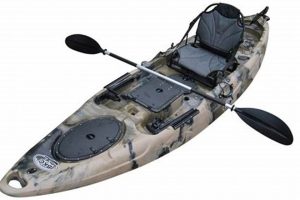
High-quality fishing kayaks measuring approximately 10 feet in length represent a popular choice for anglers seeking maneuverability, portability, and sufficient stability on the water. These vessels often incorporate features designed specifically for fishing, such as rod holders, storage compartments, and anchor systems. A well-designed 10-foot kayak offers a balance between compact size and adequate space for gear and comfortable paddling.
The increasing demand for these kayaks stems from their suitability for a variety of fishing environments, from smaller ponds and rivers to larger lakes and calmer coastal waters. Their shorter length allows for easier navigation in tighter spaces and simpler transportation on vehicle roof racks or in truck beds. Furthermore, advancements in kayak design and materials have led to improved stability and durability, making them a viable option for serious anglers seeking a compact and efficient fishing platform.
This article will delve into the key factors to consider when selecting a suitable fishing kayak of this size, including hull design, weight capacity, features, and top-rated models currently available. It will also cover essential accessories and safety considerations to ensure a productive and enjoyable fishing experience.
Tips for Selecting a 10-Foot Fishing Kayak
Choosing the right kayak for fishing requires careful consideration of several factors. The following tips offer guidance for selecting a 10-foot fishing kayak appropriate for individual needs and fishing styles.
Tip 1: Consider Hull Design. Kayak hulls come in various shapes, each impacting stability and maneuverability. A flat-bottom hull provides excellent primary stability, ideal for calmer waters and stand-up fishing, while a rounded or V-shaped hull offers better tracking and performance in choppy conditions.
Tip 2: Evaluate Weight Capacity. Ensure the kayak’s weight capacity accommodates the combined weight of the angler, gear, and potential catch. Exceeding the capacity can compromise stability and safety.
Tip 3: Prioritize Comfort and Ergonomics. A comfortable seat and adjustable footrests are crucial for longer fishing trips. Look for features like padded seating and adjustable backrests for optimal support.
Tip 4: Assess Storage Options. Adequate storage is essential for carrying fishing gear, tackle boxes, and personal items. Consider the size, location, and accessibility of storage compartments.
Tip 5: Examine Rod Holders and Mounting Options. Dedicated rod holders and mounting tracks allow for convenient rod placement and customization of fishing setups. Consider the number and placement of rod holders based on fishing preferences.
Tip 6: Factor in Portability and Transportation. A 10-foot kayak’s portability is a significant advantage. However, consider its weight and dimensions relative to available transportation methods and storage space.
Tip 7: Research Reputable Brands and Models. Choosing a kayak from a well-regarded manufacturer often ensures quality construction, durable materials, and reliable performance. Research reviews and compare models before making a purchase.
By carefully considering these factors, anglers can select a 10-foot fishing kayak optimized for their specific needs and fishing style, maximizing comfort, efficiency, and enjoyment on the water. These considerations will ensure a well-informed purchase decision.
This information provides a solid foundation for choosing a 10-foot fishing kayak. The next section will explore some of the top-rated models currently available on the market.
1. Stability

Stability stands as a critical factor in evaluating fishing kayaks, particularly those designed for still-water angling. A stable platform allows anglers to confidently cast, reel, and even stand to sight fish, significantly enhancing the fishing experience and overall safety. In 10-foot kayaks, stability is influenced by factors such as hull design, width, and weight distribution. Wider kayaks generally offer greater initial stability, resisting tipping when stationary or during minor shifts in weight. Flat-bottom hulls maximize stability on calm water but may sacrifice performance in choppy conditions. For example, an angler fishing in a calm lake benefits from a wide, flat-bottom hull, while someone fishing in a flowing river might prefer a slightly narrower kayak with a more rounded hull for improved maneuverability.
The importance of stability becomes even more pronounced when considering specialized fishing activities. Fly fishing often requires subtle weight shifts and casting motions, making stability paramount. Similarly, kayak anglers targeting larger fish need a stable platform to withstand the powerful runs and sudden changes in direction common during fights. A lack of stability can lead to capsizing, equipment loss, and potentially dangerous situations, especially in challenging weather conditions or when handling large fish. Consider a scenario where an angler hooks a strong fish in a narrow, unstable kayak. The fish’s sudden movements could easily destabilize the kayak, leading to a potentially precarious situation. A more stable platform minimizes this risk, allowing the angler to focus on landing the fish safely and efficiently.
Ultimately, selecting a 10-foot fishing kayak with appropriate stability depends on the intended fishing environment and style. While enhanced stability is generally beneficial, it is essential to consider the trade-offs with maneuverability and speed. Anglers should prioritize stability when fishing calm waters or engaging in activities requiring precise movements, but may opt for designs prioritizing maneuverability in dynamic environments. Understanding the nuanced relationship between stability and other performance characteristics empowers anglers to choose a kayak optimized for their specific needs, enhancing safety and maximizing fishing success.
2. Maneuverability

Maneuverability represents a crucial performance attribute in 10-foot fishing kayaks, directly influencing the ease and efficiency of navigating various water environments. A highly maneuverable kayak allows anglers to effortlessly navigate tight spaces, swiftly change directions, and precisely position themselves for optimal casting angles. This characteristic becomes particularly valuable when fishing in complex waterways such as narrow creeks, winding rivers, or areas with dense vegetation.
- Tracking and Turning Performance
Tracking refers to a kayak’s ability to maintain a straight course with minimal paddling input, while turning performance dictates the speed and responsiveness of directional changes. Kayaks with superior tracking require less effort to paddle in a straight line, conserving energy during long fishing trips. Responsive turning enables quick adjustments to navigate obstacles or pursue fish. A longer, narrower hull typically enhances tracking, while a shorter, wider hull improves turning performance.
- Influence of Hull Design
Hull design significantly impacts maneuverability. A V-shaped hull generally tracks well in open water but can feel less responsive when turning. Rounded hulls offer a balance between tracking and maneuverability, while flatter hulls excel in turning and navigating shallow water but may sacrifice tracking performance. For instance, a kayak with a shallow-arch hull balances stability and maneuverability, making it suitable for diverse fishing environments.
- Impact of Water Conditions
Maneuverability interacts dynamically with prevailing water conditions. Strong currents or windy conditions can challenge the tracking and turning capabilities of even the most maneuverable kayak. Understanding how a kayak performs in different conditions is vital for selecting a vessel suited to the target fishing environment. In windy or choppy conditions, a kayak with a pronounced keel or tracking fin can enhance directional stability, while a shorter, wider kayak may prove more agile in calm, protected waters.
- Relationship with Kayak Length and Width
In general, shorter kayaks offer enhanced maneuverability compared to longer models, allowing for tighter turns and easier navigation in confined spaces. Wider kayaks tend to be more stable but may sacrifice some maneuverability. The 10-foot length often represents a compromise, offering a balance between maneuverability and portability.
The interplay of these factors determines a 10-foot fishing kayak’s overall maneuverability, influencing its suitability for specific fishing environments and techniques. Careful consideration of these aspects ensures anglers select a kayak that aligns with their individual needs and fishing styles, maximizing efficiency and enjoyment on the water. A kayak optimized for maneuverability allows anglers to navigate intricate waterways effectively, enhancing their ability to access prime fishing spots and adapt to changing conditions.
3. Storage Capacity

Storage capacity represents a critical factor in evaluating 10-foot fishing kayaks, directly impacting their practicality and utility for anglers. Sufficient storage allows for the organized transport of essential fishing gear, including tackle boxes, rods, safety equipment, and personal items. Adequate storage contributes to a more efficient and enjoyable fishing experience by keeping essential items readily accessible and preventing clutter within the limited confines of the kayak.
- Types of Storage Compartments
10-foot fishing kayaks typically offer various storage compartments designed for specific purposes. These may include dedicated tackle storage, dry hatches for sensitive electronics or personal belongings, and larger open areas for storing rods or coolers. The type and configuration of storage influence the kayak’s overall organization and the accessibility of specific items. For example, a dedicated tackle storage area with removable trays allows for organized storage of lures and terminal tackle, while a dry hatch provides secure storage for electronic devices.
- Storage Capacity and Kayak Design
The overall design of a 10-foot fishing kayak significantly influences its storage capacity. Sit-on-top kayaks generally offer more open storage space compared to sit-inside models. However, sit-inside kayaks may provide better protection from the elements for stored gear. The placement and accessibility of storage compartments also impact usability. Rear storage wells, for example, provide ample space for larger items, while smaller compartments located within easy reach are ideal for frequently used items like pliers or sunscreen. The placement of storage compartments should align with the angler’s workflow and fishing style.
- Weight Capacity Considerations
While maximizing storage is desirable, it is crucial to consider the kayak’s weight capacity. Overloading a kayak can compromise stability and safety, particularly in challenging conditions. Anglers should carefully evaluate their gear requirements and ensure the combined weight of the angler, gear, and potential catch remains within the kayak’s specified weight limit. Exceeding this limit can negatively impact performance and potentially lead to dangerous situations.
- Importance of Secure Storage
Secure storage mechanisms are essential for preventing gear loss and ensuring items remain protected from water damage. Features like bungee cords, latches, and waterproof hatches contribute to secure storage. Ensuring gear remains securely stored is paramount not only for preserving equipment but also for maintaining a clutter-free and safe environment within the kayak. Loose items can create tripping hazards or interfere with paddling and fishing activities.
Effective storage solutions are paramount for maximizing the utility and enjoyment of 10-foot fishing kayaks. By carefully considering the type, accessibility, and security of storage options, anglers can select a kayak well-suited to their specific needs and fishing style. A well-organized and adequately equipped kayak allows anglers to focus on the task at hand catching fish rather than managing gear or contending with clutter. Prioritizing storage capacity contributes directly to a more efficient, comfortable, and successful fishing experience.
4. Comfort Features

Comfort features significantly influence the overall fishing experience in 10-foot kayaks, particularly during longer outings. A comfortable kayak enables anglers to focus on fishing rather than physical discomfort, maximizing endurance and enjoyment. Key comfort features include seating, backrests, footrests, and deck padding. Well-designed seating systems provide adequate support and cushioning, reducing fatigue and pressure points. Adjustable backrests accommodate individual preferences and body types, promoting proper posture and reducing strain. Footrests, especially adjustable ones, allow for efficient paddling and contribute to overall stability. Deck padding offers cushioning and traction, enhancing comfort and safety when standing or moving within the kayak. For example, an angler spending several hours on the water benefits significantly from a comfortable, adjustable seat with lumbar support, preventing backaches and enhancing overall endurance.
The connection between comfort and performance extends beyond mere physical well-being. An uncomfortable angler is a distracted angler. Discomfort can negatively impact focus, reaction time, and overall fishing effectiveness. A comfortable angler, conversely, remains alert and engaged, better equipped to respond to changing conditions or the sudden strike of a fish. Consider an angler fighting a strong fish. A comfortable and stable seating position allows the angler to exert maximum leverage and control, increasing the likelihood of a successful landing. In contrast, an uncomfortable angler may struggle to maintain balance and control, potentially losing the fish or even capsizing.
Optimizing comfort in a 10-foot fishing kayak requires careful consideration of individual needs and preferences. Factors such as body type, fishing style, and typical trip duration influence the selection of appropriate comfort features. Investing in a kayak with well-designed comfort features contributes directly to enhanced performance, reduced fatigue, and increased enjoyment on the water. Understanding the importance of these features empowers anglers to make informed decisions, ultimately leading to a more rewarding and productive fishing experience. Discomfort should not be a limiting factor in pursuing fishing passion. Prioritizing comfort in kayak selection allows anglers to fully immerse themselves in the experience, maximizing enjoyment and success on the water.
5. Durability

Durability stands as a critical factor in evaluating 10-foot fishing kayaks, directly impacting their lifespan and overall value. A durable kayak withstands the rigors of regular use, including impacts, abrasion, and exposure to the elements, ensuring reliable performance over extended periods. For anglers seeking a long-term investment, durability is paramount. A kayak’s ability to withstand wear and tear minimizes the need for repairs and replacements, ultimately saving money and ensuring consistent performance on the water.
- Material Selection
Kayak construction materials significantly influence durability. High-density polyethylene (HDPE) is a common choice due to its impact resistance and affordability. Higher-end kayaks may utilize more robust materials like cross-linked polyethylene or thermoformed ABS, offering enhanced durability and impact resistance, albeit at a higher price point. For instance, a kayak constructed from rotomolded HDPE can withstand significant impacts from rocks or submerged obstacles, ensuring longevity in demanding environments.
- UV Resistance
Exposure to ultraviolet (UV) radiation from sunlight can degrade kayak materials over time, causing fading, cracking, and reduced structural integrity. UV-resistant coatings and additives protect against these effects, extending the kayak’s lifespan. A kayak regularly exposed to intense sunlight benefits significantly from UV protection, maintaining its structural integrity and aesthetic appeal over time.
- Hardware and Fittings
The quality of hardware components, such as handles, latches, and deck fittings, contributes to overall durability. Corrosion-resistant stainless steel or marine-grade hardware ensures long-term functionality and prevents premature failure. For example, stainless steel D-rings and hardware provide reliable attachment points for gear and accessories, resisting corrosion even in saltwater environments.
- Construction Quality
Manufacturing processes and construction techniques influence a kayak’s overall durability. Properly sealed seams and reinforced stress points contribute to a watertight and robust hull, preventing leaks and structural weaknesses. A well-constructed kayak, assembled with attention to detail and quality control, provides a reliable platform for years of dependable service.
Investing in a durable 10-foot fishing kayak ensures long-term performance and value. By considering factors such as material selection, UV resistance, hardware quality, and construction techniques, anglers can choose a kayak built to withstand the demands of regular use and diverse fishing environments. Prioritizing durability minimizes maintenance requirements, reduces the risk of premature failure, and ultimately contributes to a more rewarding and cost-effective ownership experience. A durable kayak remains a reliable fishing companion, season after season, allowing anglers to focus on their passion rather than equipment concerns.
6. Weight Capacity

Weight capacity represents a critical factor in selecting the best 10-foot fishing kayaks, directly impacting safety and performance. This specification defines the maximum combined weight of the angler, gear, and potential catch the kayak can safely support. Exceeding this limit compromises stability, reduces freeboard (the distance between the waterline and the deck), and increases the risk of capsizing. Insufficient weight capacity also negatively impacts paddling efficiency and maneuverability. For example, an angler exceeding the weight capacity may experience difficulty paddling and maneuvering, especially in challenging conditions, increasing the risk of water ingress and potential instability.
Understanding the practical implications of weight capacity is essential for informed kayak selection. Anglers must realistically assess their typical gear load, including fishing rods, tackle boxes, coolers, safety equipment, and personal items. Adding the angler’s weight to this estimated gear load provides a baseline for determining the minimum required weight capacity. Choosing a kayak with ample weight capacity ensures safe and efficient operation, even with a full load of gear and a sizable catch. Consider a scenario where an angler intends to carry a substantial amount of fishing gear, including a large tackle box and a cooler. Opting for a kayak with a higher weight capacity accommodates this additional load, maintaining stability and performance. Conversely, selecting a kayak with limited weight capacity necessitates careful gear selection and potential compromises, potentially impacting fishing effectiveness and overall enjoyment.
In conclusion, weight capacity serves as a crucial consideration in selecting the best 10-foot fishing kayaks. A clear understanding of this specification and its practical implications empowers anglers to choose a kayak suited to their individual needs and fishing style. Prioritizing appropriate weight capacity ensures safe and efficient operation, maximizing enjoyment and success on the water. Neglecting this critical factor can compromise stability, performance, and ultimately, safety, highlighting the importance of careful consideration during the kayak selection process. This understanding ensures anglers choose a kayak capable of safely and effectively supporting their intended load, contributing to a positive and secure on-the-water experience.
Frequently Asked Questions
This section addresses common inquiries regarding the selection and use of 10-foot fishing kayaks.
Question 1: What are the advantages of a 10-foot kayak for fishing?
Ten-foot kayaks offer a balance of maneuverability and stability suitable for various fishing environments. Their compact size facilitates transport and storage, while their length provides sufficient tracking and speed for efficient paddling.
Question 2: Are 10-foot kayaks suitable for ocean fishing?
While some 10-foot kayaks can handle calmer coastal waters or bays, they are generally not recommended for open ocean fishing due to potential limitations in stability and seaworthiness in rough conditions. Specialized ocean kayaks are typically longer and offer enhanced stability and safety features.
Question 3: What is the typical weight capacity of a 10-foot fishing kayak?
Weight capacities vary depending on the kayak’s design and construction. However, many 10-foot models offer weight capacities ranging from 250 to 350 pounds, accommodating an angler, gear, and potential catch.
Question 4: What features should one look for in a 10-foot fishing kayak?
Essential features include comfortable seating, adjustable footrests, ample storage compartments, dedicated rod holders, and a stable hull design. Additional features like anchor systems, paddle holders, and mounting tracks enhance functionality and convenience.
Question 5: How does one transport a 10-foot fishing kayak?
Due to their compact size, 10-foot kayaks can often be transported on vehicle roof racks using readily available kayak carriers. Some models are also lightweight enough to be carried short distances by a single person.
Question 6: What safety precautions should be taken when using a 10-foot fishing kayak?
Always wear a personal flotation device (PFD). Inform someone of the planned fishing location and estimated return time. Check weather conditions before embarking and be aware of potential hazards like currents, wind, and boat traffic. Carrying essential safety gear like a whistle, signaling device, and bilge pump is also recommended.
Addressing these common inquiries provides a clearer understanding of factors influencing kayak selection, promoting informed decision-making and enhancing the overall fishing experience.
The following section will delve into a comparative analysis of several top-rated 10-foot fishing kayak models currently available.
Conclusion
Selecting optimal 10-foot fishing kayaks requires careful consideration of various factors influencing performance, comfort, and safety. Hull design, weight capacity, storage options, and comfort features contribute significantly to the overall fishing experience. Durability ensures long-term value, while appropriate weight capacity guarantees safe and efficient operation. Maneuverability and stability play crucial roles, influencing navigation and angling effectiveness in diverse environments. Understanding these key attributes empowers informed decision-making, enabling anglers to choose kayaks best suited to individual needs and fishing styles. Thorough research, including review comparisons and manufacturer specifications, further refines selection, ultimately enhancing fishing enjoyment and success.
The pursuit of angling excellence necessitates equipment optimized for performance and comfort. Careful selection of a 10-foot fishing kayak, informed by a comprehensive understanding of key features and individual requirements, contributes significantly to a rewarding experience on the water. This investment represents a commitment to maximizing fishing potential and enhancing overall enjoyment, leading to greater success and deeper appreciation for the sport. The ideal kayak becomes an extension of the angler’s skill, facilitating seamless integration with the environment and enhancing the pursuit of angling mastery.