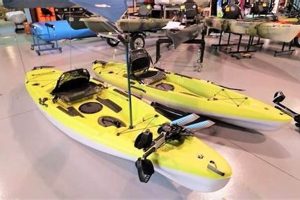
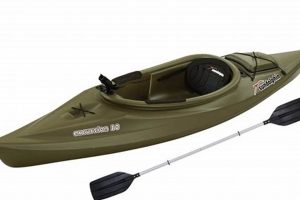
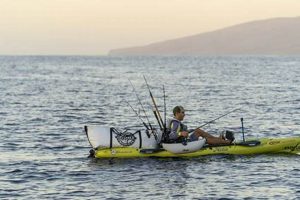
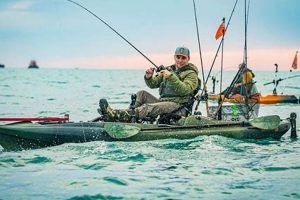
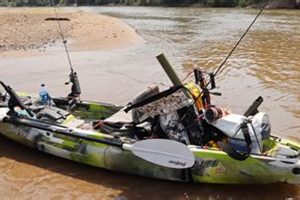
A kayak designed for angling, typically measuring approximately 14 feet in length, offers a blend of stability and maneuverability ideal for navigating various waterways. This size often accommodates ample storage for fishing gear, including rods, tackle boxes, and even small coolers. The design often incorporates features like rod holders, anchor trolleys, and specialized seating for enhanced comfort during extended fishing trips. Examples include sit-on-top models for warm climates and sit-inside designs for colder conditions.
Vessels of this size provide anglers with access to locations often unreachable by larger boats, enabling exploration of shallow waters, narrow creeks, and protected coves. The increased stability compared to shorter kayaks allows for more comfortable casting and reeling, while maintaining a degree of maneuverability essential for navigating around obstacles and following fish. Historically, kayaks have been used for fishing for millennia, but modern designs incorporating specific fishing features have significantly enhanced the angling experience, providing a dedicated platform for pursuing various fish species in diverse environments.
Further exploration will cover key considerations for selecting an appropriate vessel, including hull design, material construction, and essential features for different fishing styles. Discussions regarding safety equipment, paddling techniques, and responsible angling practices will also be addressed.
Tips for Selecting and Using a Fishing Kayak
Careful consideration of several factors contributes to a successful and enjoyable fishing kayak experience. The following tips provide guidance for making informed decisions.
Tip 1: Consider Hull Design: Different hull designs offer varying performance characteristics. A flat-bottom hull provides excellent stability, crucial for standing and casting, but sacrifices speed and tracking. A V-shaped hull offers improved tracking and speed, making it suitable for open water, but may feel less stable.
Tip 2: Choose Appropriate Length: Longer kayaks generally track better and offer more storage space, while shorter kayaks are easier to maneuver in tight spaces. Consider the typical fishing environment and storage needs.
Tip 3: Evaluate Weight Capacity: The kayak’s weight capacity should accommodate the angler’s weight, along with all gear and potential catches. Exceeding the capacity can compromise stability and performance.
Tip 4: Prioritize Comfort and Ergonomics: A comfortable seat and adjustable footrests are crucial for long hours on the water. Consider features like adjustable backrests and thigh braces for optimal comfort and support.
Tip 5: Select Essential Features: Rod holders, paddle clips, and anchor trolleys enhance fishing functionality. Consider built-in storage compartments and mounting options for fish finders or other accessories.
Tip 6: Practice Paddling and Maneuvering: Before venturing into open water, practice basic paddling strokes and maneuvering techniques in a calm environment. This builds confidence and ensures safe operation.
Tip 7: Prioritize Safety: Always wear a personal flotation device (PFD) and carry essential safety equipment, including a whistle, signaling device, and first-aid kit. Inform someone of your fishing plans, including location and expected return time.
Adhering to these guidelines contributes to a safe, productive, and enjoyable fishing experience. Selecting the appropriate vessel and understanding its capabilities empowers anglers to maximize their time on the water.
By understanding these factors, anglers can make informed decisions and enhance their overall experience.
1. Length
The 14-foot length is a defining characteristic of the “14 fishing kayak,” significantly influencing its performance and suitability for specific angling scenarios. This length represents a compromise between maneuverability and stability, creating a versatile platform suitable for a range of water conditions. Shorter kayaks offer enhanced maneuverability in tight spaces like creeks and mangroves, while longer kayaks provide improved tracking and speed in open water. The 14-foot length aims to strike a balance, offering reasonable maneuverability while maintaining sufficient tracking for traversing larger bodies of water. A longer kayak also often provides increased storage capacity, which is essential for carrying fishing gear. For example, a 14-foot kayak is generally more suitable for larger lakes or coastal areas compared to a 10-foot model, which might be preferable for smaller rivers or ponds.
The practical implications of this length are substantial. Consider an angler targeting largemouth bass in a sprawling reservoir. The 14-foot length allows for efficient paddling across open water while maintaining stability when casting and fighting fish. Conversely, navigating a narrow, winding river with a 14-foot kayak may present challenges, highlighting the importance of understanding the specific fishing environment when considering kayak length. Another angler fishing in sheltered bays or estuaries might find the 14-foot length ideal for balancing stability in moderate chop with the ability to navigate shallows and tighter areas. This versatility makes the 14-foot kayak a popular choice for diverse fishing applications.
In summary, the 14-foot length is integral to the “14 fishing kayak” concept. This dimension influences maneuverability, stability, and storage capacity, impacting its suitability for diverse fishing environments. Anglers must consider their target fishing locations and styles when selecting a kayak, understanding that the 14-foot length offers a versatile but not universally ideal solution. Careful evaluation of individual needs and intended uses ensures optimal performance and a positive fishing experience.
2. Purpose

The designation “fishing kayak” signifies a vessel explicitly designed for angling, differentiating it from recreational or touring kayaks. This purpose dictates the inclusion of specialized features and design considerations directly relevant to optimizing the angling experience. A 14-foot fishing kayak, therefore, represents a deliberate choice balancing size, stability, and maneuverability for specific fishing scenarios.
- Enhanced Stability
Stability is paramount in a fishing kayak, enabling anglers to cast, reel, and land fish effectively. A 14-foot fishing kayak generally offers greater stability than shorter models, particularly beneficial for stand-up fishing or maneuvering in challenging conditions. Increased stability translates to a more secure and confident fishing platform. For example, an angler fly fishing from a 14-foot kayak benefits from the platform’s stability, enabling precise casts and reducing the risk of capsizing during hooksets.
- Specialized Features
Fishing kayaks incorporate features absent in recreational models, enhancing angling functionality. Rod holders, tackle storage, anchor trolleys, and even livewells are common inclusions. These features are strategically integrated into the kayak’s design, streamlining the fishing process and maximizing efficiency. Consider an angler trolling for salmon; integrated rod holders allow for hands-free operation while monitoring lines, and dedicated storage compartments keep tackle organized and readily accessible.
- Maneuverability and Access
While stability is crucial, maneuverability remains essential for navigating diverse waterways. A 14-foot fishing kayak offers a balance between tracking in open water and agility in tighter environments. This maneuverability allows anglers to access shallow coves, navigate around obstacles, and position themselves strategically for optimal fishing. For instance, an angler pursuing bass in a densely vegetated area can leverage the kayak’s maneuverability to navigate through narrow channels and reach prime fishing spots inaccessible to larger boats.
- Capacity and Storage
Fishing often requires carrying substantial gear, including rods, reels, tackle boxes, and safety equipment. A 14-foot fishing kayak typically offers ample storage compared to smaller models. This increased capacity allows anglers to bring necessary equipment for a productive day on the water. Consider an angler embarking on a multi-day fishing trip; the kayak’s storage capacity accommodates camping gear, food supplies, and additional fishing equipment essential for extended excursions.
The convergence of these facetsstability, specialized features, maneuverability, and capacitydefines the “purpose: fishing” inherent in a 14-foot fishing kayak. These elements, carefully integrated into the vessel’s design, contribute to a platform explicitly tailored for angling, maximizing efficiency, comfort, and overall fishing success. The 14-foot length provides a balanced foundation upon which these fishing-specific attributes are built, creating a specialized tool for anglers seeking to optimize their time on the water. This specialization distinguishes the fishing kayak from other kayak types and underscores its unique functionality within the broader context of watercraft.
3. Stability
Stability is a critical performance attribute in a 14-foot fishing kayak, directly influencing angling effectiveness and safety. Several factors contribute to stability, including hull design, kayak length, and weight distribution. A wider, flatter hull generally provides greater initial stability, crucial for standing and casting. The 14-foot length contributes to directional stability, reducing the tendency to turn excessively in wind or current. Proper weight distribution within the kayak further enhances stability, preventing tipping. Consider an angler standing to cast in a 14-foot kayak with a wide, flat hull; the inherent stability allows for confident casting motions without compromising balance. Conversely, a narrower hull might feel less stable, particularly in windy conditions or when fighting a strong fish.
The practical implications of stability are readily apparent in various fishing scenarios. In calm, protected waters, stability facilitates stand-up fishing, offering an elevated vantage point for sight fishing and improved casting accuracy. In choppy conditions or moving water, stability becomes paramount for safety, reducing the risk of capsizing. When battling a large fish, the kayak’s stability helps maintain control and prevents unwanted tilting or rolling. For example, an angler fishing for striped bass in a tidal current relies on the kayak’s stability to resist the current’s forces and maintain a stable fishing platform. This stability also proves crucial when landing a large fish, as the kayak’s resistance to tipping helps prevent angler and fish from going overboard.
In summary, stability is an integral component of a 14-foot fishing kayak’s performance. Hull design, length, and weight distribution all contribute to overall stability. This characteristic significantly impacts angling effectiveness and safety across diverse fishing environments. Understanding the factors influencing stability empowers anglers to select appropriate kayaks and employ techniques to maximize stability on the water. This knowledge enhances fishing success and contributes to a safer, more enjoyable experience. The connection between stability and a 14-foot fishing kayak underscores the vessel’s purpose-built design for angling and highlights its distinct advantages over other kayak types in specific fishing situations.
4. Maneuverability
Maneuverability, the ability to efficiently and effectively control a kayak’s direction and movement, is a critical performance characteristic for fishing kayaks, particularly those measuring 14 feet. While longer kayaks often excel in tracking and speed across open water, their length can sometimes hinder agility in tight spaces. Therefore, understanding the maneuverability of a 14-foot fishing kayak is essential for anglers seeking to navigate diverse waterways, including narrow creeks, shallow coves, and obstacle-filled environments.
- Turning Radius
Turning radius, the space a kayak requires to complete a full turn, directly impacts maneuverability. A smaller turning radius allows for quicker turns and more precise adjustments in direction. While 14-foot kayaks generally have larger turning radii than shorter kayaks, factors like hull design and paddling technique can influence turning performance. A kayak with a more pronounced keel or tracking fin will typically have a larger turning radius, while a flatter-bottomed hull allows for sharper turns. In navigating a winding river or maneuvering around submerged structures, a tighter turning radius is advantageous. Conversely, a larger turning radius might be acceptable in open water where precise maneuvering is less critical.
- Paddle Tracking
Paddle tracking refers to the kayak’s tendency to maintain a straight course with minimal corrective strokes. While longer kayaks generally track better than shorter ones, excessive tracking can impede maneuverability. A 14-foot kayak balances tracking with maneuverability, allowing for efficient paddling in open water while retaining the ability to change direction when needed. An angler trolling along a shoreline benefits from good tracking but needs sufficient maneuverability to adjust course and avoid obstacles or follow contours. In contrast, an angler fishing in a small pond requires less tracking and more emphasis on turning and positioning.
- Response to Wind and Current
A kayak’s response to wind and current significantly impacts maneuverability. A 14-foot kayak, due to its length, generally offers more resistance to wind and current compared to shorter kayaks, providing a more stable platform in challenging conditions. However, strong winds or currents can still influence its trajectory, requiring corrective strokes. Understanding how a 14-foot kayak responds to these external forces is crucial for maintaining control and navigating effectively. Anglers fishing in exposed coastal areas or rivers with strong currents must consider the kayak’s handling in such conditions. The ability to maintain course and maneuver effectively against these forces is vital for safety and fishing success.
- Influence of Hull Design
Hull design significantly affects a kayak’s maneuverability. Flat-bottomed hulls generally offer greater maneuverability, allowing for quick turns and pivoting. V-shaped hulls, while offering better tracking, can feel less maneuverable. The 14-foot fishing kayak often incorporates a modified hull design, balancing stability with maneuverability. Anglers should consider their primary fishing environments when choosing a hull design. A kayak designed for river fishing might prioritize maneuverability with a flatter hull, while one designed for open-water fishing might opt for a V-shaped hull for better tracking. The 14-foot length provides a platform where hull design can be tailored to specific fishing needs without compromising overall stability.
The maneuverability of a 14-foot fishing kayak represents a crucial balance between tracking performance and agility. Understanding how factors like turning radius, paddle tracking, response to external forces, and hull design influence maneuverability empowers anglers to make informed decisions. Selecting a kayak with appropriate maneuverability for the intended fishing environment ensures optimal performance, enhances fishing success, and contributes to a safe and enjoyable experience. This interplay between maneuverability and other features highlights the specialized design considerations inherent in a 14-foot fishing kayak and reinforces its suitability for diverse angling applications.
5. Storage Capacity

Storage capacity is a defining feature of fishing kayaks, directly impacting their practicality and suitability for various angling scenarios. A 14-foot fishing kayak generally offers significantly more storage than shorter models, a crucial advantage for anglers carrying rods, reels, tackle boxes, safety gear, and potentially camping equipment for multi-day excursions. This increased capacity allows for extended trips and diverse fishing approaches, enhancing versatility and overall fishing success. Consider an angler targeting offshore species; the ample storage accommodates larger tackle boxes, multiple rods, and safety equipment like flares and a VHF radio, essential for open-water excursions. Conversely, an angler fishing a small pond might require less storage, highlighting the importance of aligning storage capacity with fishing style and environment.
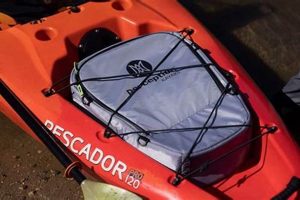
Several design elements contribute to a 14-foot fishing kayak’s storage capacity. Dedicated compartments, often located within the hull or behind the seat, provide secure storage for sensitive items like electronics or tackle boxes. Bungee cords and rigging systems on the deck offer additional storage for readily accessible items like dry bags or spare paddles. Larger hatches, often positioned near the bow or stern, allow for stowing bulkier items like camping gear or coolers. The strategic placement and design of these storage features maximize space utilization and ensure efficient organization. For example, recessed rod holders protect rods during transport and prevent entanglement with other gear, while strategically placed hatches provide access to stored items without requiring anglers to unload the entire kayak.
The relationship between storage capacity and a 14-foot fishing kayak is integral to its functionality. Ample storage facilitates diverse fishing styles, from short trips on local ponds to extended expeditions in remote locations. The strategic incorporation of storage features enhances organization and accessibility, contributing to efficient gear management and a more productive fishing experience. Understanding the storage capabilities of a 14-foot fishing kayak empowers anglers to select appropriate models for their specific needs and maximize their time on the water. This understanding underscores the purpose-built nature of the fishing kayak and distinguishes it from recreational models designed for shorter trips with minimal gear.
6. Specialized Features

Specialized features distinguish fishing kayaks from recreational models, enhancing their functionality and tailoring them to the specific demands of angling. These features, often integrated into the design of a 14-foot fishing kayak, contribute significantly to angler efficiency, comfort, and overall fishing success. The thoughtful incorporation of these features underscores the purpose-built nature of fishing kayaks and reinforces their value in diverse angling environments.
- Rod Holders
Rod holders are essential features in fishing kayaks, providing secure storage for rods while paddling, trolling, or landing fish. Multiple rod holders, strategically positioned for easy access, allow anglers to carry various rods rigged for different techniques or target species. Flush-mounted rod holders minimize interference with paddling, while adjustable rod holders offer flexibility in positioning rods for optimal presentation. For example, an angler trolling for trout might use two rod holders positioned at different angles to cover a wider area. Similarly, an angler targeting bass in heavy cover might prefer rod holders positioned closer to the cockpit for quick access when a fish strikes.
- Tackle Storage
Dedicated tackle storage compartments keep essential gear organized and readily accessible. These compartments, often designed with waterproof seals and removable trays, protect tackle from the elements and allow for customization based on specific fishing needs. Integrated tackle storage eliminates the need for external tackle boxes, freeing up deck space and streamlining the fishing process. An angler fly fishing might organize flies and leaders in compartments designed for small items, while a bass angler might store larger lures and terminal tackle in deeper compartments. This organized approach maximizes efficiency and minimizes time spent searching for specific items.
- Anchor Trolleys
Anchor trolleys allow anglers to control kayak position in current or wind, maintaining an optimal fishing location without constantly adjusting the anchor. These systems typically involve a series of pulleys and cleats that allow the anchor line to be adjusted from the cockpit. This feature proves particularly valuable in river fishing or when fishing near structure, allowing anglers to hold position and thoroughly cover a specific area. An angler fishing a drop-off in a river can deploy the anchor and use the trolley to adjust position along the structure, maximizing fishing effectiveness without constantly repositioning the kayak.
- Foot-Operated Rudder Systems
Foot-operated rudder systems enhance steering control, particularly valuable in windy conditions or when paddling long distances. These systems allow for precise course adjustments without requiring hand paddling, freeing up hands for fishing. The foot controls are typically integrated into the cockpit, allowing for effortless steering while maintaining a comfortable paddling position. An angler paddling across a large lake or navigating a strong current benefits from the enhanced steering control provided by a rudder system, conserving energy and maintaining a precise course.
These specialized features, carefully integrated into the design of a 14-foot fishing kayak, transform a basic paddling platform into a dedicated angling vessel. The combination of rod holders, tackle storage, anchor trolleys, and rudder systems enhances fishing efficiency, comfort, and overall success. The inclusion of these features highlights the specialization of fishing kayaks and reinforces their value for anglers seeking to maximize their time on the water. This specialization caters to diverse fishing styles and environments, further emphasizing the versatility and adaptability of a 14-foot fishing kayak as a purpose-built angling platform.
Frequently Asked Questions
This section addresses common inquiries regarding 14-foot fishing kayaks, providing concise and informative responses to facilitate informed decision-making.
Question 1: What are the advantages of a 14-foot kayak for fishing compared to shorter or longer models?
A 14-foot length typically balances stability for activities like casting and reeling with maneuverability for navigating various waterways. This length often accommodates ample storage for fishing gear. Shorter kayaks may be more agile but less stable, while longer kayaks excel in tracking and speed but sacrifice maneuverability in tight spaces.
Question 2: How does hull design impact the performance of a 14-foot fishing kayak?
Hull design significantly influences stability, speed, and maneuverability. Flat-bottom hulls provide excellent stability but may be slower. V-shaped hulls offer better tracking and speed but can be less stable. Pontoon hulls maximize stability but compromise speed. The choice depends on the angler’s priorities and intended fishing environment.
Question 3: What weight capacity should one consider in a 14-foot fishing kayak?
Weight capacity should accommodate the combined weight of the angler, all gear, and potential catches. Exceeding the specified weight capacity compromises stability and performance. Manufacturers provide weight capacity ratings; exceeding these limits is not recommended.
Question 4: What essential features should one look for in a 14-foot fishing kayak?
Essential features include rod holders, paddle clips, anchor trolleys, and comfortable seating. Additional features like adjustable footrests, storage compartments, and mounting options for fish finders enhance functionality and comfort. The specific features required depend on individual fishing styles and preferences.
Question 5: Are 14-foot fishing kayaks suitable for both freshwater and saltwater environments?
Many 14-foot fishing kayaks are suitable for both freshwater and saltwater use. However, material construction and hardware should be corrosion-resistant for saltwater environments. Specific design features, like scupper holes for drainage, are beneficial in saltwater conditions.
Question 6: What safety precautions should one take when using a 14-foot fishing kayak?
Always wear a personal flotation device (PFD). Carry essential safety equipment, including a whistle, signaling device, and first-aid kit. Inform someone of fishing plans, including location and expected return time. Check weather conditions before embarking and be aware of potential hazards like changing tides or strong currents.
Careful consideration of these factors ensures informed selection and promotes safe and successful fishing experiences. Understanding the interplay between kayak features, individual needs, and the intended fishing environment contributes to optimal performance and enjoyment on the water.
The next section will delve into specific models and manufacturers of 14-foot fishing kayaks, providing comparative analyses and recommendations.
Conclusion
Fourteen-foot fishing kayaks represent a considered balance between stability, maneuverability, and storage capacity within the broader kayak market. This length range offers a versatile platform suitable for diverse fishing environments, from calm lakes and rivers to open coastal waters. Hull design, specialized features, and weight capacity considerations are crucial factors influencing kayak selection and performance. Understanding the interplay between these factors empowers informed purchasing decisions aligned with individual angling needs and preferences.
The enduring appeal of kayaks for fishing stems from their ability to access shallow waters, navigate complex environments, and provide a close connection with nature. As technology continues to advance kayak design and construction, anglers can expect further refinements in performance, comfort, and specialized features. The 14-foot fishing kayak segment, poised for continued growth and innovation, offers a compelling option for anglers seeking a versatile and efficient platform for pursuing their passion on the water.