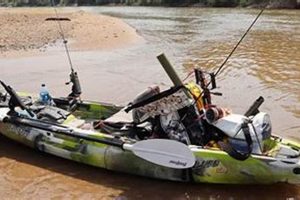
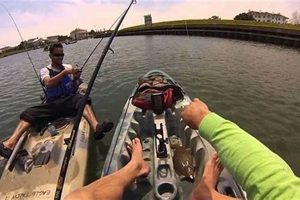
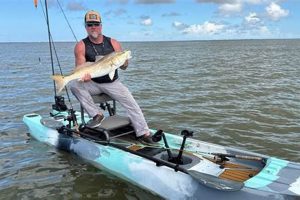
Twin-hulled kayak designs offer enhanced stability and capacity compared to traditional single-hull kayaks, making them well-suited for angling. This design provides a broader platform, reducing the likelihood of capsizing, especially in choppy waters. The increased deck space allows for the convenient mounting of fishing accessories like rod holders, fish finders, and even livewells. Furthermore, their stability makes standing up to cast or land a fish significantly safer.
The stability and load capacity inherent in these vessels contribute to a more comfortable and productive fishing experience. Anglers can focus on their technique and the pursuit of fish rather than constantly managing balance. The added space accommodates larger catches, extra gear, and even a fishing companion. While relatively recent compared to traditional kayak fishing, the use of multi-hulled kayaks for angling has seen a rapid increase in popularity due to these distinct advantages. This evolution in kayak design directly addresses the specific needs and desires of the fishing community.
This discussion will explore the various aspects of twin-hulled kayaks designed for fishing, covering topics such as hull design variations, material selection, propulsion methods, essential accessories, and recommended fishing techniques. It will also delve into safety considerations and offer guidance on selecting the right vessel based on individual needs and fishing styles.
Tips for Fishing from Twin-Hulled Kayaks
Optimizing the angling experience from a twin-hulled kayak involves understanding the nuances of these vessels and employing appropriate techniques. The following tips offer guidance for improved stability, safety, and fishing success.
Tip 1: Weight Distribution is Key: Distribute gear and equipment evenly across the kayak to maintain balance and prevent tipping. Consider using dry bags or storage compartments to secure items and optimize weight distribution.
Tip 2: Practice Launching and Landing: Due to their wider beam, launching and landing require slightly different techniques compared to traditional kayaks. Practice in calm, shallow water before venturing into more challenging environments.
Tip 3: Anchor Effectively: Utilizing a two-anchor system from both bows can prevent the kayak from swinging in the current and maintain optimal positioning for fishing. This is particularly crucial in windy conditions or strong currents.
Tip 4: Choose Appropriate Paddles: Shorter, wider kayak paddles are generally recommended for these vessels. Consider paddle length based on individual height and the width of the kayak.
Tip 5: Employ Leashes for Essential Gear: Attach leashes to paddles, fishing rods, and other important equipment to prevent loss in case of accidental drops or capsizing.
Tip 6: Stand with Caution: While the enhanced stability allows for standing, exercise caution when transitioning from a seated to a standing position. Ensure weight is centered and avoid sudden movements.
Tip 7: Respect Weather Conditions: Check weather forecasts before embarking on any fishing trip and avoid venturing out in strong winds, lightning storms, or rough sea conditions.
Adhering to these tips will enhance safety and improve fishing success from a twin-hulled kayak, allowing anglers to fully enjoy the benefits of this stable and versatile platform. Mastery of these techniques allows for a more focused and enjoyable fishing experience.
By considering these practical tips and selecting the right vessel and equipment, anglers can embark on rewarding fishing adventures while prioritizing safety and maximizing their chances of a successful catch.
1. Stability

Stability stands as a paramount concern in kayak fishing, particularly when angling in challenging conditions. The inherent design of catamaran kayaks offers significant advantages in this area, directly impacting safety and fishing efficacy. The following facets explore the components and implications of stability within the context of twin-hulled kayak fishing.
- Initial Stability:
Initial stability refers to the resistance to tipping or rocking when at rest. The wide beam and dual-hull design of catamaran kayaks provide exceptional initial stability. This inherent steadiness allows anglers to remain stable while casting, reeling, and landing fish, even in moderately choppy water. This provides a secure platform for both novice and experienced anglers.
- Secondary Stability:
Secondary stability describes the resistance to capsizing when the kayak is leaned or tilted. While catamaran kayaks may not have the same secondary stability as wider, flatter-bottomed boats, their dual-hull design still offers a significant advantage over traditional single-hull kayaks. This added stability boosts angler confidence, particularly when navigating wakes or dealing with larger fish.
- Impact of Weight Distribution:
Proper weight distribution plays a crucial role in maintaining stability in any kayak, but it becomes even more critical in a catamaran kayak due to its wider beam. Evenly distributing gear and maintaining a low center of gravity significantly enhances stability, reducing the risk of tipping. Uneven weight distribution can compromise stability, particularly during movement or when encountering waves or currents.
- Stability in Various Water Conditions:
Catamaran kayaks excel in calmer waters, providing a remarkably stable platform. While they handle chop and moderate waves well due to their multi-hull design, their performance in extreme conditions, such as rough seas or strong currents, may be limited compared to larger, more specialized vessels. Understanding the limitations and operating within appropriate water conditions is crucial for ensuring safety.
The enhanced stability offered by catamaran kayaks contributes significantly to angler comfort, safety, and overall fishing success. By understanding the nuances of initial and secondary stability, along with the impact of weight distribution and water conditions, anglers can maximize the inherent advantages of these vessels, leading to a more confident and productive fishing experience. This stability allows anglers to focus on the task at hand catching fish rather than constantly managing their balance.
2. Capacity

Capacity, encompassing both weight and storage volume, significantly influences the practicality and effectiveness of catamaran kayaks for fishing. The increased capacity offered by these vessels compared to traditional single-hull kayaks directly impacts the angler’s ability to carry necessary gear, land larger catches, and potentially accommodate an additional passenger. This enhanced capacity expands the possibilities for longer expeditions, diverse fishing styles, and overall fishing success. For instance, anglers targeting larger species require ample space for tackle, specialized equipment, and the safe handling of substantial catches. Similarly, extended trips necessitate sufficient storage for food, water, safety gear, and camping equipment if required.
The weight capacity of a catamaran kayak dictates the maximum combined weight of passengers, gear, and any landed fish. Exceeding this limit compromises stability and safety, increasing the risk of capsizing. Storage capacity, often divided between open deck space and sealed compartments, determines the volume and type of gear that can be carried. Anglers should carefully consider their specific needs and fishing style when evaluating capacity. Those planning multi-day expeditions or targeting large fish require significantly greater capacity than those embarking on short, casual fishing trips in calm waters. The selection of a kayak with appropriate capacity directly impacts the success and safety of any fishing venture.
Understanding the capacity limitations of a catamaran kayak and selecting a model aligned with individual needs are critical for a safe and successful fishing experience. Careful consideration of weight distribution within the vessel also plays a vital role in maintaining stability and optimal performance. Overloading the kayak can lead to instability, reduced maneuverability, and increased risk of capsizing. A well-balanced load improves tracking and overall handling, contributing to a more enjoyable and productive fishing experience. This practical consideration ultimately allows anglers to optimize their time on the water and focus on their primary objective: catching fish.
3. Adaptability
Adaptability in catamaran kayak fishing refers to the vessel’s capacity to perform effectively across diverse environments and fishing styles. This versatility stems from several key features, including stability, storage capacity, and the potential for customization. The stable platform offered by the twin-hull design allows for various fishing techniques, from fly fishing to trolling, accommodating both seated and standing positions. Ample storage space facilitates carrying diverse equipment, catering to different target species and fishing locations. Furthermore, the adaptability of these kayaks extends to their compatibility with various propulsion systems, from paddles to pedal drives and even small electric motors, allowing anglers to customize their setup based on individual preferences and fishing conditions. For example, a pedal-powered catamaran kayak allows hands-free fishing, while a paddle-powered version offers greater maneuverability in shallow waters or tight spaces. This inherent versatility makes catamaran kayaks suitable for a broader range of fishing environments, from calm lakes and slow-moving rivers to protected coastal areas.
Practical examples further illustrate the adaptability of catamaran kayaks for fishing. Their stability and open deck space accommodate specialized equipment like fish finders, rod holders, and even livewells, enhancing fishing efficiency. This adaptability allows anglers to transition seamlessly between different fishing styles within a single outing. Consider an angler targeting both bass in shallow cover and crappie in deeper open water. A catamaran kayak allows for easy maneuvering in the shallows while also providing the stability needed for vertical jigging in deeper areas. Moreover, the increased capacity allows for carrying the necessary tackle and equipment for both techniques. This adaptability also translates to varying water conditions. While not designed for extreme offshore environments, these kayaks can handle moderate chop and currents, expanding the range of fishable locations compared to less stable vessels. This versatility expands fishing opportunities and allows anglers to adjust their strategies based on real-time conditions.
The adaptability of catamaran kayaks presents a significant advantage in the world of fishing. This versatility empowers anglers to explore diverse fishing styles, target various species, and access a wider range of fishing environments. While challenges such as limited maneuverability in tight spaces and susceptibility to wind drift exist, the inherent stability, capacity, and customization options of catamaran kayaks offer a unique blend of performance and practicality. By understanding these factors and selecting the appropriate configuration, anglers can maximize their fishing potential and adapt effectively to changing conditions and fishing objectives. This ability to adapt ultimately enhances the overall fishing experience and contributes to greater success on the water.
4. Maneuverability
Maneuverability in the context of catamaran kayaks designed for fishing presents a nuanced interplay between stability and responsiveness. While the twin-hull design provides exceptional stability, it inherently impacts maneuverability, particularly in confined spaces or when navigating complex waterways. The wider beam of these kayaks necessitates wider turning arcs compared to traditional single-hull designs. This characteristic requires anglers to anticipate turns and employ more deliberate paddling techniques. In environments with dense vegetation, tight corners, or swift currents, this reduced maneuverability can present challenges. For example, navigating narrow, winding creeks or swiftly flowing rivers requires precise paddle strokes and a keen understanding of the vessel’s handling characteristics. Similarly, maneuvering around submerged obstacles or other boats necessitates careful planning and execution.
However, the inherent stability of catamaran kayaks offers advantages in certain fishing scenarios. In open water or when trolling, the reduced responsiveness translates to greater directional stability, requiring less effort to maintain a straight course. This can be particularly beneficial in windy conditions or when covering larger distances. Furthermore, the stability allows anglers to focus on fishing techniques rather than constantly correcting their position. For instance, while sight fishing in shallow flats, the stable platform allows for precise casts and presentations without the constant need for adjustments. Understanding the trade-off between stability and maneuverability is crucial for selecting the appropriate fishing kayak and employing effective paddling techniques. Choosing the right paddle length and blade shape can also influence maneuverability, with shorter, wider blades generally providing more control in tight spaces.
Ultimately, the maneuverability of a catamaran kayak influences its suitability for specific fishing environments and techniques. While not ideal for navigating extremely confined or rapidly changing waterways, the inherent stability offers advantages in open water and scenarios requiring precise boat control. Anglers should carefully assess their target fishing locations and techniques when considering the maneuverability characteristics of these vessels. Recognizing the limitations and adapting paddling techniques accordingly allows anglers to effectively utilize the stability advantages of catamaran kayaks while mitigating the challenges posed by reduced maneuverability. This understanding ultimately contributes to a safer and more productive fishing experience.
5. Specialized Design

Specialized design in catamaran kayaks for fishing directly addresses the unique needs and challenges inherent in angling from a waterborne platform. These designs prioritize stability, storage, and adaptability, often integrating features not found in recreational kayaks. Cause and effect relationships are evident: the need for a stable casting platform drives the twin-hull design, the need to carry fishing gear necessitates specialized storage solutions, and the desire for hands-free fishing promotes the integration of pedal drives or motor mounts. This purposeful design distinguishes fishing-oriented catamaran kayaks from their recreational counterparts. For example, recessed rod holders, integrated tackle storage compartments, and mounting points for fish finders or GPS units are common features reflecting this specialization. These integrated features enhance efficiency and overall fishing success by providing readily accessible tools and equipment.
Practical examples further highlight the significance of specialized design. A dedicated standing platform, often featuring non-slip surfaces and strategically placed handles, allows anglers to sight fish, cast with greater leverage, and fight larger fish more effectively. Similarly, integrated livewells maintain the health and vitality of caught fish, crucial for tournament fishing or catch-and-release practices. Even the hull design itself can be specialized, with features like tracking keels or pontoon-style hulls optimized for specific water conditions or fishing styles. Consider a catamaran kayak designed for offshore fishing. Such a vessel might feature a longer, more streamlined hull for improved tracking in open water, along with higher gunwales and sealed storage compartments for enhanced seaworthiness. These specialized design features directly contribute to a more comfortable, efficient, and successful fishing experience.
In summary, specialized design represents a crucial aspect of catamaran kayaks designed for fishing. It distinguishes these vessels from recreational models by prioritizing features that enhance stability, storage, and adaptability. While specialized design often adds to the cost, the enhanced functionality and improved fishing experience justify the investment for serious anglers. Understanding the connection between specialized design and fishing effectiveness allows anglers to select the appropriate vessel and maximize their potential on the water. By carefully considering design features and their practical implications, anglers can tailor their equipment to specific fishing styles, target species, and environmental conditions. This informed approach ultimately contributes to a more rewarding and successful fishing experience.
Frequently Asked Questions
This FAQ section addresses common inquiries regarding the use of catamaran kayaks for fishing, providing clear and concise answers to assist in informed decision-making.
Question 1: Are catamaran kayaks more stable than traditional kayaks for fishing?
Twin-hulled designs offer significantly greater initial stability than traditional kayaks, reducing the likelihood of tipping, especially when stationary or moving slowly. This enhanced stability is particularly beneficial for activities like casting, reeling, and landing fish.
Question 2: How does the maneuverability of a catamaran kayak compare to a single-hull kayak?
While offering exceptional stability, catamaran kayaks generally exhibit wider turning radii compared to single-hull designs. This characteristic requires more deliberate maneuvering, especially in confined areas. However, the increased stability benefits tracking in open water.
Question 3: What are the advantages of the increased capacity offered by catamaran kayaks?
The larger deck space and higher weight capacity of catamaran kayaks allow for more gear storage, larger catches, and potentially an additional passenger. This added capacity expands fishing possibilities, accommodating longer trips and diverse fishing styles.
Question 4: Are catamaran kayaks suitable for all types of fishing environments?
While adaptable to various environments, catamaran kayaks are best suited for calmer waters such as lakes, slow-moving rivers, and protected coastal areas. Their performance in rough seas or strong currents may be limited compared to larger, more specialized vessels. Careful consideration of water conditions is crucial for safe operation.
Question 5: What are the key features to consider when choosing a catamaran kayak for fishing?
Essential considerations include weight capacity, storage options, hull design, propulsion system (paddle, pedal, or motor), and specialized features like rod holders, livewells, and mounting points for accessories. Selecting the right features depends on individual fishing style, target species, and typical fishing environment.
Question 6: Are there any specific maintenance considerations for catamaran kayaks?
Maintenance requirements are similar to those of traditional kayaks, including regular cleaning, inspection for damage, and proper storage. However, the twin-hull design may require slightly more attention regarding cleaning between the hulls and ensuring proper drainage to prevent the growth of mold or mildew.
Careful consideration of these frequently asked questions provides a foundation for informed decision-making regarding the suitability of catamaran kayaks for individual fishing needs and preferences. Assessing personal fishing styles, target species, and typical fishing locations allows for effective evaluation and selection of the most appropriate kayak.
Further exploration of specific catamaran kayak models and features is recommended to fully understand the nuances and potential benefits of these specialized fishing vessels.
Conclusion
This exploration of catamaran kayaks for fishing has highlighted their unique blend of stability, capacity, and adaptability. The twin-hull design, while impacting maneuverability in certain situations, offers a remarkably stable platform ideal for various fishing styles and environments. The increased capacity accommodates ample gear and larger catches, expanding fishing possibilities. Furthermore, specialized design features cater specifically to anglers’ needs, enhancing efficiency and overall fishing success. From calm lakes and slow-moving rivers to protected coastal waters, catamaran kayaks provide a versatile and stable option for anglers seeking a specialized fishing platform.
The evolution of kayak design continues to refine the angling experience. Catamaran kayaks represent a significant advancement, offering a compelling alternative to traditional fishing kayaks. Careful consideration of individual needs, fishing styles, and target environments remains crucial for selecting the optimal vessel. As technology and design continue to progress, the future of kayak fishing promises further enhancements in stability, performance, and overall angler experience. The informed selection of a fishing kayak directly contributes to enhanced enjoyment and success on the water.