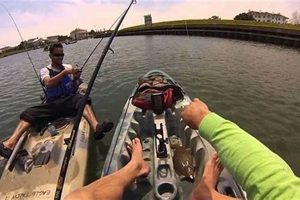
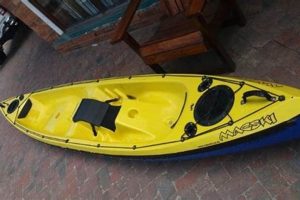
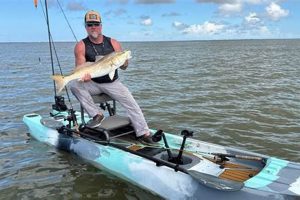
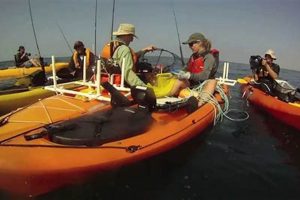
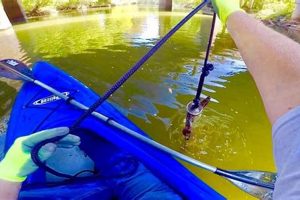
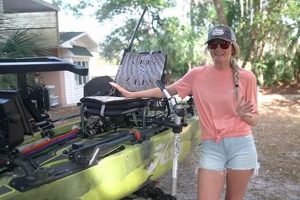
An affordable, functional kayak configuration designed for angling often involves a sit-on-top kayak, basic paddle, and essential fishing accessories like rod holders and a small anchor. Such setups prioritize practicality and cost-effectiveness over premium features or advanced materials. For example, a budget-conscious angler might choose a shorter, wider kayak made from high-density polyethylene for stability, paired with an adjustable paddle and a simple crate for tackle storage.
Accessible kayak fishing setups expand participation in the sport by removing financial barriers. This allows a broader range of individuals to experience the enjoyment and health benefits of on-the-water angling. Historically, specialized fishing kayaks were expensive investments. The increasing availability of more economical options contributes to the growth and democratization of kayak fishing, enabling more people to connect with nature and pursue this recreational activity.
This exploration will cover key aspects of assembling an economical yet effective kayak fishing platform, including selecting appropriate kayaks, paddles, and essential accessories, along with safety considerations and tips for maximizing on-the-water performance.
Tips for an Economical Kayak Fishing Setup
Creating a functional and affordable kayak fishing setup requires careful consideration of various factors. The following tips offer guidance on maximizing value and performance while minimizing cost.
Tip 1: Prioritize Stability over Speed. Shorter, wider kayaks offer greater stability, especially for beginners. While they may not be as fast as longer, narrower models, stability is crucial for casting, reeling, and landing fish. Consider a sit-on-top design for easier entry and exit.
Tip 2: Choose Used Kayaks Wisely. Purchasing a used kayak can significantly reduce costs. Carefully inspect used kayaks for damage, including cracks, deep scratches, and repairs. Consider inflatable kayaks as a potentially less expensive option.
Tip 3: Select a Basic Paddle. An adjustable, two-piece paddle made from aluminum or plastic provides adequate performance for recreational fishing. Prioritize durability and functionality over lightweight, high-performance materials like carbon fiber.
Tip 4: Utilize Affordable Rod Holders. Simple rod holders, including clamp-on or flush-mount designs, can be purchased at reasonable prices. Consider DIY options, such as PVC pipe rod holders, for further cost savings.
Tip 5: Employ a Small Anchor. A lightweight anchor, like a folding grapnel anchor, is sufficient for most kayak fishing situations. A simple anchor trolley system can be constructed using basic hardware and rope.
Tip 6: Repurpose Existing Gear. Utilize existing tackle boxes, coolers, and dry bags for storage rather than investing in specialized kayak fishing accessories. A milk crate can offer a cost-effective solution for organizing gear.
Tip 7: Focus on Essential Safety Equipment. Prioritize essential safety gear, including a personal flotation device (PFD) and a whistle. These items are crucial for safety and often required by law.
By focusing on practicality and resourcefulness, anglers can assemble a complete kayak fishing setup without excessive expenditure. This approach enables more individuals to enjoy the sport while staying within budget.
These tips provide a foundation for assembling an affordable and functional kayak fishing setup. Further research and planning will contribute to a successful and enjoyable on-the-water experience.
1. Used Kayaks

Acquiring a used kayak represents a primary strategy for reducing the overall cost of a fishing kayak setup. Careful selection and inspection are essential to ensure a balance between affordability and functionality.
- Condition Assessment
Thorough inspection is crucial. Examine the hull for cracks, deep scratches, or repairs. Check for wear and tear on seating, hatches, and hardware. Evaluate the overall structural integrity. A well-maintained used kayak can offer years of service, while a neglected one may require costly repairs.
- Pricing Research
Research current market prices for comparable models to establish a fair offer. Online marketplaces, local classifieds, and used sporting goods stores provide valuable pricing data. Negotiating a reasonable price maximizes cost savings.
- Model Selection
Consider the intended fishing style and environment when selecting a used kayak. A stable sit-on-top model is generally preferred for fishing. Evaluate the kayak’s length, width, and weight capacity to ensure suitability for the angler and their gear.
- Reputable Sources
Purchasing from reputable sources, such as established used kayak retailers or individual sellers with verifiable feedback, mitigates risks. A reputable source often provides some level of assurance regarding the kayak’s condition and history.
Selecting a suitable used kayak significantly reduces initial investment. Combining this approach with other cost-conscious choices related to accessories and gear enables anglers to assemble a complete fishing kayak setup while adhering to a budget. Thorough research and careful inspection are essential components of this process.
2. Basic Paddle
A basic paddle plays a crucial role in a cost-effective fishing kayak setup. Paddle selection significantly impacts overall expenditure. Opting for a basic paddle over a high-performance model contributes substantially to budget management. A basic paddle typically features an aluminum or plastic shaft and blades, offering adequate functionality and durability for recreational fishing. For example, an adjustable two-piece paddle allows for customized length and compact storage, serving practical needs without the premium associated with lightweight materials like carbon fiber.
The importance of a basic paddle in an economical approach extends beyond initial cost savings. Maintenance requirements are generally lower for basic paddles. Their robust construction withstands typical wear and tear, reducing the likelihood of damage and replacement costs. While high-performance paddles offer advantages in speed and efficiency, a basic paddle provides sufficient performance for recreational anglers. The marginal gains offered by premium paddles are often outweighed by their significantly higher price point, making a basic paddle the pragmatic choice for budget-conscious anglers. One might compare this choice to selecting a reliable vehicle for transportation over a luxury model; both achieve the core objective, but the former does so at a lower cost.
Understanding the role of a basic paddle in an economical kayak fishing setup allows anglers to prioritize value and functionality. This informed decision-making process optimizes resource allocation, ensuring fishing remains accessible without compromising on-the-water performance. The selection of a basic paddle exemplifies the broader principle of prioritizing essential functionality over premium features in a budget-conscious approach. This principle applies to all aspects of assembling an affordable and effective fishing kayak configuration. Anglers can focus their resources on other essential equipment or enhance their fishing experience by investing in high-quality tackle or electronics.
3. Simple Rod Holders

Simple rod holders represent a key component in a cost-effective fishing kayak setup. Their function is essential for hands-free fishing, allowing anglers to manage lines, change lures, or paddle without constantly holding a rod. Cost-effectiveness is paramount in a budget-conscious setup, and simple rod holders offer this essential functionality without the premium price of advanced models.
- DIY Solutions
Do-it-yourself rod holders offer significant cost savings. Examples include repurposed PVC pipe sections, modified plastic bottle holders, or simple wooden dowels attached to the kayak. These DIY solutions reduce reliance on commercially manufactured products and allow for customization to specific needs. However, careful construction and secure mounting are essential for functionality and safety.
- Clamp-on Rod Holders
Clamp-on rod holders offer a balance of affordability and versatility. These readily available holders attach to the kayak’s gunwale or rails, providing a secure mounting point for rods. They are typically constructed from plastic or aluminum, keeping costs manageable. Relatively easy installation and removal allow for adaptability to various fishing scenarios.
- Flush-Mount Rod Holders
Flush-mount rod holders offer a more permanent solution. These holders are installed directly into the kayak’s deck or gunwale, creating a streamlined and secure setup. While potentially requiring more installation effort, they offer a robust and convenient solution for frequent kayak anglers. Economical versions made from plastic are available, offering cost-effectiveness compared to high-end stainless steel models.
- Repurposed Gear
Existing gear can be repurposed to create functional rod holders. Examples include utilizing existing fishing rod holders from boats or docks, adapting camera mounts, or utilizing simple straps or bungee cords to secure rods. This resourceful approach further reduces reliance on specialized kayak fishing products and promotes cost-effectiveness.
The choice of simple rod holders contributes significantly to the overall affordability of a fishing kayak setup. Selecting economical options, including DIY solutions, clamp-on holders, or repurposed gear, allows anglers to allocate resources to other essential components, such as safety equipment or improved tackle. This targeted approach maximizes on-the-water functionality while adhering to budgetary constraints. By prioritizing simple yet functional rod holders, anglers demonstrate the practicality and resourcefulness that define a truly cost-effective approach to kayak fishing.
4. Affordable PFD
An affordable personal flotation device (PFD) forms an indispensable component of a cheap fishing kayak setup. Safety should never be compromised for cost, and an affordable PFD ensures essential safety without excessive expenditure. This allows budget-conscious anglers to prioritize safety while adhering to financial constraints. A PFD’s primary function is to provide buoyancy and prevent drowning in the event of capsizing or accidental immersion. Kayak fishing, by its nature, involves inherent risks related to water exposure. An affordable PFD mitigates these risks without significantly impacting the overall cost of the setup.
Consider a scenario where an angler opts for a high-end fishing kayak but neglects a PFD due to cost concerns. In the event of an accident, this decision could have dire consequences. Conversely, an angler utilizing a basic, inflatable PFD within a budget-friendly setup maintains a crucial safety measure without compromising financial goals. Numerous manufacturers offer certified PFDs at accessible price points. Type III PFDs, designed for calm, inland waters where rapid rescue is expected, are particularly suitable for kayak fishing and are often available at lower costs compared to specialized or inherently buoyant models. Selecting an appropriate and affordable PFD demonstrates responsible resource allocation, prioritizing safety within a cost-effective framework.
Prioritizing an affordable PFD within a cheap fishing kayak setup underscores a critical understanding: safety is non-negotiable. Resourceful anglers can equip themselves with essential safety gear without excessive financial burden. This approach allows broader access to the sport, ensuring financial constraints do not equate to compromised safety. Investing in an affordable PFD exemplifies a commitment to responsible and enjoyable kayak fishing, balancing practicality with essential safety precautions. This approach aligns with the overall philosophy of a budget-conscious setup, maximizing value while ensuring necessary safety measures remain paramount.
5. Small Anchor

A small anchor plays a significant role in a cheap fishing kayak setup, offering essential functionality while minimizing cost and weight. Maintaining position in a chosen fishing spot is crucial for angling success, especially in areas with current or wind. A small, appropriately sized anchor provides this capability without the expense and bulk of larger anchors designed for larger vessels. This aligns with the core principles of a budget-conscious approach: maximizing utility while minimizing expenditure.
- Anchor Type
Folding grapnel anchors or small fluke anchors are ideal for kayaks due to their compact size and efficient holding power in common kayak fishing environments like riverbeds or weed beds. These anchors stow easily and minimize weight, important considerations for kayak anglers. A heavier, more complex anchor, such as a plow or mushroom anchor, would be unnecessarily cumbersome and expensive for kayak fishing.
- Anchor Weight
Anchor weight must be balanced against the kayak’s size and stability. A kayak requires less holding power than a larger boat. A 1.5- to 3-kilogram anchor is typically sufficient for most kayak fishing situations. Overly heavy anchors compromise stability and maneuverability, while excessively light anchors prove ineffective. Selecting the correct weight maximizes holding power while maintaining kayak performance.
- Anchor Line
Floating anchor line simplifies retrieval and prevents entanglement. A length of 15-30 meters is usually adequate for kayak fishing. Economical options include polypropylene or nylon rope. While specialized anchor lines offer enhanced features like abrasion resistance, basic, cost-effective lines function effectively within a budget-conscious setup.
- Anchor Trolley System
A simple anchor trolley system enhances control and stability. The trolley allows the anchor point to be adjusted, compensating for wind or current changes. Basic trolley systems can be assembled using readily available hardware and rope, minimizing cost while significantly improving anchor control compared to a fixed anchor point. This cost-effective modification improves fishing efficiency and overall kayak control.
The incorporation of a small anchor exemplifies the thoughtful approach necessary for a successful cheap fishing kayak setup. Balancing functionality, weight, and cost is crucial. By selecting an appropriately sized anchor, suitable line, and a simple trolley system, anglers enhance their fishing experience without exceeding budgetary constraints. This detailed examination of anchor selection reinforces the core principle of maximizing utility while minimizing cost, a principle applicable to all aspects of a budget-conscious kayak fishing setup.
6. DIY Accessories
DIY accessories represent a cornerstone of the cheap fishing kayak setup, offering significant cost savings while allowing for customization and personalization. Resourceful creation of essential fishing accessories allows anglers to equip their kayaks effectively without the expense of commercially manufactured products. This resourceful approach directly addresses the financial constraints inherent in a budget-conscious setup.
- Rod Holders
PVC pipe sections, readily available and inexpensive, can be readily transformed into functional rod holders. Cutting the pipe to appropriate lengths and securing them to the kayak using readily available hardware provides a stable platform for multiple fishing rods. This simple modification eliminates the need for purchasing specialized kayak rod holders, which can represent a substantial cost saving.
- Tackle Storage
Repurposed containers, such as plastic tubs or modified toolboxes, offer practical tackle storage solutions. Securing these containers to the kayak using bungee cords or straps provides organized storage for lures, hooks, and other essential fishing gear. This avoids the cost of specialized kayak tackle boxes and allows anglers to utilize existing resources effectively.
- Anchor Trolley System
A simple anchor trolley system, constructed from basic hardware and rope, significantly enhances anchor control and stability. This cost-effective modification improves fishing efficiency by allowing adjustments to the anchor point based on wind or current changes, negating the need for more expensive commercially available trolley systems. This further emphasizes the resourcefulness inherent in a DIY approach.
- Paddle Leash
A simple paddle leash, crafted from a length of bungee cord and a carabiner, provides a secure connection between the paddle and the kayak, preventing loss in the event of a capsize or accidental drop. This inexpensive safety measure exemplifies the practicality of DIY accessories, addressing essential needs without incurring significant cost.
The integration of DIY accessories exemplifies the resourcefulness and cost-effectiveness central to a cheap fishing kayak setup. By utilizing readily available materials and employing creative solutions, anglers can equip their kayaks effectively without compromising functionality or exceeding budgetary constraints. This hands-on approach fosters a deeper understanding of kayak fishing equipment and promotes a more personalized and satisfying on-the-water experience. Furthermore, the money saved through DIY projects can be reallocated towards other essential gear or enhancements, maximizing the overall value and enjoyment derived from the setup.
7. Essential Safety Gear
Essential safety gear forms an integral part of any fishing kayak setup, especially a budget-conscious one. While cost-effectiveness remains a primary objective, safety should never be compromised. Integrating necessary safety equipment ensures a secure and enjoyable experience without negating the financial benefits of a less expensive setup. A common misconception associates budget limitations with compromised safety. However, careful selection and prioritization allow anglers to incorporate essential safety gear without excessive expenditure. This understanding is crucial for promoting safe and accessible kayak fishing.
Consider a scenario where an angler saves money on a kayak and paddle but forgoes a personal flotation device (PFD) due to perceived cost. A capsize or unexpected immersion could result in a life-threatening situation. Conversely, an angler who prioritizes an affordable, certified PFD, even within a limited budget, significantly increases their chances of survival in such an event. Similarly, a whistle, costing only a few dollars, can attract attention and aid in rescue, proving invaluable in an emergency. These examples demonstrate the crucial role of essential safety gear, irrespective of the overall setup cost. Practical applications include carrying a waterproof first-aid kit, a signaling device like a mirror or flare, and a communication device such as a waterproof VHF radio or a charged mobile phone in a waterproof bag.
Prioritizing essential safety gear within a cheap fishing kayak setup underscores a fundamental principle: safety is non-negotiable. Resourceful planning allows anglers to equip themselves adequately without exceeding budgetary constraints. This approach fosters a culture of responsible kayak fishing, ensuring financial accessibility does not equate to increased risk. The integration of essential safety gear, even within a budget-conscious context, reflects a commitment to a safe and enjoyable on-the-water experience. It reinforces the understanding that a truly economical approach considers not only the initial cost of equipment but also the potential long-term costs associated with neglecting essential safety precautions.
Frequently Asked Questions
This section addresses common inquiries regarding the assembly and utilization of a cost-effective fishing kayak setup. Clarifying these points aims to facilitate informed decision-making and promote safe, enjoyable kayak fishing experiences.
Question 1: Does a cheap fishing kayak setup compromise safety?
Safety is not necessarily determined by cost. A focus on essential safety equipment, such as a properly fitted PFD and appropriate signaling devices, remains paramount regardless of budget. Economical setups can prioritize safety through careful selection and prioritization of essential gear.
Question 2: Are cheap fishing kayaks less durable?
Durability varies significantly among kayaks, irrespective of price. Careful inspection of used kayaks and selection of reputable brands, even within a lower price range, can yield durable, long-lasting equipment. Focus on construction materials and manufacturing quality rather than solely on price.
Question 3: What essential features should one prioritize in an affordable fishing kayak?
Stability and sufficient storage space are key considerations. Stability ensures safe casting and reeling, while adequate storage accommodates essential fishing gear. Prioritize these functional aspects over premium features like advanced seating or rudder systems.
Question 4: How can anglers reduce costs on fishing kayak accessories?
DIY solutions and repurposing existing gear offer significant cost savings. Simple rod holders can be crafted from PVC pipe, and repurposed containers offer effective tackle storage. Resourcefulness minimizes reliance on expensive specialized accessories.
Question 5: Is it advisable to purchase a used fishing kayak?
Purchasing a used kayak can significantly reduce initial investment. Thorough inspection for damage and wear is crucial. Researching comparable models establishes fair market value and facilitates informed purchasing decisions. A well-maintained used kayak can offer excellent value.
Question 6: Can a cheap fishing kayak setup provide a comparable fishing experience to more expensive setups?
Fishing success depends more on angler skill and knowledge than equipment cost. An economical setup, properly assembled and equipped, allows anglers to access desired fishing locations and employ effective techniques. Focus should remain on fishing skills rather than equipment expense.
Careful consideration of these frequently asked questions empowers anglers to make informed decisions when assembling a cost-effective fishing kayak setup. Prioritizing essential functionality and safety, even within budgetary constraints, enables enjoyable and rewarding on-the-water experiences.
This concludes the FAQ section. The following section will delve into specific product recommendations and reviews for creating a budget-friendly fishing kayak setup.
Cheap Fishing Kayak Setup
Exploration of cost-effective fishing kayak setups reveals accessibility need not be sacrificed for affordability. Careful selection of core components, including used kayaks, basic paddles, and simple rod holders, contributes significantly to cost reduction. Resourceful utilization of DIY accessories and repurposed gear further minimizes expenditure without compromising functionality. Prioritizing essential safety equipment, such as PFDs and signaling devices, remains paramount irrespective of budget. Informed decision-making regarding equipment selection and a focus on essential functionality empower anglers to create highly effective setups without excessive financial burden.
The increasing availability of affordable options democratizes kayak fishing, enabling broader participation in this rewarding recreational activity. Continued innovation in kayak design and manufacturing promises further advancements in affordability and accessibility. Emphasis on resourcefulness and informed decision-making ensures the growth and enjoyment of kayak fishing for future generations. Ultimately, a well-planned, cost-effective setup enables anglers to focus on the core experience: connecting with nature and enjoying the pursuit of fishing.