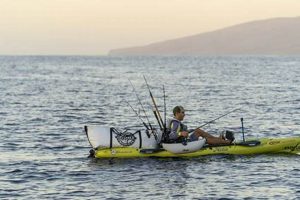
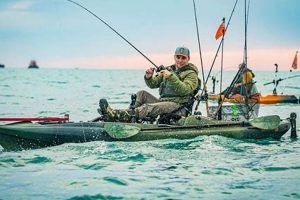
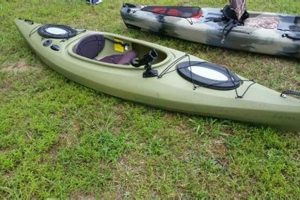
Compact, easily transportable kayaks designed for angling represent a significant advancement in fishing accessibility. These vessels prioritize portability without sacrificing stability or functionality, often incorporating features specifically for anglers, such as rod holders and storage compartments.
The demand for such watercraft stems from a desire for convenient and efficient fishing experiences. Reduced weight simplifies transport to and from remote fishing locations, eliminating the need for trailers or specialized vehicles. This ease of handling also benefits individuals with physical limitations. Historically, kayaks were crafted from heavier materials, limiting their portability. Modern materials and manufacturing techniques now allow for remarkably lightweight yet durable construction, opening up new possibilities for anglers.
This discussion will further explore the advantages and disadvantages of these specialized kayaks, including considerations of materials, design, and performance characteristics relevant to diverse fishing environments.
Tips for Selecting a Compact, Easily Transportable Fishing Kayak
Choosing a suitable lightweight fishing kayak requires careful consideration of several factors. The following tips offer guidance for making an informed decision.
Tip 1: Consider Transportation Needs: Evaluate typical transportation methods. Will the kayak be carried by hand, transported on a car roof rack, or stored in a vehicle? This will influence the acceptable weight and size.
Tip 2: Prioritize Stability: While lightweight design is desirable, stability remains crucial, especially when casting or reeling in fish. Research hull designs known for stability in various water conditions.
Tip 3: Evaluate Storage Capacity: Adequate storage is essential for fishing gear, tackle boxes, and personal items. Consider the type and amount of gear typically carried and choose a kayak with sufficient storage compartments.
Tip 4: Assess Fishing Style: Different fishing styles necessitate specific features. Anglers targeting larger fish in open water may prioritize stability and tracking, while those fishing in shallow waters may prefer maneuverability.
Tip 5: Inspect Weight Capacity: Ensure the kayak’s weight capacity accommodates the angler’s weight plus all gear and potential catches. Exceeding the weight capacity can compromise stability and performance.
Tip 6: Research Materials: Different materials offer varying degrees of durability, weight, and cost. Understand the advantages and disadvantages of common kayak materials such as polyethylene, fiberglass, and composites.
Tip 7: Test Before Purchasing: If possible, test different models before making a purchase. This allows for firsthand assessment of stability, comfort, and handling characteristics.
Careful consideration of these factors will contribute to selecting a lightweight fishing kayak that enhances angling experiences. A well-chosen vessel provides convenient access to diverse fishing locations and contributes to overall enjoyment on the water.
By understanding the nuances of these specialized kayaks, anglers can confidently choose a model that best suits their individual needs and fishing preferences. The subsequent conclusion will summarize the key benefits and considerations discussed throughout this article.
1. Portability

Portability is a defining characteristic of lightweight fishing kayaks, directly influencing accessibility and ease of transport. Reduced weight simplifies handling and allows anglers to reach fishing spots inaccessible to larger, heavier vessels. This section explores the facets of portability within the context of these specialized kayaks.
- Transport Methods
Lightweight kayaks offer diverse transport options. They can be easily loaded onto car roof racks, transported in truck beds, or even carried short distances by hand. This eliminates the need for trailers and expands fishing location possibilities. For example, a lightweight kayak can be easily portaged between smaller bodies of water or across stretches of land separating fishing areas.
- Storage Considerations
Compact size and lightweight construction simplify storage. These kayaks can be stored in garages, sheds, or even apartments, requiring minimal space compared to larger vessels. This ease of storage reduces logistical challenges and contributes to overall convenience.
- Launch and Retrieval
The reduced weight facilitates easier launch and retrieval from the water. This is particularly advantageous in shallow water or areas with limited access points. The simplified process minimizes physical strain and maximizes time spent fishing.
- Solo Adventures
Lightweight kayaks are ideally suited for solo adventures, offering independence and maneuverability. The ease of transport and handling allows individuals to explore remote locations without assistance, expanding opportunities for solitary angling experiences.
These aspects of portability collectively enhance the overall fishing experience. By eliminating logistical barriers associated with heavier watercraft, lightweight kayaks grant anglers greater freedom and access to a wider range of fishing environments. The ability to easily transport, store, launch, and retrieve these kayaks contributes significantly to their appeal among diverse angling communities.
2. Material Selection

Material selection is paramount in achieving the low weight and desirable performance characteristics of a lightweight fishing kayak. The chosen material directly impacts the vessel’s overall weight, durability, and cost. Understanding the properties of various materials is crucial for informed decision-making.
- Polyethylene (HDPE)
High-density polyethylene is a common material due to its affordability, durability, and impact resistance. While heavier than other options, advancements in rotomolding technology allow for thinner, lighter HDPE kayaks without sacrificing structural integrity. These kayaks are well-suited for recreational use and can withstand impacts from rocks and other obstacles commonly encountered in various waterways.
- Fiberglass
Fiberglass offers a balance between weight and performance. Kayaks constructed from fiberglass are generally lighter than HDPE kayaks and offer improved speed and efficiency in the water. However, fiberglass is more susceptible to damage from impacts and requires more careful handling. Its lighter weight contributes to easier transport and enhanced paddling performance.
- Carbon Fiber
Carbon fiber represents the premium option for lightweight kayaks. Significantly lighter than both polyethylene and fiberglass, carbon fiber offers exceptional performance and responsiveness. This material allows for rapid acceleration and efficient paddling, making it ideal for anglers seeking optimal speed and maneuverability. The trade-off for this performance is a higher cost.
- Thermoformed Composites
Thermoformed composites combine different materials, often incorporating ABS plastic with a core material like foam. This process results in a lightweight and durable kayak with good performance characteristics. Thermoforming allows for intricate hull designs, optimizing stability and tracking while maintaining a relatively low weight. This material represents a middle ground between the affordability of HDPE and the performance of higher-end materials.
The selection of appropriate materials ultimately depends on individual needs and priorities. Balancing weight, durability, performance, and cost is essential for choosing a lightweight fishing kayak suitable for specific fishing styles and environments. While carbon fiber offers the lightest option, its higher cost may not be justifiable for all anglers. Conversely, HDPE provides a durable and affordable entry point, while thermoformed composites offer a balance of performance and value.
3. Stability Considerations

Stability is a critical factor influencing the performance and safety of lightweight fishing kayaks. Reducing weight, while beneficial for portability, can sometimes compromise stability. Understanding the relationship between weight and stability is crucial for anglers seeking optimal performance on the water. A less stable kayak can hinder casting accuracy, make reeling in fish challenging, and even pose a risk of capsizing, particularly in rough conditions or when landing larger fish. Wider hulls generally offer greater primary stability (initial stability at rest), while longer kayaks often provide better secondary stability (resistance to tipping when leaned). Kayak design elements like pontoon hulls and outriggers can significantly enhance stability, particularly in lightweight models.
Consider, for example, an angler fishing in a narrow, lightweight kayak designed for speed. While advantageous for covering distance, this design may be less stable than a wider, heavier model. A sudden shift in weight, such as leaning over to retrieve a dropped lure, could lead to instability. Conversely, a wider, more stable kayak might sacrifice some speed but offer a more secure platform for casting and fighting fish, especially in challenging conditions like windy days or choppy waters. Choosing a kayak with appropriate stability features, such as a flatter hull design or added stability enhancements, directly impacts the angler’s safety and overall fishing experience. Understanding the trade-offs between weight, stability, and performance is essential for making informed decisions.
Ultimately, the ideal level of stability depends on the intended fishing environment and the angler’s experience. Prioritizing stability in a lightweight fishing kayak ensures a secure and enjoyable fishing experience, enabling anglers to focus on their technique and the pursuit of their catch. Neglecting stability considerations can lead to compromised performance, increased risk, and a less satisfying time on the water. Evaluating design features, considering potential fishing conditions, and understanding the interplay between weight and stability are key components of selecting the appropriate lightweight fishing kayak.
4. Fishing Features

Specialized features integrated into lightweight fishing kayaks significantly enhance their functionality and overall angling experience. These features, while adding minimal weight, contribute substantially to efficiency and convenience on the water. The careful incorporation of such features addresses the unique needs of anglers while maintaining the portability advantages of a lighter vessel. For example, built-in rod holders secure fishing rods, freeing hands for other tasks like paddling or handling tackle. Similarly, strategically placed storage compartments accommodate tackle boxes, gear, and personal items, ensuring easy access and organization.
Consider a scenario where an angler is fishing in a lightweight kayak equipped with flush-mounted rod holders and a recessed tackle storage compartment. This setup allows for hands-free trolling, maximizing fishing time and minimizing disruptions. The readily accessible tackle within the recessed compartment streamlines lure changes and adjustments, further optimizing efficiency. Conversely, a kayak lacking these features would require the angler to hold rods constantly, limiting mobility and potentially compromising safety. The absence of dedicated storage would necessitate carrying loose tackle, increasing the risk of loss or damage and hindering efficient retrieval.
Integrating fishing-specific features into lightweight kayaks directly addresses the practical needs of anglers. Features like adjustable footrests enhance paddling comfort and control, contributing to overall endurance and efficiency. Anchor trolleys simplify anchor management, enabling precise positioning in desired fishing locations. The thoughtful inclusion of these features transforms a lightweight kayak from a simple vessel into a specialized fishing platform. This focus on functionality maximizes angling effectiveness while preserving the portability benefits that define lightweight kayak design. The harmonious balance between weight, performance, and specialized features underscores the significant contribution of fishing-specific features to the overall value and utility of lightweight fishing kayaks.
5. Weight Capacity

Weight capacity is a critical specification directly impacting the performance and safety of lightweight fishing kayaks. While minimizing kayak weight enhances portability, it necessitates careful consideration of weight capacity to ensure safe and effective operation. Exceeding the specified weight capacity can compromise stability, reduce freeboard (the distance between the waterline and the top of the kayak’s side), and increase the risk of capsizing. This is particularly crucial in fishing scenarios where anglers carry gear and potentially land substantial catches, adding considerable weight to the vessel. Understanding the relationship between kayak weight and weight capacity is essential for informed decision-making.
Consider a lightweight fishing kayak with a specified weight capacity of 300 pounds. An angler weighing 175 pounds, carrying 30 pounds of gear, and landing a 40-pound fish approaches the kayak’s weight limit. Exceeding this limit reduces maneuverability, increases the risk of swamping, and compromises stability, particularly in rough conditions. Conversely, selecting a kayak with ample weight capacity, even in a lightweight model, ensures a safe and stable platform for various fishing scenarios. A higher weight capacity allows for carrying additional gear, accommodating larger catches, and maintaining optimal performance even with added weight. This is particularly crucial for anglers targeting larger fish species or embarking on extended fishing trips requiring more equipment.
Evaluating weight capacity relative to anticipated load is fundamental for safe and effective kayak operation. Manufacturers provide weight capacity specifications based on rigorous testing, and adhering to these guidelines ensures optimal performance and safety margins. Understanding this relationship empowers anglers to select lightweight fishing kayaks that meet their specific needs without compromising stability or safety. Prioritizing weight capacity alongside lightweight construction ensures a balanced approach, maximizing portability while maintaining the necessary safety and performance characteristics required for diverse fishing environments and scenarios.
6. Target Fishing Environments
Target fishing environments significantly influence the suitability of a lightweight fishing kayak. Specific environments present unique challenges and opportunities, necessitating careful consideration of kayak design, features, and performance characteristics. Matching kayak selection to the intended fishing environment optimizes performance, enhances safety, and maximizes angling success. The relationship between target environment and kayak characteristics is fundamental to informed decision-making.
- Calm Lakes and Ponds
Calm lakes and ponds offer relatively stable conditions, allowing for the effective use of lighter, more maneuverable kayaks. These environments often prioritize stability for casting and still fishing, making wider, shorter hulls suitable. Lightweight kayaks excel in these conditions due to their ease of transport and launch from shore or shallow access points.
- Slow-Moving Rivers and Streams
Slow-moving rivers and streams present moderate challenges, requiring kayaks with sufficient tracking and stability to navigate gentle currents. Lightweight kayaks, while suitable, should offer adequate control to maintain desired positions and avoid excessive drifting. Features like rudders or skegs can enhance tracking performance in these environments.
- Coastal Waters and Bays
Coastal waters and bays introduce more dynamic conditions, including wind, waves, and currents. Lightweight kayaks intended for these environments require enhanced stability and tracking to handle rougher waters. Longer kayaks with defined keels or tracking fins provide better performance in these conditions, while maintaining portability advantages.
- Open Ocean
Open ocean environments present the most demanding conditions, requiring specialized kayaks designed for stability, speed, and seaworthiness. While lightweight construction can benefit paddling efficiency, it must be balanced with robust design and construction to handle challenging open water conditions. Specialized ocean fishing kayaks, while prioritizing stability and performance, can still incorporate lightweight materials and design elements to optimize portability for transport and launch.
The interplay between target fishing environment and kayak characteristics is paramount. A lightweight kayak designed for calm lakes may perform poorly in coastal waters, while a robust ocean kayak may be unnecessarily cumbersome in a small pond. Carefully evaluating the intended fishing environment informs decisions regarding hull design, length, width, stability features, and overall kayak weight. Aligning kayak selection with target environment optimizes performance, enhances safety, and maximizes the enjoyment and success of angling pursuits.
Frequently Asked Questions
This section addresses common inquiries regarding lightweight fishing kayaks, offering concise and informative responses to facilitate informed decision-making.
Question 1: How does reduced weight impact the durability of a fishing kayak?
Modern manufacturing techniques and advanced materials allow for lightweight construction without compromising structural integrity. Kayaks utilizing high-quality materials like carbon fiber or advanced composites achieve low weight while maintaining robust durability.
Question 2: Are lightweight kayaks suitable for larger anglers or those carrying substantial gear?
Weight capacity specifications, provided by manufacturers, dictate the suitable weight range for each kayak model. Lightweight kayaks are available with varying weight capacities, accommodating diverse angler sizes and gear loads. Adhering to these specifications is crucial for safe and optimal performance.
Question 3: Do lightweight kayaks sacrifice stability for portability?
While weight reduction can influence stability, design features like wider hulls, flatter bottoms, and outriggers compensate for this. Many lightweight kayaks offer excellent stability suitable for various fishing styles and conditions.
Question 4: Are lightweight kayaks more susceptible to wind and current drift?
Lighter kayaks can be more susceptible to wind drift. However, design elements like longer keels, tracking fins, or rudders mitigate this effect. Proper paddling technique and understanding water conditions also contribute to effective control.
Question 5: How do lightweight kayaks compare in price to traditional fishing kayaks?
Pricing varies depending on materials, features, and brand. While some lightweight kayaks utilizing premium materials like carbon fiber command higher prices, many affordable options are available offering excellent value and performance.
Question 6: What maintenance considerations apply specifically to lightweight fishing kayaks?
Proper storage, cleaning, and occasional inspections for damage are essential for any kayak. Lightweight kayaks, especially those constructed from composite materials, may require additional care to prevent scratches or impacts that could compromise structural integrity.
Understanding these frequently asked questions clarifies key aspects of lightweight fishing kayaks, empowering potential buyers to make informed decisions aligned with individual needs and preferences. Careful consideration of these factors contributes to selecting a kayak that enhances fishing experiences.
The following conclusion summarizes the key takeaways discussed throughout this exploration of lightweight fishing kayaks.
Conclusion
Compact, easily transportable fishing kayaks represent a significant advancement in angling accessibility. Analysis reveals the advantages of reduced weight for transport and storage, enabling access to remote fishing locations previously inaccessible with heavier craft. Material selection, encompassing high-density polyethylene, fiberglass, and carbon fiber, directly impacts weight, durability, and cost, offering diverse options tailored to individual needs and budgets. Stability considerations remain paramount, with design features like wider hulls and specialized seating configurations compensating for potential stability compromises associated with lighter construction. Integration of fishing-specific features, including rod holders, storage compartments, and anchor trolleys, enhances functionality without significantly increasing weight. Careful consideration of weight capacity ensures safe and effective operation, accommodating angler weight, gear, and potential catches. Finally, adapting kayak selection to the target fishing environment, from calm lakes to open ocean, optimizes performance and safety.
The evolution of compact, easily transportable fishing kayaks empowers anglers with enhanced access, portability, and specialized functionality. Careful evaluation of these factors, informed by individual needs and target fishing environments, allows for strategic selection of the optimal vessel, enhancing angling experiences and maximizing success on the water. Continued innovation in materials and design promises further advancements in lightweight fishing kayak technology, expanding opportunities and fostering greater engagement within the angling community.