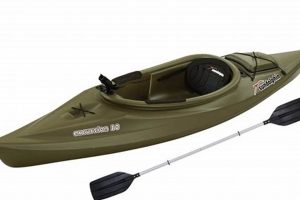
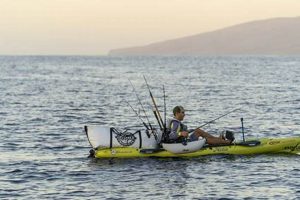
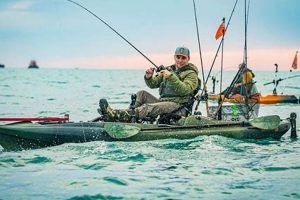
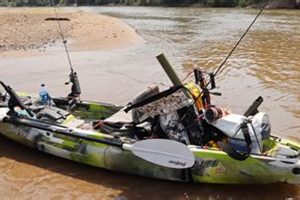
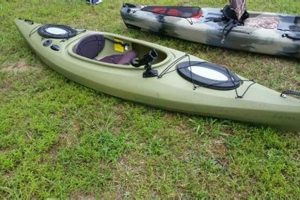
A specialized insulated container designed for transporting captured fish while kayaking offers a portable solution for keeping catches fresh on the water. These containers are typically constructed from durable, waterproof materials and often feature specialized compartments, attachment points, and designs optimized for kayak storage and stability.
Maintaining the quality of a catch is paramount for anglers, especially in warmer climates. These specialized containers provide a critical function by preserving the freshness and edibility of fish from the moment they are caught until they are brought ashore. Their compact design and kayak-specific features address the unique challenges of fishing from a small watercraft, allowing anglers to focus on the sport while ensuring their harvest remains in optimal condition. This reflects a broader trend towards specialized equipment catering to specific outdoor pursuits, maximizing both enjoyment and efficiency.
The subsequent sections will explore key features to consider when selecting such a container, including size, insulation, mounting options, and material construction. Additional topics will address proper usage, cleaning techniques, and integration with other kayaking accessories.
Tips for Selecting and Using a Kayak Fishing Cooler
Choosing and utilizing an appropriate insulated fish container is crucial for maintaining catch quality during kayak fishing excursions. The following tips offer guidance for maximizing effectiveness and enjoyment.
Tip 1: Size Appropriately. Container capacity should align with anticipated catch size and fishing trip duration. Overly large containers consume valuable kayak space, while insufficient capacity compromises fish preservation. Consider typical catch sizes and trip lengths when determining the ideal volume.
Tip 2: Prioritize Insulation. Effective insulation is paramount for maintaining low temperatures and preserving fish quality, particularly in warm climates. Look for containers constructed with high-quality insulating materials and designs that minimize temperature fluctuations.
Tip 3: Securely Mount the Container. A stable and secure mounting system prevents container movement during paddling and fishing. Consider dedicated kayak mounting systems or straps designed specifically for cooler attachment. Secure mounting ensures both angler safety and fish preservation.
Tip 4: Choose Durable Materials. Exposure to water, sun, and potential impacts necessitates a robust container construction. Select containers made from UV-resistant, puncture-resistant materials designed for harsh marine environments. Durable construction ensures longevity and reliable performance.
Tip 5: Pre-Chill Before Use. Pre-chilling the container with ice or frozen packs enhances cooling efficiency and prolongs fish freshness. Adding pre-chilled items before departing ensures optimal temperature maintenance from the outset of the fishing trip.
Tip 6: Regularly Drain Meltwater. Accumulated meltwater reduces cooling efficiency and can compromise fish quality. Regularly drain excess water to maintain optimal cooling performance and prevent bacterial growth.
Tip 7: Integrate with Existing Gear. Compatibility with existing kayaking gear, such as rod holders and storage compartments, enhances overall efficiency and convenience. Consider container designs that complement existing equipment for seamless integration.
By considering these tips, anglers can select and utilize an insulated container that optimizes both catch preservation and overall fishing experience. Proper container selection contributes significantly to successful and enjoyable kayak fishing trips.
The following section concludes with a summary of key considerations and reinforces the importance of proper container selection for responsible kayak fishing.
1. Insulation

Insulation is paramount for a kayak fish cooler bag’s primary function: preserving catch freshness. Effective insulation minimizes heat transfer, maintaining a consistently low internal temperature critical for slowing bacterial growth and enzymatic activity that degrade fish quality. The duration for which a cooler bag maintains optimal temperatures directly correlates with insulation quality. A well-insulated bag keeps fish fresh for extended periods, essential for longer fishing trips or warmer climates. Conversely, inadequate insulation compromises fish preservation, potentially rendering the catch inedible or unsafe to consume.
Various insulation methods and materials exist, each with performance characteristics relevant to kayak fishing. Closed-cell foam, often used in these coolers, provides excellent insulation due to its trapped air pockets, minimizing heat conduction. Thickness and density of the foam directly impact insulation performance; thicker, denser foam typically provides superior insulation. Vacuum insulation, another effective method, eliminates air molecules, significantly reducing heat transfer. Reflective materials integrated into the cooler’s lining further minimize radiant heat absorption. The choice of insulation material and construction directly affects the cooler’s effectiveness in maintaining low internal temperatures, impacting overall catch preservation during kayak fishing excursions.
Understanding the crucial role of insulation in a kayak fish cooler bag empowers informed purchasing decisions. Prioritizing insulation quality ensures optimal fish preservation, crucial for successful and enjoyable kayak fishing experiences. The effectiveness of insulation directly impacts the quality and safety of the consumed catch, underscoring its importance as a critical component of this specialized equipment.
2. Capacity
Cooler bag capacity significantly influences kayak fishing practicality. Appropriate capacity ensures efficient use of limited kayak space while accommodating anticipated catch volume. Careful consideration of capacity requirements optimizes both fishing success and kayak stability.
- Storage Volume
Storage volume, typically measured in quarts or liters, dictates the quantity of fish a cooler bag can hold. Selecting appropriate volume requires estimating typical catch size and desired storage duration. Insufficient volume necessitates discarding fish prematurely or compromising preservation quality, while excessive volume consumes valuable kayak space, potentially impacting stability and maneuverability. Balancing storage requirements with available kayak space is crucial for successful kayak fishing.
- Dimensions and Shape
Physical dimensions and shape influence cooler bag placement and integration within the kayak’s limited space. Long, narrow coolers may fit better in specific kayak areas than shorter, wider ones. Cooler shape should complement kayak design and available storage compartments to maximize space utilization and prevent interference with paddling or fishing activities. Optimal cooler dimensions and shape enhance both kayak organization and fishing efficiency.
- Weight Capacity
Cooler bag weight capacity, including both the cooler itself and its contents, influences kayak stability and maneuverability. Exceeding weight capacity compromises kayak performance and potentially creates safety hazards. Understanding cooler bag weight limitations and anticipated catch weight is crucial for maintaining kayak balance and ensuring a safe fishing experience. Proper weight distribution within the kayak further enhances stability and control.
- Organization and Accessibility
Internal compartments and organizational features enhance efficient use of cooler bag capacity. Dividers or separate compartments facilitate categorization and preservation of different fish species or sizes. Accessibility features, such as wide openings or easy-access lids, simplify retrieving items without disrupting the remaining contents or compromising cooler bag stability. Thoughtful organization and accessibility maximize cooler bag utility and contribute to a more efficient and enjoyable fishing experience.
Careful evaluation of cooler bag capacity relative to anticipated needs and kayak limitations ensures successful and enjoyable fishing trips. Appropriate capacity selection maximizes space utilization, maintains kayak stability, and preserves catch quality, contributing significantly to a positive kayak fishing experience.
3. Durability
Durability is a critical attribute for kayak fish cooler bags, given the demanding conditions they routinely endure. Exposure to saltwater, UV radiation, and physical impacts necessitates robust construction. A durable cooler bag resists punctures, tears, and abrasion, maintaining its structural integrity and preserving its insulating properties over extended use. Cooler bag failure during a fishing trip can compromise catch preservation and overall trip success, underscoring the importance of durability.
Several factors contribute to cooler bag durability. Material selection plays a key role; high-quality fabrics like heavy-duty nylon or polyester with reinforced stitching provide robust resistance to tearing and abrasion. Waterproof coatings and seam sealing prevent water ingress, protecting both the cooler’s insulation and the catch within. High-quality zippers and closures resist corrosion from saltwater exposure and ensure reliable functionality over time. Reinforced base construction and strategically placed wear patches further enhance durability in high-wear areas. Selecting a cooler bag constructed with these features contributes to its longevity and reliable performance in challenging kayak fishing environments.
Investing in a durable kayak fish cooler bag offers significant long-term benefits. Reduced replacement frequency minimizes costs and environmental impact. Consistent performance ensures reliable catch preservation, enhancing fishing trip success and food safety. A durable cooler bag provides peace of mind, allowing anglers to focus on fishing rather than equipment concerns. Therefore, prioritizing durability when selecting a kayak fish cooler bag is a practical investment that contributes significantly to a positive and sustainable fishing experience.
4. Portability
Portability is a defining characteristic of effective kayak fish cooler bags. Kayak fishing necessitates easily transportable gear, and cooler bags must be lightweight and maneuverable for convenient carrying to and from the kayak launch, as well as for efficient storage within the limited confines of the kayak itself. Cumbersome or unwieldy cooler bags hinder kayak transport and on-water mobility, compromising overall fishing efficiency. Features like comfortable carrying handles, adjustable shoulder straps, and compact dimensions contribute significantly to cooler bag portability.
The portability of a kayak fish cooler bag directly impacts the overall fishing experience. Easy transport to and from the water reduces physical strain and allows anglers to focus on fishing preparations. Efficient storage within the kayak maximizes available space and prevents interference with paddling and casting. For instance, a compact, lightweight cooler bag easily stows beneath a kayak seat or within a designated storage compartment, preserving deck space for essential fishing gear. Conversely, a bulky, heavy cooler bag creates challenges for both transport and storage, potentially hindering kayak maneuverability and overall fishing enjoyment.
Consideration of portability is essential when selecting a kayak fish cooler bag. Balancing storage capacity with portability requirements ensures efficient use of kayak space without compromising transport convenience. Evaluating features like carrying handles, straps, and overall dimensions allows anglers to select a cooler bag optimized for their specific needs and physical capabilities. Prioritizing portability contributes to a more streamlined and enjoyable kayak fishing experience, enabling anglers to focus on the sport rather than equipment challenges. Ultimately, portability enhances both the efficiency and enjoyment of kayak fishing excursions.
5. Water Resistance
Water resistance is a critical feature for kayak fish cooler bags due to the inherent exposure to water in a kayak fishing environment. Spray from paddles, waves, and rain, along with potential submersion during launching or landing, necessitate a high degree of water resistance to protect the cooler’s contents and maintain its functionality. A non-water-resistant cooler bag risks waterlogging, compromising insulation effectiveness and potentially spoiling the catch. Furthermore, water entering the cooler can damage personal belongings stored alongside the fish.
The level of water resistance required depends on typical fishing conditions. Calm, inland waters may necessitate only basic water repellency, while ocean kayaking or fishing in frequently rainy conditions demands a higher level of protection. Sealed zippers, waterproof fabrics, and welded seams contribute to a cooler bag’s ability to repel water. Some cooler bags offer complete submersion protection, essential for extreme conditions. For instance, a cooler bag accidentally dropped overboard in rough waters requires a high degree of water resistance to prevent saltwater intrusion and protect the catch. Similarly, heavy rainfall during a fishing trip demands a cooler bag capable of withstanding prolonged water exposure. Choosing a cooler bag with appropriate water resistance ensures catch preservation and protects other items from water damage, regardless of the fishing environment.
Understanding the importance of water resistance empowers informed purchasing decisions. Matching cooler bag water resistance to anticipated fishing conditions ensures optimal performance and catch preservation. Adequate water resistance safeguards both the catch and other essential gear, contributing significantly to a successful and worry-free kayak fishing experience. Failure to consider water resistance can lead to spoiled catches, damaged equipment, and a compromised fishing trip. Prioritizing water resistance is a practical consideration that enhances the overall enjoyment and success of kayak fishing.
6. Secure Mounting

Secure mounting is essential for kayak fish cooler bags due to the dynamic nature of kayak fishing. Movement inherent in paddling, casting, and retrieving fish necessitates a stable cooler bag to prevent shifting or tipping. An unsecured cooler bag risks capsizing the kayak, especially in challenging conditions like rough water or strong currents. Furthermore, a shifting cooler bag can interfere with paddling efficiency and create an unstable fishing platform, compromising both safety and fishing success. For example, a cooler bag sliding across the deck during a hookset can disrupt balance and potentially lead to a fall overboard. Secure mounting systems, such as straps, D-rings, or dedicated cooler mounts, minimize these risks by firmly securing the cooler bag to the kayak.
Several mounting options exist, each with advantages and disadvantages. Straps offer versatility and adjustability, allowing customization to various kayak layouts and cooler bag sizes. D-rings provide fixed attachment points for added security. Dedicated cooler mounts offer the most stable solution, often integrating directly with the kayak’s design. Factors influencing mount selection include kayak type, cooler bag size and shape, and individual fishing style. For instance, a sit-on-top kayak may offer more mounting options than a sit-inside kayak. Similarly, a larger cooler bag may require more robust mounting hardware than a smaller one. Understanding these factors facilitates informed decisions regarding mounting solutions, maximizing cooler bag stability and enhancing overall kayak fishing safety.
Proper securement contributes significantly to both safety and fishing success. A stable cooler bag minimizes the risk of capsizing and interference with paddling, allowing anglers to focus on fishing. Furthermore, secure mounting prevents cooler bag movement, reducing the chance of damage to the cooler or its contents. The practical significance of secure mounting is particularly evident in challenging fishing environments. Rough water, strong currents, and sudden movements during fish fighting all underscore the importance of a securely mounted cooler bag. Ultimately, prioritizing secure mounting enhances kayak fishing safety, efficiency, and overall enjoyment.
Frequently Asked Questions
This section addresses common inquiries regarding specialized insulated containers designed for kayak fishing, providing concise and informative responses to facilitate informed decision-making.
Question 1: What are the key advantages of using a dedicated kayak fish cooler bag compared to a standard cooler?
Kayak-specific designs prioritize space efficiency, secure mounting, and portability within the confines of a kayak. Standard coolers often lack these specialized features, potentially compromising stability and convenience during kayak fishing excursions.
Question 2: How does one determine the appropriate size cooler bag for kayak fishing?
Appropriate cooler bag size depends on anticipated catch size, trip duration, and available kayak space. Balancing storage needs with kayak capacity and stability considerations is crucial for selecting the optimal size.
Question 3: What materials offer the best durability and insulation for kayak fish cooler bags?
High-density, closed-cell foam provides excellent insulation, while durable materials like marine-grade nylon or polyester with reinforced stitching offer robust resistance to punctures, tears, and UV degradation.
Question 4: What mounting options are available for securing a cooler bag in a kayak?
Common mounting options include adjustable straps, D-rings, and dedicated kayak cooler mounts. Selection depends on kayak type, cooler bag design, and desired level of stability.
Question 5: How should a kayak fish cooler bag be cleaned and maintained?
Regular cleaning with mild soap and water, along with thorough drying, prevents bacterial growth and extends cooler bag lifespan. Prompt removal of fish remains and proper drainage of meltwater are crucial hygiene practices.
Question 6: Can a kayak fish cooler bag be used for other outdoor activities besides fishing?
While designed for kayak fishing, these versatile containers can also function effectively for other outdoor pursuits requiring portable, insulated storage, such as camping, picnicking, or general boating.
Addressing these common questions aims to provide a comprehensive understanding of the key considerations when selecting and utilizing a specialized kayak fish cooler bag. Careful consideration of these factors enhances both fishing success and overall enjoyment on the water.
The following section will offer concluding remarks and summarize the key benefits of incorporating a dedicated kayak fish cooler bag into one’s fishing equipment.
Kayak Fish Cooler Bag
Effective preservation of catches during kayak fishing excursions necessitates specialized equipment. A kayak fish cooler bag addresses this need, offering a portable and efficient solution for maintaining fish freshness and quality on the water. Key features discussed include insulation properties, capacity considerations, durability requirements, portability benefits, water resistance necessity, and secure mounting options. Each feature contributes significantly to the overall functionality and effectiveness of these specialized containers. Prioritizing these aspects during cooler bag selection ensures optimal performance, contributing directly to successful kayak fishing outcomes.
Investing in a high-quality kayak fish cooler bag represents a commitment to responsible fishing practices and enhanced enjoyment of the sport. Proper catch preservation ensures food safety and minimizes waste, contributing to sustainable fishing practices. Furthermore, a reliable cooler bag enhances angler peace of mind, allowing focus to shift towards the enjoyment of the fishing experience itself. Selecting appropriate equipment tailored to the specific demands of kayak fishing elevates both the success and satisfaction derived from this increasingly popular pursuit.