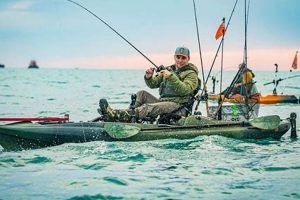
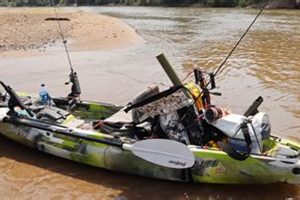
This likely refers to a specific kayak model designed for diverse water conditions, targeting anglers seeking large fish. The “3 waters” designation suggests versatility across different environments, possibly encompassing lakes, rivers, and coastal areas. The “108” likely denotes a specific model number or length designation within the manufacturer’s lineup. This combination of attributes indicates a kayak tailored for stability, capacity, and features beneficial to fishing, such as rod holders and storage compartments.
A kayak suited for multiple water types offers significant advantages to anglers. It eliminates the need for owning multiple specialized kayaks, thereby reducing cost and storage needs. Its focus on larger fish suggests enhanced stability and load capacity, important factors for safety and successful angling. Historically, fishing kayaks have evolved from basic recreational designs to highly specialized vessels equipped with advanced features. This evolution reflects a growing understanding of angler needs and technological advancements in kayak design and materials.
The subsequent sections will explore the specifics of navigating various water types in this type of kayak, including recommended techniques and safety precautions. Furthermore, the discussion will cover appropriate gear selection for targeting large fish and strategies for successful angling in diverse environments. Finally, maintenance and care guidelines specific to this type of kayak will be provided to ensure longevity and optimal performance.
Tips for Multi-Water Kayak Fishing
Effective kayak fishing across diverse environments requires careful consideration of several factors, from equipment selection to safety procedures. The following tips provide guidance for maximizing success and ensuring a safe, enjoyable experience.
Tip 1: Understand Water Conditions: Prior to launching, thoroughly research the specific water conditions expected. Currents, tides, and wind patterns can significantly impact kayak handling and angler safety. Consult local resources, including weather reports and tide charts.
Tip 2: Choose Appropriate Gear: Select fishing rods, reels, and tackle suitable for the target species and the specific water environment. Consider using braided fishing line for its strength and sensitivity. Organize gear within the kayak for easy access.
Tip 3: Prioritize Safety: Always wear a personal flotation device (PFD). Carry a whistle or other signaling device. Inform someone of your fishing plans, including your intended location and return time. Check safety equipment regularly.
Tip 4: Master Kayak Control: Practice maneuvering the kayak in calm waters before venturing into more challenging environments. Learn basic paddling strokes and techniques for turning and maintaining stability. Consider taking a kayaking safety course.
Tip 5: Respect Wildlife and the Environment: Adhere to local fishing regulations and licensing requirements. Practice catch-and-release whenever possible. Dispose of fishing line and other waste responsibly. Minimize disturbance to wildlife and their habitats.
Tip 6: Adapt to Changing Conditions: Weather and water conditions can change rapidly. Be prepared to adjust plans as needed. If conditions deteriorate, return to shore promptly. Monitor weather forecasts throughout the fishing trip.
Tip 7: Maintain Equipment: Regularly rinse the kayak with fresh water after each use, especially after exposure to saltwater. Inspect and maintain all fishing gear and safety equipment to ensure proper function and longevity.
By following these guidelines, anglers can enhance their fishing experience while prioritizing safety and environmental responsibility. Preparation and careful consideration of these factors contribute significantly to successful outings in diverse water environments.
These tips, combined with knowledge of specific fishing techniques, provide a foundation for successful kayak angling across various water conditions. The following section will delve into advanced strategies for targeting specific fish species.
1. Three-water versatility

The “three-water” designation within the “3 Waters Kayaks Big Fish 108” model signifies its adaptability across various aquatic environments. This versatility distinguishes it from kayaks designed for specific water types, offering anglers greater flexibility and eliminating the need for multiple specialized vessels. Understanding the implications of this feature requires examining its core components.
- Hull Design:
The hull design plays a crucial role in determining a kayak’s performance across different water conditions. A “3 Waters” kayak likely features a hybrid hull design, balancing stability and maneuverability. For example, a slightly flatter hull provides stability in calm lakes, while a moderate rocker profile allows for navigating river currents and ocean swells. This balanced design enables anglers to confidently navigate diverse environments within a single vessel.
- Adaptability to Conditions:
Adaptability is paramount when transitioning between calm lakes, flowing rivers, and unpredictable ocean conditions. The “3 Waters Kayaks Big Fish 108” likely incorporates design elements that enhance performance across this spectrum. Features like adjustable skegs or rudders contribute to directional stability in windy conditions or strong currents. The ability to adjust the kayak’s tracking and maneuverability based on the environment contributes significantly to its versatile nature.
- Fishing Applications:
Versatility extends to fishing applications. A “3 Waters” kayak allows anglers to target different species in diverse habitats. One day, it might be used for trolling for lake trout in deep water, and the next, for casting lures for bass in shallow riverbeds. This adaptability expands fishing opportunities without requiring specialized equipment for each environment. The kayak becomes a platform for diverse angling experiences.
- Transportation and Storage:
Owning a single kayak capable of navigating multiple water types simplifies transportation and storage logistics. Eliminating the need for multiple kayaks reduces transportation costs and required storage space. This practicality makes “3 Waters” kayaks an attractive option for anglers with limited storage capacity or those frequently traveling to different fishing destinations.
In conclusion, the “three-water versatility” of the “3 Waters Kayaks Big Fish 108” represents a significant advantage for anglers seeking diverse fishing experiences. Its adaptability to different water conditions, combined with practical considerations related to transportation and storage, positions it as a versatile platform for pursuing a wide range of angling opportunities.
2. Large fish capacity

The “Big Fish” component of the “3 Waters Kayaks Big Fish 108” designation directly relates to its capacity for handling larger fish. This attribute encompasses several factors beyond simply accommodating the weight of a substantial catch. It signifies a design tailored for the specific challenges and requirements inherent in angling for larger species, impacting stability, maneuverability, and overall fishing experience. Exploring these facets provides insight into the practical implications of “large fish capacity.”
- Stability:
A kayak intended for large fish must possess exceptional stability. The increased weight and potential for sudden movements from a powerful fish necessitate a stable platform to maintain balance and prevent capsizing. Wider hulls, strategically placed seating, and potentially outrigger systems contribute to enhanced stability. This stability is crucial not only for angler safety but also for effectively managing the fight and landing of a large fish.
- Weight Capacity:
The kayak’s overall weight capacity is a critical factor. This capacity must account not only for the angler’s weight but also for the potential weight of large fish, fishing gear, and any additional equipment. Exceeding the specified weight capacity can compromise stability and maneuverability, potentially creating hazardous situations. Manufacturers typically provide clear weight capacity guidelines that anglers must adhere to for safe and optimal performance.
- Deck Space and Layout:
Ample deck space is essential for managing large fish alongside fishing gear. A cluttered deck can interfere with landing and handling a large catch, increasing the risk of tangles or equipment loss. Well-designed layouts prioritize open deck space and strategic placement of rod holders, tackle storage, and other accessories to maximize efficiency and minimize interference during critical moments.
- Durability and Construction:
The stresses exerted by large fish necessitate a robust and durable construction. Reinforced hulls, high-quality materials, and sturdy fittings contribute to the kayak’s ability to withstand the forces involved in battling substantial catches. Durability ensures the kayak remains reliable and performs consistently under the demanding conditions of large fish angling.
These facets collectively contribute to the “large fish capacity” of the “3 Waters Kayaks Big Fish 108.” The interplay between stability, weight capacity, deck layout, and robust construction creates a platform specifically designed for targeting larger species. This specialized design enhances not only the probability of landing a trophy fish but also the overall safety and enjoyment of the angling experience.
3. Stability

Stability forms a cornerstone of the “3 Waters Kayaks Big Fish 108” design, directly influencing its suitability for diverse environments and targeting large fish. This characteristic hinges on multiple factors, including hull design, weight distribution, and the angler’s center of gravity. A stable kayak provides a secure platform for casting, reeling, and landing fish, particularly crucial when battling strong currents, unpredictable waves, or the powerful struggles of a substantial catch. Consider a scenario where an angler hooks a large fish in choppy coastal waters. A stable kayak enables the angler to maintain balance and control, increasing the likelihood of a successful landing while minimizing the risk of capsizing.
Hull design contributes significantly to stability. Wider hulls generally offer greater initial stability, resisting tipping. However, they can sacrifice maneuverability. The “Big Fish 108” likely incorporates a hull design balancing stability and maneuverability, crucial for navigating varied water conditions. Weight distribution also plays a vital role. Evenly distributed weight, including gear and the angler’s position, lowers the center of gravity, enhancing stability. Imagine an angler shifting weight suddenly while reaching for a dropped lure. In a less stable kayak, this movement could lead to instability or even capsizing. The “Big Fish 108” design likely prioritizes a low center of gravity to mitigate such risks.
Understanding the factors influencing stability is crucial for safe and successful kayak fishing, particularly when targeting larger species in diverse environments. A stable platform enables anglers to focus on fishing techniques and managing the fight, rather than constantly battling to maintain balance. This translates to a more enjoyable and productive fishing experience, while simultaneously minimizing the risk of accidents or equipment loss. Choosing a kayak with appropriate stability characteristics empowers anglers to confidently explore different waters and pursue their target species, ultimately enhancing the overall angling experience.
4. Durability
Durability represents a critical attribute of the “3 Waters Kayaks Big Fish 108,” directly impacting its longevity and performance across diverse environments. This characteristic encompasses material selection, construction techniques, and resistance to wear and tear. A durable kayak withstands the rigors of navigating various water conditions, from rocky riverbeds to abrasive saltwater environments, and the stresses exerted by large, powerful fish. Consider a scenario involving frequent transport over rough terrain or impacts against submerged obstacles. A durable kayak resists damage, maintaining structural integrity and extending its lifespan. This resilience translates directly into long-term value and consistent performance.
Material selection plays a pivotal role in determining durability. High-quality polymers, such as polyethylene, offer a balance of impact resistance, UV protection, and flexibility. Specific construction techniques, including rotomolding or thermoforming, further enhance durability. Rotomolded kayaks, for example, typically possess uniform wall thickness, enhancing overall strength and impact resistance. Reinforced areas, particularly in high-stress zones like the keel or seating area, further bolster durability against abrasion and impact. Consider a kayak frequently used in shallow, rocky rivers. Reinforced areas protect against damage, ensuring continued functionality and preventing leaks.
The practical significance of durability extends beyond simply prolonging the kayak’s lifespan. A durable kayak provides a reliable platform for angling, minimizing the risk of failures or compromises in performance. Consistent performance under demanding conditions translates directly into enhanced safety and a more enjoyable fishing experience. Durable construction allows anglers to focus on fishing, rather than concerns about potential damage or equipment failure. In conclusion, durability represents a crucial factor in the “3 Waters Kayaks Big Fish 108” design, contributing significantly to its long-term value, reliability, and overall performance in diverse fishing environments.
5. Storage Solutions

Effective storage solutions are integral to the “3 Waters Kayaks Big Fish 108” design, directly impacting functionality and the overall angling experience. Kayak fishing necessitates carrying various equipment, including rods, reels, tackle boxes, safety gear, and potentially food and water. Organized and accessible storage facilitates efficient gear management, maximizing fishing time and minimizing clutter. Consider an angler needing to quickly change lures based on changing fish behavior. Well-designed storage allows rapid access to the required tackle, maximizing fishing opportunities.
The “Big Fish 108” likely incorporates various storage features tailored to the demands of diverse fishing environments. These might include waterproof compartments for sensitive electronics, recessed storage areas for tackle boxes, and bungee cord systems for securing larger items. Dedicated rod holders, strategically positioned for easy access and minimal interference with paddling, further enhance functionality. Imagine an angler navigating through dense vegetation in a shallow river. Securely stored rods prevent entanglement and potential damage, preserving valuable equipment and ensuring uninterrupted fishing.
Practical implications of well-designed storage extend beyond simple organization. Securely stored gear minimizes the risk of loss or damage, particularly in challenging conditions. Waterproof compartments protect sensitive electronics and essential items from water damage, preserving their functionality and extending their lifespan. Efficient storage also contributes to overall kayak stability, as improperly secured gear can shift during movement, compromising balance. Furthermore, organized storage facilitates a clear and uncluttered deck, maximizing fishing space and minimizing the risk of tripping hazards. Strategic storage solutions within the “3 Waters Kayaks Big Fish 108” enhance functionality, safety, and the overall angling experience, allowing anglers to focus on fishing rather than managing equipment.
6. Targeted design

The “3 Waters Kayaks Big Fish 108” embodies a design philosophy centered on specific angling pursuits. This targeted approach differentiates it from general-purpose kayaks, optimizing features and functionalities for a particular angling style and target species. Understanding this targeted design requires exploring its core components.
- Stability and Maneuverability:
The kayak’s design balances stability for handling large fish with maneuverability for navigating diverse environments. A stable platform is crucial for battling strong currents and the movements of a substantial catch, while maneuverability allows for navigating tight spaces in rivers or maneuvering in coastal waters. This balance caters to anglers seeking both stability and responsiveness in their kayak.
- Storage and Organization:
Targeted design extends to storage solutions tailored for fishing gear. Specialized compartments, rod holders, and strategically placed attachment points accommodate the equipment necessary for pursuing large fish, maximizing organization and accessibility. This focus on storage efficiency streamlines the fishing experience, minimizing clutter and maximizing time spent actively fishing. Consider an angler needing quick access to different lures based on changing fish behavior. Dedicated storage compartments facilitate rapid retrieval, maximizing fishing opportunities.
- Durability and Construction:
Targeting large fish necessitates a robust construction. Reinforced hulls, durable materials, and high-quality fittings ensure the kayak withstands the stresses exerted by powerful fish and the rigors of diverse environments. This focus on durability translates to longevity and consistent performance, essential for anglers frequently encountering challenging conditions. Imagine repeatedly landing large fish onto the kayak’s deck. Durable construction ensures the kayak maintains its structural integrity, providing a reliable platform for continued use.
- Comfort and Ergonomics:
Long fishing trips require comfort. Features like adjustable seating, ergonomic footrests, and strategically placed padding enhance comfort and reduce fatigue, allowing anglers to focus on fishing rather than physical discomfort. This attention to ergonomics contributes to a more enjoyable and productive angling experience, especially during extended outings. Consider an angler spending hours on the water battling a strong current. A comfortable and supportive seat minimizes fatigue, allowing the angler to maintain focus and effectively manage the fishing rod.
These interconnected elements of targeted design collectively contribute to the “3 Waters Kayaks Big Fish 108’s” suitability for specific angling pursuits. The design prioritizes functionalities essential for targeting large fish in diverse environments, enhancing both performance and the overall angling experience. This specialized approach distinguishes it from general-purpose kayaks, optimizing its features for a particular audience and angling style. The result is a kayak purpose-built for anglers seeking a platform tailored to their specific needs and aspirations.
7. Model 108 Specifics

“Model 108 specifics” represent critical defining characteristics within the broader context of “3 Waters Kayaks Big Fish 108.” These specifics translate the general concept of a versatile, large-fish-oriented kayak into tangible attributes. Understanding these specifics provides potential users with concrete data for informed decision-making. Consider length. A longer kayak might offer superior tracking in open water but prove cumbersome in narrow, winding rivers. The “108” likely denotes length, a crucial factor influencing maneuverability and suitability for specific environments. Similarly, width impacts stability. A wider kayak provides enhanced stability for landing large fish but might sacrifice speed and agility. Beam measurements, likely incorporated within “Model 108 specifics,” directly influence stability and handling characteristics. Weight capacity represents another crucial specific. This figure dictates the maximum combined weight of the angler, gear, and potential catch. Exceeding this limit compromises stability and safety. “Model 108 specifics” would provide this essential information, enabling users to assess suitability for their intended use. Features like integrated rod holders, storage compartments, and rudder systems further define the model. These specifics dictate functionality and suitability for particular fishing styles. Consider an angler prioritizing trolling. Integrated rod holders and ample storage for tackle become essential “Model 108 specifics” influencing purchasing decisions.
Practical implications of understanding “Model 108 specifics” are substantial. Consider an angler targeting large saltwater species in open coastal waters. A longer, more stable “108” model with a higher weight capacity might prove ideal. Conversely, an angler fishing smaller rivers for bass might prefer a shorter, more maneuverable version, potentially a different model within the “3 Waters Kayaks Big Fish” series. Accessing “Model 108 specifics” empowers informed decisions tailored to individual needs and target environments. These details enable anglers to choose a kayak optimized for their specific fishing style, target species, and preferred water conditions. Without these details, selecting the appropriate kayak becomes guesswork, potentially leading to an unsuitable choice compromising both performance and safety.
In conclusion, “Model 108 specifics” provide crucial details transforming the general concept of “3 Waters Kayaks Big Fish 108” into a tangible product with measurable attributes. Understanding these specifics empowers informed purchasing decisions, aligning kayak selection with individual angler needs and target environments. This informed approach maximizes performance, enhances safety, and ultimately contributes to a more satisfying and productive angling experience. Challenges arise when these specifics are unavailable or unclear. Thorough research and accessing manufacturer-provided data remain essential for informed decision-making. This detailed understanding enables anglers to select the optimal kayak configuration tailored to their specific requirements, maximizing performance and ensuring a safe and rewarding fishing experience.
Frequently Asked Questions
This section addresses common inquiries regarding kayaks designed for diverse water conditions and targeting larger fish. Clarity on these points assists potential users in making informed decisions aligned with individual needs and intended usage.
Question 1: What specific water types constitute “3 waters” suitability?
“3 Waters” typically signifies suitability for lakes, rivers, and coastal ocean environments. However, specific model limitations may exist. Consult manufacturer specifications for clarification regarding intended usage parameters.
Question 2: Does “Big Fish” capacity compromise maneuverability in calmer waters?
Kayaks designed for larger fish often prioritize stability, potentially impacting maneuverability in certain conditions. Model-specific design features, such as hull shape and rudder systems, influence the degree of maneuverability. Research specific model characteristics to assess suitability for intended use.
Question 3: How does one determine the appropriate kayak length for individual needs?
Kayak length influences tracking, maneuverability, and storage considerations. Longer kayaks generally track better in open water, while shorter kayaks offer enhanced maneuverability in tight spaces. Consider target fishing environments and storage constraints when determining appropriate length.
Question 4: What safety precautions are essential when kayak fishing for larger species?
Safety remains paramount, particularly when targeting large fish. Always wear a personal flotation device (PFD). Carry essential safety equipment, including a whistle, signaling device, and first-aid kit. Inform someone of fishing plans, including location and estimated return time.
Question 5: How does kayak weight capacity relate to angler safety and performance?
Weight capacity dictates the maximum combined weight of the angler, gear, and potential catch. Exceeding this limit compromises stability and can lead to capsizing. Adhering to manufacturer-specified weight limits ensures safe and optimal kayak performance.
Question 6: What maintenance procedures are recommended for kayaks used in diverse environments?
Regular maintenance preserves kayak longevity and performance. Rinse the kayak with fresh water after each use, particularly after saltwater exposure. Inspect and maintain all hardware, including fittings, hatches, and rudder systems. Address any damage promptly to prevent further deterioration. Consult manufacturer guidelines for specific maintenance recommendations.
Understanding these frequently asked questions clarifies key aspects of kayak selection and usage. Thorough research, combined with accurate model-specific information, empowers informed decisions, enhancing safety and optimizing the angling experience.
For further information on specific model specifications, features, and recommended accessories, refer to the subsequent sections detailing individual kayak models within the “3 Waters Kayaks Big Fish” series.
Conclusion
Exploration of the hypothetical “3 Waters Kayaks Big Fish 108” model reveals a design philosophy prioritizing versatility, stability, and capacity. Key attributes discussed include suitability for diverse aquatic environments, robust construction for handling larger fish, ample storage solutions, and a targeted design catering to specific angling needs. Understanding these core components empowers informed decision-making for prospective kayak anglers. Analysis of hull design, weight capacity, and specialized features emphasizes the model’s intended purpose: to provide a stable, efficient, and durable platform for anglers pursuing larger species in various water conditions. The confluence of these attributes positions this hypothetical model as a specialized tool capable of enhancing angling experiences across a range of environments.
The pursuit of angling excellence necessitates careful consideration of equipment choices. Matching kayak characteristics to individual needs and target environments optimizes performance, enhances safety, and elevates the overall angling experience. Thorough research, coupled with an understanding of key design principles, empowers anglers to make informed decisions, maximizing their potential on the water. The hypothetical “3 Waters Kayaks Big Fish 108” represents a compelling example of how targeted design can cater to specific angling aspirations, underscoring the importance of aligning equipment choices with individual fishing goals.