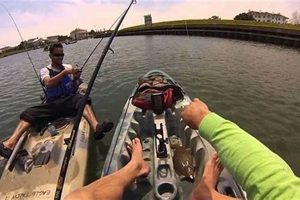
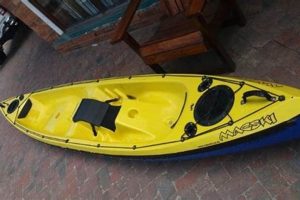
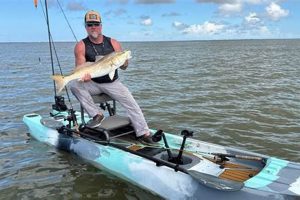
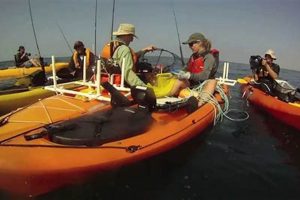
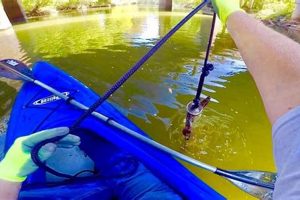
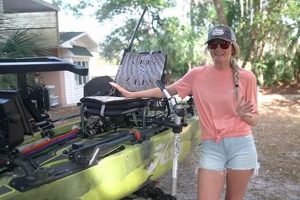
This specific model denotes a sit-on-top kayak designed for angling, manufactured by Feelfree Kayaks. The “11.5” likely refers to its length in feet, suggesting a compact and maneuverable vessel suitable for various water bodies. Such kayaks are often equipped with features like rod holders, tackle storage, and comfortable seating tailored for extended fishing trips.
Compact fishing kayaks offer significant advantages to anglers. Their smaller size enhances portability and maneuverability, allowing access to shallower waters and tighter spaces often inaccessible to larger boats. This design prioritizes stability and ease of use, making them suitable for both novice and experienced anglers. The specialized features incorporated into these vessels contribute to a more efficient and enjoyable fishing experience. The growing popularity of kayak fishing reflects a broader trend toward accessible and nature-focused recreational activities.
Further exploration will delve into specific design elements, performance characteristics, user experiences, and potential comparisons with similar models available in the market.
Tips for Kayak Fishing
Effective angling from a compact kayak requires preparation and technique. The following tips offer guidance for a successful and enjoyable fishing experience.
Tip 1: Balance and Stability: Prioritize even weight distribution within the kayak. Keep the center of gravity low and avoid sudden movements. Practice entering and exiting the kayak in shallow water to build confidence and familiarity.
Tip 2: Paddle Efficiency: Utilize proper paddling techniques to conserve energy and maximize efficiency. Short, quick strokes are often more effective than long, sweeping motions in a compact vessel.
Tip 3: Anchor Positioning: Learn to deploy and retrieve the anchor swiftly and quietly. Consider wind and current conditions to maintain optimal fishing position. A drift sock can also be a valuable tool for controlling drift.
Tip 4: Tackle Management: Organize tackle within easy reach, minimizing clutter and maximizing efficiency. Utilize storage compartments designed for specific gear and secure loose items to prevent loss.
Tip 5: Safety First: Always wear a personal flotation device (PFD). Carry a whistle, signaling device, and basic safety equipment. Inform someone of your fishing plans, including location and expected return time.
Tip 6: Respect the Environment: Adhere to Leave No Trace principles. Pack out all trash and discarded fishing line. Minimize disturbance to wildlife and aquatic habitats. Observe local fishing regulations and licensing requirements.
Tip 7: Weather Awareness: Check weather forecasts before embarking on a fishing trip. Be prepared for changing conditions and avoid venturing out in inclement weather. Wind, rain, and lightning pose significant risks on open water.
By incorporating these practices, anglers can enhance safety, improve fishing effectiveness, and contribute to responsible enjoyment of the sport.
These tips provide foundational knowledge for successful kayak fishing. Further sections will address specific techniques, gear recommendations, and advanced strategies for various fishing scenarios.
1. Stability

Stability represents a critical performance characteristic for any fishing kayak, directly influencing angler safety, comfort, and fishing effectiveness. In the context of the Feelfree 11.5 fishing kayak, stability merits careful consideration. This section explores key facets of stability as they relate to this specific model.
- Primary Stability:
Primary stability refers to the kayak’s initial resistance to tipping when at rest. A wider hull and lower center of gravity typically contribute to greater primary stability. This allows anglers to sit comfortably and make minor movements without feeling unsteady. Information regarding the Feelfree 11.5’s hull design and dimensions would inform assessments of its primary stability.
- Secondary Stability:
Secondary stability describes the kayak’s resistance to tipping when leaning or tilted. This becomes crucial during activities like casting, reeling, and retrieving fish. Kayaks with a rounded or shallow-V hull tend to offer higher secondary stability. Understanding the Feelfree 11.5’s hull shape contributes to evaluating its performance in dynamic situations.
- Factors Affecting Stability:
Various factors influence a kayak’s stability beyond its inherent design. Weight distribution within the kayak, water conditions, and angler movements all play a role. Proper loading and weight balancing techniques become especially important in smaller kayaks like the Feelfree 11.5. Understanding these factors empowers anglers to maximize stability and minimize risks on the water.
- Stability and Intended Use:
The desired level of stability depends on intended fishing applications. Anglers fishing in calm, protected waters may prioritize maneuverability over extreme stability. Conversely, those fishing in rougher conditions or engaging in stand-up fishing require exceptional stability. Assessing the Feelfree 11.5’s stability characteristics in relation to different fishing scenarios helps determine its suitability for specific needs.
By analyzing these facets of stability, potential users can gain valuable insights into the Feelfree 11.5 fishing kayak’s performance characteristics and its suitability for various angling scenarios. Further research comparing its stability with similar models can enhance informed decision-making.
2. Maneuverability
Maneuverability represents a crucial performance attribute in fishing kayaks, particularly in environments requiring precise navigation through complex waterways. Its relevance to the Feelfree 11.5 fishing kayak stems from the need to access shallow waters, navigate tight spaces, and efficiently position the vessel for optimal fishing. This section explores key facets of maneuverability as they pertain to this specific model.
- Hull Design and Length:
The hull design and length significantly influence a kayak’s maneuverability. Shorter kayaks, like the Feelfree 11.5, generally offer enhanced maneuverability compared to longer models. A shorter length allows for quicker turns and easier navigation in confined areas, such as narrow creeks or shallow coves. The specific hull design, whether flat-bottomed, rounded, or V-shaped, also impacts tracking and turning performance. Understanding the Feelfree 11.5’s hull characteristics contributes to assessing its maneuverability in various water conditions.
- Water Conditions:
Maneuverability can be affected by prevailing water conditions. Currents, wind, and waves can impact tracking and turning performance. A kayak’s ability to maintain course and respond effectively to paddle input becomes crucial in challenging conditions. Evaluating the Feelfree 11.5’s performance characteristics in different water environments is essential for determining its suitability for specific fishing locations.
- Paddle Length and Technique:
Paddle length and paddling technique contribute significantly to maneuverability. A properly sized paddle and efficient paddling technique maximize control and responsiveness. Short, quick strokes are often more effective than long, sweeping motions for maneuvering in tight spaces. Understanding appropriate paddling techniques enhances the Feelfree 11.5’s inherent maneuverability.
- Weight and Load Distribution:
The kayak’s overall weight and the distribution of weight within the hull influence its responsiveness and turning performance. Evenly distributed weight enhances maneuverability, while uneven loading can hinder turning and tracking. Proper weight management becomes particularly important in smaller kayaks like the Feelfree 11.5, where even minor weight imbalances can have noticeable effects.
These factors collectively contribute to a comprehensive understanding of maneuverability as it relates to the Feelfree 11.5 fishing kayak. Analyzing these aspects alongside practical experience and comparisons with other models empowers informed assessments of its suitability for various fishing environments and angling styles.
3. Storage Capacity

Storage capacity in a fishing kayak directly impacts the angler’s ability to carry essential gear, tackle, and personal items. For the Feelfree 11.5 fishing kayak, understanding the available storage options and their practical implications is crucial for assessing its suitability for various fishing expeditions. This section explores key facets of storage capacity relevant to this specific model.
- Front Storage Hatch:
A front storage hatch, a common feature in kayaks, offers accessible storage for frequently used items. Its size and design influence the type and volume of gear that can be accommodated. A larger hatch allows for bulkier items like tackle boxes and extra clothing, while a smaller hatch may be suitable for smaller accessories. Examining the Feelfree 11.5’s front hatch dimensions and accessibility provides insights into its practicality for different fishing scenarios.
- Rear Tankwell:
The rear tankwell, typically an open storage area at the stern, provides space for larger items like crates, coolers, and dry bags. Its capacity and configuration influence the angler’s ability to transport substantial amounts of gear or catch. A well-designed tankwell incorporates bungee cords or tie-down points to secure items during transit. Understanding the Feelfree 11.5’s rear tankwell dimensions and features helps determine its capacity for extended fishing trips.
- Side Storage and Pockets:
Side storage compartments and pockets offer convenient access to smaller items like tools, lures, and personal belongings. Their placement and design influence the angler’s ability to retrieve items quickly and efficiently without disrupting fishing activities. Ergonomically designed side storage enhances angler comfort and efficiency. Analyzing the Feelfree 11.5’s side storage options provides insights into its practicality for organizing essential gear.
- Rod Holders and Tackle Management:
Dedicated rod holders and integrated tackle management systems contribute significantly to a fishing kayak’s overall storage capacity and organization. Flush-mounted or adjustable rod holders secure rods during transit and allow for hands-free fishing. Integrated tackle storage compartments keep lures and other small items organized and within easy reach. Evaluating the Feelfree 11.5’s rod holders and tackle management features provides insights into its specialized storage solutions for angling.
By examining these facets of storage capacity, potential users gain a clearer understanding of the Feelfree 11.5 fishing kayak’s practicality for carrying and organizing essential gear. Comparing its storage solutions with those of similar models aids informed decision-making based on individual fishing needs and preferences.
4. Comfort

Comfort significantly influences the overall fishing experience, particularly during extended trips. In the context of the Feelfree 11.5 fishing kayak, comfort directly impacts angler endurance, focus, and enjoyment. This section explores key facets of comfort relevant to this specific model.
- Seat Design and Adjustability:
Seat design plays a crucial role in angler comfort. Features like adjustable backrests, lumbar support, and breathable fabrics contribute to a more comfortable and supportive seating position. An adjustable seat allows anglers to customize the fit and accommodate individual preferences. Information regarding the Feelfree 11.5’s seat design, materials, and adjustability options would inform assessments of its long-term comfort.
- Legroom and Footrests:
Adequate legroom and adjustable footrests contribute significantly to comfort, especially during long hours on the water. Proper leg positioning reduces fatigue and allows for efficient paddling. Adjustable footrests accommodate varying leg lengths and paddling styles. Understanding the Feelfree 11.5’s cockpit dimensions and footrest system informs assessments of its suitability for different body types and paddling preferences.
- Standing Platform and Stability:
For anglers who prefer to stand while fishing, a stable platform and ample standing area are essential for comfort and safety. A wide, flat deck provides secure footing and facilitates casting and reeling. Information regarding the Feelfree 11.5’s deck design and stability characteristics would inform assessments of its suitability for stand-up fishing.
- Overall Ergonomics and Accessibility:
The overall ergonomics of the kayak, including the placement of hatches, rod holders, and other accessories, influence angler comfort and efficiency. Easy access to essential gear and equipment minimizes strain and maximizes fishing enjoyment. Analyzing the Feelfree 11.5’s layout and design in terms of accessibility provides insights into its user-friendliness and overall comfort.
By analyzing these facets of comfort, potential users can gain valuable insights into the Feelfree 11.5 fishing kayak’s suitability for extended fishing trips and diverse angling styles. Further research comparing its comfort features with similar models can contribute to informed decision-making.
5. Fishing Features
Specialized fishing features distinguish a dedicated fishing kayak from recreational models. These features directly influence angling effectiveness and overall experience. In the context of the Feelfree 11.5 fishing kayak, analyzing these features provides crucial insights into its suitability for various fishing applications. Specific features often include integrated rod holders, strategically positioned mounting tracks for fish finders and other accessories, and specialized storage compartments designed for tackle and gear organization. For example, flush-mounted rod holders secure rods during transit and allow for hands-free fishing, while transducer scuppers simplify fish finder installation. The presence and design of these features directly impact the angler’s ability to fish efficiently and comfortably.
Consider the practical significance of these features. Adjustable rod holders accommodate different fishing techniques, from trolling to jigging. Well-placed mounting tracks allow customization with accessories like GPS units and camera mounts. Dedicated tackle storage keeps lures and tools organized and readily accessible, minimizing time spent searching for gear and maximizing time spent fishing. These features, while seemingly minor, contribute significantly to a more streamlined and productive fishing experience. The availability and design of these features on the Feelfree 11.5 should be evaluated based on individual angling preferences and target species.
Integrating these specialized features into a kayak like the Feelfree 11.5 reflects a design philosophy centered around angler needs. These features represent an evolution beyond basic kayak design, catering specifically to the demands of fishing. The effectiveness and usability of these features ultimately determine the kayak’s suitability for serious anglers. Further analysis should consider the durability and functionality of these features in real-world fishing scenarios, comparing their design and implementation with those of competing models in the same market segment. This detailed examination contributes to a comprehensive understanding of the Feelfree 11.5 fishing kayak and its potential as a dedicated fishing platform.
Frequently Asked Questions
This section addresses common inquiries regarding the Feelfree 11.5 fishing kayak, providing concise and informative responses to facilitate informed purchasing decisions and enhance user experience.
Question 1: What is the weight capacity of the Feelfree 11.5 fishing kayak?
Weight capacity specifications are crucial for safe and efficient operation. Consult the manufacturer’s official documentation for precise weight limits. Exceeding the specified capacity can compromise stability and performance.
Question 2: What materials are used in the construction of the Feelfree 11.5 fishing kayak?
Hull materials directly impact durability and performance. Specific material information should be available on the manufacturer’s website or through authorized retailers. Common kayak construction materials include polyethylene and composite materials, each offering distinct performance characteristics.
Question 3: Is the Feelfree 11.5 fishing kayak suitable for use in saltwater environments?
Saltwater compatibility is an important consideration for anglers fishing in coastal areas. Manufacturer recommendations regarding saltwater use should be consulted. Specific design features and material choices influence a kayak’s resistance to corrosion and degradation in saltwater environments.
Question 4: What is the warranty coverage for the Feelfree 11.5 fishing kayak?
Warranty information provides assurance against manufacturing defects and material failures. Detailed warranty terms and conditions should be readily available from the manufacturer or authorized dealers. Understanding warranty coverage provides peace of mind and protection against unforeseen issues.
Question 5: What are the recommended maintenance procedures for the Feelfree 11.5 fishing kayak?
Proper maintenance ensures optimal performance and prolongs the kayak’s lifespan. Manufacturer guidelines outline recommended cleaning and storage procedures. Regular maintenance, including cleaning, inspection, and proper storage, contributes to the kayak’s long-term durability and performance.
Question 6: What accessories are compatible with the Feelfree 11.5 fishing kayak?
Compatible accessories enhance functionality and customize the kayak for specific fishing needs. Information regarding compatible accessories, such as rod holders, fish finders, and storage solutions, can often be found on the manufacturer’s website or through authorized retailers. Selecting appropriate accessories enhances fishing efficiency and personalizes the kayak setup.
Addressing these frequently asked questions provides a foundational understanding of the Feelfree 11.5 fishing kayak. Further research and consultation with authorized dealers can provide more in-depth information tailored to individual needs and preferences.
The subsequent section will provide concluding remarks and summarize key takeaways regarding the Feelfree 11.5 fishing kayak.
Conclusion
Analysis of the Feelfree 11.5 fishing kayak encompassed key aspects relevant to prospective purchasers. Discussions regarding stability, maneuverability, storage capacity, comfort, and specialized fishing features provided a comprehensive overview of this model’s capabilities and potential limitations. Understanding these attributes facilitates informed decision-making based on individual angling preferences, target species, and intended fishing environments. The examination sought to provide objective insights into the kayak’s suitability for various fishing applications.
The Feelfree 11.5 fishing kayak represents one option within a diverse market segment. Thorough research, including comparisons with competing models and consideration of individual needs, remains essential for selecting appropriate fishing kayak equipment. Informed choices contribute to enhanced fishing experiences and promote responsible enjoyment of the sport.