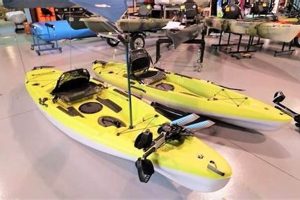
Anglers seeking adaptable and cost-effective solutions for carrying fishing rods on kayaks often turn to custom-built equipment. These devices typically involve mounting hardware and supportive structures crafted from readily available materials like PVC pipe, wood, or metal. A simple example involves securing sections of PVC pipe to a kayak’s deck, allowing rods to be inserted and held securely.
Creating personalized carrying solutions provides significant advantages. Such devices can be tailored to the specific dimensions and layout of individual watercraft, maximizing space efficiency and rod security during navigation. Building one’s own equipment often reduces costs compared to commercially available options. Further, customization allows for specific features like adjustable angles and multiple rod capacity. This practice resonates with the historical tradition of anglers adapting gear to suit their particular fishing environments and needs.
This article will delve further into the advantages of custom-fabricated carrying solutions, explore various materials and construction techniques, and provide guidance on safe and effective installation procedures.
Tips for Constructing Rod Holders
Careful planning and execution are essential for creating effective and durable custom rod holders. The following tips provide guidance for successful fabrication and installation.
Tip 1: Prioritize Stability: Ensure the chosen design and materials provide ample stability to prevent rod displacement during paddling or encountering rough water. Secure mounting points are crucial.
Tip 2: Consider Kayak Compatibility: Design the holder to integrate seamlessly with the kayak’s existing features. Avoid obstructing access to hatches, seating areas, or other essential equipment.
Tip 3: Select Appropriate Materials: Opt for durable, weather-resistant materials like marine-grade plywood, PVC, or stainless steel. Consider the weight and potential impact on the kayak’s overall balance.
Tip 4: Measure Carefully: Accurate measurements are essential for a proper fit. Consider rod lengths and diameters when determining holder dimensions and spacing.
Tip 5: Test and Refine: After installation, conduct thorough testing in calm water before venturing into more challenging conditions. Identify and address any potential weaknesses or instability issues.
Tip 6: Factor in Fishing Style: Adapt the design to accommodate specific fishing techniques. Trolling or drift fishing might require different holder configurations compared to casting or jigging.
Tip 7: Prioritize Safety: Ensure the holder does not interfere with paddling or create potential hazards during entry and exit from the kayak. Avoid sharp edges or protrusions.
By adhering to these guidelines, anglers can construct functional, durable, and safe custom rod holders tailored to their specific needs and enhancing their on-the-water fishing experience.
With these considerations in mind, the following section will provide a step-by-step guide to constructing a sample rod holder.
1. Material Selection

Material selection significantly impacts the functionality, durability, and longevity of a homemade kayak fishing rod holder. Chosen materials must withstand constant exposure to sunlight, water, and potentially harsh weather conditions. Furthermore, the materials must provide adequate strength and rigidity to securely hold fishing rods, even during challenging maneuvers or when battling strong fish. Incorrect material selection can lead to premature failure, rod damage, or even safety hazards.
Several factors influence material suitability. Resistance to corrosion and degradation in saltwater environments is paramount. Common choices include marine-grade plywood, PVC pipe, and stainless steel hardware. Marine-grade plywood offers a balance of strength, workability, and weather resistance. PVC pipe provides a lightweight, cost-effective, and readily available option for constructing rod holders. Stainless steel hardware ensures corrosion resistance and secure fastening. For example, using untreated wood can lead to rot and weakening of the structure, while using non-marine grade stainless steel can corrode quickly in saltwater. Choosing high-quality, appropriate materials ensures the rod holder remains functional and reliable over time.
Careful consideration of material properties and potential environmental exposure is essential when constructing a homemade kayak fishing rod holder. Selecting durable, weather-resistant materials contributes significantly to the overall success and longevity of the project. Appropriate material selection, coupled with sound construction techniques, ensures a safe and effective fishing experience. Ignoring these factors can compromise the integrity of the rod holder and potentially lead to equipment failure or safety risks.
2. Mounting Location
Mounting location plays a crucial role in the effectiveness and usability of a homemade kayak fishing rod holder. Strategic placement optimizes accessibility, minimizes interference with paddling, and ensures rod security. Incorrect placement can hinder casting, obstruct paddling strokes, or compromise stability. Consideration must be given to the angler’s reach, fishing style, and the kayak’s design. For instance, mounting a rod holder too far forward can create difficulties in retrieving a fish, while placement too far back might interfere with paddling. Similarly, positioning holders near hatches or other frequently accessed areas can obstruct their use.
Several factors influence optimal mounting location. Anglers who primarily cast should consider positions that allow easy access and unobstructed casting arcs. Those who troll might prefer holders positioned further back, keeping lines clear of the paddling area. Kayak design also plays a significant role. Sit-on-top kayaks offer more flexibility in mounting locations, while sit-inside kayaks might require more creative solutions. For example, track-mounted systems provide adjustable positioning options, whereas fixed mounts necessitate precise pre-planning. The mounting location should also consider rod length and the potential for entanglement with other gear.
Careful selection of mounting location is essential for a successful homemade kayak fishing rod holder. Balancing accessibility, stability, and non-interference with other kayak functions contributes to a safer and more enjoyable fishing experience. Failure to consider these factors can negatively impact fishing efficiency and potentially create hazardous situations. Therefore, thorough planning and consideration of individual needs and kayak characteristics are crucial before mounting a rod holder.
3. Stability
Stability represents a critical design consideration for homemade kayak fishing rod holders. A stable holder prevents rod displacement during paddling, maneuvering, and fish retrieval. This stability protects the rod from damage and prevents entanglement with other equipment or the surrounding environment. Lack of stability can lead to lost rods, disrupted fishing experiences, and potential safety hazards. For instance, a loosely mounted holder might allow a rod to swing freely, potentially striking the angler or becoming entangled in overhanging branches. Conversely, a securely mounted, stable holder keeps the rod in a designated position, minimizing the risk of accidental movement or displacement.
Several factors influence rod holder stability. The mounting method plays a significant role. Securely attaching the holder to the kayak’s structure, using appropriate hardware and reinforcement techniques, is paramount. The holder’s design also impacts stability. Wider bases and supportive bracing structures enhance stability, preventing tipping or swaying. Material selection also contributes to stability. Rigid, durable materials resist flexing and maintain structural integrity under stress. For example, using a robust mounting plate distributes the load and reduces stress on individual attachment points. Similarly, incorporating bracing elements prevents lateral movement, enhancing overall stability.
Achieving optimal stability requires careful consideration of mounting methods, design principles, and material selection. A stable rod holder enhances safety, protects equipment, and improves the overall fishing experience. Failure to prioritize stability can lead to frustration, equipment damage, and potential safety risks. Therefore, stability should be a primary focus throughout the design and construction process of a homemade kayak fishing rod holder.
4. Rod Security
Rod security is paramount when designing and constructing a homemade kayak fishing rod holder. A secure holder prevents rod loss due to accidental bumps, sudden movements, or strong fish strikes. Loss of a fishing rod represents a significant financial setback and can disrupt a fishing trip. Furthermore, a loose rod presents a potential safety hazard, potentially becoming entangled in other equipment or striking the angler. Effective rod security requires a combination of appropriate design features and careful construction techniques. For example, incorporating a retaining strap or clip secures the rod within the holder, preventing accidental dislodgement. Similarly, using a deep enough holder prevents the rod from easily tipping out, even during rough conditions. A well-secured rod contributes to peace of mind and allows anglers to focus on fishing without constantly worrying about equipment safety.
Several factors influence rod security. The holder’s design should accommodate the specific rod types used, considering factors such as rod diameter and handle shape. The mounting method also plays a crucial role. A securely mounted holder provides a stable platform, minimizing movement or vibration that could dislodge the rod. Furthermore, the materials used should be robust and durable enough to withstand the forces exerted on the holder during use. For instance, using flexible materials might allow the holder to bend or deform under stress, compromising rod security. Conversely, using rigid, high-strength materials maintains the holder’s shape and integrity, ensuring continued rod security. Properly chosen and implemented security measures minimize the risk of rod loss, enhancing the overall fishing experience.
Effective rod security is an essential aspect of a successful homemade kayak fishing rod holder. Careful attention to design, construction, and material selection ensures rods remain securely in place, reducing the risk of loss or damage. This not only protects valuable equipment but also contributes to a safer and more enjoyable fishing experience. Failure to prioritize rod security can lead to frustrating equipment loss and potential safety hazards. Therefore, rod security should be a primary consideration throughout the design and construction process.
5. Accessibility
Accessibility in the context of homemade kayak fishing rod holders refers to the ease and convenience with which anglers can access their rods while on the water. Proper accessibility significantly impacts fishing efficiency and overall enjoyment. A well-designed holder allows for quick and effortless retrieval and stowage of rods without hindering paddling or other on-the-water activities. Conversely, poorly planned accessibility can lead to frustration, tangled lines, and potentially dangerous situations.
- Reach and Positioning
Rod holders should be positioned within easy reach of the angler, minimizing the need for excessive stretching or awkward movements. Placement too far forward, backward, or to the side can compromise stability and create difficulties in retrieving or stowing rods. For example, a right-handed angler might prefer holders positioned slightly forward and to the right for easy access. The angler’s body size and kayak dimensions should also be considered when determining optimal placement.
- Obstruction-Free Zones
Holders should not interfere with paddling strokes, kayak entry and exit, or access to other essential equipment. Obstructions can create safety hazards and hinder efficient movement on the water. Placement near hatches, seats, or paddle strokes should be avoided. For example, a holder positioned too close to the paddle stroke can cause interference and potentially lead to a capsize. Careful consideration of kayak layout and intended fishing activities is crucial.
- Angle and Orientation
The angle and orientation of the rod holder impact both accessibility and rod security. Holders should be angled to allow for easy rod retrieval while also preventing accidental dislodgement. The angle should also facilitate smooth casting and retrieval of fish. For example, a slightly forward-leaning angle might be preferable for casting, while a more upright angle might be better suited for trolling. The specific fishing techniques employed will influence the ideal angle.
- Adjustability and Customization
Adjustable rod holders provide flexibility in accommodating different fishing styles and rod lengths. Customization options, such as adjustable angles and mounting positions, allow anglers to tailor the setup to their specific needs and preferences. For instance, an adjustable holder allows anglers to quickly switch between different rod types or fishing techniques without requiring significant modifications to the kayak setup. This adaptability enhances versatility and overall fishing efficiency.
Prioritizing accessibility in the design and placement of homemade kayak fishing rod holders significantly enhances fishing efficiency and enjoyment. Careful consideration of reach, positioning, obstructions, angle, and adjustability ensures that rods are readily available when needed while minimizing interference with other on-the-water activities. A well-designed and accessible rod holder system contributes to a safer, more organized, and ultimately more successful fishing experience.
6. Customization Options

Customization options represent a significant advantage of constructing do-it-yourself fishing rod holders for kayaks. Unlike commercially available products, homemade holders offer flexibility in design and functionality, catering to individual angler preferences and specific kayak configurations. This adaptability enhances user experience, optimizes fishing techniques, and maximizes equipment integration. Exploration of key customization facets reveals the extensive potential of personalized designs.
- Angle Adjustment
Adjusting the angle of a rod holder significantly influences fishing techniques and presentation. Custom holders allow for precise angle adjustments tailored to specific needs, whether trolling, casting, or jigging. For example, a shallow angle facilitates trolling, while a steeper angle suits vertical jigging. This adaptability enhances fishing versatility and effectiveness.
- Rod Capacity and Spacing
Custom holders can be designed to accommodate multiple rods, optimizing space utilization and catering to diverse fishing styles. Spacing between holders becomes crucial, ensuring sufficient clearance to prevent rod entanglement and facilitate easy access. For instance, wider spacing suits larger rods or techniques requiring greater casting clearance, while closer spacing maximizes rod capacity in limited spaces.
- Material Selection and Finish
Material choice impacts durability, aesthetics, and kayak integration. Custom fabrication allows selection of preferred materials, from PVC and wood to specialized composites. Finishes, such as paint or varnish, further enhance durability and aesthetics, integrating the holder seamlessly with the kayak’s overall appearance. For example, choosing marine-grade plywood with a weather-resistant varnish ensures longevity and a cohesive aesthetic.
- Attachment Methods and Positioning
Custom holders offer flexibility in attachment methods and positioning. Utilizing existing kayak features, such as tracks or rails, or creating custom mounting points allows for precise placement to optimize accessibility and minimize interference with paddling or other equipment. For instance, track-mounted systems offer adjustable positioning, while fixed mounts provide a secure, permanent solution.
The ability to tailor these facets to individual requirements distinguishes homemade kayak fishing rod holders. This customization potential results in enhanced functionality, improved ergonomics, and seamless integration with existing kayak setups. Ultimately, customized rod holders contribute to a more personalized, efficient, and enjoyable fishing experience.
7. Installation Process

The installation process of a homemade kayak fishing rod holder significantly impacts its functionality, safety, and longevity. A properly executed installation ensures the holder remains securely attached to the kayak, withstands the stresses of fishing activity, and does not compromise the kayak’s structural integrity. Conversely, improper installation can lead to holder failure, rod loss, and potential safety hazards. Understanding the key considerations of the installation process is crucial for a successful outcome. For instance, using inappropriate mounting hardware, such as screws that are too short or of insufficient strength, can result in the holder detaching from the kayak during use. Similarly, failing to properly seal mounting holes can lead to water intrusion and weaken the kayak’s structure.
Several factors contribute to a successful installation. Selecting appropriate mounting hardware tailored to the kayak’s construction material is essential. Different kayak materials, such as polyethylene or composite, require specific hardware types and installation techniques. Ensuring proper sealant application prevents water intrusion and protects the kayak’s structure. Reinforcement methods, such as backing plates or washers, distribute stress and enhance stability. Precise placement avoids interference with other kayak features and optimizes accessibility. For example, when installing a rod holder on a polyethylene kayak, well-nuts or toggle bolts provide secure attachment points. Using marine-grade sealant around these attachment points prevents water from seeping into the kayak’s hull. Reinforcing the mounting area with a backing plate further distributes stress and prevents cracking.
Successful installation necessitates careful planning, appropriate material selection, and meticulous execution. Attention to detail during the installation process ensures the rod holder functions as intended, remains securely attached, and does not compromise the kayak’s integrity. A properly installed rod holder enhances fishing enjoyment and promotes safety on the water. Overlooking these crucial steps can lead to equipment failure, potential damage to the kayak, and safety risks. Therefore, a thorough understanding of the installation process is essential for achieving a functional, durable, and safe homemade kayak fishing rod holder.
Frequently Asked Questions
This section addresses common inquiries regarding the construction and utilization of custom-fabricated kayak fishing rod holders.
Question 1: What materials are best suited for constructing a rod holder?
Marine-grade plywood, PVC pipe, and stainless steel hardware are recommended due to their durability and resistance to marine environments. Material selection should consider strength, weight, and weather resistance.
Question 2: How does one determine the optimal mounting location on a kayak?
Optimal placement depends on kayak design, fishing style, and angler reach. Placement should prioritize accessibility without hindering paddling or other essential kayak functions. Testing potential locations before permanent installation is advisable.
Question 3: What methods ensure the stability of a homemade rod holder?
Stability is achieved through secure mounting hardware, reinforcement techniques like backing plates, and a stable base design. The holder should resist movement or vibration during paddling and fish retrieval.
Question 4: How can rod security be maximized in a custom holder?
Incorporating features like retaining straps, clips, or deep recesses enhances rod security, preventing accidental dislodgement during movement or strong fish strikes. The design should accommodate the specific rod types used.
Question 5: What considerations are important for accessible rod holder placement?
Accessibility involves easy reach, unobstructed access, and appropriate angle for effortless rod retrieval and stowage. Placement should not interfere with paddling, kayak entry and exit, or other equipment.
Question 6: What are the advantages of customizing a rod holder?
Customization allows tailoring holder designs to specific fishing styles, rod types, and kayak configurations. Adjustability in angle, capacity, and mounting location optimizes functionality and personalizes the fishing experience.
Careful consideration of these frequently asked questions facilitates the construction of a safe, functional, and personalized kayak fishing rod holder tailored to individual needs and preferences. Addressing these aspects enhances fishing enjoyment and promotes responsible equipment usage.
The subsequent section offers step-by-step instructions for constructing a sample rod holder, providing practical application of the concepts discussed.
Homemade Kayak Fishing Rod Holder
Custom-fabricated kayak fishing rod holders offer anglers distinct advantages in terms of cost-effectiveness, personalized design, and optimized functionality. Exploration of material selection, mounting location, stability considerations, rod security measures, accessibility principles, customization options, and proper installation techniques reveals the potential of these adaptable solutions. Careful consideration of these factors ensures the construction of durable, functional, and safe equipment tailored to individual angler needs and kayak specifications.
Empowering anglers to create personalized equipment enhances the kayak fishing experience. Strategic design and meticulous construction contribute not only to improved fishing efficiency but also to increased safety on the water. Adoption of these practices fosters a deeper understanding of equipment functionality and promotes responsible engagement with the angling environment.