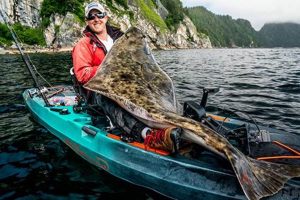
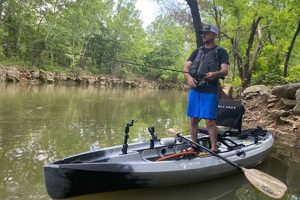
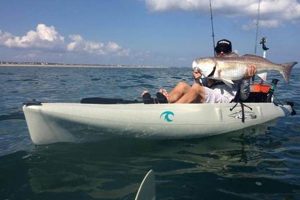
Proper fish stowage on a kayak is crucial for both a successful and enjoyable fishing trip. This involves considering factors such as kayak stability, fish preservation, and ease of access. For example, a dedicated cooler, a livewell, or even a simple stringer can serve as appropriate storage depending on the type of fishing being undertaken. The chosen method should prevent spoilage, minimize the risk of capsizing, and keep the catch readily available for retrieval.
Effective management of captured fish contributes significantly to angler safety and responsible fishing practices. A poorly stowed catch can shift the kayak’s center of gravity, increasing the likelihood of tipping. Moreover, proper storage techniques, such as icing or using a livewell, help maintain the quality of the fish, maximizing its value for consumption or release. Historically, anglers have utilized various methods for storing their catch, from woven baskets and stringers to modern insulated containers, reflecting an ongoing adaptation to available technologies and evolving conservation practices.
This article will delve deeper into specific storage solutions, addressing the advantages and disadvantages of each, and providing guidance for selecting the optimal approach based on individual needs and circumstances. Topics covered will include the selection and placement of coolers, livewell management, and responsible fish handling techniques for different species and environments.
Tips for Storing Fish on a Kayak
Maintaining a stable and organized kayak while fishing requires careful consideration of fish storage. The following tips offer guidance for safe and effective fish management on the water.
Tip 1: Prioritize Kayak Stability: Balance is paramount. Distribute weight evenly within the kayak, avoiding concentration at either end. A centered cooler or livewell contributes to stability, reducing the risk of capsizing.
Tip 2: Select Appropriate Storage: Choose a method suited to the target species and fishing duration. A cooler with ice preserves catches for extended trips, while a livewell keeps fish alive for later release or short-duration outings. Stringers offer a simple solution for smaller catches but require frequent monitoring.
Tip 3: Secure the Storage: Ensure all storage containers are firmly secured to the kayak. Bungee cords, straps, or dedicated mounting points prevent unwanted movement during paddling or maneuvering.
Tip 4: Consider Accessibility: Place storage within easy reach. Reaching for a poorly positioned cooler or struggling with a tangled stringer can compromise balance and safety.
Tip 5: Practice Responsible Fish Handling: Minimize handling time to reduce stress on the fish. Use appropriate tools, such as lip grips or dehookers, and wet hands before handling to protect their slime coat.
Tip 6: Regularly Monitor the Catch: Periodically check stored fish, particularly those on a stringer or in a livewell. Ensure proper ventilation and water flow to maintain fish health and prevent spoilage.
Tip 7: Adhere to Regulations: Familiarize oneself with local fishing regulations concerning catch limits, size restrictions, and permitted storage methods.
By adhering to these guidelines, anglers can enhance both safety and the overall fishing experience. Proper fish stowage allows for a more focused and enjoyable time on the water while contributing to responsible fishing practices.
These strategies contribute to a more enjoyable and productive kayak fishing experience, allowing anglers to focus on the sport while ensuring the safety and well-being of their catch. The following section concludes with a review of key takeaways and emphasizes the importance of these practices.
1. Cooler

Coolers play a crucial role in kayak fishing, serving as primary storage for preserving catches. Their placement and utilization significantly impact both kayak stability and the quality of the retained fish. Understanding cooler selection, placement, and management is essential for a successful fishing trip.
- Cooler Placement and Stability
Cooler placement directly influences kayak balance. Positioning a cooler centrally and low in the kayak maximizes stability. Securing the cooler with straps or bungee cords prevents shifting during movement, further enhancing safety. An improperly secured or unbalanced cooler can compromise stability, increasing the risk of capsizing.
- Cooler Size and Capacity
Cooler size should align with both the anticipated catch and the kayak’s capacity. Oversized coolers occupy valuable space and can negatively impact maneuverability. Conversely, undersized coolers limit storage, potentially leading to spoilage or the need to curtail fishing prematurely. Careful consideration of target species and trip duration informs appropriate cooler selection.
- Cooling Methods and Fish Preservation
Effective cooling is paramount for preserving fish quality. Pre-chilling the cooler and using ample ice, including reusable ice packs, maintains low temperatures. Layering fish with ice within the cooler maximizes chilling efficiency. Neglecting proper cooling practices can result in spoilage, rendering the catch unsuitable for consumption.
- Cooler Features and Accessories
Various cooler features enhance their utility on a kayak. Dedicated tie-down points facilitate securement, while drain plugs simplify cleaning. Features like built-in cup holders or cutting boards can further enhance convenience. Considering these aspects during cooler selection can optimize the overall fishing experience.
Careful consideration of cooler selection, placement, and utilization optimizes both fish preservation and kayak stability. These factors contribute significantly to a successful and enjoyable kayak fishing experience. Proper cooler management allows anglers to focus on fishing while ensuring their catch remains fresh and the kayak remains stable on the water.
2. Livewell

Livewells offer a specialized solution for maintaining live fish on a kayak, addressing the “where to put fish” question with a focus on preservation and ethical considerations. Their integration into kayak fishing practices allows for catch-and-release fishing, tournament participation where live weigh-ins are required, or simply keeping fish fresh for later consumption. Placement and management of a livewell significantly influence kayak stability and fish well-being. Typically integrated into the kayak’s hull or added as a portable unit, livewells require careful positioning to maintain balance. Weight distribution becomes crucial, particularly as the livewell fills. An unevenly distributed load can compromise stability, increasing the risk of capsizing. For instance, a large livewell positioned towards the stern necessitates counterbalancing gear or angler positioning towards the bow.
Livewell effectiveness hinges on maintaining adequate oxygenation and water quality. Integrated livewells often feature aeration systems and circulation pumps. Portable livewells may require manual aeration or the addition of oxygenating tablets. Water temperature regulation also plays a crucial role. Extended periods in warm, stagnant water can stress fish, potentially leading to mortality. Regular water changes or the addition of ice can mitigate this risk, particularly in warmer climates. Failure to maintain optimal water conditions compromises fish health, negating the purpose of the livewell. For example, transporting delicate species in a poorly maintained livewell can result in fatalities, raising ethical concerns and potentially violating fishing regulations.
Proper livewell management is essential for responsible fishing practices. Regular monitoring of water quality, temperature, and fish condition is vital. Overcrowding a livewell stresses fish and depletes oxygen, increasing mortality risk. Matching livewell capacity to target species and anticipated catch size is crucial. Furthermore, adhering to local regulations regarding livewell usage and fish handling practices is paramount. Effective livewell utilization allows anglers to preserve fish humanely while contributing to conservation efforts. This understanding of livewell placement, maintenance, and ethical implications provides anglers with the knowledge necessary to implement this specialized fish storage solution effectively.
3. Stringer
Stringers present a traditional, readily available method for short-term fish storage on kayaks. While offering simplicity and affordability, stringers require careful consideration regarding placement and usage to minimize negative impacts on both fish and kayak stability. Understanding their implications within the context of kayak fishing is crucial for responsible and effective utilization.
- Stringer Placement and Kayak Balance
Stringer placement influences kayak stability due to the potential for shifting weight as fish move. Securing the stringer to the kayak, ideally near the center or slightly towards the stern, minimizes disruption to balance. A loose or poorly positioned stringer can create unpredictable weight shifts, increasing the risk of capsizing, especially when maneuvering or encountering waves. For example, attaching a stringer laden with heavy fish to one side of the kayak can create a significant imbalance.
- Fish Health and Water Quality
Stringers necessitate submerging the catch, raising concerns regarding water quality and fish health. In stagnant or polluted water, fish on stringers are exposed to harmful bacteria and decreased oxygen levels, potentially leading to spoilage or mortality. Regularly checking and refreshing the stringer’s position in cleaner, flowing water mitigates these risks. Leaving fish on a stringer in warm, shallow water for extended periods can result in rapid deterioration.
- Stringer Material and Fish Safety
Stringer material selection impacts fish well-being. Sharp or abrasive materials can damage the fish’s skin and flesh, increasing susceptibility to infection. Opting for smooth, corrosion-resistant materials, such as stainless steel or coated wire, minimizes harm. Using a stringer with sharp metal points can injure the fish, impacting its survival if released later.
- Stringer Length and Capacity
Stringer length and capacity should correspond with anticipated catch size and quantity. An overly long stringer can become cumbersome and difficult to manage, potentially entangling in gear or vegetation. Overloading a stringer stresses the fish and increases the likelihood of tangling, further compromising their well-being. A short stringer quickly becomes overcrowded, impacting fish health and making it difficult to add more catches.
While stringers offer a simple solution for temporary fish storage on a kayak, their limitations require careful consideration. Proper placement, mindful monitoring of fish health, and adherence to responsible fishing practices are essential for successful implementation. Integrating these considerations into kayak fishing practices ensures both angler safety and the ethical treatment of captured fish.
4. Kayak Crate

Kayak crates offer versatile storage solutions directly addressing the challenge of where to put fish on a kayak. These crates, typically constructed from durable, weather-resistant materials, provide designated compartments and attachment points, enhancing organization and security. Their modular design allows for customization, accommodating various fishing styles and target species. A crate system might include specialized compartments for tackle, tools, and even a dedicated cooler or livewell, consolidating essential equipment within easy reach. For instance, a fly fisherman might utilize a crate system with compartments for fly boxes, tippet spools, and small tools, while a bass angler might prioritize space for larger tackle boxes and soft plastic lures. This organized approach contributes to both efficiency and safety by reducing clutter and minimizing the need for disruptive searches during fishing.
The strategic placement of a kayak crate further optimizes its functionality. Positioning a crate behind the seat provides convenient access without compromising paddling space. Alternatively, mounting a smaller crate in front of the angler allows for quick retrieval of frequently used items. Securing the crate firmly to the kayak is paramount. Shifting cargo compromises stability, increasing the risk of capsizing. Bungee cords, straps, or dedicated mounting systems ensure the crate remains stable even in challenging conditions. For example, a securely mounted crate remains in place even during rapid maneuvers or unexpected encounters with waves, preserving both gear and angler safety.
Effective utilization of kayak crates significantly enhances the overall fishing experience. Organized storage streamlines workflow, allowing anglers to focus on fishing rather than managing equipment. Furthermore, secure storage contributes to kayak stability, promoting a safer and more enjoyable outing. Understanding the role of kayak crates in addressing the “where to put fish” challenge empowers anglers to optimize their kayak setup for specific needs and fishing styles. Addressing this practical aspect of kayak fishing contributes significantly to both efficiency and safety on the water.
5. Behind the Seat

Positioning fish storage behind the kayak seat offers a strategic advantage in balancing weight distribution. This location typically aligns with the angler’s center of gravity, minimizing the impact of added weight on the kayak’s stability. Placing heavier items, such as a cooler filled with fish, behind the seat counteracts the angler’s weight, promoting a more level and stable vessel. This becomes particularly crucial as the catch accumulates throughout the fishing trip. For instance, in a sit-on-top kayak, placing the cooler directly behind the seat creates a balanced center of gravity, reducing the likelihood of tipping. Conversely, positioning the cooler towards the bow or stern significantly alters the kayak’s trim, potentially impacting maneuverability and increasing the risk of capsizing, especially in rough conditions or during sudden movements.
Accessibility plays a crucial role in the decision to store fish behind the seat. This location often allows for relatively easy access without requiring significant stretching or twisting. Anglers can reach behind them to retrieve items from a cooler or check on fish in a livewell without compromising their balance or interrupting their fishing rhythm. This convenient access facilitates essential tasks such as adding ice to the cooler, retrieving a beverage, or adjusting fishing gear. However, kayak design influences accessibility. High-backed seats or limited space behind the seat can restrict reach, potentially negating the advantages of this location. In such cases, alternative storage solutions, such as a crate mounted in front of the angler or a smaller cooler positioned between the legs, may prove more practical. Selecting the appropriate location requires careful consideration of individual kayak design and angler preferences.
Utilizing the space behind the kayak seat for fish storage offers advantages in weight distribution and accessibility. This strategic placement contributes significantly to kayak stability and efficient gear management. However, kayak design and individual needs influence the practicality of this location. Careful consideration of these factors ensures optimal utilization of available space and promotes a safe and productive fishing experience. Balancing access with stability remains key to effective fish stowage behind the seat, contributing to a more enjoyable and successful outing on the water.
6. In front of feet
Positioning fish storage in front of the feet on a kayak presents specific advantages and disadvantages related to accessibility and stability. This location offers immediate access to stored items, facilitating quick retrieval of frequently used gear or monitoring of recently caught fish. For instance, anglers fly fishing can readily access a small cooler containing flies and leaders positioned between their legs. Similarly, a shallow container holding recently caught fish allows for easy observation and handling. However, placing weight in front of the feet can shift the kayak’s center of gravity forward, potentially impacting maneuverability and increasing the risk of tipping, particularly in rough water or during sudden movements. The size and weight of the storage container become critical considerations. Larger, heavier containers exacerbate the forward weight shift, while smaller, lighter containers minimize the impact on stability. Understanding this trade-off between accessibility and stability informs appropriate utilization of this storage location.
Practical application of this storage strategy depends on several factors. Kayak design, fishing style, and target species influence the suitability of placing fish storage in front of the feet. Kayaks with ample foot space and a stable hull design accommodate forward storage more readily. Fishing styles requiring frequent access to gear, such as fly fishing or lure fishing, benefit from this convenient location. Target species also influence storage choices. Anglers targeting smaller species might utilize a small container or mesh bag for temporary holding, while those targeting larger species require more robust and secure storage solutions located elsewhere in the kayak. Consideration of these factors ensures effective implementation of this storage strategy, optimizing both accessibility and stability.
Strategic use of the space in front of the angler’s feet contributes to efficient gear management and potentially improved fishing success. Balancing accessibility with the impact on kayak stability remains crucial. Overloading this area compromises stability, increasing the risk of capsizing. Careful selection of appropriately sized containers and consideration of kayak design and fishing style allow anglers to maximize the benefits of this readily available storage location. Successfully integrating this location into a comprehensive fish storage strategy enhances the overall kayak fishing experience.
7. Dedicated Storage Compartments
Dedicated storage compartments in kayaks offer a significant advantage for anglers grappling with the challenge of fish stowage. These compartments, often integrated into the kayak’s design, provide designated spaces for specific gear and catches, promoting organization, enhancing stability, and improving overall fishing efficiency. A key benefit of dedicated compartments lies in their ability to secure items, preventing shifting weight that could compromise balance. Rod holders, tackle storage, and designated cooler recesses exemplify such compartments. For example, a recessed cooler well secures the cooler, minimizing movement during paddling or maneuvering. Similarly, dedicated rod holders secure rods, preventing entanglement and potential damage. This organized approach reduces clutter, allowing anglers to focus on fishing rather than managing equipment. A well-organized kayak promotes both safety and efficiency, contributing to a more enjoyable and productive fishing experience.
Several factors influence the effectiveness of dedicated storage compartments. Compartment size and location play crucial roles in determining suitability for specific gear or fish storage. A large, insulated compartment might accommodate a cooler for preserving catches, while smaller compartments suit tackle boxes, tools, and personal items. Accessibility also influences practicality. Easily accessible compartments facilitate quick retrieval of essential items without requiring awkward reaching or twisting. For instance, a compartment located within easy reach of the angler’s seated position simplifies access to frequently used lures or tools. Conversely, compartments located in less accessible areas might better suit items used less frequently. Careful consideration of compartment size, location, and accessibility ensures optimal utilization and contributes to efficient gear management.
Strategic use of dedicated storage compartments directly addresses the “where to put fish” challenge. By utilizing designated spaces for catches and gear, anglers enhance both safety and efficiency on the water. This organized approach minimizes clutter, reduces the risk of gear shifting, and streamlines workflow, allowing for a more focused and productive fishing experience. Understanding the advantages and limitations of dedicated storage compartments empowers anglers to optimize kayak organization and make informed decisions about fish stowage, maximizing both enjoyment and success on the water.
Frequently Asked Questions
This section addresses common inquiries regarding fish storage on kayaks, providing concise and informative responses to enhance understanding and promote safe and responsible fishing practices.
Question 1: What is the most effective method for keeping fish fresh on a kayak?
The most effective method depends on the duration of the fishing trip and the intended use of the catch. For longer trips or when preserving fish for consumption, a properly iced cooler is recommended. For shorter trips or catch-and-release fishing, a well-maintained livewell or aerated container is suitable.
Question 2: How does fish storage impact kayak stability?
Uneven weight distribution, caused by improperly stored fish, significantly impacts kayak stability. Concentrated weight at either end of the kayak increases the risk of capsizing. Distributing weight evenly and securing storage containers minimizes this risk.
Question 3: Are there specific regulations regarding fish storage on kayaks?
Regulations vary by location and may include limits on catch numbers, size restrictions, and permitted storage methods. Consulting local fishing regulations before embarking on a kayak fishing trip is essential.
Question 4: What are the ethical considerations regarding fish storage on kayaks?
Ethical considerations prioritize fish well-being. Proper storage methods minimize stress on the fish and prevent unnecessary suffering. For catch-and-release fishing, maintaining adequate oxygenation and water quality in livewells or aerated containers is crucial.
Question 5: How can one choose the appropriate fish storage solution for a kayak?
Choosing the right storage depends on several factors, including the target species, fishing duration, kayak design, and personal preferences. Considering these factors ensures the chosen method aligns with both angler needs and responsible fishing practices.
Question 6: What are the potential safety hazards associated with improper fish storage on a kayak?
Improper fish storage primarily compromises kayak stability, increasing the risk of capsizing. Unsecured or unevenly distributed weight can create unpredictable handling characteristics, particularly in challenging conditions. Adhering to proper storage practices mitigates these risks.
Careful consideration of these frequently asked questions enhances understanding of proper fish storage practices on kayaks. Prioritizing fish well-being, kayak stability, and adherence to regulations ensures a safe, responsible, and enjoyable fishing experience.
The next section offers concluding thoughts and emphasizes the importance of responsible fish handling practices within the context of kayak fishing.
Conclusion
Effective fish placement on kayaks is paramount for a safe and productive fishing experience. Strategic stowage considers kayak stability, fish preservation, and accessibility. Discussed methods include coolers, livewells, stringers, kayak crates, and utilizing space behind the seat or in front of the feet. Each method presents advantages and disadvantages; optimal selection depends on individual needs and circumstances. Prioritizing balanced weight distribution minimizes the risk of capsizing, while proper storage techniques maintain fish quality. Adherence to local fishing regulations and ethical considerations ensures responsible fishing practices.
Careful consideration of fish placement transforms a potentially hazardous situation into an efficient and enjoyable angling experience. Proper stowage allows anglers to focus on the sport while ensuring both personal safety and responsible fish handling. This knowledge empowers informed decisions, contributing to the sustainability of kayak fishing and the preservation of aquatic ecosystems.