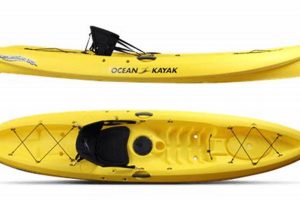
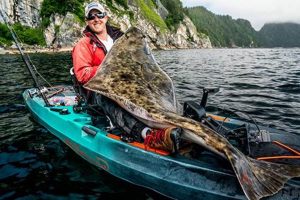
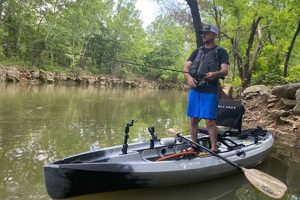
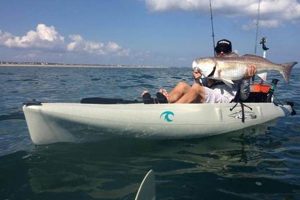
A sit-on-top fishing kayak measuring twelve feet in length, manufactured by Sun Dolphin, is a popular choice for anglers. This type of vessel typically features specialized design elements such as rod holders, storage compartments, and often a comfortable, elevated seat. These kayaks are designed to provide stability and maneuverability on various water bodies, from lakes and rivers to calmer coastal waters.
Vessels of this size and configuration offer a balance of stability and performance suitable for fishing activities. The length provides ample storage and tracking capability, while the sit-on-top design allows for easy entry and exit, especially beneficial for anglers who may need to reposition quickly or manage their gear. Furthermore, Sun Dolphin kayaks have established a presence in the recreational boating market, making them a readily accessible option for many. The evolution of fishing kayak design has contributed to the popularity of these vessels, offering enhanced features and functionality compared to traditional fishing boats or canoes.
This article will explore the key aspects of selecting and utilizing a fishing kayak of this size, including considerations for different fishing styles, essential gear, and safety precautions. Topics covered will include an in-depth examination of design features, performance characteristics, and maintenance requirements.
Tips for Utilizing a 12-Foot Fishing Kayak
Proper preparation and technique enhance the fishing experience and contribute to safety on the water. The following tips offer guidance for maximizing the utility of a 12-foot fishing kayak.
Tip 1: Weight Distribution is Crucial: Evenly distributing weight within the kayak ensures stability. Gear should be strategically placed to maintain balance and prevent tipping. Consider using dry bags or waterproof containers to protect equipment and further organize the load.
Tip 2: Practice Paddling Technique: Efficient paddling conserves energy and improves maneuverability. Learning proper strokes and body positioning allows for smoother, more controlled movement on the water. Practicing in calm waters before venturing into challenging conditions is recommended.
Tip 3: Understand Water Conditions: Assessing wind, current, and tide patterns before embarking on a fishing trip is essential for safety. Weather conditions can change rapidly, so continuous monitoring is important. Consulting local resources and forecasts provides valuable insights.
Tip 4: Essential Safety Gear: Carrying necessary safety equipment, including a personal flotation device (PFD), a whistle, and a signaling device, is paramount. A first-aid kit and a communication device, such as a waterproof cell phone or VHF radio, should also be readily accessible.
Tip 5: Proper Anchor Deployment: Using a suitable anchor system prevents drifting and maintains position in desired fishing locations. Understanding how to deploy and retrieve the anchor efficiently contributes to a successful fishing experience.
Tip 6: Respect Wildlife and the Environment: Adhering to Leave No Trace principles helps preserve the natural environment. Proper disposal of fishing line and other waste minimizes impact on aquatic ecosystems.
Tip 7: Regular Maintenance: Routine cleaning and inspection of the kayak prolong its lifespan and maintain its performance. Checking for wear and tear, especially on hull fittings and rigging, ensures continued safety and functionality.
By implementing these tips, anglers can enhance their fishing experience, ensuring safety and enjoyment on the water. These practices contribute to responsible kayak usage and promote environmental stewardship.
This information serves as a foundation for informed decision-making regarding equipment selection, trip planning, and on-the-water practices. The subsequent sections will delve into further detail on specific aspects of kayak fishing.
1. Length

The twelve-foot length of a fishing kayak represents a significant design consideration, directly influencing performance characteristics relevant to anglers. This length contributes to a balance between stability and maneuverability, factors crucial for navigating various water conditions and fishing styles. Shorter kayaks, while often more agile, can be less stable and track less effectively, particularly in currents or wind. Conversely, significantly longer kayaks can be cumbersome to maneuver and transport. Twelve feet represents a compromise that accommodates diverse fishing scenarios. For example, a twelve-foot kayak provides sufficient stability for stand-up casting in calmer waters while remaining manageable in moving currents or when paddling longer distances. This length also allows for adequate storage capacity for fishing gear and accessories.
The practical implications of a twelve-foot length are evident in several real-life scenarios. When trolling for fish, the enhanced tracking capability of a twelve-foot kayak allows anglers to cover more water efficiently. In river fishing, the length provides stability in currents while maintaining maneuverability around obstacles. Furthermore, the increased deck space afforded by a twelve-foot design allows for comfortable positioning of fishing gear and facilitates movement within the kayak. Consider, for instance, the advantage of having sufficient space to manage a fishing rod, tackle box, and landing net simultaneously, all within easy reach.
In summary, the twelve-foot length of a fishing kayak like the Sun Dolphin models contributes significantly to its utility and effectiveness. This design choice balances stability and maneuverability, offering anglers a versatile platform suitable for diverse fishing environments and techniques. While personal preferences and specific fishing needs influence kayak selection, understanding the impact of length is paramount for informed decision-making. The interplay between length, stability, and maneuverability presents certain challenges, particularly in extreme conditions, underscoring the importance of selecting a kayak appropriate for the intended use.
2. Brand
Sun Dolphin’s association with the 12′ fishing kayak significantly influences the vessel’s perceived value and market positioning. Sun Dolphin, a recognized brand in the recreational boating industry, manufactures a range of kayaks, fishing boats, and other watercraft. Their established presence contributes to consumer familiarity and often implies a certain level of affordability and accessibility. The brand’s reputation, built over time through product offerings and market presence, directly impacts consumer perception of the 12′ fishing kayak. For example, an angler seeking an entry-level fishing kayak might consider a Sun Dolphin model due to its perceived value and readily available replacement parts. Conversely, experienced anglers seeking high-performance features might opt for brands known for specialized designs or advanced materials. The “Sun Dolphin” name itself becomes a factor in the purchasing decision.
The practical implications of the “Sun Dolphin” brand extend beyond initial purchase considerations. Availability of accessories, replacement parts, and customer support services are often linked to the manufacturer. A well-established brand like Sun Dolphin typically offers a broader support network and readily available parts, contributing to the long-term usability and maintainability of the kayak. Consider, for instance, the relative ease of finding a replacement seat or paddle for a Sun Dolphin kayak compared to a lesser-known brand. This accessibility influences ownership experience and potentially reduces long-term costs. Furthermore, the brand’s reputation for durability and performance directly influences resale value, a factor often overlooked during the initial purchase but relevant to the overall cost of ownership.
In summary, the “Sun Dolphin” brand represents a key component in understanding the 12′ fishing kayak. The brand’s market positioning, reputation for affordability and accessibility, and established support network influence consumer perception and long-term ownership experience. While factors such as length, features, and materials contribute significantly to kayak performance, the brand itself plays a crucial role in the overall value proposition. Recognizing the interplay between brand identity and product characteristics provides a more comprehensive understanding of the 12′ Sun Dolphin fishing kayak’s position within the broader recreational fishing market. Challenges related to brand perception, such as perceived quality versus price point, highlight the complex relationship between brand identity and product performance.
3. Purpose
The designation “fishing” within the context of a 12′ Sun Dolphin fishing kayak signifies a crucial design focus: optimization for angling activities. This purpose directly influences the kayak’s features, construction, and overall performance. Cause and effect are clearly evident: the need for a stable, maneuverable, and feature-rich platform for fishing directly results in design choices that prioritize these attributes. The “fishing” designation distinguishes this kayak from recreational paddling models, highlighting specialized features such as rod holders, tackle storage, and often an elevated seating position. These adaptations cater specifically to the needs of anglers, enhancing their efficiency and enjoyment on the water. For example, integrated rod holders allow hands-free operation while paddling or preparing bait, while strategically placed storage compartments keep essential gear organized and readily accessible. Without the “fishing” designation, the kayak would likely lack these crucial elements, limiting its effectiveness for angling purposes.
The importance of “fishing” as a component of the 12′ Sun Dolphin fishing kayak is further illustrated through real-life examples. Consider a scenario where an angler needs to quickly switch between paddling and casting. The stability afforded by a fishing kayak’s wider hull design, coupled with strategically placed rod holders, facilitates this transition seamlessly. Furthermore, integrated storage compartments prevent gear from shifting or interfering with fishing activities, allowing anglers to focus on the task at hand. Imagine the frustration of constantly searching for misplaced lures or dealing with tangled lines in a kayak not specifically designed for fishing. The “fishing” designation ensures that these considerations are addressed, resulting in a more efficient and enjoyable angling experience.
The practical significance of understanding the “fishing” purpose lies in informed selection and utilization of the kayak. Recognizing the intended purpose allows consumers to evaluate the kayak’s suitability for their specific fishing needs. It highlights the value proposition of specialized features, justifying the potential price difference compared to standard recreational kayaks. Challenges related to design trade-offs, such as stability versus maneuverability, are also brought into focus. While a wider, more stable hull design benefits fishing activities, it may compromise speed and agility. Understanding the “fishing” purpose underscores the importance of balancing these competing design considerations to achieve optimal performance for the intended application. Ultimately, recognizing the “fishing” designation as a core attribute of the 12′ Sun Dolphin fishing kayak empowers anglers to make informed choices, maximizing their on-the-water success and enjoyment.
4. Type
The classification “kayak” within the description “12′ Sun Dolphin fishing kayak” immediately establishes the vessel’s fundamental characteristics, distinguishing it from other watercraft. This categorization informs expectations regarding hull design, propulsion method, and overall functionality. Understanding the core attributes of a kayak provides a framework for evaluating its suitability for fishing activities and comparing it to alternative fishing platforms like canoes or small boats. The following facets explore the implications of the “kayak” classification in detail.
- Hull Design and Stability
Kayaks typically feature a closed-deck design with a cockpit for the paddler, differentiating them from open-deck canoes. This design contributes to enhanced stability, particularly in challenging conditions such as wind or currents. Consider the scenario of an angler encountering choppy water. The lower center of gravity and enclosed cockpit of a kayak provide greater stability compared to a canoe, reducing the risk of capsizing. This characteristic is particularly important in a fishing context, where stability enhances casting accuracy and overall safety. The sit-on-top design of many fishing kayaks, like the Sun Dolphin, further enhances stability and facilitates water re-entry if capsizing occurs.
- Propulsion: Paddle Power
Kayaks are propelled using a double-bladed paddle, a defining characteristic that distinguishes them from motorized boats. Paddle propulsion offers advantages in maneuverability and stealth, crucial for navigating shallow waters or approaching fish without disturbance. Imagine navigating a narrow, winding creek choked with vegetation. The precise control offered by paddle propulsion allows for efficient movement in such confined spaces, whereas a motor-powered boat would be impractical. This maneuverability enhances the fishing experience by providing access to prime fishing locations often inaccessible to larger vessels.
- Compact Size and Portability
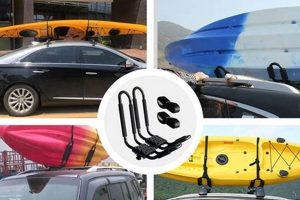
Kayaks are generally smaller and lighter than other fishing vessels, contributing to their portability and ease of transport. A 12′ kayak, while substantial, can still be transported on roof racks or trailers, providing access to diverse fishing locations. Consider the angler who frequently fishes various lakes and rivers. The ability to transport a kayak easily expands their fishing opportunities compared to someone limited by the logistical challenges of transporting a larger boat. This portability enhances the versatility of a kayak as a fishing platform.
- Versatility and Adaptability
Kayaks, particularly those designed for fishing, offer versatility in terms of fishing styles and environments. A 12′ Sun Dolphin fishing kayak can be used for trolling, casting, or still-fishing in a variety of water bodies, from calm lakes to flowing rivers. This adaptability enhances the kayak’s value proposition, offering a multi-purpose platform for diverse fishing experiences. For example, the same kayak used for trolling in open water can be easily adapted for still-fishing in a sheltered cove by simply deploying an anchor. This versatility expands the angler’s options and maximizes the kayak’s utility.
These facets collectively demonstrate the significance of the “kayak” classification in the context of a “12′ Sun Dolphin fishing kayak.” Understanding the inherent characteristics of a kayak its hull design, propulsion method, compact size, and versatility allows for informed evaluation of its suitability as a fishing platform. Comparing these attributes to alternative fishing vessels highlights the unique advantages and limitations of a kayak, empowering anglers to make informed decisions based on their specific needs and fishing preferences. While other factors, such as brand and specific features, contribute to the overall value proposition, the fundamental “kayak” classification provides a crucial foundation for understanding its capabilities and limitations within the broader context of fishing activities.
5. Hull Design

The “sit-on-top” hull design is a defining characteristic of many contemporary fishing kayaks, including the 12′ Sun Dolphin models, and directly influences their functionality and suitability for angling. This design contrasts with traditional sit-inside kayaks, where the paddler’s lower body is enclosed within the hull. The sit-on-top configuration offers several advantages specifically relevant to fishing activities. Self-bailing scupper holes, a key feature of sit-on-top kayaks, allow water to drain quickly, enhancing stability and preventing the kayak from becoming waterlogged. This design choice directly addresses the challenges posed by waves, splashes, and accidental submersion, particularly relevant in dynamic fishing environments. Furthermore, the open design facilitates easy entry and exit, a crucial advantage for anglers who frequently reposition, enter and exit the kayak to wade fish, or need to quickly react to changing fishing conditions. The cause-and-effect relationship is clear: the need for a stable, accessible, and easily manageable fishing platform leads directly to the adoption of the sit-on-top hull design.
The importance of the “sit-on-top” hull design within the context of a 12′ Sun Dolphin fishing kayak is further underscored by practical examples. Consider an angler fishing in choppy conditions. The self-bailing scupper holes ensure that the kayak remains stable and responsive, even when waves wash over the deck. In contrast, a sit-inside kayak might become swamped and unstable in similar conditions. Furthermore, the ease of entry and exit offered by a sit-on-top design allows anglers to quickly and safely enter the water to land a fish or adjust their position without the risk of becoming trapped inside the kayak. This accessibility enhances the angler’s overall fishing experience and contributes significantly to safety on the water. The practical implications extend beyond these immediate benefits. The open design also facilitates easier cleaning and maintenance, as there is no enclosed cockpit to trap dirt, debris, or water.
In summary, the “sit-on-top” hull design represents a critical component of the 12′ Sun Dolphin fishing kayak. This design choice prioritizes stability, accessibility, and ease of use, all crucial factors for a successful and enjoyable fishing experience. While sit-on-top kayaks may offer slightly less protection from the elements compared to sit-inside models, their advantages in terms of stability, self-bailing capabilities, and ease of access make them ideally suited for fishing applications. The challenges posed by various fishing environments, such as changing weather conditions and the need for quick maneuvering, are directly addressed by the inherent advantages of the sit-on-top design. Understanding this connection provides a deeper appreciation for the design considerations behind the 12′ Sun Dolphin fishing kayak and its effectiveness as a specialized fishing platform.
6. Material
Polyethylene’s prevalence as a construction material for 12′ Sun Dolphin fishing kayaks stems from a combination of properties well-suited to the demands of recreational angling. Durability, impact resistance, and affordability characterize this thermoplastic polymer, making it a practical choice for mass-produced kayaks. Cause and effect are evident: the need for a robust yet cost-effective construction material drives the selection of polyethylene. This material’s resilience against impacts, abrasion, and UV degradation contributes to the kayak’s longevity, reducing the likelihood of damage from rocks, submerged obstacles, or prolonged sun exposure. Furthermore, polyethylene’s relatively low cost compared to alternatives like fiberglass or composites allows manufacturers like Sun Dolphin to offer competitively priced kayaks, broadening market accessibility. The choice of polyethylene directly impacts the kayak’s affordability, durability, and overall lifecycle.
The practical implications of polyethylene construction become evident in real-world scenarios. Consider a fishing excursion involving navigating shallow, rocky waters. Polyethylene’s impact resistance protects the hull from damage, ensuring the kayak’s continued functionality. Furthermore, the material’s inherent buoyancy contributes to the kayak’s overall safety profile. In the event of a capsize, polyethylene’s low density helps keep the kayak afloat, facilitating recovery and re-entry. Additionally, the material’s resistance to UV degradation ensures that the kayak maintains its structural integrity and colorfastness even after extended exposure to sunlight. These practical benefits contribute to the long-term value and usability of a polyethylene kayak.
In summary, the selection of polyethylene as the primary material for 12′ Sun Dolphin fishing kayaks represents a deliberate balance of performance, durability, and cost-effectiveness. This material’s inherent properties align well with the demands of recreational angling, offering resistance to impact, abrasion, and UV degradation. While alternative materials might offer performance advantages in specific areas, polyethylene’s overall suitability for the intended application, coupled with its affordability, makes it a pragmatic choice for mass-market fishing kayaks. Challenges related to polyethylene’s weight and potential for deformation under extreme stress highlight the importance of proper handling and storage. Understanding the material’s characteristics empowers consumers to make informed decisions and adopt appropriate care practices, maximizing the lifespan and performance of their 12′ Sun Dolphin fishing kayak.
Frequently Asked Questions
This section addresses common inquiries regarding 12-foot fishing kayaks manufactured by Sun Dolphin. The information provided aims to clarify key aspects of selection, usage, and maintenance.
Question 1: What is the typical weight capacity of a 12′ Sun Dolphin fishing kayak?
Weight capacity varies by model but generally ranges from 300 to 400 pounds. Consulting the manufacturer’s specifications for the specific model is essential.
Question 2: Are these kayaks suitable for ocean use?
While designed primarily for calm waters such as lakes and rivers, some 12′ Sun Dolphin fishing kayaks can handle calmer coastal waters or bays. Ocean use requires careful consideration of weather conditions and appropriate safety precautions. Manufacturer recommendations should be consulted.
Question 3: What type of paddle is recommended for a 12′ fishing kayak?
Paddle selection depends on individual preference and paddling style. A paddle length appropriate for the paddler’s height and the kayak’s width is essential. Consult a kayak specialist or retailer for guidance.
Question 4: How should a 12′ fishing kayak be stored?
Storing the kayak out of direct sunlight, preferably in a covered area or on a rack designed for kayaks, helps prevent UV degradation and prolongs its lifespan. Proper support is essential to avoid hull warping.
Question 5: What maintenance is required for a Sun Dolphin fishing kayak?
Regular rinsing with fresh water after each use, especially in saltwater environments, helps prevent corrosion and damage from salt buildup. Periodic inspection of hull fittings and hardware is also recommended.
Question 6: What safety precautions should be taken when using a 12′ fishing kayak?
Always wear a personal flotation device (PFD) and carry essential safety equipment, including a whistle, signaling device, and communication device. Checking weather forecasts before embarking on a fishing trip and informing someone of the intended route are also crucial safety practices.
Understanding these key aspects contributes to informed decision-making and responsible kayak usage. Addressing these common concerns ensures greater enjoyment and safety on the water.
The subsequent section will offer a detailed exploration of popular 12′ Sun Dolphin fishing kayak models and their specific features.
Conclusion
Exploration of the 12′ Sun Dolphin fishing kayak reveals a vessel designed for accessibility and functionality in recreational angling. Key features such as the sit-on-top hull, specialized storage, and readily available replacement parts contribute to its popularity. The vessel’s length provides a balance of stability and maneuverability suitable for diverse fishing environments, while the Sun Dolphin brand offers an established presence in the recreational boating market. Understanding the interplay between these elements provides a comprehensive perspective on the kayak’s suitability for various fishing styles and conditions.
Careful consideration of individual needs, fishing style, and intended environment remains crucial for informed selection. Proper utilization, including adherence to safety guidelines and regular maintenance, maximizes the kayak’s lifespan and ensures an enjoyable, productive fishing experience. Continued evolution of kayak design and technology promises further advancements in functionality and performance, enhancing angling opportunities for enthusiasts of all levels.