Kayak fishing requires specific equipment and preparation for a safe and successful experience. This includes the kayak itself, appropriate paddling gear, essential safety equipment like a personal flotation device and signaling devices, and fishing-specific gear such as rods, reels, tackle, and potentially specialized electronics like fish finders. A well-planned outing also considers factors like weather conditions, water conditions, and local fishing regulations.
Adequate preparation enhances angler safety and increases the likelihood of a productive fishing trip. Choosing the right kayak and gear improves stability and maneuverability, allowing anglers to access shallow waters and other areas often inaccessible by larger boats. Furthermore, understanding and employing appropriate safety measures minimizes risks associated with on-water activities. Over time, specialized kayaks and gear have been developed to meet the unique needs of kayak anglers, reflecting the growth and popularity of the sport.
The following sections will explore the essential equipment for kayak fishing in detail, covering kayak selection, safety gear, fishing tackle, and other important considerations. These insights will empower anglers to make informed choices and enjoy their time on the water responsibly.
Essential Kayak Fishing Tips
Preparation and thoughtful equipment choices are crucial for a successful and safe kayak fishing experience. The following tips offer guidance for anglers of all skill levels.
Tip 1: Choose the Right Kayak: Kayak selection depends on fishing style and water conditions. Sit-on-top kayaks offer stability and ease of re-entry, while sit-inside kayaks provide better protection from the elements. Consider factors like length, width, and weight capacity when making a selection.
Tip 2: Prioritize Safety Gear: A personal flotation device (PFD) is mandatory. A whistle, signaling mirror, and first-aid kit are also essential. Inform someone of fishing plans, including location and expected return time.
Tip 3: Organize Tackle and Gear: Utilize tackle boxes and storage solutions designed for kayaks. Keep essential gear readily accessible and secure it to prevent loss in case of capsize.
Tip 4: Dress Appropriately: Dress in layers to adapt to changing weather conditions. Wear quick-drying clothing and consider waterproof outerwear. Protective footwear suitable for aquatic environments is recommended.
Tip 5: Check Weather and Water Conditions: Monitor forecasts before heading out. Avoid fishing in strong winds, lightning storms, or hazardous water conditions. Be aware of tides and currents.
Tip 6: Practice Paddle Strokes and Kayak Control: Develop proficient paddling skills before venturing into challenging waters. Learn basic maneuvering techniques and practice self-rescue procedures.
Tip 7: Respect Wildlife and the Environment: Adhere to “catch and release” practices whenever possible. Pack out all trash and avoid disturbing natural habitats. Be mindful of other boaters and anglers.
Tip 8: Learn Basic Knots: Knowing a few essential fishing knots, like the improved clinch knot and the palomar knot, is crucial for securing your line and hooks.
By adhering to these tips, anglers can significantly enhance their safety and enjoyment on the water. Proper preparation allows for a more focused and productive fishing experience.
The next section will discuss specific techniques for various fish species commonly targeted by kayak anglers.
1. Kayak
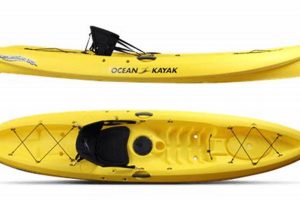
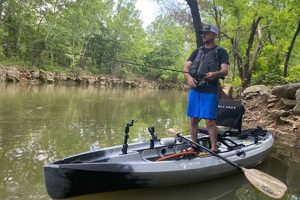
The kayak itself forms the foundational element of kayak fishing. Kayak selection directly impacts maneuverability, stability, and accessibility to fishing locations. Choosing a kayak suited to the intended fishing environment is crucial. For instance, a shorter, wider kayak offers greater stability in calm, shallow waters, ideal for sight fishing or targeting species in tight spaces. Conversely, a longer, narrower kayak provides better tracking and speed in open water, benefiting anglers pursuing pelagic species or covering greater distances. Specialized fishing kayaks frequently incorporate features like rod holders, anchor trolleys, and integrated fish finders, further enhancing their suitability. Kayak stability influences casting accuracy and overall safety, while its maneuverability dictates access to specific fishing areas. The connection between the chosen kayak and the overall effectiveness of the fishing expedition is undeniable.
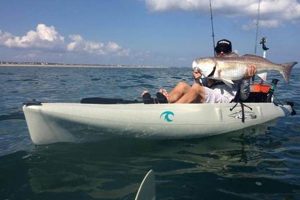
Kayak features directly influence fishing techniques. A stable platform allows for stand-up casting, increasing visibility and casting range. Built-in storage compartments accommodate tackle and gear, streamlining organization and access. Furthermore, kayaks provide access to shallow or otherwise inaccessible areas, expanding fishing opportunities beyond the reach of traditional boats. Consider an angler targeting bonefish in shallow flats. A shallow-draft kayak allows silent approach and precise positioning, maximizing fishing success. Conversely, an angler trolling for offshore species benefits from a kayak designed for speed and stability in open water. The kayak becomes an extension of the angler’s fishing strategy, impacting technique and expanding the range of fishable waters.
Understanding the critical role of kayak selection in kayak fishing empowers anglers to make informed decisions. Evaluating specific fishing needs and matching them to appropriate kayak features optimizes performance and safety. Challenges such as limited storage space or navigating challenging waters can be addressed through careful kayak selection and appropriate gear choices. Ultimately, the kayak itself becomes an integral component of the overall fishing system, directly contributing to a successful and enjoyable experience. Investing time and consideration in choosing the right kayak lays the groundwork for productive and safe kayak fishing adventures.
2. Paddle

Paddle selection significantly impacts kayak fishing effectiveness and safety. The paddle serves as the primary means of propulsion and maneuverability, directly influencing an angler’s ability to reach desired fishing locations, control drift, and navigate varying water conditions. Paddle length, blade shape, and construction materials all contribute to overall performance. A paddle that is too short or too long can lead to inefficient paddling, fatigue, and reduced boat control. For example, a shorter paddle with wider blades provides greater power for maneuvering in tight spaces, while a longer, narrower paddle offers efficiency for covering longer distances. Selecting a paddle appropriate for angler height, kayak width, and intended fishing style is paramount. The connection between paddle choice and successful kayak fishing is often overlooked, yet its impact is substantial.
The paddle’s role extends beyond basic propulsion. In kayak fishing, subtle paddle strokes are essential for maintaining position, controlling drift, and approaching fish stealthily. A properly sized and shaped paddle facilitates precise movements, allowing anglers to present lures or bait effectively without spooking fish. Consider a scenario where an angler needs to hold position against a current while presenting a lure to a specific target. An efficient paddle stroke minimizes disturbance and maximizes control, increasing the likelihood of a successful hookup. Furthermore, the paddle can be utilized for maneuvering in tight quarters, navigating shallow water obstacles, and even assisting with fish landing. Understanding these nuanced applications elevates the paddle from a simple tool to an integral component of the kayak fishing system.
Efficient paddle technique, combined with appropriate paddle selection, contributes significantly to a positive kayak fishing experience. Reduced fatigue, improved boat control, and enhanced maneuverability all contribute to greater fishing success and overall safety. Challenges such as strong currents or windy conditions can be mitigated with proper paddling technique and equipment choices. Investing time in selecting the right paddle and practicing effective paddling techniques enhances angler performance and enjoyment on the water. The often-underestimated importance of the paddle in kayak fishing warrants careful consideration and informed decision-making.
3. Safety Gear
Safety gear constitutes a critical component of kayak fishing preparation. Its importance cannot be overstated, as it directly impacts angler well-being and the ability to respond effectively to unforeseen circumstances. Understanding and utilizing appropriate safety equipment mitigates risks inherent in on-water activities, enabling a more secure and enjoyable fishing experience.
- Personal Flotation Device (PFD)
A properly fitted PFD is non-negotiable. It provides essential buoyancy in the event of capsize or accidental immersion, significantly increasing survival chances. Choosing a PFD designed for paddling offers comfort and freedom of movement while fishing. Inflatable PFDs are available, but require regular maintenance and inspection. A PFD’s role in preventing drowning is paramount in kayak fishing safety.
- Signaling Devices
Carrying signaling devices, such as a whistle, signal mirror, or flares, enables communication in emergencies. These tools can attract attention in situations like capsizing, becoming lost, or requiring assistance due to injury. A whistle’s high-pitched sound carries farther than shouting, while a mirror can reflect sunlight to signal distant boats or aircraft. The availability of signaling devices can dramatically expedite rescue efforts.
- First-Aid Kit
A compact, waterproof first-aid kit containing essential supplies addresses minor injuries or ailments that may occur while on the water. Items such as bandages, antiseptic wipes, pain relievers, and sunscreen provide immediate care for common fishing-related injuries like hook punctures or sun exposure. A readily available first-aid kit promotes self-sufficiency and minimizes the impact of minor medical incidents.
- Float Plan
Informing someone on shore of fishing plans, including intended location and expected return time, constitutes a critical safety measure. This “float plan” provides crucial information for search and rescue efforts should an angler fail to return as planned. Including details like kayak description and emergency contact information further enhances the float plan’s effectiveness. This simple precaution significantly increases the likelihood of a timely response in emergency situations.
These safety precautions contribute significantly to angler well-being and preparedness for unforeseen events. While focusing on catching fish is a primary objective, prioritizing safety ensures the ability to enjoy the sport responsibly and minimize potential risks. Integrating these safety measures into pre-fishing preparations establishes a foundation for a safe and successful kayak fishing experience.
4. Fishing Tackle

Fishing tackle represents a crucial aspect of kayak fishing, directly influencing an angler’s ability to effectively target and catch desired species. Appropriate tackle selection hinges on factors such as target species, fishing location, and prevailing conditions. Understanding the nuances of various tackle components and their applications empowers anglers to make informed decisions, maximizing their chances of success on the water.
- Rods and Reels
Rod and reel selection depends primarily on the target species and fishing techniques employed. Lighter rods and reels suffice for smaller species like panfish or trout, while heavier tackle is necessary for larger, more powerful fish like salmon or muskie. Spinning reels offer versatility for various techniques, while baitcasting reels provide greater control and power for heavier lines and lures. Matching rod and reel combinations to specific fishing scenarios optimizes performance and enhances the angler’s ability to effectively manage fish during the fight.
- Lines and Leaders
Fishing line selection depends on factors like target species, fishing environment, and desired presentation. Braided lines offer high strength and sensitivity, making them suitable for fishing around heavy cover or targeting powerful fish. Monofilament lines provide good knot strength and affordability, while fluorocarbon lines offer low visibility and abrasion resistance, making them ideal for clear water situations. Leaders, typically made of fluorocarbon or wire, provide additional abrasion resistance and protect the main line from sharp teeth or rough structures. Choosing appropriate line and leader combinations contributes significantly to successful hookups and landing fish.
- Lures and Baits
Lure and bait selection depends on target species, water conditions, and fishing technique. Artificial lures, such as crankbaits, spinnerbaits, and soft plastics, mimic the appearance and movement of prey fish, triggering strikes from predatory species. Live bait, such as worms, minnows, or crickets, can be highly effective, particularly for species that prefer natural forage. Understanding the feeding habits and preferences of target species informs lure and bait selection, maximizing the chances of attracting and catching fish.
- Terminal Tackle
Terminal tackle encompasses a variety of components, including hooks, weights, swivels, and snaps. Hook selection depends on bait type and target species, while weights influence lure depth and presentation. Swivels prevent line twist, and snaps allow for quick lure changes. These seemingly small components play a crucial role in the overall effectiveness of the fishing tackle system. Choosing appropriate terminal tackle ensures proper lure action, secure hooksets, and efficient fish landing. Overlooking the importance of terminal tackle can lead to missed opportunities and lost fish.
The selection and application of appropriate fishing tackle directly influence success in kayak fishing. Understanding the nuances of each tackle component, its function, and its relationship to the target species and fishing environment enables anglers to make informed decisions. By carefully considering these factors, anglers can optimize their tackle systems for specific fishing scenarios, maximizing their chances of a successful and rewarding experience on the water.
5. Appropriate Clothing

Appropriate clothing plays a vital role in kayak fishing safety and comfort. Garments offering protection from the elements while allowing for a full range of motion are essential. Consider the effects of prolonged sun exposure, wind, and water spray. Appropriate clothing mitigates these factors. For example, lightweight, quick-drying fabrics with built-in UV protection shield anglers from harmful sun rays and maintain comfort even when wet. Layering clothing allows adaptation to changing weather conditions throughout the day. A waterproof outer layer provides protection from rain and spray, while moisture-wicking base layers regulate body temperature and prevent chilling. The direct connection between appropriate clothing and angler well-being is undeniable.
Practical considerations further underscore the importance of appropriate clothing in kayak fishing. Footwear offering good grip and protection is essential for navigating slippery surfaces and wading in shallow water. Specialized fishing gloves protect hands from line cuts, sun exposure, and provide a better grip on rods and reels. A wide-brimmed hat shields the face and neck from the sun, while polarized sunglasses reduce glare and improve visibility in the water. These seemingly minor details contribute significantly to overall comfort and safety, allowing anglers to focus on fishing without distraction. Consider an angler wading in shallow water to sight-cast to bonefish. Proper footwear prevents slips and protects feet from sharp rocks or coral. In this scenario, appropriate clothing becomes an integral part of the fishing experience itself.
Choosing appropriate clothing enhances both safety and performance in kayak fishing. Protection from the elements, combined with enhanced comfort and mobility, allows anglers to fully engage in the activity. Addressing potential challenges, such as changing weather conditions or specialized fishing scenarios, through careful clothing choices maximizes enjoyment and minimizes risks. Understanding the critical role of appropriate clothing in kayak fishing empowers anglers to make informed decisions, leading to a safer, more comfortable, and ultimately more successful experience on the water.
6. Planning and Preparation
Thorough planning and preparation are essential for a safe and successful kayak fishing excursion. These pre-trip activities directly influence not only the effectiveness of the fishing experience but also the angler’s safety and overall enjoyment. Adequate preparation minimizes potential risks, maximizes fishing opportunities, and contributes to a more rewarding time on the water.
- Weather Assessment
Checking weather forecasts, including wind speed, direction, and precipitation, is paramount. Adverse weather conditions can create hazardous situations on the water, particularly for kayakers. Strong winds can impede paddling and navigation, while lightning storms pose a severe threat. Assessing weather conditions informs decisions regarding trip timing and location, minimizing exposure to potentially dangerous situations. For example, choosing a sheltered cove on a windy day or postponing a trip due to an approaching storm demonstrates responsible planning based on weather assessment. This proactive approach contributes significantly to angler safety.
- Water Conditions and Tides
Understanding water conditions, including currents, tides, and potential hazards like submerged obstacles, is crucial for safe kayak navigation. Strong currents can significantly impact paddling efforts and create challenging conditions, especially in narrow channels or near inlets. Tidal fluctuations affect water depth and access to certain areas. Researching these factors beforehand allows anglers to plan routes, anticipate potential challenges, and make informed decisions about fishing locations. For instance, consulting tide charts helps determine optimal times to access shallow flats or navigate around submerged structures, maximizing fishing opportunities and minimizing risks.
- Fishing Regulations and Licensing
Familiarizing oneself with local fishing regulations, including licensing requirements, size and catch limits, and permitted fishing methods, is essential for responsible angling. Obtaining the necessary licenses and adhering to regulations ensures compliance with local laws and contributes to sustainable fisheries management. Understanding specific regulations related to target species and fishing locations avoids potential legal issues and promotes ethical fishing practices. Checking for any temporary closures or restrictions further enhances responsible planning.
- Trip Logistics and Communication
Planning trip logistics, including launch points, intended fishing areas, and estimated return times, enhances safety and facilitates communication. Informing someone on shore of these plans constitutes a crucial safety measure, providing essential information in case of emergencies. Sharing a float plan with a friend or family member, including details like kayak description and emergency contact information, further strengthens communication and preparedness. This proactive approach ensures a timely response should assistance be required.
These planning and preparation steps are integral to a successful and safe kayak fishing experience. By considering these factors beforehand, anglers minimize potential risks, maximize fishing opportunities, and enhance their overall enjoyment on the water. The connection between thorough preparation and a positive kayak fishing outcome is undeniable. Investing time in planning and preparation contributes significantly to a more rewarding and secure experience, allowing anglers to focus on the joy of fishing with peace of mind.
Frequently Asked Questions
This section addresses common inquiries regarding essential aspects of kayak fishing, providing concise and informative responses to facilitate informed decision-making and enhance angler preparedness.
Question 1: What type of kayak is best suited for fishing?
Kayak choice depends on individual fishing styles and target environments. Sit-on-top kayaks offer stability and ease of re-entry, making them suitable for calmer waters and sight fishing. Sit-inside kayaks provide better protection from the elements but can be more challenging to re-enter after capsizing. Inflatable kayaks offer portability and affordability but may be less durable and stable than rigid kayaks. Specific fishing kayak models often incorporate features like rod holders, anchor trolleys, and integrated fish finders.
Question 2: What essential safety gear should one carry while kayak fishing?
Essential safety equipment includes a properly fitted personal flotation device (PFD), a whistle, a visual signaling device like a mirror, and a waterproof first-aid kit. A communication device, such as a VHF radio or a waterproofed cell phone, is also highly recommended. Informing someone of fishing plans, including location and estimated return time, constitutes a critical safety precaution.
Question 3: What fishing tackle is recommended for beginners?
A medium-power spinning rod and reel combination paired with a braided fishing line offers versatility for various fishing techniques and species. A selection of hooks, weights, swivels, and lures appropriate for target species completes the basic setup. Local tackle shops can provide guidance on species-specific tackle recommendations.
Question 4: How does one choose the right paddle for kayak fishing?
Paddle selection depends on factors such as angler height, kayak width, and paddling style. A paddle that is too short or too long can lead to inefficient paddling and fatigue. Consult paddle sizing charts and consider factors like blade shape and material. Wider blades offer more power, while narrower blades are more efficient for long-distance paddling.
Question 5: What clothing is recommended for kayak fishing?
Lightweight, quick-drying clothing with built-in UV protection is essential. Dressing in layers allows for adaptation to changing weather conditions. A waterproof outer layer provides protection from rain and spray. Appropriate footwear with good grip and water resistance is crucial. Additional accessories, like a wide-brimmed hat and polarized sunglasses, enhance comfort and protection.
Question 6: What pre-trip planning is necessary for kayak fishing?
Essential pre-trip planning includes checking weather forecasts and water conditions, researching local fishing regulations and licensing requirements, and informing someone of fishing plans, including location and expected return time. Identifying potential hazards, such as strong currents or submerged obstacles, and planning alternative routes enhances safety. Packing essential gear, including safety equipment, fishing tackle, and appropriate clothing, ensures preparedness for various scenarios.
Careful consideration of these frequently asked questions contributes significantly to angler safety, preparedness, and overall fishing success. Addressing these common concerns beforehand enhances the kayak fishing experience, allowing for a more focused and enjoyable time on the water.
The next section will offer advanced tips and techniques for experienced kayak anglers.
Conclusion
Successful kayak fishing necessitates careful consideration of various interconnected elements. From selecting the appropriate kayak and paddle to assembling essential safety gear, fishing tackle, and suitable clothing, each component contributes significantly to both safety and fishing effectiveness. Pre-trip planning, including weather assessment, understanding water conditions, and adherence to local regulations, further enhances preparedness and responsible angling practices. A holistic approach, encompassing equipment choices, safety considerations, and informed planning, lays the foundation for a rewarding kayak fishing experience.
Ultimately, thoughtful preparation empowers anglers to confidently navigate the challenges and opportunities presented by kayak fishing. By prioritizing safety, optimizing equipment choices, and engaging in responsible angling practices, individuals can fully experience the unique rewards of this increasingly popular pursuit. The interplay of these essential elements unlocks the full potential of kayak fishing, fostering a deeper connection with the aquatic environment and promoting a sustainable approach to enjoying this dynamic sport.