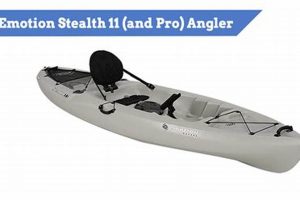
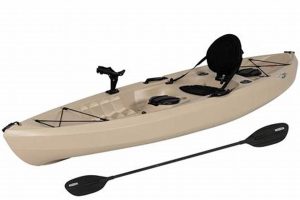
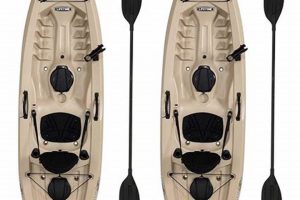
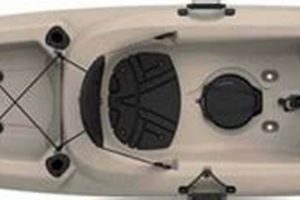
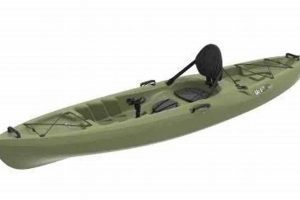
This specific model of watercraft is designed for recreational fishing, offering stability and specialized features. Typically, these kayaks are built with a sit-on-top design, multiple rod holders, storage compartments for tackle and gear, and often include features like anchor trolleys and adjustable seating. Such vessels provide anglers with a mobile and versatile platform for accessing various fishing locations, from calm lakes and ponds to slow-moving rivers.
Small, human-powered watercraft tailored for angling provide numerous advantages. Their compact size allows access to shallow waters and areas inaccessible to larger boats, expanding fishing opportunities. The stability inherent in their design makes casting and reeling easier, even for less experienced individuals. Historically, kayaks have served diverse purposes, from hunting and transportation to recreation. Their modern adaptation for fishing has increased their popularity among outdoor enthusiasts, reflecting a growing demand for specialized recreational equipment.
Further exploration will delve into specific design elements, materials, and accessories commonly associated with this type of kayak. Topics to be covered include considerations for selection, maintenance, and safe operation practices. The goal is to provide a comprehensive understanding of this specialized watercraft, equipping readers with the knowledge to make informed decisions and enhance their angling experience.
Tips for Sit-On-Top Fishing Kayak Use
Proper preparation and technique enhance safety and enjoyment while using this specialized watercraft. The following tips provide valuable guidance for both novice and experienced anglers.
Tip 1: Pre-Trip Planning: Check weather forecasts, water conditions, and local regulations before embarking. Inform someone of the intended fishing location and estimated return time.
Tip 2: Essential Gear: Carry required safety equipment, including a personal flotation device (PFD), a whistle, and a signaling device. Navigation tools, such as a compass or GPS, are also recommended.
Tip 3: Proper Paddling Technique: Utilize efficient paddling strokes to conserve energy and maintain control. Practice proper posture to minimize strain and maximize efficiency.
Tip 4: Safe Launching and Landing: Select stable launch and landing points. Exercise caution when entering and exiting the kayak, maintaining a low center of gravity.
Tip 5: Anchoring Techniques: Deploy the anchor system strategically to maintain position in desired fishing locations. Ensure proper anchor line management to avoid entanglement.
Tip 6: Fish Handling: Use appropriate techniques for landing and handling fish while maintaining balance and stability in the kayak. Carry essential tools for hook removal and fish handling.
Tip 7: Respect Wildlife and the Environment: Practice Leave No Trace principles by packing out all trash and minimizing disturbance to natural habitats.
Adherence to these guidelines contributes to a safer and more rewarding experience on the water. Careful planning, proper equipment, and mindful practices enhance enjoyment and promote responsible use of these specialized vessels.
These insights serve as a foundation for maximizing the angling potential of sit-on-top fishing kayaks. Further exploration can provide in-depth knowledge on specific techniques and equipment choices.
1. Stability

Stability is a paramount characteristic of the Tioga Angler fishing kayak, directly influencing its performance and the angler’s experience. A stable platform is essential for various fishing activities, from casting and retrieving to landing fish. The kayak’s inherent stability minimizes the risk of capsizing, particularly in challenging conditions such as windy days or when reeling in a strong fish. This stability is achieved through design elements such as a wider hull and a lower center of gravity. Consider a scenario where an angler hooks a large fish. The kayak’s stability ensures the angler can maintain balance and control during the fight, increasing the likelihood of a successful landing.
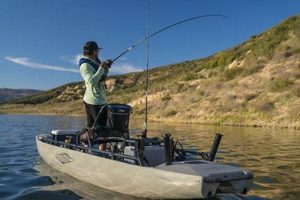
Furthermore, stability enhances overall comfort and confidence on the water. Anglers can focus on fishing rather than constantly adjusting their balance. This is especially crucial for extended fishing trips, where fatigue can become a factor. A stable kayak allows for more comfortable casting and reduces the likelihood of accidental entry into the water. For instance, an angler standing to cast in a stable kayak can maintain balance even in slight chop or current, optimizing casting accuracy and distance. The practical implication is a more enjoyable and productive fishing experience.
In summary, the Tioga Angler’s stability significantly contributes to its effectiveness as a fishing platform. This characteristic enhances not only safety but also angling performance and overall enjoyment. The ability to maintain balance while performing various fishing activities is crucial, especially under challenging conditions. This stability is a defining feature, setting it apart from less stable alternatives and contributing to its popularity among anglers.
2. Storage Capacity

Storage capacity is a critical feature differentiating the Tioga Angler fishing kayak from recreational models. Ample storage directly impacts the angler’s preparedness and efficiency on the water. The ability to carry a variety of tackle, gear, and personal items enhances fishing versatility and extends trip duration. Consider the scenario of an angler targeting multiple species. Sufficient storage allows for carrying different rod-and-reel combinations, lure assortments, and specialized equipment like landing nets or fish finders. This preparedness eliminates the need to return to shore for gear changes, maximizing time spent fishing.
Furthermore, strategically designed storage compartments contribute to organization and accessibility. Dedicated compartments for tackle boxes, rods, and personal items prevent clutter and ensure essential gear is readily available. Dry storage compartments safeguard sensitive electronics and personal belongings from water damage, maintaining their functionality and extending their lifespan. For instance, storing a camera or GPS device in a dry hatch allows for capturing memorable moments or navigating safely without the risk of water damage. Such considerations underscore the practical value of well-designed storage in fishing kayaks.
In conclusion, the Tioga Angler’s storage capacity is a defining feature, directly contributing to its practicality and effectiveness as a fishing platform. Adequate storage enables anglers to carry essential gear, maximizing preparedness and efficiency on the water. Furthermore, organized and accessible storage enhances convenience and safety, allowing anglers to focus on the fishing experience rather than logistical challenges. This understanding highlights the importance of storage capacity when evaluating fishing kayaks, emphasizing its impact on overall angling success and enjoyment.
3. Specialized Features
Specialized features distinguish the Tioga Angler fishing kayak from recreational models, enhancing its utility and angler performance. These purpose-built components optimize fishing activities, contributing to efficiency, comfort, and overall success on the water. The following facets illustrate key specialized features and their impact on the angling experience.
- Rod Holders
Multiple rod holders, strategically positioned throughout the kayak, allow anglers to keep rods readily accessible while paddling, managing tackle, or landing fish. For example, an angler trolling can position rods at varying angles and depths, maximizing coverage and strike detection. Integrated rod holders minimize clutter and prevent rod entanglement, contributing to a more organized and efficient fishing experience. Secure rod storage also protects valuable fishing equipment during transport and navigation.
- Anchor Trolley System
An anchor trolley system provides precise control over positioning, allowing anglers to hold the kayak in a desired location despite wind or current. This feature is particularly valuable in river fishing or when targeting specific structures. The angler can adjust the anchor point along the side of the kayak, optimizing boat position relative to the target area. This control enhances fishing effectiveness by maintaining ideal presentation and minimizing drift.
- Adjustable Seating
Adjustable seating systems contribute significantly to angler comfort, particularly during long fishing trips. The ability to adjust the seat position and backrest angle reduces fatigue and strain, allowing for extended periods on the water. An angler can customize the seating configuration for optimal paddling posture or switch to a more relaxed position while waiting for a bite. This flexibility enhances comfort and reduces the physical demands of kayak fishing.
- Gear Tracks and Mounting Points
Integrated gear tracks and mounting points provide versatile options for attaching accessories such as fish finders, GPS units, cameras, and other specialized equipment. This modularity allows anglers to customize their kayak setup to match specific fishing styles and preferences. For instance, mounting a fish finder provides real-time underwater insights, aiding in locating fish and identifying underwater structures. The ability to tailor the kayak with preferred accessories enhances its functionality and adaptability.
These specialized features collectively contribute to the Tioga Angler fishing kayak’s effectiveness as a dedicated angling platform. They enhance not only fishing performance but also comfort, organization, and overall enjoyment on the water. By understanding the purpose and application of these features, anglers can maximize their potential and create a personalized fishing experience tailored to their specific needs and preferences. This focused design distinguishes the Tioga Angler from general-purpose recreational kayaks, solidifying its position as a specialized tool for the serious angler.
4. Maneuverability

Maneuverability is a crucial aspect of the Tioga Angler fishing kayak, directly influencing its effectiveness in various fishing environments. The ability to navigate efficiently and precisely impacts access to fishing spots, strategic positioning, and overall angling success. This exploration delves into the facets contributing to the kayak’s maneuverability and their implications for the angler.
- Hull Design
The Tioga Angler’s hull design plays a significant role in its maneuverability. A well-designed hull balances tracking (moving in a straight line) with turning responsiveness. The specific hull shape influences how the kayak interacts with the water, affecting its speed, stability, and turning radius. For instance, a slightly V-shaped hull offers a good compromise between tracking and maneuverability, enabling efficient paddling in open water while maintaining the ability to navigate tight turns in shallows or around obstacles.
- Length and Width
The kayak’s dimensions also contribute to its maneuverability. Shorter kayaks generally turn more quickly than longer ones, allowing for agile navigation in confined spaces like creeks or mangrove tunnels. However, shorter lengths can compromise tracking performance in open water. The Tioga Angler’s length and width are balanced to provide a blend of maneuverability and stability, catering to diverse fishing environments.
- Rudder or Skeg System
The presence and type of rudder or skeg system significantly influence the kayak’s tracking and maneuverability. A rudder allows for precise steering adjustments, enhancing directional control in windy conditions or strong currents. A skeg, on the other hand, primarily improves tracking performance by reducing yaw (side-to-side movement). The inclusion of either or both systems on the Tioga Angler provides options for optimizing performance based on specific water conditions and fishing techniques.
- Paddler Input
While inherent design elements contribute significantly to maneuverability, paddler skill and technique play a crucial role. Efficient paddling strokes, proper body posture, and effective use of the rudder or skeg system are essential for maximizing the kayak’s maneuverability. Experienced paddlers can leverage these techniques to navigate complex waterways, position the kayak precisely for casting, and maintain control in challenging conditions.
In summary, the Tioga Angler’s maneuverability is a product of its hull design, dimensions, steering systems, and paddler input. These factors collectively determine its ability to navigate efficiently and precisely in various fishing environments. The kayak’s maneuverability empowers anglers to access productive fishing areas, maintain optimal positioning, and execute precise maneuvers, ultimately contributing to a more successful and rewarding fishing experience. Understanding these factors allows for informed evaluation of the kayak’s suitability for specific fishing locations and techniques.
5. Durability

Durability is a critical factor influencing the lifespan and overall value of a fishing kayak, especially in demanding environments. The Tioga Angler fishing kayak’s construction and material selection directly impact its ability to withstand the rigors of regular use, including impacts, abrasion, and exposure to the elements. A durable kayak ensures long-term performance and minimizes the need for frequent repairs or replacements, contributing to a more cost-effective and enjoyable ownership experience. The following facets explore key components of durability relevant to this specific model.
- Construction Material
The primary construction material significantly influences the kayak’s overall durability. High-density polyethylene (HDPE) is a common choice for fishing kayaks due to its impact resistance, UV stability, and ability to withstand temperature fluctuations. HDPE can endure impacts from rocks, submerged logs, or accidental collisions without sustaining significant damage. This resilience ensures the kayak remains functional even after encountering harsh conditions, contributing to long-term reliability.
- Hull Thickness
Hull thickness directly correlates with the kayak’s ability to resist punctures and abrasion. A thicker hull provides greater protection against sharp objects, rocky shorelines, and dragging the kayak over rough surfaces. While increased thickness adds weight, it significantly enhances the kayak’s resistance to damage, extending its lifespan. The Tioga Angler’s hull thickness is optimized to balance durability with weight considerations, providing robust protection without compromising maneuverability.
- UV Resistance
Exposure to ultraviolet (UV) radiation from sunlight can degrade certain plastics over time, causing them to become brittle and prone to cracking. UV-resistant materials are essential for ensuring the kayak maintains its structural integrity and colorfastness even after prolonged sun exposure. This resistance preserves the kayak’s appearance and performance over time, reducing the need for frequent replacements. The Tioga Angler utilizes UV-resistant materials in its construction, safeguarding against sun damage and prolonging its lifespan.
- Hardware and Fittings
The durability of hardware components, such as handles, latches, and mounting points, contributes to the kayak’s overall longevity. Corrosion-resistant materials, such as stainless steel or marine-grade aluminum, are essential for ensuring these components remain functional and reliable even in saltwater environments. Rust and corrosion can weaken hardware, compromising its integrity and potentially leading to equipment failure. The Tioga Angler incorporates durable hardware designed to resist corrosion, maintaining its functionality and structural integrity over time.
These facets collectively contribute to the Tioga Angler fishing kayak’s overall durability. By utilizing robust materials, strategic design, and corrosion-resistant hardware, this kayak is built to withstand the demands of regular fishing excursions. This durability translates to long-term reliability, reducing the need for repairs and replacements, and ultimately enhancing the value and enjoyment of ownership for the angler. Investing in a durable kayak like the Tioga Angler ensures many seasons of reliable performance on the water, contributing to a positive and cost-effective fishing experience.
6. Comfort

Comfort significantly influences the overall fishing experience, especially during extended trips on the water. The Tioga Angler fishing kayak addresses comfort through several key design elements, contributing to reduced fatigue and enhanced enjoyment. Consider the impact of an uncomfortable seat on an angler spending hours on the water. Back pain, stiffness, and general discomfort can detract from the fishing experience, potentially cutting trips short. The Tioga Angler addresses this through an adjustable seating system. An angler can modify the seat position and backrest angle to find the most ergonomic and supportive configuration, minimizing strain and maximizing comfort. This adjustability accommodates individual preferences and body types, ensuring a personalized fit for each angler. Furthermore, the seat material itself plays a role in comfort. Breathable, padded materials enhance comfort and prevent overheating, particularly in warm weather. The impact is readily apparent; a comfortable angler can focus on fishing, rather than physical discomfort, leading to a more enjoyable and productive experience.
Beyond the seat, other design elements contribute to overall comfort. Ample legroom allows anglers to stretch and change positions, reducing stiffness and promoting circulation. Strategically placed footrests provide support and stability while paddling and casting, further enhancing comfort and control. Consider an angler sight fishing in shallow water. The ability to comfortably maintain a standing position, supported by well-placed footrests, allows for better visibility and casting accuracy, contributing to a more successful fishing outcome. These seemingly small design choices collectively contribute to a more comfortable and user-friendly experience, allowing anglers to focus on their fishing technique and enjoy their time on the water.
In summary, the Tioga Angler fishing kayak prioritizes comfort through features like adjustable seating, ample legroom, and strategically placed footrests. These design choices contribute directly to reduced fatigue, enhanced enjoyment, and ultimately, increased fishing success. Understanding the connection between comfort and performance highlights the importance of ergonomic design in fishing kayaks, enabling anglers to select equipment that maximizes both comfort and functionality on the water. Addressing comfort not only enhances the immediate experience but also contributes to long-term angler health and well-being, ensuring continued enjoyment of the sport.
Frequently Asked Questions
This section addresses common inquiries regarding the Tioga Angler fishing kayak, providing concise and informative responses to facilitate informed decision-making and optimal product utilization.
Question 1: What differentiates the Tioga Angler from recreational kayaks?
Specialized features like rod holders, an anchor trolley system, and ample storage capacity distinguish the Tioga Angler as a purpose-built fishing platform, unlike recreational kayaks designed for general-purpose paddling.
Question 2: How stable is the Tioga Angler, and can one stand to fish?
The Tioga Angler exhibits inherent stability due to its wider hull and lower center of gravity. While standing and fishing is possible, caution and proper technique are recommended, especially in challenging conditions.
Question 3: What is the weight capacity of the Tioga Angler, and how does this affect performance?
Weight capacity varies depending on the specific model but generally falls within a range suitable for most anglers and their gear. Exceeding the recommended capacity can compromise stability and performance. Consulting manufacturer specifications is advised.
Question 4: What materials are used in the Tioga Angler’s construction, and how do they impact durability?
High-density polyethylene (HDPE) is commonly used for its impact resistance and UV stability, contributing to the kayak’s overall durability and longevity. Specific model details regarding material composition should be confirmed through product specifications.
Question 5: How does one transport the Tioga Angler, and are roof racks required?
Transportation options vary depending on vehicle type and kayak size. Roof racks are the recommended method for secure transport. Alternatives include trailers or truck beds, ensuring proper support and tie-down procedures.
Question 6: What maintenance is required for the Tioga Angler to ensure optimal performance and longevity?
Regular rinsing with fresh water after each use, especially in saltwater environments, helps prevent corrosion and prolong the lifespan of hardware components. Periodic inspection of the hull, fittings, and storage compartments is recommended to identify and address potential issues promptly. Manufacturer guidelines provide detailed maintenance instructions specific to each model.
These responses provide a foundational understanding of common inquiries regarding the Tioga Angler fishing kayak. Further research and consultation with authorized dealers can offer additional insights tailored to individual needs and preferences.
Further sections will explore specific model variations, accessory options, and advanced fishing techniques utilizing the Tioga Angler platform.
Conclusion
This exploration has provided a comprehensive overview of the Tioga Angler fishing kayak, highlighting its key features, benefits, and considerations for selection and use. From its specialized design elements, including rod holders, anchor trolley systems, and ample storage, to its focus on stability, maneuverability, durability, and comfort, the Tioga Angler stands as a purpose-built platform designed to enhance the angling experience. Understanding these attributes empowers informed decision-making, ensuring alignment between kayak selection and individual angling needs and preferences.
The Tioga Angler represents a significant advancement in kayak fishing technology, offering anglers a specialized vessel tailored to the demands of the sport. Its thoughtful design, coupled with durable construction, promises years of reliable performance on the water. As angling techniques evolve and the pursuit of on-the-water adventures continues to grow, specialized equipment like the Tioga Angler fishing kayak becomes increasingly essential, enabling anglers to push boundaries, explore new waters, and connect with the natural world. The emphasis on functionality, comfort, and durability positions the Tioga Angler not just as a vessel, but as an essential tool for the passionate angler seeking to maximize their potential and fully immerse themselves in the pursuit of their quarry.