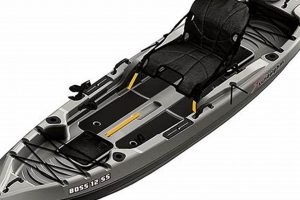
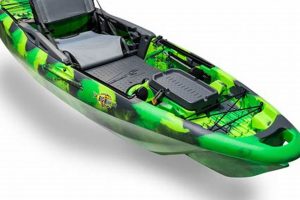
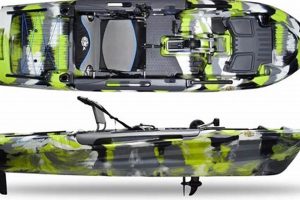
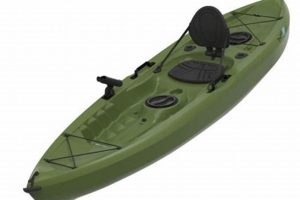
Motorized kayaks operated wirelessly offer anglers enhanced maneuverability and access to previously unreachable fishing spots. These vessels typically employ an electric trolling motor controlled by a handheld remote, allowing for hands-free navigation and precise positioning. This technology contrasts with traditional paddle kayaks and even pedal-powered versions, providing a distinct advantage in covering larger distances and navigating challenging currents or winds.
The advantages of this technology are significant. Anglers gain increased fishing time by reducing physical exertion and streamlining boat control. This is particularly beneficial for individuals with physical limitations or those seeking to conserve energy for the act of fishing itself. Furthermore, the ability to precisely maneuver in tight spaces or hold a steady position against currents offers a tactical edge for targeting specific fish species or structures. This innovation builds upon the established popularity of fishing kayaks, incorporating modern technology to enhance the fishing experience.
The following sections will delve deeper into the key features, selecting the appropriate model, essential accessories, and best practices for utilizing this evolving fishing platform. Topics covered will include motor types and power, battery life and management, hull design considerations, remote control functionality, and safety precautions.
Tips for Utilizing Motorized Fishing Kayaks
Optimizing the use of a motorized fishing kayak involves understanding its capabilities and limitations. The following tips offer guidance for maximizing effectiveness and safety on the water.
Tip 1: Pre-Trip Planning is Crucial: Always check weather conditions and water levels before embarking on any fishing trip. Understand local regulations and obtain necessary permits. Plan routes and identify potential hazards. Inform someone of intended fishing locations and estimated return times.
Tip 2: Battery Management: Fully charge batteries before each outing. Carry a spare battery if extended trips are planned. Monitor battery levels throughout the trip and adjust motor usage accordingly. Cold temperatures can significantly reduce battery performance.
Tip 3: Understand Motor Operation: Familiarize oneself thoroughly with the remote control’s functions and the motor’s responsiveness. Practice maneuvering in open water before navigating complex or congested areas. Understand the effects of wind and current on boat control.
Tip 4: Safety First: Always wear a personal flotation device (PFD). Carry essential safety equipment, including a whistle, signaling device, and first-aid kit. Be mindful of other boaters and watercraft. Avoid operating the vessel under the influence of alcohol or drugs.
Tip 5: Proper Weight Distribution: Distribute weight evenly within the kayak to maintain stability. Secure fishing gear and other equipment to prevent shifting during movement. Be aware of the kayak’s weight capacity and avoid overloading.
Tip 6: Respect Wildlife and the Environment: Avoid disturbing wildlife and sensitive habitats. Adhere to Leave No Trace principles by packing out all trash and minimizing environmental impact. Observe local fishing regulations and practice ethical angling techniques.
Tip 7: Regular Maintenance: Rinse the kayak and motor with fresh water after each use, particularly after exposure to saltwater. Inspect the motor, propeller, and remote control for damage or wear. Follow the manufacturer’s recommendations for maintenance and lubrication.
By adhering to these guidelines, anglers can enhance their fishing experience while prioritizing safety and responsible use of motorized kayaks.
The subsequent section offers a comprehensive overview of selecting the ideal motorized fishing kayak based on individual needs and preferences.
1. Wireless Operation

Wireless operation is fundamental to the functionality and appeal of remote control fishing kayaks. This technology eliminates the physical connection between the angler and the kayak’s motor, enabling remote control of the vessel’s movement and positioning. The reliance on wireless communication allows for hands-free fishing, providing anglers with greater freedom and flexibility to focus on their fishing techniques while maintaining precise boat control. This is particularly advantageous in situations requiring intricate maneuvering, such as navigating tight spaces, holding position against currents, or following fish activity. For instance, an angler targeting structure in a fast-flowing river can maintain an ideal position effortlessly using the remote, a feat challenging to achieve with a traditional paddle or pedal kayak.
The practical implications of wireless operation are substantial. Anglers experience reduced physical exertion, conserving energy for the core activity of fishing. Furthermore, the ability to control the kayak from a distance opens up new possibilities for fishing strategies. An angler can discreetly approach fish-holding areas without disturbing the water, or quickly reposition the kayak to capitalize on changing fish behavior. The range of the wireless signal varies depending on the specific model and environmental factors but typically provides ample freedom of movement within a reasonable fishing radius. This enhanced control translates to greater efficiency and potentially increased fishing success.
In conclusion, wireless operation is not merely a convenient feature; it is an integral component defining the remote control fishing kayak. This technology significantly impacts the angling experience, enhancing maneuverability, reducing physical strain, and expanding tactical possibilities. Understanding the capabilities and limitations of wireless operation is essential for maximizing the potential of these advanced fishing platforms. Future developments in wireless technology promise even greater range, reliability, and integration with other onboard systems, further refining the remote control fishing kayak experience.
2. Enhanced Maneuverability

Enhanced maneuverability represents a defining characteristic of remote-controlled fishing kayaks, distinguishing them from traditional paddle or pedal-powered alternatives. This superior control stems from the integration of a wirelessly operated motor, enabling precise adjustments to speed and direction without manual paddling or pedaling. The ability to make minute directional changes and maintain precise positioning, even against currents or wind, significantly expands angling opportunities. Consider a scenario where an angler needs to hold position near a submerged structure in a flowing river. A remote-controlled kayak allows for effortless adjustments to counter the current, maintaining the ideal fishing location without constant physical exertion. This precision is often unattainable with traditional kayaks, highlighting the practical advantage of enhanced maneuverability.
The practical significance of enhanced maneuverability extends beyond simply holding position. Navigating complex shorelines, weaving through tight spaces in mangrove forests, or approaching fish-holding areas stealthily becomes markedly easier. The remote control allows for quick and responsive adjustments, enabling anglers to react swiftly to changing conditions or fish behavior. For instance, if fish are spotted schooling near a weed bed, the angler can precisely navigate the kayak to the optimal casting position without disturbing the water through paddling. This level of control translates to increased fishing efficiency and potentially higher catch rates.
In summary, enhanced maneuverability achieved through remote control is not simply a convenient feature but a transformative element in kayak fishing. It expands access to challenging fishing locations, facilitates precise boat control in dynamic environments, and allows for quick adjustments to optimize fishing strategies. This capability distinguishes remote-controlled fishing kayaks, offering distinct advantages over traditional methods and underscoring their growing popularity among anglers seeking improved performance and efficiency on the water.
3. Increased Fishing Access

Remote control fishing kayaks offer significantly increased fishing access compared to traditional paddle or pedal-powered kayaks. The primary contributing factor is the motorized propulsion system controlled wirelessly. This eliminates the limitations imposed by physical exertion and allows anglers to cover greater distances and navigate challenging waters previously inaccessible. Consider, for example, areas with strong currents or vast expanses of open water. Reaching these locations in a traditional kayak can be physically demanding or even impossible, whereas a remote-controlled kayak allows effortless navigation. Similarly, shallow-water zones, dense vegetation, or areas with submerged obstacles become readily accessible with the precise and responsive control offered by remote operation. This expanded reach opens up a wider range of fishing opportunities, allowing anglers to explore previously untapped waters and target specific species or habitats.
The practical implications of increased fishing access are substantial. Anglers can venture further offshore, explore distant coves and inlets, or navigate upstream against currents with relative ease. This translates to a greater potential for discovering productive fishing spots and targeting species that may be concentrated in hard-to-reach areas. Moreover, the reduced physical exertion associated with remote-controlled kayaks allows individuals with physical limitations to enjoy greater participation in the sport. A person unable to paddle long distances can now access remote fishing grounds, enhancing inclusivity and broadening the angling experience. The ability to traverse challenging waters also offers a safety advantage, as anglers can quickly navigate away from hazardous conditions or seek sheltered areas in inclement weather.
In conclusion, increased fishing access stands as a key advantage of remote control fishing kayaks. The combination of motorized propulsion and wireless control expands the angler’s reach, opening up new fishing grounds and facilitating exploration of previously inaccessible areas. This broadened scope contributes significantly to the appeal of remote-controlled kayaks, offering both practical and recreational benefits. While considerations regarding battery life and range remain relevant, the increased access they provide represents a substantial advancement in kayak fishing, enhancing the overall experience and expanding opportunities for anglers of all abilities.
4. Motorized Propulsion

Motorized propulsion forms the core of a remote control fishing kayak, fundamentally differentiating it from traditional paddle-driven or pedal-powered variants. The integration of an electric motor, typically a transom-mounted trolling motor, provides the thrust necessary for hands-free navigation. This eliminates the reliance on physical exertion for propulsion, allowing anglers to conserve energy for fishing and cover greater distances. The motor’s operation is directly linked to the remote control system, enabling precise adjustments to speed and direction. This interconnectedness between motorized propulsion and remote control functionality defines the essence of this specialized kayak. For example, an angler can effortlessly navigate against strong currents or maintain a precise position near structure without continuous paddling, showcasing the practical advantage of this integrated system. This capability directly impacts fishing efficiency by reducing fatigue and allowing strategic positioning in demanding environments.
The implications of motorized propulsion extend beyond mere convenience. It expands access to fishing grounds previously unreachable by human-powered kayaks, opening up new opportunities to explore distant shorelines, navigate upstream in rivers, or venture further offshore. Furthermore, precise motor control facilitates stealthy approaches to fish-holding areas, minimizing disturbance and maximizing angling success. Consider an angler targeting spooky fish in shallow water. The quiet operation of an electric motor combined with the subtle maneuvering afforded by remote control allows for an approach that would be impossible with a paddle kayak. This precise control and reduced noise output are particularly valuable in situations where stealth is paramount.
In conclusion, motorized propulsion is not merely a component but the defining feature of a remote control fishing kayak. It provides the foundation for enhanced maneuverability, increased fishing access, and improved angling efficiency. Understanding the interplay between the motor, remote control system, and the kayak’s hull design is crucial for maximizing performance and achieving desired fishing outcomes. While factors such as battery life and motor maintenance require consideration, the advantages offered by motorized propulsion significantly enhance the overall fishing experience and solidify the remote control fishing kayak’s position as a valuable tool for modern anglers.
5. Hands-Free Fishing
Hands-free fishing represents a significant advantage offered by remote control fishing kayaks, directly linked to the core functionality of wireless motor control. This capability allows anglers to focus entirely on fishing techniques, manipulating rods, reels, and tackle without the need for paddling or pedaling. The remote control manages boat positioning and movement, freeing both hands for fishing activities. This is particularly beneficial in situations requiring precise lure presentation, fighting strong fish, or managing multiple rods simultaneously. Consider a scenario where an angler hooks a large fish. With hands free from propulsion management, the angler can dedicate full attention to battling the fish, increasing the chances of a successful landing. Similarly, techniques like trolling or drift fishing become significantly easier to manage, as the remote control maintains the kayak’s desired course and speed. This hands-free operation enhances angling efficiency and responsiveness, enabling anglers to react quickly to changing conditions or fish behavior.
The practical implications of hands-free fishing extend beyond improved angling techniques. It contributes significantly to overall comfort and reduces physical strain, particularly during extended fishing trips. Eliminating the need for constant paddling or pedaling lessens fatigue, allowing anglers to focus on the fishing experience rather than physical exertion. This advantage is particularly beneficial for individuals with physical limitations or those seeking a more relaxed approach to fishing. Furthermore, hands-free operation provides enhanced safety in certain situations. In the event of unexpected weather changes or encounters with obstacles, anglers can react swiftly and maintain control of the vessel without being encumbered by paddles or pedals, enhancing overall safety on the water.
In conclusion, hands-free fishing is integral to the remote control fishing kayak experience, inextricably linked to the technology of wireless motor control. This capability enhances fishing techniques, improves comfort and reduces physical strain, and contributes to increased safety. While factors like battery life and remote control range remain relevant considerations, the advantages offered by hands-free operation represent a significant advancement in kayak fishing, making it a compelling choice for anglers seeking improved efficiency, comfort, and control on the water.
6. Improved Angling Efficiency
Improved angling efficiency represents a significant outcome associated with the utilization of remote control fishing kayaks. This enhancement stems from several key factors directly related to the technology’s core functionalities. Wireless control of the kayak’s motor allows for precise positioning and effortless navigation, enabling anglers to reach optimal fishing locations and maintain ideal presentations with minimal physical exertion. This eliminates the need for constant paddling or pedaling, conserving energy and allowing for greater focus on fishing techniques. Consider a scenario where an angler targets structure in a fast-flowing river. Maintaining an effective fishing position in such conditions requires continuous adjustments to counter the current. A remote-controlled kayak achieves this effortlessly, allowing the angler to focus entirely on lure presentation and fish detection, a task significantly more challenging with a traditional paddle or pedal kayak. This precise control translates directly to increased time spent fishing effectively, maximizing opportunities for success.
Furthermore, the hands-free nature of remote control operation facilitates more dynamic fishing strategies. Anglers can quickly adjust their position to respond to changing fish behavior, follow schooling fish, or explore new areas with minimal effort. This responsiveness is crucial for capitalizing on fleeting opportunities and maximizing catch rates. For example, if fish are observed surfacing in a particular area, the angler can swiftly and silently reposition the kayak using the remote, optimizing casting angles and presentation without disturbing the fish. This level of control and responsiveness is difficult to achieve with traditional kayaks, highlighting the efficiency gains provided by remote control technology. The ability to manage multiple rods simultaneously is also enhanced, allowing anglers to cover more water and experiment with different techniques concurrently. This versatility further contributes to improved angling efficiency, increasing the likelihood of successful outcomes.
In conclusion, improved angling efficiency emerges as a direct consequence of the features and functionalities inherent in remote control fishing kayaks. Precise boat control, reduced physical exertion, enhanced responsiveness, and the ability to employ more dynamic fishing strategies contribute significantly to maximizing fishing time and optimizing catch potential. While factors such as battery life and responsible use remain important considerations, the demonstrable improvements in angling efficiency offered by this technology solidify its value as a tool for serious anglers seeking to maximize their success on the water.
Frequently Asked Questions
This section addresses common inquiries regarding remote control fishing kayaks, providing concise and informative responses to facilitate informed decision-making and optimal usage.
Question 1: What are the primary advantages of a remote-controlled fishing kayak over a traditional paddle or pedal kayak?
Remote-controlled kayaks offer several key advantages: reduced physical exertion, enhanced maneuverability in challenging conditions (wind, current, tight spaces), increased access to distant or difficult-to-reach fishing locations, and hands-free fishing, allowing anglers to focus on techniques and fish fighting.
Question 2: How far can a remote-controlled fishing kayak travel on a single battery charge?
Range varies significantly depending on factors like battery capacity, motor size, kayak weight, water conditions, and speed. Manufacturers typically provide estimated run times. Conservative use and carrying a spare battery are recommended for longer trips.
Question 3: Are remote-controlled fishing kayaks suitable for saltwater environments?
Many models are designed for both freshwater and saltwater use. However, thorough rinsing with fresh water after each saltwater trip is crucial to prevent corrosion of the motor, electrical components, and other metal parts.
Question 4: What maintenance is required for a remote-controlled fishing kayak’s motor and electrical system?
Regular maintenance includes rinsing with fresh water after each use, periodic inspection of wiring and connections, proper battery charging and storage, and adherence to manufacturer recommendations for lubrication and other maintenance procedures.
Question 5: What safety precautions should be taken when operating a remote-controlled fishing kayak?
Always wear a personal flotation device (PFD). Carry essential safety gear, including a whistle, signaling device, and first-aid kit. Check weather conditions before embarking and inform someone of your intended route and return time. Avoid operating the vessel under the influence of alcohol or drugs.
Question 6: How does one choose the appropriate motor size and battery capacity for a remote-controlled fishing kayak?
Motor size and battery capacity selection depend on factors like kayak size and weight, intended fishing locations (calm lakes vs. rivers with strong currents), desired speed, and typical trip duration. Consulting manufacturer specifications and seeking advice from experienced anglers can assist in making informed decisions.
Understanding these key aspects of remote control fishing kayaks is crucial for a safe and successful fishing experience. Thorough research and consideration of individual needs will ensure informed purchasing decisions and optimal utilization of this technology.
The following section will explore various accessories available to enhance the functionality and customize remote-controlled fishing kayaks.
Remote Control Fishing Kayak
This exploration of remote control fishing kayaks has highlighted the significant advancements this technology offers anglers. Key benefits include enhanced maneuverability, increased access to fishing grounds, reduced physical exertion, and the ability to perform hands-free fishing. These advantages translate to improved angling efficiency, allowing more time for strategic fishing and less time battling currents or navigating long distances. The discussion encompassed key features such as wireless operation, motorized propulsion, and the importance of understanding battery management and safety precautions. Furthermore, frequent questions regarding maintenance, saltwater compatibility, and motor selection were addressed, providing a comprehensive overview of crucial aspects.
Remote control fishing kayaks represent a significant evolution in the sport of angling. The technology empowers anglers to explore previously inaccessible waters, conserve energy for the act of fishing, and employ more dynamic fishing strategies. As technology continues to advance, further refinements in battery life, motor efficiency, and integrated features promise an even more refined and accessible fishing experience. Careful consideration of individual needs and responsible use will ensure this technology continues to enhance the enjoyment and success of anglers on the water for years to come.