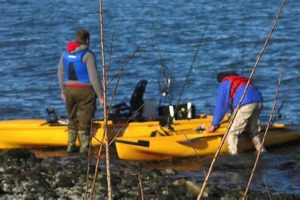
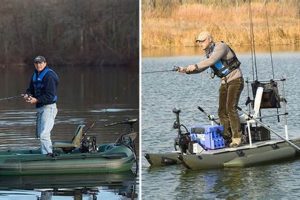
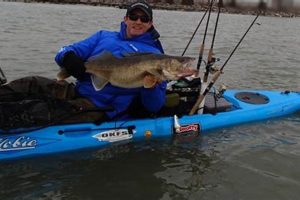
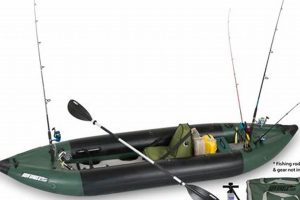
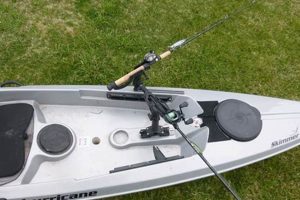
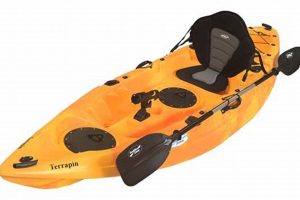
This specific type of watercraft is designed for anglers, offering stability and specialized features for a comfortable and productive fishing experience. These vessels often incorporate rod holders, storage compartments for tackle and gear, and comfortable seating arrangements designed for extended periods on the water. Some models may also feature specialized hull designs for enhanced stability and maneuverability in various water conditions.
Anglers benefit from the enhanced stability and specialized features these watercraft offer. The dedicated design facilitates easier casting, retrieval, and overall fish-fighting capability. Historically, fishing from small, human-powered vessels has been a common practice, evolving from simple canoes and rafts to the sophisticated designs available today. Modern advancements in materials and construction techniques have led to lighter, more durable, and feature-rich options that cater to a wide range of fishing styles and environments.
Further exploration will cover topics such as selecting the right model based on individual needs and preferences, essential safety considerations, recommended accessories, and popular fishing techniques best suited for this type of watercraft. Additionally, the impact of these specialized vessels on the sport of fishing will be examined.
Tips for a Successful Outing
Proper preparation and technique are essential for a safe and rewarding experience on the water. The following tips offer guidance for maximizing fishing success and overall enjoyment.
Tip 1: Stability and Balance: Prioritize maintaining a low center of gravity. Distribute weight evenly and avoid sudden movements that could compromise stability.
Tip 2: Essential Gear Preparation: Ensure all necessary fishing gear, safety equipment (including a personal flotation device), and navigation tools are readily accessible and in good working order before embarking.
Tip 3: Choosing the Right Paddle: Select a paddle appropriate for individual height and paddling style. A properly sized paddle enhances efficiency and reduces fatigue.
Tip 4: Understanding Water Conditions: Be aware of currents, tides, and weather forecasts before heading out. Adjust plans accordingly to ensure a safe and enjoyable trip.
Tip 5: Respecting Wildlife and the Environment: Practice leave-no-trace principles. Pack out all trash and avoid disturbing natural habitats.
Tip 6: Mastering Basic Paddling Techniques: Learning efficient paddling strokes conserves energy and allows for greater maneuverability. Consider practicing basic paddling techniques in calm waters before venturing into more challenging conditions.
Tip 7: Effective Fish Handling: Employ proper fish handling techniques to minimize stress on the fish and ensure its safe release.
By following these guidelines, anglers can enhance their safety, improve their fishing success, and contribute to the preservation of the natural environment.
This information provides a foundation for a safe and fulfilling experience. The following section will offer concluding thoughts and additional resources for continued learning and exploration.
1. Stability

Stability is a paramount consideration in the design and performance of fishing kayaks, directly impacting safety, angler comfort, and fishing effectiveness. A stable platform is essential for various on-the-water activities, from casting and reeling to landing fish and navigating challenging conditions. This exploration delves into key facets of stability relevant to this type of watercraft.
- Hull Design:
Hull design plays a crucial role in determining a kayak’s stability. Wider hulls generally offer greater primary stability (initial resistance to tipping), while longer, narrower hulls often provide better secondary stability (resistance to capsizing once tipped). Specific hull designs, such as pontoon hulls or catamaran hulls, offer enhanced stability due to their wider base. The chosen hull design significantly influences the kayak’s performance in different water conditions.
- Center of Gravity:
A lower center of gravity contributes to increased stability. Factors such as the angler’s weight, gear placement, and seating position influence the overall center of gravity. Proper weight distribution and a low seating position enhance stability, minimizing the risk of tipping. Understanding the relationship between center of gravity and stability is crucial for maintaining balance and safety on the water.
- Water Conditions:
Water conditions, including currents, waves, and wind, significantly impact stability. Calm, flat water generally presents fewer stability challenges compared to rough or choppy conditions. Kayak stability in varying water conditions should be considered when planning fishing trips. Matching the kayak’s stability characteristics to the expected water conditions is essential for a safe and productive outing.
- Angler Experience and Technique:
An angler’s experience and technique also influence stability. Experienced anglers often develop techniques for maintaining balance and adjusting to changing conditions. Proper paddling techniques, body positioning, and understanding weight shifts contribute to overall stability. Gaining experience and practicing essential techniques enhances stability and control on the water.
These interconnected facets of stability collectively influence the performance and safety of a fishing kayak. Understanding these elements enables anglers to make informed decisions when selecting a watercraft suitable for their individual needs, fishing style, and the anticipated water conditions.
2. Maneuverability

Maneuverability is a critical performance attribute influencing a fishing kayak’s effectiveness and adaptability on the water. Efficient navigation through diverse aquatic environments, including tight waterways, currents, and obstacles, directly impacts fishing success. This exploration delves into key facets of maneuverability pertaining to this specialized type of watercraft.
- Hull Design and Length:
Hull design and length significantly impact maneuverability. Shorter kayaks generally offer greater agility and turning responsiveness, while longer kayaks tend to track straighter and glide more efficiently. Specific hull designs, such as those with a pronounced keel or defined chines, influence tracking and turning characteristics. The interplay between hull design and length dictates a kayak’s responsiveness to paddle input and its ability to navigate varying water conditions.
- Waterline Length and Width:
The waterline length, the portion of the hull in contact with the water, affects speed and directional stability. A longer waterline typically yields greater speed, while a shorter waterline enhances maneuverability. Width also plays a role, with narrower kayaks generally being more maneuverable but less stable than wider counterparts. The relationship between waterline length and width influences how easily a kayak can be turned and controlled.
- Rudder and Skeg Systems:
Rudders and skegs are control systems that enhance tracking and maneuverability. A rudder, controlled by foot pedals, assists in turning and maintaining course, particularly in windy or current-driven conditions. A skeg, a fixed or retractable fin, enhances directional stability. The presence and type of these systems contribute significantly to a kayak’s performance in different water environments.
- Paddling Technique and Experience:
Proficient paddling techniques are essential for maximizing maneuverability. Effective use of various paddle strokes allows for precise control and efficient turning. Experience plays a significant role, as experienced paddlers develop a nuanced understanding of how to leverage paddle strokes and body positioning for optimal maneuverability. The combination of skilled paddling and experience enhances the kayak’s responsiveness and navigational precision.
These interconnected aspects of maneuverability collectively define a fishing kayak’s agility and control on the water. A comprehensive understanding of these elements empowers anglers to select a watercraft optimized for their specific needs and the demands of their target fishing environments. The optimal balance between maneuverability and stability varies based on individual preferences and fishing styles, emphasizing the importance of careful consideration during the selection process.
3. Storage Capacity

Ample storage capacity is a defining feature of fishing kayaks, directly impacting their practicality and effectiveness on the water. The ability to securely transport essential gear, tackle, and personal items contributes significantly to a successful and organized fishing experience. This exploration delves into the crucial connection between storage capacity and this specialized type of watercraft.
Dedicated storage compartments, such as hatches, tank wells, and integrated storage areas, facilitate organized gear management. These compartments safeguard equipment from water damage and prevent items from shifting during movement, minimizing distractions and maximizing fishing efficiency. The strategic placement and design of storage areas optimize accessibility, allowing anglers to quickly retrieve necessary items without compromising stability or balance. Examples include dedicated rod holders, tackle trays, and dry storage compartments for electronics and personal belongings. The availability of ample and well-designed storage contributes directly to an angler’s preparedness and overall enjoyment on the water.
The practical significance of adequate storage capacity extends beyond simple convenience. It allows anglers to carry a wider variety of tackle and gear, adapting to changing fishing conditions and targeting diverse species. This adaptability enhances versatility and increases the likelihood of a successful outing. Furthermore, organized storage promotes safety by minimizing clutter and ensuring essential safety equipment remains readily accessible. The ability to securely store personal items, such as food, water, and first-aid supplies, further enhances comfort and preparedness for extended trips. A well-designed storage system contributes significantly to the overall functionality and effectiveness of a fishing kayak, transforming it from a simple vessel into a comprehensive and organized fishing platform.
4. Comfort Features
Comfort features significantly influence the overall fishing experience, particularly during extended outings. A comfortable and supportive seating system reduces fatigue and allows anglers to focus on fishing, rather than physical discomfort. Adjustable seating positions accommodate diverse body types and preferences, enabling personalized comfort. Features like padded seats, adjustable backrests, and ample legroom contribute to a more enjoyable and less physically demanding experience. For example, an angler spending hours on the water benefits significantly from a well-designed seat that provides proper lumbar support and cushioning. This translates to reduced back strain and increased endurance, allowing for longer, more productive fishing sessions. The practical significance of comfortable seating becomes even more apparent in challenging conditions or when navigating rough waters, where a stable and supportive seating position is essential for maintaining balance and control.
Beyond seating, other comfort features enhance the overall on-the-water experience. Features like integrated footrests or adjustable foot braces allow for optimal paddling posture and reduce leg fatigue. Recessed cup holders and strategically placed storage compartments keep essential items within easy reach, minimizing unnecessary movement and maximizing efficiency. Consider an angler needing to access a water bottle or adjust a rod holder; conveniently located features minimize disruption and allow for seamless transitions between fishing activities. This contributes to a more streamlined and enjoyable experience, allowing anglers to focus on the task at hand. Furthermore, thoughtful design elements, such as non-slip surfaces and strategically placed handles, enhance safety and ease of movement, reducing the risk of slips or falls.
In summary, comfort features in a fishing kayak are not mere luxuries but essential components that directly impact performance, endurance, and overall enjoyment. From supportive seating and adjustable footrests to strategically placed storage and non-slip surfaces, these features contribute to a more comfortable, efficient, and ultimately, more successful fishing experience. Addressing these ergonomic considerations allows anglers to maximize their time on the water and fully immerse themselves in the pursuit of their passion, without the limitations of physical discomfort or inconvenience. Selecting a kayak with appropriate comfort features, tailored to individual needs and preferences, is crucial for ensuring a positive and productive fishing experience.
5. Durability
Durability is a critical factor influencing the lifespan and overall value of a fishing kayak. The ability to withstand the rigors of regular use, including exposure to various environmental conditions and potential impacts, directly affects the kayak’s long-term performance and reliability. A durable construction minimizes the risk of damage and ensures the vessel remains functional and safe throughout its intended lifespan. This translates to fewer repairs, reduced maintenance costs, and a greater return on investment. Consider, for example, a kayak frequently used in rocky or shallow waters; a durable hull material, such as high-density polyethylene, is essential for resisting abrasions and impacts, preventing leaks and maintaining structural integrity. Conversely, a less durable material might quickly succumb to wear and tear, requiring frequent repairs or even replacement, ultimately diminishing the kayak’s value and usability. The practical significance of durability extends beyond mere cost savings; it directly impacts safety and peace of mind on the water.
Several factors contribute to a fishing kayak’s overall durability. The choice of hull material plays a pivotal role. High-density polyethylene (HDPE) is a common choice due to its impact resistance, UV stability, and relatively low cost. Other materials, such as fiberglass or composites, offer enhanced stiffness and performance characteristics but may come at a higher price point. Construction methods, including rotomolding and thermoforming, also influence durability. Rotomolded kayaks typically exhibit greater impact resistance, making them suitable for challenging environments. Beyond the core construction, hardware components, such as hatches, handles, and seating mounts, also contribute to overall durability. Corrosion-resistant fittings and robust attachment points ensure these components remain functional and secure throughout extended use. For instance, stainless steel hardware is less susceptible to corrosion than cheaper alternatives, ensuring long-term reliability and minimizing the risk of failures in critical areas.
Investing in a durable fishing kayak offers long-term benefits, minimizing maintenance requirements and maximizing the vessel’s lifespan. The ability to withstand regular use, exposure to various environments, and potential impacts ensures the kayak remains a reliable and safe platform for fishing adventures. Selecting a kayak constructed from durable materials and incorporating robust hardware components is an investment in long-term performance and peace of mind on the water. Understanding the factors that contribute to durability enables informed decision-making and ensures the chosen kayak aligns with individual needs and intended usage. This translates to a more secure and enjoyable fishing experience, free from the concerns of premature wear and tear or unexpected failures.
6. Specialized Design

Specialized design distinguishes fishing kayaks from recreational models, optimizing them for enhanced angling performance and efficiency. These purpose-built features cater specifically to the needs of anglers, transforming the kayak into a dedicated fishing platform. This exploration delves into key facets of specialized design that contribute to a more productive and enjoyable fishing experience.
- Rod Holders:
Integrated rod holders, strategically positioned for easy access and secure rod storage, are a hallmark of fishing kayak design. These specialized holders free up anglers’ hands for other tasks, such as paddling, landing fish, or adjusting tackle. Various rod holder types accommodate different fishing styles and rod sizes, from flush-mounted holders for trolling to adjustable holders for casting and spinning. The availability of multiple rod holders allows anglers to carry various rods rigged for different techniques or target species.
- Tackle Storage and Organization:
Dedicated compartments and storage solutions for tackle boxes, tools, and other fishing essentials are integral to specialized kayak design. These compartments keep gear organized, readily accessible, and protected from the elements. Features such as integrated tackle trays, dry storage hatches, and side pockets streamline gear management and minimize clutter. Efficient tackle organization enhances fishing efficiency, allowing anglers to quickly locate and deploy necessary equipment without disrupting their flow.
- Mounting Systems for Accessories:
Integrated mounting systems, such as tracks, rails, and inserts, provide versatile platforms for attaching accessories like fish finders, GPS units, cameras, and other electronic devices. These systems allow for customized setups tailored to individual fishing preferences and techniques. For example, a transducer mount enables easy installation of a fish finder, providing crucial underwater insights. Similarly, mounting points for cameras allow anglers to document their catches or capture scenic views. The flexibility offered by these mounting systems enhances the kayak’s versatility and adaptability.
- Specialized Hull Designs for Stability and Performance:
Fishing kayaks often feature specialized hull designs optimized for stability and performance in specific fishing environments. Wider, flatter hulls offer enhanced stability for stand-up fishing, while longer, more streamlined hulls prioritize speed and tracking for covering greater distances. Specific hull designs, such as tunnel hulls or pontoon hulls, cater to particular fishing styles and water conditions. The choice of hull design directly influences the kayak’s maneuverability, stability, and overall performance on the water.
These specialized design elements collectively transform a standard kayak into a dedicated fishing platform, enhancing efficiency, organization, and overall fishing performance. The integration of features like rod holders, tackle storage, mounting systems, and specialized hull designs caters specifically to the unique needs of anglers, maximizing their time on the water and increasing their chances of success. By carefully considering these specialized features, anglers can select a kayak optimized for their preferred fishing style, target species, and the specific demands of their chosen fishing environments. This attention to detail translates to a more productive, comfortable, and ultimately, more rewarding fishing experience.
Frequently Asked Questions
This section addresses common inquiries regarding specialized fishing kayaks, providing concise and informative responses to facilitate informed decision-making.
Question 1: What key features distinguish a fishing kayak from a recreational kayak?
Fishing kayaks typically incorporate specialized features such as rod holders, tackle storage compartments, anchor trolleys, and often a wider, more stable hull design compared to recreational kayaks. These features enhance angling functionality and overall on-the-water performance.
Question 2: How is stability affected by hull design?
Hull design significantly influences stability. Wider hulls generally offer greater initial stability, while longer, narrower hulls provide better secondary (tipping) stability. Specialized hull designs, like pontoon or catamaran hulls, maximize stability for activities like stand-up fishing.
Question 3: What materials are commonly used in fishing kayak construction, and how do they impact durability?
Common materials include high-density polyethylene (HDPE), fiberglass, and composites. HDPE offers excellent impact resistance and UV stability. Fiberglass and composites provide enhanced stiffness and performance but may require more careful handling. Material choice directly impacts the kayak’s durability and resistance to wear and tear.
Question 4: What safety precautions should one take when using a fishing kayak?
Essential safety precautions include wearing a personal flotation device (PFD), carrying a whistle or other signaling device, informing someone of paddling plans, checking weather forecasts, and being aware of potential hazards such as currents and changing water conditions.
Question 5: How does one choose the right paddle length for a fishing kayak?
Appropriate paddle length depends on factors such as torso height, kayak width, and paddling style. Consult retailer guidelines or utilize online paddle sizing charts for personalized recommendations. A properly sized paddle enhances efficiency and reduces fatigue.
Question 6: What essential accessories enhance the fishing kayak experience?
Essential accessories include a comfortable seat, a well-designed paddle, a PFD, a fish finder, appropriate safety gear, and storage solutions for tackle and personal items. Additional accessories, like anchor trolleys and rod leashes, further enhance functionality and convenience.
Addressing these common inquiries provides a foundational understanding of key aspects related to specialized fishing kayaks. Thorough research and careful consideration of individual needs and preferences are essential for selecting the optimal watercraft for a safe, productive, and enjoyable fishing experience.
The subsequent section will delve further into advanced techniques and considerations for maximizing fishing success from a kayak.
Neptune Fishing Kayak
This exploration has provided a comprehensive overview of the neptune fishing kayak, encompassing its key features, benefits, and considerations for selection and usage. From stability and maneuverability to storage capacity, comfort features, durability, and specialized design elements, the multifaceted nature of these watercraft has been thoroughly examined. The importance of selecting a kayak tailored to individual needs, fishing styles, and target environments has been emphasized throughout. Furthermore, the significance of safety precautions, proper paddling techniques, and responsible environmental practices has been underscored.
The neptune fishing kayak represents a significant advancement in the evolution of angling, offering unparalleled access and a unique connection with the aquatic environment. Careful consideration of the elements discussed herein empowers anglers to make informed decisions, maximizing their on-the-water experiences and fostering a deeper appreciation for the sport of fishing. As technology continues to evolve and kayak design progresses, the future promises even greater innovations, further enhancing the performance, comfort, and overall enjoyment derived from these specialized watercraft. The neptune fishing kayak stands as a testament to the ingenuity and passion of anglers, reflecting a harmonious blend of functionality, performance, and a profound connection with the natural world.