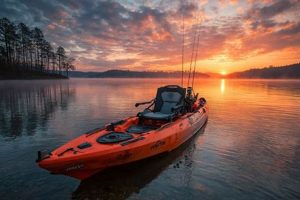
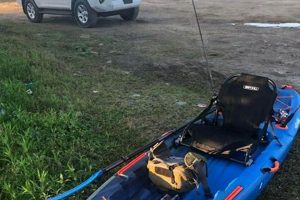
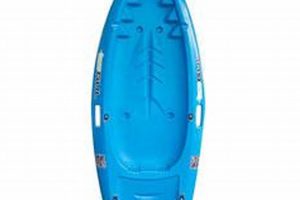
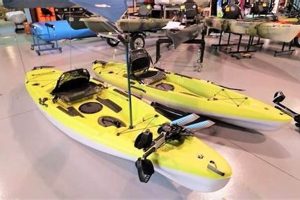
This sit-on-top, two-person fishing vessel, manufactured by Lifetime Products, is designed for recreational angling in calm waters. It typically features built-in rod holders, storage compartments, and adjustable seating. Its polyethylene construction offers durability and UV resistance.
Affordable and stable, this type of watercraft provides a comfortable platform for anglers. Its manageable size and relatively light weight make transport and launching easier compared to larger boats. Tandem configurations promote shared experiences and can be advantageous for novice anglers or those seeking companionship on the water. The stability and open design can be particularly beneficial for fishing activities. This style of kayak has contributed to the growing accessibility of recreational fishing.
The following sections will delve into specific aspects of this type of recreational fishing vessel, including design features, performance characteristics, user experiences, and maintenance recommendations. Further topics will explore suitable fishing environments and accessories that can enhance its utility.
Tips for Using a Tandem Fishing Kayak
Proper preparation and mindful usage enhance safety and enjoyment on the water. These tips offer guidance for optimizing the experience.
Tip 1: Weight Distribution: Balanced loading is crucial for stability. Distribute gear and passengers evenly throughout the vessel. Consider using dry bags to organize and protect equipment from water damage.
Tip 2: Paddle Synchronization: Coordinated paddling improves efficiency and directional control. Discuss paddling techniques and establish a rhythm before launching.
Tip 3: Safety Gear: Personal flotation devices (PFDs) are essential for all occupants. Carry a whistle, signaling device, and first-aid kit. Check weather conditions prior to departure and inform someone of your planned route and return time.
Tip 4: Launching and Landing: Select calm, shallow areas for entry and exit. Work together to stabilize the vessel during boarding and disembarking.
Tip 5: Fishing Etiquette: Maintain a respectful distance from other boaters and anglers. Adhere to catch limits and regulations. Properly dispose of fishing line and other waste.
Tip 6: Navigation: Familiarize yourself with navigation aids and charts relevant to your location. Carry a compass or GPS device and learn basic navigational skills.
Tip 7: Anchor Positioning: Utilize an appropriate anchor system suited for the waterbody’s bottom composition. Ensure proper anchor deployment and retrieval techniques.
Adherence to these guidelines promotes safe and enjoyable fishing excursions. Preparedness and mindful practice contribute significantly to a positive experience on the water.
By incorporating these recommendations, individuals can maximize the benefits of this type of kayak and enhance their fishing adventures.
1. Tandem Configuration

The tandem configuration of the Lifetime Sport Fisher 100 kayak directly impacts its functionality and suitability for various angling scenarios. Designed for two paddlers, this configuration offers advantages and disadvantages depending on user needs and preferences. Shared paddling responsibilities can reduce individual exertion, particularly during longer trips or against challenging currents. The increased capacity allows for greater combined weight limits, accommodating more gear or a larger combined passenger weight. However, tandem kayaks generally exhibit slightly reduced maneuverability compared to single-person models. Coordination between paddlers is crucial for efficient paddling and directional control.
The tandem design fosters shared fishing experiences. Two anglers can fish simultaneously, covering more water and potentially increasing catch rates. It provides a platform for collaborative angling strategies and shared learning opportunities. The increased stability offered by the tandem design can be beneficial when fighting larger fish or fishing in choppy conditions. However, the shared space requires careful coordination to avoid tangled lines or interference during casting. The size and weight of a tandem kayak require additional considerations for transport and storage compared to single kayaks.
The tandem configuration of the Lifetime Sport Fisher 100 provides specific benefits and limitations. Understanding these factors enables informed decisions regarding its suitability for individual needs and intended usage. Successful utilization of the tandem design necessitates effective communication and coordination between paddlers. This cooperative approach enhances overall efficiency, safety, and enjoyment on the water.
2. Fishing-Specific Design
The Lifetime Sport Fisher 100 tandem kayak incorporates design elements specifically tailored for angling activities. These features distinguish it from recreational kayaks and contribute significantly to its utility as a fishing platform. Analysis of these design elements provides insights into its intended purpose and functionality.
- Flush-Mounted Rod Holders:
Multiple flush-mounted rod holders provide convenient storage and access during fishing. These holders secure rods, freeing hands for paddling, baiting hooks, or landing fish. Their placement minimizes interference with paddling strokes and reduces the risk of entanglement. Anglers can troll multiple lines or readily switch between different rod setups.
- Storage Compartments:
Dedicated storage compartments offer organized storage for tackle boxes, fishing gear, and personal items. These compartments often include dry storage options to protect sensitive equipment from water damage. Strategic placement of compartments maximizes accessibility while maintaining stability and balance within the kayak.
- Adjustable Seating:
Adjustable seating systems enhance comfort and support during extended fishing trips. These systems allow for customization based on individual preferences and fishing styles. Adjustable backrests and footrests improve posture and reduce fatigue. Proper seating contributes to overall stability and control while casting and reeling.
- Trolling Motor Compatibility:
While not always standard, many models offer compatibility with trolling motors. This feature expands fishing capabilities by allowing anglers to cover greater distances and maintain precise positioning in currents or wind. Trolling motor mounts integrate seamlessly into the kayak’s design, minimizing interference and maximizing efficiency.
These fishing-specific design elements collectively enhance the angler’s experience. They contribute to increased efficiency, comfort, and overall fishing success. The integration of these features demonstrates a focused design approach that prioritizes the needs of recreational anglers. The Lifetime Sport Fisher 100 distinguishes itself through its purpose-built design, catering specifically to the requirements of kayak fishing.
3. Durability (Polyethylene)

The Lifetime Sport Fisher 100 tandem kayak’s construction utilizes high-density polyethylene (HDPE), a material integral to its durability and longevity. This material choice directly influences the kayak’s resilience against impacts, UV radiation, and general wear, contributing significantly to its overall performance and lifespan. Understanding HDPE’s properties provides insights into the kayak’s suitability for various aquatic environments and usage patterns.
- Impact Resistance
HDPE exhibits excellent impact resistance, safeguarding the kayak from damage caused by collisions with rocks, submerged debris, or during transport and storage. This resilience minimizes the risk of cracks or punctures, preserving structural integrity and preventing leaks. The material’s flexibility allows it to absorb impacts without permanent deformation, ensuring the kayak remains functional even after encountering obstacles.
- UV Resistance
HDPE’s inherent UV resistance protects the kayak from the degrading effects of prolonged sun exposure. This characteristic prevents material discoloration, fading, and weakening, preserving the kayak’s appearance and structural integrity over time. UV resistance contributes to the kayak’s longevity, reducing the need for frequent replacements or repairs due to sun damage. This is particularly important in regions with intense sunlight.
- Maintenance Requirements
HDPE’s low-maintenance nature contributes to the kayak’s overall practicality. The material’s resistance to staining, fading, and corrosion minimizes cleaning requirements. Routine rinsing with fresh water typically suffices to remove dirt, grime, and saltwater residue. This ease of maintenance reduces the time and effort required for upkeep, allowing users to focus on enjoying their time on the water.
- Recyclability
HDPE’s recyclability aligns with environmentally conscious practices. At the end of its lifespan, the kayak’s material can be recycled, reducing landfill waste and contributing to sustainable manufacturing processes. This aspect adds to the kayak’s overall value proposition, appealing to users concerned about environmental impact.
The selection of HDPE as the primary construction material significantly contributes to the Lifetime Sport Fisher 100 tandem kayak’s durability, longevity, and low maintenance requirements. These characteristics enhance its suitability for recreational fishing, ensuring reliable performance and extended lifespan under various conditions. The material’s inherent properties align with practical and environmental considerations, making it a suitable choice for recreational watercraft.
4. Stability and Maneuverability
Stability and maneuverability represent crucial performance characteristics of the Lifetime Sport Fisher 100 tandem kayak, directly influencing its suitability for fishing activities. The kayak’s design balances stability, essential for casting, reeling, and landing fish, with maneuverability, facilitating navigation through various water conditions. The flat-bottom hull design contributes significantly to primary stability, resisting tipping and providing a secure platform, particularly beneficial for novice kayakers or anglers engaging in activities that require significant movement. However, this design can sometimes compromise secondary stability, the ability to recover from tipping, potentially posing challenges in rougher waters. The kayak’s length and width also influence its tracking ability, the tendency to maintain a straight course. Longer kayaks generally track better, while shorter kayaks offer enhanced maneuverability in tight spaces, such as narrow creeks or inlets. The tandem configuration’s inherent weight capacity enhances stability but can reduce responsiveness to paddle input, requiring coordinated paddling for efficient turning and maneuvering.
Consider a scenario involving two anglers fishing in a moderately flowing river. The inherent stability allows them to cast and retrieve lines comfortably, even when dealing with a hooked fish. However, navigating around fallen logs or shallow areas necessitates coordinated paddling to effectively maneuver the tandem kayak. In contrast, fishing in a calm lake prioritizes stability over maneuverability, allowing anglers to focus on casting and reeling without constantly adjusting their position. The kayak’s design prioritizes stability to create a secure platform for fishing, recognizing the inherent movements associated with casting, hooking, and landing fish. Maneuverability, while crucial for navigation, takes secondary importance in the context of fishing applications, where precise positioning and stability often outweigh the need for quick turns or rapid acceleration.
Understanding the interplay between stability and maneuverability informs appropriate usage and paddle techniques. Recognizing the kayak’s performance characteristics allows anglers to adapt their approach based on specific water conditions and fishing objectives. While the Lifetime Sport Fisher 100 prioritizes stability for fishing activities, paddlers must consider its maneuverability limitations and adjust their techniques accordingly to ensure safe and efficient navigation. Successful utilization of this kayak requires balancing its inherent stability with effective paddling techniques to achieve optimal performance in diverse aquatic environments.
5. Affordable Recreation
The Lifetime Sport Fisher 100 tandem kayak contributes significantly to the accessibility of recreational fishing due to its affordability. Compared to the substantial investment required for motorized boats, trailers, and associated maintenance, this kayak presents a significantly lower barrier to entry for individuals interested in fishing. This affordability extends beyond the initial purchase price, encompassing lower operating costs due to the absence of fuel consumption and reduced storage fees. This cost-effectiveness expands participation opportunities, enabling broader access to outdoor recreational activities.
Consider, for example, a family seeking recreational fishing opportunities. Purchasing and maintaining a motorboat may prove financially prohibitive. However, the Lifetime Sport Fisher 100 provides an affordable alternative, enabling the family to engage in fishing activities without incurring excessive costs. This accessibility fosters family bonding experiences and promotes healthy outdoor lifestyles. Further, individuals seeking solitary recreational fishing benefit from the kayak’s affordability, eliminating the need for costly boat ownership or rentals. This empowers individuals to pursue personal interests and connect with nature without significant financial strain. The kayak’s affordability serves as a catalyst for increased participation in recreational fishing, contributing to both individual well-being and broader economic activity related to fishing tourism and associated industries.
The affordability of the Lifetime Sport Fisher 100 democratizes access to recreational fishing. It eliminates financial barriers, enabling diverse populations to participate in outdoor activities and experience the associated health and social benefits. This accessibility fosters individual well-being, strengthens community bonds, and contributes to the overall growth and sustainability of the recreational fishing sector. The emphasis on affordability reflects a broader trend in recreational equipment, striving to make outdoor activities accessible to a wider range of participants. This focus on affordability plays a pivotal role in promoting healthy lifestyles and connecting individuals with nature.
Frequently Asked Questions
This section addresses common inquiries regarding the Lifetime Sport Fisher 100 tandem kayak, providing concise and informative responses.
Question 1: What is the maximum weight capacity?
The maximum weight capacity is typically 500 lbs., encompassing combined passenger weight and gear. Exceeding this limit compromises stability and safety.
Question 2: Is this kayak suitable for ocean use?
While designed for calm waters such as lakes and slow-moving rivers, it is not recommended for ocean use due to potential instability in challenging conditions.
Question 3: What maintenance is required?
Routine rinsing with fresh water after each use helps prevent saltwater corrosion and extends the kayak’s lifespan. Periodic inspection for damage is also recommended.
Question 4: What accessories are recommended?
Essential accessories include personal flotation devices (PFDs), paddles, and a bilge pump. Optional accessories include rod holders, anchors, and dry bags for storage.
Question 5: How does one transport this kayak?
Roof racks designed for kayaks are recommended for vehicle transport. Securely strapping the kayak to the roof rack ensures safe and stable transit.
Question 6: What are the dimensions of this kayak?
The approximate dimensions are 126 inches in length, 36 inches in width, and 13 inches in height. These dimensions influence storage and transportation considerations.
Understanding these key aspects contributes to informed decisions regarding usage and maintenance. Consulting the manufacturer’s documentation provides additional details specific to the product.
The next section provides comprehensive user reviews and expert opinions.
Conclusion
The Lifetime Sport Fisher 100 tandem kayak presents a compelling option for recreational anglers seeking an affordable and stable fishing platform. Its specialized design features, including rod holders and storage compartments, cater specifically to angling needs. The durable polyethylene construction ensures resilience against impacts and UV degradation, contributing to longevity. While prioritizing stability for fishing activities, its maneuverability requires consideration, particularly in challenging water conditions. The tandem configuration promotes shared experiences but necessitates coordinated paddling. This kayak’s affordability significantly reduces barriers to entry for individuals seeking recreational fishing opportunities.
Careful consideration of design features, performance characteristics, and intended usage scenarios facilitates informed purchasing decisions. Appropriate usage and adherence to safety guidelines enhance enjoyment and promote responsible engagement in recreational fishing. The Lifetime Sport Fisher 100 tandem kayak offers a practical and accessible pathway to exploring aquatic environments and enjoying the sport of fishing.