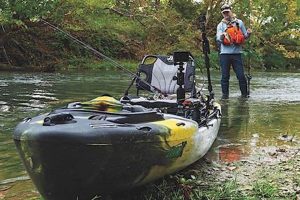
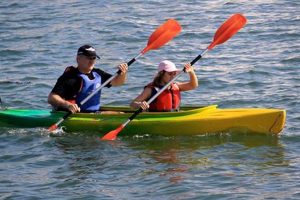
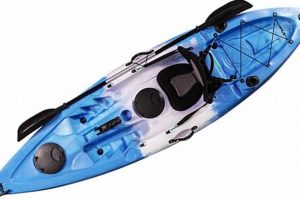
Small, human-powered boats propelled by double-bladed oars are essential for various water activities. These vessels typically seat one or two paddlers and are used for recreation, fishing, and even competitive sports. A properly sized and shaped oar is critical for efficient movement and maneuverability on the water.
The combination of boat and oar allows for exploration of otherwise inaccessible waterways, offering opportunities for exercise, nature observation, and a unique perspective on the environment. From their historical origins as hunting and fishing vessels, these small crafts have evolved into popular recreational tools, contributing to the enjoyment of lakes, rivers, and coastal areas worldwide. The proper use and maintenance of these tools are essential for both safety and an enjoyable paddling experience.
This article will delve deeper into selecting the right vessel and oar, essential safety considerations, and techniques for efficient and enjoyable paddling. Further topics will cover various paddling environments and the specific challenges and rewards they offer.
Essential Tips for Kayaking
Proper preparation and technique enhance safety and enjoyment on the water. These tips provide guidance for both novice and experienced paddlers.
Tip 1: Choose the Right Vessel: Selecting an appropriate boat depends on intended use, water conditions, and paddler experience. Longer boats track better in open water, while shorter boats offer greater maneuverability in rivers and streams.
Tip 2: Select the Correct Paddle: Paddle length is determined by paddler height, boat width, and paddling style. A properly fitted paddle maximizes efficiency and reduces strain.
Tip 3: Dress for the Water Temperature, Not the Air Temperature: Cold water immersion can be dangerous. Wearing appropriate clothing, including a personal flotation device (PFD), is crucial.
Tip 4: Check Weather Conditions: Wind, tides, and currents can significantly impact paddling conditions. Consult forecasts before heading out and be prepared for changing weather.
Tip 5: Learn Basic Paddle Strokes: Mastering fundamental strokes like the forward stroke, reverse stroke, and sweep stroke allows for efficient maneuvering and control.
Tip 6: Practice Self-Rescue Techniques: Knowing how to re-enter a capsized watercraft is essential for safety. Practice these techniques in a controlled environment.
Tip 7: Respect Wildlife and the Environment: Maintain a safe distance from wildlife and avoid disturbing natural habitats. Pack out any trash and leave no trace.
Tip 8: Inform Someone of Your Paddling Plans: Share your itinerary, including launch point, intended route, and estimated return time, with a responsible person.
By following these guidelines, paddlers can enhance their safety, improve their skills, and contribute to responsible enjoyment of the waterways.
This information provides a foundation for safe and enjoyable paddling. Further exploration of specific techniques, safety procedures, and environmental considerations will enhance one’s overall experience.
1. Vessel Selection

Vessel selection is paramount for a successful kayaking experience. The choice of kayak directly impacts maneuverability, speed, stability, and overall comfort. Different hull designs cater to various water conditions and paddling styles. For example, a longer, narrower hull provides speed and efficiency in open water, while a shorter, wider hull offers greater stability and maneuverability in rivers and surf. Matching the vessel to the intended environment and the paddler’s skill level is crucial for both safety and enjoyment. Ignoring these factors can lead to instability, difficulty maneuvering, and a less rewarding experience.
Consider a recreational paddler exploring calm lakes. A sit-on-top kayak offers stability and ease of entry and exit. Conversely, a whitewater kayaker navigating rapids requires a shorter, more maneuverable boat designed for quick turns and stability in turbulent conditions. A touring kayaker undertaking longer expeditions benefits from a longer vessel designed for speed and efficiency over distance, often with storage compartments for gear. These examples highlight the direct relationship between vessel selection and the specific demands of different paddling environments.
Appropriate vessel selection, therefore, is inextricably linked to the overall kayaking experience. Understanding the nuances of hull design, length, and width allows paddlers to make informed decisions. This knowledge translates to improved performance, enhanced safety, and a greater appreciation for the sport. Further investigation into specific kayak types and their suitability for various paddling disciplines will provide a more comprehensive understanding of this critical aspect.
2. Paddle Choice

Paddle choice is integral to efficient and enjoyable kayaking. A properly selected paddle complements the kayak and the paddler’s physique, maximizing performance and minimizing strain. Understanding the relationship between paddle dimensions, materials, and paddling style is crucial for informed decision-making.
- Blade Shape and Size
Blade shape and size influence power and efficiency. Wider blades generate more power per stroke, suitable for open water or moving against currents. Narrower blades offer efficiency for longer distances and calmer conditions. A larger blade surface area requires more effort per stroke, potentially leading to fatigue. Smaller blades reduce strain but may require more strokes to cover the same distance.
- Paddle Length
Paddle length is determined by factors including paddler height, kayak width, and paddling style. A paddle that is too long can cause shoulder strain and inefficient strokes. A paddle that is too short limits reach and power. Correct length ensures proper body mechanics and efficient energy transfer.
- Shaft Material and Construction
Paddle shafts are typically constructed from aluminum, fiberglass, or carbon fiber. Aluminum offers durability and affordability, while fiberglass and carbon fiber provide lighter weight and greater efficiency, albeit at a higher cost. Shaft construction also impacts flex and overall performance.
- Paddle Feathering
Paddle feathering refers to the angle between the blades. Feathered blades reduce wind resistance on the blade not in the water. While adjustable feathering allows paddlers to customize the angle, fixed feathering offers simplicity. The optimal feather angle depends on wind conditions and personal preference.
Selecting the correct paddle enhances overall kayaking performance. By considering blade shape and size, paddle length, shaft material, and feathering, paddlers can optimize their experience on the water. A well-chosen paddle complements the kayak and the paddler’s physique, maximizing efficiency, comfort, and control. This understanding contributes to a more enjoyable and rewarding paddling experience.
3. Efficient Strokes

Efficient paddling strokes are fundamental to maximizing performance and minimizing exertion in kayaking. A proper stroke technique translates to greater speed, enhanced control, and reduced fatigue, allowing for longer and more enjoyable paddling experiences. Understanding the mechanics of various strokes and their application in different kayaking scenarios is crucial for any paddler seeking to improve their skills and overall enjoyment of the sport. The connection between efficient strokes and the kayak-paddle combination is direct and significant, impacting every aspect of the paddling experience.
- Forward Stroke
The forward stroke propels the kayak forward. It involves a combination of core rotation, arm extension, and blade immersion. A proper forward stroke engages larger muscle groups, maximizing power and minimizing strain on smaller muscles. Examples include high-angle and low-angle variations, each suited to different conditions and paddling styles. An effective forward stroke is essential for covering distance efficiently and maintaining a consistent pace. It directly impacts the kayak’s tracking and speed, highlighting the crucial interplay between paddle, vessel, and paddler technique.
- Reverse Stroke
The reverse stroke is used for stopping and moving the kayak backward. It mirrors the forward stroke, but with the blade moving in the opposite direction. Effective reverse strokes are crucial for maneuvering in tight spaces, controlling drift, and avoiding obstacles. Precision and control in this stroke are essential for safe and efficient paddling. The reverse stroke demonstrates the dynamic relationship between paddle manipulation and vessel control, showcasing the essential link between equipment and technique.
- Sweep Stroke
Sweep strokes turn the kayak by creating a sweeping arc with the paddle. Forward sweep strokes turn the kayak away from the paddling side, while reverse sweep strokes turn it towards the paddling side. These strokes are fundamental for maneuvering around obstacles, changing direction, and maintaining control in challenging conditions. Effective sweep strokes highlight the importance of blade angle and body rotation in manipulating the kayak’s direction, showcasing the integrated nature of vessel and paddle control.
- Draw Stroke
The draw stroke moves the kayak sideways. It involves pulling the paddle towards the kayak, drawing the vessel closer to the paddle blade. This stroke is useful for docking, maneuvering in tight spaces, and adjusting position relative to other objects or vessels. A controlled draw stroke allows for precise lateral movement, further demonstrating the nuanced interplay between paddle technique and vessel control in various kayaking scenarios.
Mastery of these fundamental strokes is essential for efficient and enjoyable kayaking. These strokes, combined with a well-chosen kayak and paddle, form the foundation for a successful paddling experience. By understanding the biomechanics of each stroke and practicing their application in diverse conditions, paddlers can significantly enhance their control, efficiency, and overall connection with the water. This knowledge empowers paddlers to navigate various waterways with confidence and finesse, maximizing the potential of their kayak-paddle combination.
4. Safety Gear
Safety gear is inextricably linked to responsible kayaking practices. The inherent risks associated with navigating waterways necessitate a proactive approach to safety, where appropriate equipment plays a vital role. Paddling inherently exposes individuals to potential hazards, including cold water immersion, changing weather conditions, and the possibility of capsizing. These risks underscore the critical importance of safety gear as an integral component of kayaking, not merely an optional accessory. Neglecting necessary safety precautions can have severe consequences, potentially leading to injury or even fatality. A conscious and informed approach to safety gear significantly mitigates these risks, allowing for a more secure and enjoyable paddling experience. For example, a life jacket (Personal Flotation Device or PFD) is paramount for survival in the event of capsizing, particularly in cold water conditions where hypothermia can rapidly set in. A readily accessible first aid kit and a signaling device like a whistle or flare are also essential for responding to unexpected events. A waterproof pouch for storing communication devices enables contact in case of emergencies. The presence and proper use of these safety items often represent the difference between a minor inconvenience and a potentially life-threatening situation.
Further amplifying the importance of safety gear is the variability of environmental conditions. Sudden shifts in weather, unexpected currents, and encounters with natural obstacles can present unforeseen challenges. Appropriate safety gear provides a crucial layer of protection against these unpredictable elements. For instance, wearing appropriate clothing for immersion, such as a drysuit or wetsuit, provides thermal protection in cold water, significantly increasing survival time. Carrying a bilge pump and paddle float assists in recovering from a capsize, while navigation tools like a compass or GPS enhance situational awareness and reduce the risk of disorientation. These examples illustrate the practical significance of integrating safety gear into every kayaking excursion. Preparation for a range of potential scenarios is not merely a recommendation but a fundamental aspect of responsible paddling.
In summary, the connection between safety gear and kayaking is fundamental and non-negotiable. The inherent risks associated with on-water activities necessitate a proactive and comprehensive approach to safety. Appropriate and readily available safety equipment is paramount for mitigating these risks and ensuring a safe and enjoyable experience. A thorough understanding of potential hazards and the appropriate safety measures for addressing them is essential for all kayakers, regardless of experience level. This knowledge empowers paddlers to make informed decisions, promoting responsible practices and enhancing safety on the water. Ultimately, prioritizing safety gear demonstrates a respect for the environment, fellow paddlers, and one’s own well-being.

Navigation skills are essential for safe and efficient travel in kayaks. These skills enable paddlers to plan routes, maintain bearings, and respond effectively to changing conditions. Without proficient navigation, kayakers risk disorientation, delays, and potential hazards. The connection between navigation skills and kayaking safety is direct and significant, impacting every aspect of the paddling experience, from pre-trip planning to on-water decision-making. Competent navigation enhances not only safety but also the overall enjoyment and efficiency of kayaking excursions.
- Chart Reading and Interpretation
Understanding nautical charts, including symbols, scales, and depths, is fundamental for planning kayak routes. Charts provide crucial information about potential hazards, navigable channels, and landmarks. Interpreting chart data allows paddlers to anticipate challenges, select appropriate routes, and make informed decisions on the water. For example, recognizing a symbol indicating shallow water or a swift current allows a kayaker to adjust their course and avoid potential grounding or capsizing. Accurate chart reading contributes significantly to safe and efficient passage planning.
- Compass and GPS Use
Compasses and GPS devices provide essential directional information, particularly in open water or areas with limited visibility. A compass helps maintain a bearing, while a GPS provides precise location data and can be used to track progress and navigate to specific waypoints. In foggy conditions or featureless waters, these tools become invaluable for maintaining orientation and avoiding disorientation. Integrating compass and GPS data with chart information provides a comprehensive navigational approach. For instance, a kayaker navigating a complex coastline can use a GPS to confirm their position on a chart and a compass to maintain their intended course, even in changing conditions.
- Tidal and Current Awareness
Understanding tidal patterns and currents is crucial for kayaking, especially in coastal areas or rivers. Tides influence water levels and currents, impacting navigation and safety. Paddling against a strong current can be significantly more challenging and require careful planning. For example, a kayaker planning a trip in a tidal estuary needs to consult tide tables to determine the direction and strength of the current and adjust their route and timing accordingly. Failure to account for tidal influences can lead to delays, increased exertion, and potentially hazardous situations.
- Trip Planning and Route Selection
Effective trip planning is essential for safe kayaking. This includes considering factors such as weather forecasts, water conditions, distance, and potential hazards. Choosing appropriate routes based on these factors minimizes risks and enhances the overall experience. For instance, a kayaker planning a multi-day trip needs to consider prevailing wind patterns, potential campsites, and emergency exit points. Careful planning allows for informed decision-making and a proactive approach to managing potential challenges. A well-planned trip enhances safety and allows for a more enjoyable and fulfilling paddling experience.
These navigational skills are integral to safe and efficient kayaking. They empower paddlers to navigate various waterways confidently and responsibly. Proficient navigation enhances not only safety but also the overall enjoyment and efficiency of kayaking excursions. By integrating these skills with a solid understanding of kayaking principles, paddlers can maximize their potential and minimize risks on the water. This knowledge transforms kayaking from a simple recreational activity into a more engaging and rewarding pursuit, fostering a deeper appreciation for the environment and the challenges of navigating it.
6. Environmental Awareness

Environmental awareness is integral to responsible kayaking. The act of paddling immerses individuals directly within natural ecosystems, highlighting the delicate balance of these environments and the potential impact of human activity. Kayaking offers a unique perspective on the interconnectedness of waterways, wildlife, and human actions. This perspective fosters a deeper appreciation for the environment and underscores the importance of minimizing negative impacts. Ignoring environmental considerations can lead to habitat disruption, pollution, and a diminished experience for all who enjoy these natural spaces. A cause-and-effect relationship exists between paddling practices and environmental well-being, requiring paddlers to adopt a mindful approach. For example, improper disposal of trash can pollute waterways and harm aquatic life, directly impacting the health and beauty of the kayaking environment. Disturbing nesting birds or approaching wildlife too closely disrupts natural behaviors and can have long-term consequences for local populations. Respecting these natural processes is essential for preserving the integrity of the ecosystem. These direct interactions highlight the importance of environmental awareness as an intrinsic component of responsible kayaking, not merely an afterthought. Practical application of this awareness involves adopting Leave No Trace principles, minimizing disturbance to wildlife, and respecting sensitive habitats. Choosing biodegradable sunscreen and avoiding single-use plastics further reduces environmental impact.
Further emphasizing the significance of environmental awareness is the interconnectedness of ecosystems. Actions within a seemingly localized area can have far-reaching consequences. For example, runoff containing pollutants from upstream areas can impact water quality downstream, affecting both wildlife and recreational opportunities. Noise pollution from motorized watercraft disrupts the tranquility of natural environments and can stress wildlife. Understanding these broader connections encourages a more holistic approach to environmental stewardship, recognizing that individual actions contribute to a larger cumulative impact. The practical significance of this understanding lies in fostering a sense of responsibility. Kayakers can actively contribute to conservation efforts by participating in waterway cleanups, advocating for responsible land use practices, and educating others about the importance of environmental protection. These actions, combined with mindful paddling practices, demonstrate a commitment to preserving the natural beauty and ecological integrity of waterways for present and future generations. By actively engaging in conservation efforts, kayakers become stewards of the environment, demonstrating the potential for recreation and conservation to coexist harmoniously.
In summary, environmental awareness is not merely a peripheral concern for kayakers; it is an essential component of responsible paddling. The direct interaction with natural environments necessitates a mindful approach, recognizing the potential impact of human actions on these delicate ecosystems. Understanding the cause-and-effect relationship between paddling practices and environmental well-being fosters a deeper appreciation for the interconnectedness of waterways, wildlife, and human activity. The practical significance of this understanding lies in adopting responsible paddling practices, minimizing negative impacts, and actively contributing to conservation efforts. Ultimately, environmental awareness transforms kayaking from a recreational pursuit into an opportunity for stewardship, fostering a deeper connection with nature and a commitment to preserving its beauty and integrity.
Frequently Asked Questions
This section addresses common inquiries regarding small human-powered boats and their accompanying oars, aiming to provide clear and concise information for both novice and experienced paddlers.
Question 1: How does one select an appropriately sized paddle?
Paddle length depends on factors such as paddler torso height, boat width, and paddling style. Consult a paddle sizing chart or seek expert advice for optimal selection.
Question 2: What are the primary differences between various hull designs?
Hull designs influence stability, maneuverability, and tracking. Flat hulls offer stability, rounded hulls enhance maneuverability, and V-shaped hulls improve tracking in open water. Each design caters to specific paddling environments and styles.
Question 3: What safety precautions should one take before embarking on a kayaking trip?
Essential precautions include checking weather forecasts, informing someone of trip plans, wearing a personal flotation device (PFD), and carrying essential safety gear like a whistle and first-aid kit.
Question 4: How does one maintain and care for a kayak and paddle?
Regular rinsing with fresh water after each use, proper storage away from direct sunlight, and periodic inspections for damage contribute to the longevity of both kayak and paddle.
Question 5: What are the basic paddling strokes every kayaker should learn?
Fundamental strokes include the forward stroke for propulsion, the reverse stroke for stopping and moving backward, sweep strokes for turning, and draw strokes for lateral movement.
Question 6: What environmental considerations are relevant to kayaking?
Respecting wildlife, avoiding sensitive habitats, packing out all trash, and minimizing disturbance to natural environments are crucial for responsible kayaking practices. Adhering to Leave No Trace principles ensures the preservation of these natural spaces for future generations.
Understanding these fundamental aspects of kayaking contributes significantly to both safety and enjoyment on the water. Thorough preparation and responsible practices enhance the overall experience.
The subsequent sections will delve deeper into specific kayaking techniques, advanced safety procedures, and further environmental considerations.
Conclusion
Small, maneuverable vessels paired with double-bladed oars offer a unique means of navigating waterways. Selection of appropriate vessel and oar dimensions, coupled with practiced paddling techniques, contributes significantly to efficient and enjoyable experiences. Prioritizing safety through proper gear and responsible practices remains paramount. Respect for the environment and adherence to Leave No Trace principles ensures the preservation of these natural spaces.
Exploration of diverse aquatic environments via human-powered watercraft offers opportunities for both recreation and personal growth. Continued learning and responsible practices ensure the sustainability and enjoyment of this activity for future generations. Embracing the challenge of mastering efficient paddling techniques and navigation skills unlocks the full potential of these versatile vessels, fostering a deeper connection with the natural world.