A superlative adjective modifying a noun describes a watercraft designed for paddling, emphasizing its exceptional size compared to others in its class. An example could be a multi-person vessel capable of accommodating a large group or carrying significant cargo.
The concept of maximizing dimensions in kayak design offers advantages related to capacity, stability, and potentially speed. Historically, larger canoes and boats served communal purposes, and the evolution of oversized kayaks may reflect a similar drive toward collaborative paddling or specialized transport needs. This focus on scale can be significant for expeditions, group recreation, or unique applications like scientific research or specialized equipment transport.
Exploring the specific design considerations, performance characteristics, and practical uses of substantial kayaks provides valuable insights into their niche within the broader context of watercraft. This discussion will delve into areas such as construction materials, hull designs, paddling techniques, and the suitability of various models for different environments and activities.
Tips for Selecting and Utilizing Substantial Kayaks
Choosing and effectively utilizing a large-capacity kayak requires careful consideration of several factors. The following tips offer guidance for making informed decisions.
Tip 1: Assess Capacity Needs: Carefully determine the number of paddlers and the volume of gear the vessel must accommodate. Overloading can compromise stability and performance.
Tip 2: Consider Water Conditions: Larger kayaks may be more suitable for calm waters, while smaller, more maneuverable craft might be preferable for challenging conditions.
Tip 3: Evaluate Construction Materials: Durability and weight are crucial. Heavier materials offer robustness but can impact portability and maneuverability. Lighter materials may require more careful handling.
Tip 4: Prioritize Stability Features: Features like a wide beam and a flat hull contribute to stability, especially important for larger, multi-person kayaks.
Tip 5: Practice Paddling Techniques: Coordinating paddling efforts in a larger kayak requires practice and communication among all paddlers.
Tip 6: Understand Transportation and Storage: The size and weight of substantial kayaks present logistical challenges. Ensure adequate transportation and storage solutions are available.
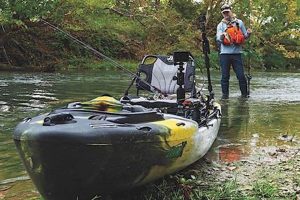
Tip 7: Research Specialized Features: Consider specific features like rudders, skegs, or specialized storage compartments depending on intended use (e.g., fishing, expeditions).
Selecting the correct kayak size and type, combined with appropriate paddling techniques and logistical planning, ensures safe and enjoyable experiences on the water.
By addressing these considerations, individuals and groups can confidently choose the most appropriate vessel for their specific needs and activities.
1. Capacity (passengers, cargo)

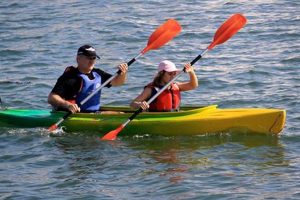
Capacity stands as a defining characteristic when discussing substantial kayaks. The ability to accommodate multiple passengers and significant cargo directly correlates with increased size. This relationship influences design considerations, material selection, and ultimately, the kayak’s intended purpose. Cause and effect are evident: a need for greater capacity necessitates a larger vessel. A tandem kayak, for instance, requires a longer and potentially wider hull than a solo kayak to maintain stability and efficient paddling with two occupants. Similarly, kayaks designed for expeditions must offer ample storage for gear, impacting overall dimensions.
Consider a guided fishing tour. A larger kayak capable of carrying multiple clients, plus their fishing gear and the guide’s equipment, becomes essential for the business operation. In scientific research, transporting sensitive instruments and collected samples safely across various water conditions may necessitate a robust, high-capacity kayak. These real-world examples illustrate the practical significance of understanding capacity’s role in defining the “largest kayak” concept. Furthermore, weight distribution becomes critical with increased capacity. Proper loading and balance are essential for maintaining stability and preventing capsizing, especially in challenging conditions.
In summary, capacity acts as a primary driver in the design and utilization of larger kayaks. The ability to transport more people or cargo necessitates increased dimensions, influencing material choices, hull design, and operational considerations like weight distribution and stability. Balancing capacity with other performance factors presents a key challenge in kayak design, shaping the evolution of these specialized watercraft for diverse applications, from recreational touring to demanding professional endeavors.
2. Dimensions (length, width, height)

Dimensionslength, width, and heightare fundamental to understanding the concept of a “largest kayak.” These measurements directly influence performance characteristics, including stability, speed, and carrying capacity. Cause and effect relationships exist between dimensions and functionality. Increased length generally improves tracking and speed, while greater width enhances initial stability. Height, particularly relating to freeboard (the distance between the waterline and the gunwale), affects load capacity and seaworthiness. The interplay of these dimensions defines a kayak’s suitability for specific activities and conditions.
Consider a long, narrow kayak designed for sea kayaking. Its length promotes efficient cruising over long distances, while its narrow beam minimizes drag. Conversely, a wider, shorter kayak intended for recreational use on calm lakes prioritizes stability over speed. A high-volume kayak with increased height might be preferred for expeditions requiring substantial gear storage. Analyzing real-world examples like these demonstrates the practical implications of dimensional choices. For instance, a kayak designed for whitewater paddling necessitates a shorter length for maneuverability in rapids, while a touring kayak benefits from increased length for covering greater distances efficiently. The dimensions must be carefully balanced to achieve the desired performance characteristics for the intended use.
In summary, understanding the relationship between dimensions and kayak performance is crucial. Length, width, and height interact to influence stability, speed, maneuverability, and capacity. Designers carefully consider these factors to create kayaks optimized for specific activities and environments. The “largest kayak” isn’t simply defined by maximum dimensions, but rather by a balanced combination of measurements that effectively meet specific functional requirements, whether it be maximizing stability for fishing or prioritizing speed for racing. The challenge lies in optimizing these dimensions to achieve the desired balance of performance characteristics within the constraints of material properties and design principles. This optimization process drives innovation in kayak design, leading to specialized vessels tailored for diverse paddling experiences.
3. Stability

Stability represents a critical performance attribute, particularly relevant when discussing the “largest kayak” concept. A vessel’s ability to resist capsizing and maintain equilibrium directly influences user safety and confidence, especially in challenging conditions or when carrying substantial loads. Cause and effect relationships are readily apparent: increased width and a lower center of gravity generally enhance stability, while increased height or uneven weight distribution can compromise it. The importance of stability as a component of “largest kayak” design cannot be overstated, as larger vessels inherently present greater challenges in maintaining balance due to increased surface area exposed to wind and waves. Consider a multi-person kayak used for family outings; stability becomes paramount for ensuring the safety and comfort of all passengers, particularly children or inexperienced paddlers. Similarly, a large kayak used for fishing necessitates a stable platform for casting and reeling in fish, often while carrying specialized equipment.
Real-world examples further highlight the practical significance of stability considerations. A wide, flat-bottomed kayak designed for recreational use on calm lakes prioritizes stability for novice paddlers. In contrast, a sea kayak, while longer and narrower for efficient paddling over long distances, incorporates design features like a rounded hull and a low center of gravity to maintain stability in rougher ocean conditions. Examining these diverse applications illustrates how stability requirements vary depending on the intended use and environment. Factors like passenger weight, gear distribution, and prevailing water conditions further influence stability considerations. For example, proper loading and weight distribution become even more critical in larger kayaks to maintain balance and prevent tipping. Outrigger systems or other stabilizing features can further enhance stability, particularly in challenging conditions or for specialized applications like fishing or photography.
In summary, stability plays a pivotal role in the design and functionality of the “largest kayak.” Balancing stability with other performance characteristics, such as speed and maneuverability, presents a fundamental challenge for kayak designers. Understanding the factors that influence stabilityincluding width, center of gravity, and weight distributionis essential for choosing the appropriate kayak for specific activities and conditions. Prioritizing stability in larger kayaks contributes significantly to user safety and confidence, enabling a wider range of individuals to enjoy paddling experiences, from recreational outings to demanding expeditions. This emphasis on stability directly impacts the design and evolution of larger kayaks, shaping their form and function to meet the specific needs of diverse paddling disciplines and user groups.
4. Maneuverability

Maneuverability, the ability to easily change direction and navigate through various water conditions, presents inherent challenges when dealing with larger kayak designs. The relationship between size and maneuverability is often inversely proportional: larger kayaks typically require more effort to turn and control, especially in tight spaces or complex environments. This dynamic necessitates careful consideration of design features and paddling techniques to mitigate the inherent limitations of increased size and weight. Understanding the impact of size on maneuverability is crucial for selecting the appropriate kayak for specific paddling activities and environments, as well as for developing effective paddling strategies.
- Turning Radius and Sweep Strokes
Larger kayaks exhibit a wider turning radius, requiring more space and effort to change direction compared to smaller, more agile designs. Sweep strokes, a fundamental paddling technique for turning, become more critical and demanding in larger kayaks. Consider navigating a winding river or maneuvering close to shore; the increased turning radius necessitates more deliberate paddling and a greater awareness of surrounding obstacles. Kayakers must adapt their paddling technique and anticipate turns earlier to maintain control and avoid collisions. This difference in turning radius becomes particularly evident when comparing a short, recreational kayak designed for easy maneuverability on calm lakes to a long sea kayak optimized for straight-line tracking over open water. The trade-off between stability and maneuverability often influences design choices in larger kayaks.
- Water Resistance and Hull Design
Larger kayaks present a greater surface area in contact with the water, increasing resistance and requiring more effort to maintain speed and execute maneuvers. Hull design plays a crucial role in mitigating this increased resistance. A longer, more streamlined hull can improve tracking and reduce drag, while a wider, flatter hull enhances stability at the expense of maneuverability. For example, a sea kayak designed for long-distance paddling typically features a long, narrow hull to minimize water resistance and maximize efficiency. Conversely, a recreational kayak designed for stability prioritizes a wider, flatter hull, accepting increased water resistance as a trade-off for enhanced stability. Understanding the relationship between hull design, water resistance, and maneuverability is crucial for selecting the appropriate kayak for specific paddling activities and environmental conditions.
- Wind and Current Effects
Larger kayaks are more susceptible to wind and current effects due to their increased surface area. This susceptibility can impact tracking and necessitate more corrective strokes to maintain the desired course. Consider paddling a large kayak on a windy lake or in a strong current; the increased surface area exposed to these forces requires more effort to counteract their influence and maintain directional control. Experienced kayakers develop techniques like edging and bracing to manage wind and current effects, but these techniques become more demanding in larger kayaks. This sensitivity to environmental factors underscores the importance of careful planning and route selection when paddling larger kayaks, particularly in exposed or dynamic water conditions. Choosing sheltered waterways or paddling during calmer periods can significantly enhance maneuverability and safety.
- Paddle Length and Leverage
Paddle length and leverage play a significant role in maneuverability, especially with larger kayaks. A longer paddle provides greater leverage, facilitating more powerful strokes for turning and maneuvering, but can also be more cumbersome to handle. Choosing the appropriate paddle length depends on factors like kayak width, paddler height, and paddling style. In larger kayaks, the increased width often necessitates a longer paddle to maintain efficient stroke mechanics. Consider the difference between paddling a narrow, recreational kayak with a shorter paddle and maneuvering a wider, multi-person kayak with a longer paddle; the longer paddle offers greater leverage for turning and controlling the larger vessel, but requires more strength and coordination. Optimizing paddle length becomes crucial for maximizing maneuverability and minimizing fatigue in larger kayaks, enabling paddlers to maintain control and efficiency throughout their paddling experience.
These factors, when considered collectively, illustrate the intricate relationship between size and maneuverability in kayaks. While larger kayaks offer advantages in terms of capacity and stability, they inevitably present challenges regarding maneuverability. Addressing these challenges through thoughtful design choices, appropriate paddling techniques, and careful consideration of environmental conditions is crucial for ensuring safe and enjoyable paddling experiences in larger kayaks. This understanding empowers paddlers to make informed decisions about kayak selection and to develop the skills necessary to effectively navigate various water environments. The trade-offs between size, stability, and maneuverability continue to drive innovation in kayak design, leading to specialized hull shapes, paddling accessories, and specialized techniques that enhance the performance and versatility of these versatile watercraft.
5. Specialized Uses
Specialized uses often necessitate the increased size found in the largest kayaks. The unique demands of certain activities, ranging from scientific research and guided tours to specialized expeditions and rescue operations, drive the need for kayaks with exceptional capacity, stability, and specialized features. Examining these specialized applications provides valuable insight into the design considerations and performance characteristics that define the largest kayak category.
- Scientific Research
Scientific research often requires transporting sensitive equipment, collecting large samples, and accessing remote locations. Large kayaks provide a stable platform for conducting observations and measurements, while their increased capacity allows for the transport of essential scientific instruments and collected samples. For example, researchers studying marine ecosystems might utilize a large, stable kayak to deploy and retrieve data-collecting buoys or to transport underwater cameras and sampling equipment. The stability and load-carrying capacity of these kayaks are essential for ensuring the safety of researchers and the integrity of their valuable equipment. The need for specialized features, such as mounting points for instruments or dedicated storage compartments for samples, further distinguishes these kayaks from recreational models.
- Guided Tours and Ecotourism
Guided tours and ecotourism operations often utilize large kayaks to accommodate multiple passengers and guides, providing stable and comfortable platforms for observing wildlife and exploring natural environments. These kayaks prioritize stability and passenger comfort, featuring ample seating and storage space for personal belongings and tour-related equipment. For instance, a guided kayaking tour through a mangrove forest might utilize a large, stable kayak capable of carrying multiple passengers and a guide, providing a safe and enjoyable experience for all participants. The capacity and stability of these kayaks enhance the accessibility of ecotourism experiences, allowing individuals of varying skill levels to participate in guided explorations of sensitive natural environments.
- Expeditions and Long-Distance Paddling
Expeditions and long-distance paddling trips demand kayaks capable of carrying significant amounts of gear, including camping equipment, food supplies, and safety equipment. Large kayaks designed for expeditions prioritize storage capacity and durability, often featuring watertight compartments and reinforced hulls to withstand the rigors of extended journeys. For example, a kayaking expedition along a remote coastline might necessitate a large kayak capable of carrying weeks’ worth of supplies, including tents, sleeping bags, cooking equipment, and safety gear. The increased capacity and robust construction of these kayaks are essential for ensuring the safety and self-sufficiency of expedition paddlers in challenging environments.
- Rescue Operations and Safety Support
Rescue operations and safety support teams often utilize large kayaks for their stability, maneuverability in challenging conditions, and capacity to transport personnel and rescue equipment. These specialized kayaks might feature reinforced hulls, specialized compartments for medical supplies, and towing capabilities. For instance, a swiftwater rescue team might deploy a large, stable kayak to access flooded areas or rescue individuals stranded in swift currents. The kayak’s stability and maneuverability are critical for navigating challenging water conditions, while its capacity to carry rescue personnel and equipment enhances the effectiveness of emergency response efforts.
These specialized applications demonstrate how the largest kayaks fulfill unique roles beyond recreational paddling. The demands of scientific research, ecotourism, expeditions, and rescue operations drive the development of kayaks with exceptional capacity, stability, and specialized features. Analyzing these specialized uses reveals the intricate relationship between design, functionality, and the specific needs of diverse paddling disciplines, highlighting the versatility and adaptability of the largest kayak designs within the broader context of watercraft innovation.
Frequently Asked Questions
This section addresses common inquiries regarding kayaks notable for their substantial size. Understanding these aspects is crucial for informed decision-making regarding selection and utilization.
Question 1: What are the primary advantages of choosing a larger kayak?
Increased capacity for passengers and gear, enhanced stability, and potentially improved tracking in calm conditions are key benefits. However, maneuverability and transport logistics require consideration.
Question 2: How does size affect kayak performance?
Length influences speed and tracking, width impacts stability, and height affects volume and seaworthiness. Balancing these dimensions optimizes performance for intended use.
Question 3: Are larger kayaks more difficult to maneuver?
Generally, larger kayaks require more effort to turn and control due to increased water resistance and inertia. Proper paddling techniques and consideration of environmental conditions are essential.
Question 4: What materials are typically used in the construction of large kayaks?
High-density polyethylene (HDPE), fiberglass, and composites are common choices. Material selection impacts weight, durability, and cost.
Question 5: Are larger kayaks suitable for all water conditions?
While offering stability in calm waters, larger kayaks may be challenging to manage in strong winds, currents, or rough seas. Consider environmental factors when selecting a kayak.
Question 6: What logistical considerations are associated with larger kayaks?
Transportation and storage present practical challenges. Ensure adequate space and appropriate transport mechanisms are available before acquiring a large kayak.
Careful consideration of these factors ensures informed decisions regarding the suitability of a large kayak for specific needs and paddling environments. Prioritizing safety and functionality remains paramount.
The subsequent section delves into specific models and manufacturers renowned for producing substantial kayaks, offering further insights for prospective purchasers.
Largest Kayak
Exploration of the “largest kayak” concept reveals a complex interplay between dimensions, capacity, stability, maneuverability, and specialized functionalities. Maximizing size necessitates careful consideration of design trade-offs and performance characteristics. Material selection, hull design, and intended use significantly influence the overall suitability of a substantial kayak for specific activities and environments. Understanding these factors empowers informed decision-making regarding selection, utilization, and logistical considerations such as transportation and storage.
The evolution of kayak design continues to push boundaries in terms of size and functionality. As technological advancements in materials and construction techniques progress, opportunities for further innovation in large-capacity kayaks emerge. Careful consideration of user needs, environmental impact, and safety considerations will shape the future of these specialized watercraft, enabling continued exploration and enjoyment of diverse aquatic environments.