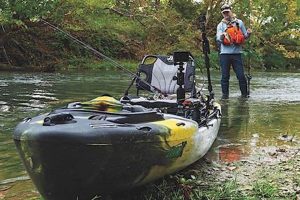
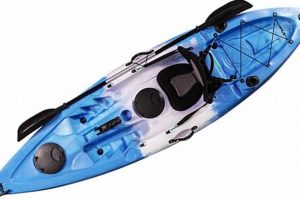
Acquiring a kayak through e-commerce platforms offers a convenient alternative to traditional brick-and-mortar stores. This method allows consumers to browse a wide selection of kayak models, compare prices, and have the product delivered directly to their location or a convenient pick-up point. An example would be researching various kayak types on a retailer’s website, selecting the desired model and specifications, and completing the purchase through an online checkout system.
The growth of digital marketplaces has significantly streamlined the process of purchasing recreational equipment. This method offers significant advantages such as broader product availability, often at competitive prices, and eliminates the need for physical travel to a retail location. Historically, acquiring a kayak required visiting specialized stores with potentially limited inventory. The advent of e-commerce has democratized access to a wider variety of kayaks, regardless of geographical location. This has facilitated greater participation in watersports by reducing barriers to entry.
The following sections will delve into key aspects of purchasing a kayak online, covering topics such as choosing the right kayak type, navigating online retailers, understanding shipping and delivery options, and ensuring a secure online transaction.
Tips for Purchasing Kayaks Online
Acquiring a kayak online requires careful consideration of various factors to ensure a satisfactory purchase. The following tips offer guidance for navigating the online kayak market effectively.
Tip 1: Determine the intended use. Different kayak types cater to specific activities, such as recreational paddling, fishing, or whitewater kayaking. Researching kayak categories and their suitability for intended activities is crucial for selecting the appropriate vessel.
Tip 2: Consider hull design. Kayak hulls impact stability, maneuverability, and tracking. Flat-bottom hulls offer stability, while V-shaped hulls provide better tracking and speed. Understanding hull characteristics is essential for performance optimization.
Tip 3: Evaluate kayak materials. Kayaks are constructed from various materials, including polyethylene, fiberglass, and composite materials. Each material offers different durability, weight, and performance characteristics. Selecting the right material depends on usage and budget considerations.
Tip 4: Assess size and weight capacity. Choosing the correct kayak size and weight capacity is essential for safety and comfort. Consider individual body weight and any additional gear to be transported.
Tip 5: Research reputable online retailers. Selecting reputable retailers with established customer service policies and secure payment gateways ensures a positive buying experience. Reviewing seller ratings and customer feedback provides valuable insights.
Tip 6: Compare prices and shipping costs. Different retailers offer varying prices and shipping options. Comparing these factors across multiple platforms helps identify the most cost-effective option.
Tip 7: Review return policies. Understanding the retailer’s return policy is crucial in case the kayak does not meet expectations or arrives damaged. Thoroughly reviewing return procedures and associated costs mitigates potential issues.
Careful consideration of these factors enhances the likelihood of a successful online kayak purchase. This informed approach ensures a satisfying kayaking experience tailored to individual needs.
By adhering to these guidelines, consumers can confidently navigate the online marketplace and acquire a kayak that aligns with their requirements and preferences. The next section will offer concluding remarks and summarize key takeaways for prospective kayak buyers.
1. Research Kayak Types

Thorough research of kayak types forms a critical foundation for successful online kayak acquisition. Understanding the nuances of various kayak designssit-on-top, sit-inside, inflatable, touring, recreational, fishing, and whitewaterdirectly influences purchaser satisfaction. A novice kayaker intending calm lake paddling, for instance, might find an inflatable recreational kayak suitable, while an experienced kayaker seeking open-ocean expeditions requires a specialized touring kayak with ample storage. Disregarding this crucial research phase can lead to mismatched purchases, hindering enjoyment and potentially compromising safety. The online marketplace offers an extensive array of options, making preliminary research even more crucial for navigating the diverse product landscape.
Consider a scenario where an individual purchases a whitewater kayak without prior research, intending to use it for recreational paddling on a calm lake. The kayak’s design, optimized for maneuverability in turbulent waters, would prove unstable and challenging to control in a placid environment. Conversely, purchasing a recreational kayak for ocean touring would expose the paddler to unnecessary risks due to its limited stability and storage capacity. These examples highlight the practical implications of pre-purchase research in ensuring the chosen kayak aligns with the intended activity and skill level. Online platforms often provide detailed product descriptions and specifications, facilitating informed decision-making.
In summary, dedicating time to research kayak types before engaging in an online purchase constitutes a fundamental step towards a successful acquisition. This research-driven approach mitigates the risks of mismatched purchases, enhances user experience, and ultimately fosters a deeper appreciation for the sport. Failure to conduct thorough research can result in dissatisfaction, safety concerns, and potentially financial losses due to returns or the need for a subsequent purchase. Understanding the connection between kayak type and intended use empowers informed choices, maximizes enjoyment, and contributes to safe kayaking practices.
2. Compare Retailer Prices

Price comparison across multiple online retailers constitutes a crucial component of informed kayak acquisition. The inherent variability of online pricing necessitates diligent cross-referencing to secure optimal value. Factors influencing price discrepancies include retailer overhead, marketing strategies, inventory levels, and ongoing promotions. A seemingly identical kayak model can exhibit significant price variations across different platforms. Neglecting comparative analysis potentially results in overspending, especially given the considerable investment a kayak purchase often represents. For instance, a specific kayak model retailing for $1,000 on one platform might be available for $850 on another, highlighting the potential savings achievable through diligent comparison.
This principle extends beyond the base price of the kayak. Shipping costs, often overlooked, contribute significantly to the overall expense. One retailer might offer free shipping, while another charges a substantial fee based on location and delivery speed. Similarly, warranties, return policies, and included accessories influence overall value. A lower base price coupled with exorbitant shipping costs or limited warranty coverage might ultimately prove less economical than a slightly higher initial price with comprehensive included services. Thorough evaluation of these factors empowers consumers to make informed decisions aligned with their budgetary constraints and desired service level. For example, a retailer offering free shipping and a lifetime warranty might represent a more attractive option despite a marginally higher base price.
In conclusion, systematic price comparison stands as a cornerstone of prudent online kayak purchasing. This practice maximizes value, minimizes unnecessary expenditure, and ensures a balanced assessment of overall cost. Failing to compare prices exposes consumers to potential financial disadvantages, particularly in a market characterized by dynamic pricing fluctuations. Integrating price comparison into the online kayak acquisition process equips consumers with the necessary tools to secure the best possible value for their investment. The potential for significant savings and the mitigation of financial risks underscore the practical importance of this analytical step.
3. Check Shipping Options

Verifying shipping options represents a critical stage in online kayak acquisition. Kayaks, due to their size and weight, present unique logistical challenges. Shipping costs can vary significantly based on factors such as delivery distance, carrier, service level (e.g., standard vs. expedited), and retailer policies. Overlooking this aspect can lead to unexpected expenses, potentially offsetting any initial savings perceived from the online purchase. Consider a scenario where a kayak purchased online offers a seemingly attractive price, but subsequent shipping costs, due to the buyer’s remote location, inflate the total expense beyond the price offered by a local retailer. This oversight negates the intended financial benefit of the online purchase.
Furthermore, delivery timeframes impact the overall purchase experience. Standard shipping might entail a waiting period of several weeks, while expedited options offer quicker delivery at a premium cost. Understanding these timeframes allows purchasers to align delivery with their paddling plans. Imagine purchasing a kayak online for an upcoming weekend trip, only to discover the standard shipping timeframe extends beyond the departure date. This scenario underscores the practical importance of checking shipping options before finalizing the purchase. Additionally, some retailers offer delivery to designated pick-up points, offering a compromise between cost and convenience. Evaluating these alternatives contributes to a more informed and satisfactory purchasing experience.
In summary, careful consideration of shipping options forms an integral part of successful online kayak acquisition. Neglecting this aspect can lead to unexpected costs, delayed deliveries, and overall dissatisfaction. Thorough review of shipping costs, delivery timeframes, and available delivery methods empowers informed decision-making, aligning logistical considerations with individual needs and budgetary constraints. This proactive approach mitigates potential frustrations and contributes to a positive online kayak purchasing experience.
4. Verify Return Policies
Verification of return policies constitutes a critical aspect of online kayak purchases. Kayaks represent a significant investment, and the inherent limitations of online assessment necessitate robust return safeguards. Unlike in-store purchases, where physical inspection and testing are feasible, online buyers rely heavily on product descriptions and images. Discrepancies between advertised specifications and the received product, unforeseen damage during transit, or even a simple change of mind necessitate a clear understanding of return procedures. Failure to verify return policies prior to purchase can expose consumers to significant financial risk. Consider a scenario where a received kayak exhibits manufacturing defects not apparent in online descriptions. Without a comprehensive return policy, the buyer absorbs the cost of a defective product, significantly impacting the perceived value of the online purchase.
Return policies vary considerably across online retailers. Factors influencing policy stringency include product type, retailer reputation, and prevailing market conditions. Some retailers offer full refunds, while others impose restocking fees or limit returns to exchanges or store credit. Shipping costs associated with returns also warrant careful scrutiny. Certain retailers provide prepaid return shipping labels, while others require buyers to bear these expenses. These variables can significantly impact the financial implications of a return. For instance, a retailer offering a full refund but requiring the buyer to cover return shipping for a large item like a kayak effectively reduces the refund value. Understanding these nuances beforehand allows consumers to factor potential return costs into their purchase decisions.
In conclusion, verifying return policies before finalizing an online kayak purchase is paramount. This due diligence protects consumers from financial risks associated with product discrepancies, shipping damage, or unforeseen circumstances necessitating a return. Thorough review of return procedures, associated costs, and applicable timeframes empowers informed decision-making and mitigates potential post-purchase complications. Failure to verify these policies can transform a seemingly advantageous online purchase into a financially burdensome experience. This proactive approach ensures consumer protection and reinforces the overall value proposition of online kayak acquisition.
5. Read Customer Reviews

Customer reviews constitute a critical information source within the online kayak purchasing ecosystem. They offer prospective buyers insights into real-world product performance, durability, and overall user experience, supplementing manufacturer specifications and marketing materials. This user-generated feedback provides a valuable counterpoint to potentially biased vendor-provided information. The impact of consulting customer reviews can be substantial. For example, a manufacturer might emphasize a kayak’s tracking ability, but customer reviews could reveal a tendency to weathercock in windy conditions, a critical detail impacting purchase decisions, particularly for open-water paddling.
Furthermore, reviews offer perspectives on less quantifiable aspects of the purchase experience, such as customer service responsiveness, warranty claim processing, and even the accuracy of online product descriptions. This information provides a more holistic view of the purchasing process beyond the product itself. Consider a scenario where a kayak retailer boasts competitive pricing but customer reviews consistently cite delayed shipping or unresponsive customer service. This qualitative data empowers potential buyers to assess the true cost of a seemingly attractive offer, factoring in potential frustrations stemming from logistical or communication issues.
In summary, integrating customer review analysis into the online kayak acquisition process significantly reduces purchase risks. These reviews provide invaluable perspectives on product performance, retailer reliability, and overall user experience, often revealing critical details omitted from official product descriptions. Neglecting this readily available information source can lead to misinformed purchase decisions and potential post-purchase dissatisfaction. The practical significance of consulting customer reviews lies in its capacity to bridge the information gap inherent in online transactions, empowering consumers to make informed choices aligned with real-world product performance and retailer service quality.
6. Secure payment methods

Secure payment methods are essential for protecting financial information during online transactions, particularly for higher-value purchases like kayaks. Utilizing secure payment gateways mitigates the risk of fraud and unauthorized access to sensitive data. This fosters consumer confidence and contributes to a positive online buying experience. Understanding available secure payment options and their respective security features empowers informed decision-making and safeguards financial interests.
- Encrypted Transactions
Encryption scrambles sensitive data transmitted during online transactions, rendering it unreadable to unauthorized parties. Secure Sockets Layer (SSL) and Transport Layer Security (TLS) represent common encryption protocols. When purchasing a kayak online, encrypted transactions protect credit card details, bank account information, and personal identifiers. Visually, a secure website URL typically begins with “https” and displays a padlock icon, signifying an encrypted connection. Failure to utilize encrypted payment gateways exposes consumers to potential financial compromise.
- Tokenization
Tokenization replaces sensitive data with unique, non-sensitive tokens. During an online kayak purchase, instead of transmitting actual credit card numbers, a token representing the card details is processed. This mitigates the risk of data breaches, as even if intercepted, the token itself holds no intrinsic value. Tokenization reduces the scope of sensitive data stored by retailers, further enhancing security. This method adds a layer of protection without impacting the transaction’s seamlessness.
- Two-Factor Authentication (2FA)
2FA adds an additional layer of security by requiring two distinct forms of identification. This typically involves a password and a unique code sent to a registered mobile device or email address. During an online kayak purchase, 2FA ensures that even if a password is compromised, unauthorized access to the account remains blocked. This safeguards against fraudulent purchases and unauthorized account access. This added security measure, while sometimes perceived as an additional step, significantly enhances account protection.
- Third-Party Payment Processors
Third-party payment processors, such as PayPal, Apple Pay, or Google Pay, offer an additional layer of security by acting as intermediaries between the buyer and the retailer. These platforms utilize their own robust security measures, reducing the risk of direct exposure of financial data to the retailer’s systems. When purchasing a kayak online, utilizing a third-party processor limits the amount of sensitive information shared directly with the retailer. This minimizes potential vulnerabilities associated with data breaches or compromised retailer systems.
Prioritizing secure payment methods during online kayak purchases is paramount for safeguarding financial information and ensuring a positive buying experience. Selecting retailers that implement robust security protocols, such as encryption, tokenization, and two-factor authentication, significantly reduces the risk of fraud and data breaches. This proactive approach contributes to a secure and confident online purchasing environment. By understanding and utilizing these security measures, consumers can navigate the online marketplace with greater confidence and mitigate potential financial risks associated with online transactions.
7. Confirm delivery details

Confirmation of delivery details represents a critical final step in online kayak acquisition. Accuracy in delivery address, contact information, and designated delivery window ensures timely and secure product arrival. Overlooking this seemingly minor detail can lead to significant logistical complications, delaying access to the purchased kayak and potentially incurring additional costs. Consider a scenario where an incorrect address or outdated contact information results in a missed delivery. The kayak might be returned to the retailer, necessitating reshipment with associated fees or, worse, becoming lost in transit. Accurate delivery details, therefore, directly impact the successful culmination of the online purchase process.
Furthermore, confirming delivery details extends beyond mere address verification. For larger items like kayaks, specialized delivery arrangements might be necessary. Some retailers offer delivery to designated pick-up points, requiring confirmation of chosen location and availability. Others might offer scheduled delivery windows, necessitating purchaser availability during the specified timeframe. Understanding these nuances and confirming the chosen delivery method minimizes potential logistical conflicts. For example, if a purchaser selects home delivery but is unavailable during the designated delivery window, the kayak might be returned to the depot, requiring rescheduling and potentially incurring additional fees. Clear communication with the retailer regarding delivery preferences ensures alignment between logistical requirements and purchaser availability, contributing to a seamless and efficient delivery process. This proactive approach mitigates potential delays and frustrations associated with missed deliveries or unsuitable delivery arrangements.
In conclusion, meticulous confirmation of delivery details constitutes a crucial final step in online kayak acquisition. Accurate address verification, contact information validation, and clear communication regarding delivery preferences minimize the risk of logistical complications, ensuring timely and secure product arrival. This attention to detail, while seemingly minor, directly impacts the successful culmination of the online purchase process. Failure to confirm these details can lead to delayed access to the purchased kayak, additional shipping costs, and overall dissatisfaction. Therefore, confirming delivery details represents not merely a procedural formality but a critical component of a successful online kayak purchase, safeguarding the investment and ensuring a positive customer experience. This proactive approach mitigates potential frustrations and contributes to the seamless transition from online purchase to on-water enjoyment.
Frequently Asked Questions
This section addresses common inquiries regarding online kayak acquisition, providing concise and informative responses to facilitate informed purchasing decisions.
Question 1: What are the advantages of purchasing a kayak online versus in a physical store?
Online platforms generally offer a wider selection of kayak models, often at more competitive prices. Additionally, online purchasing eliminates the need for physical travel to a retail location, offering greater convenience and broader access to inventory beyond local availability.
Question 2: How are kayaks shipped, and what are the typical shipping costs?
Kayaks are typically shipped via freight carriers due to their size and weight. Shipping costs vary based on distance, carrier, service level, and retailer policies. Some retailers offer free shipping promotions, while others charge fees based on delivery location and speed. It is essential to confirm shipping costs before finalizing a purchase.
Question 3: What should one look for in a reputable online kayak retailer?
Reputable online kayak retailers typically possess secure payment gateways, transparent return policies, established customer service channels, and positive customer reviews. Verifying these aspects contributes to a secure and satisfactory purchasing experience.
Question 4: How can one determine the appropriate kayak size and type for individual needs?
Kayak size and type selection depend on factors such as intended use (recreational paddling, fishing, touring, etc.), paddler weight and size, and storage capacity requirements. Researching various kayak types and consulting online resources or retailer expertise can guide appropriate selection.
Question 5: What are the typical return policies for kayaks purchased online?
Return policies vary among online retailers. Some offer full refunds within a specified timeframe, while others impose restocking fees or limit returns to exchanges. Understanding the retailer’s return policy before purchase is essential.
Question 6: How can one ensure the security of online transactions when purchasing a kayak?
Secure online transactions are characterized by encrypted connections (https), reputable payment gateways, and adherence to secure payment practices, such as tokenization and two-factor authentication. Selecting retailers with robust security measures protects financial information and mitigates fraud risks.
Careful consideration of these frequently asked questions empowers informed decision-making during the online kayak acquisition process, enhancing the likelihood of a positive purchasing experience.
The following section offers concluding remarks and summarizes key takeaways for prospective kayak buyers.
Conclusion
Acquiring a kayak through online platforms offers distinct advantages, including broader selection, potential cost savings, and enhanced convenience. However, successful online kayak acquisition necessitates careful consideration of several key factors. Thorough research of kayak types ensures alignment between vessel characteristics and intended usage. Diligent price comparison across multiple retailers identifies optimal value propositions. Careful scrutiny of shipping options, including costs, delivery timeframes, and available methods, mitigates logistical complications. Verification of return policies safeguards against unforeseen circumstances necessitating product return. Customer review analysis provides valuable insights into real-world product performance and retailer reliability. Prioritizing secure payment methods protects financial information during online transactions. Finally, accurate confirmation of delivery details ensures timely and secure product arrival.
The evolving landscape of e-commerce continues to transform purchasing paradigms across various product categories. Kayak acquisition exemplifies this shift, empowering consumers with unprecedented access to information and product diversity. By adhering to the outlined principles of informed online purchasing, consumers can confidently navigate the digital marketplace and acquire a kayak ideally suited to individual needs and aspirations. This research-driven, detail-oriented approach maximizes the likelihood of a positive purchasing experience and facilitates a seamless transition from online selection to on-water enjoyment.