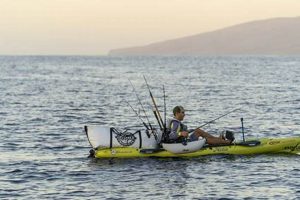
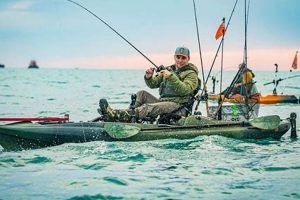
Stability is a paramount concern for anglers on the water, particularly when standing to cast or reel in a catch. Kayaks designed with exceptional beam (width) offer enhanced stability, reducing the likelihood of capsizing and providing a more secure platform for fishing activities. A fishing kayak with a generous beam provides ample space for gear storage, accessories, and comfortable movement within the vessel.
The demand for stable fishing platforms has driven the development of wider kayak designs. This focus on stability is particularly important for anglers targeting larger fish species or navigating challenging water conditions. A wider kayak offers a greater margin of error for balance, allowing anglers to focus on fishing rather than maintaining equilibrium. This design characteristic directly addresses the need for a secure and comfortable fishing experience, contributing to increased angling success and enjoyment. Furthermore, the increased deck space afforded by a wider hull provides added convenience for storing tackle, coolers, and other essential fishing equipment.
This article will explore the advantages and disadvantages of various kayak widths, considering factors such as stability, maneuverability, and speed. It will also delve into the different types of fishing kayaks available on the market and discuss key features to consider when selecting a suitable vessel for specific fishing needs and preferences.
Tips for Choosing a Stable Fishing Kayak
Selecting a kayak with appropriate stability is crucial for a safe and enjoyable fishing experience. The following tips offer guidance for choosing a vessel that balances stability with other important performance characteristics.
Tip 1: Consider the intended fishing environment. Calm lakes and ponds require less stability than open ocean or rivers with strong currents. Match the kayak’s stability to the anticipated water conditions.
Tip 2: Factor in angler weight and gear. The combined weight of the angler, fishing gear, and any additional equipment influences the kayak’s stability. Choose a kayak with sufficient capacity and buoyancy.
Tip 3: Evaluate hull design. Wider, flatter hulls generally offer greater initial stability, while narrower, more rounded hulls provide better secondary stability (resistance to tipping once tilted). Consider the trade-offs between these characteristics.
Tip 4: Test the kayak before purchasing. If possible, try out different kayak models on the water to assess their stability firsthand. This allows for a practical understanding of how each kayak performs under various conditions.
Tip 5: Think about intended fishing activities. Standing while casting or fighting fish requires a higher level of stability than sitting. Choose a kayak that accommodates intended fishing styles.
Tip 6: Consider outriggers or stabilizers. These accessories can enhance stability for anglers who prioritize a rock-solid platform. Research compatible options for specific kayak models.
By carefully considering these factors, anglers can select a kayak that provides the optimal balance of stability, maneuverability, and performance for their specific needs and fishing style.
This informed decision-making process ensures not only a comfortable and enjoyable experience on the water, but also contributes to angler safety and overall fishing success.
1. Enhanced Stability

A wider hull significantly contributes to a kayak’s primary stability, referring to its resistance to initial tipping. This enhanced stability is a direct consequence of the increased distance between the hull’s contact points with the water. The wider base creates a larger righting moment, counteracting forces that might cause the kayak to capsize. This is particularly beneficial for activities requiring balance, such as standing to cast or reeling in a large fish. Consider, for instance, an angler sight fishing in shallow water. The ability to stand provides a significant advantage for spotting fish and making accurate casts. A wider kayak allows the angler to maintain balance while standing, maximizing their fishing effectiveness. Conversely, a narrower kayak would make standing precarious, limiting the angler’s ability to utilize this advantageous technique.
The relationship between width and stability extends beyond simply standing. Even while seated, a wider kayak offers a more secure platform, especially in challenging conditions. Wind, waves, and currents can destabilize a kayak, but a wider hull provides greater resistance to these forces. For example, navigating choppy waters in a wider kayak reduces the likelihood of capsizing, offering a safer and more confident experience. This enhanced stability also allows anglers to focus more on fishing and less on maintaining balance, ultimately improving their overall success. Moreover, the increased stability can be crucial in situations involving unexpected movements, such as a sudden shift in weight when landing a fish or encountering an obstacle in the water.
While maneuverability is sometimes sacrificed for increased stability in wider kayaks, the trade-off can be invaluable for certain fishing styles and environments. Anglers prioritizing stability over agility, particularly those fishing in calm waters or engaging in activities that require standing, will find the enhanced stability offered by a wider hull to be a significant advantage. Understanding this relationship between hull width and stability is crucial for selecting a kayak that aligns with individual fishing needs and priorities. Ultimately, the appropriate level of stability contributes significantly to both angler safety and fishing success.
2. Increased Capacity

A wider fishing kayak directly translates to increased carrying capacity, a crucial factor for anglers who require ample space for gear, equipment, and even larger catches. This expanded capacity enhances both comfort and practicality on the water, allowing for longer and more productive fishing trips.
- Gear Storage
Wider kayaks offer significantly more deck space and storage compartments for essential fishing gear. This includes tackle boxes, rods, reels, and other equipment that would otherwise be difficult or impossible to accommodate in narrower kayaks. For example, anglers specializing in techniques requiring multiple rod setups, such as trolling or bottom fishing, benefit significantly from the increased storage capacity of a wider kayak. This eliminates the need to make difficult choices about which gear to bring and allows for greater versatility on the water.
- Larger Catches
The increased volume of a wider kayak provides ample space for storing larger fish. This is particularly important for anglers targeting species known for their size and fighting strength. A wider, more stable platform also facilitates the safe and efficient handling of larger catches, minimizing the risk of capsizing or losing the fish. For example, kayak anglers targeting large game fish such as tuna or marlin require a stable platform with sufficient space to manage these powerful creatures. A wider kayak provides the necessary capacity and stability for a successful and safe angling experience.
- Comfort and Space
Beyond gear and catches, a wider kayak simply offers more personal space for the angler. This added room allows for greater comfort, especially during long fishing trips. Anglers can stretch their legs, shift positions, and generally enjoy a more relaxed experience on the water. This increased comfort translates to reduced fatigue and a greater ability to focus on fishing. For instance, anglers spending extended hours on the water appreciate the extra space provided by a wider kayak, as it allows for greater freedom of movement and reduces the cramped feeling often associated with smaller vessels.
- Weight Capacity
Wider kayaks generally have a higher weight capacity, allowing them to carry heavier loads without compromising stability or performance. This higher capacity is essential for anglers carrying substantial gear, larger catches, or even a fishing companion. Consider anglers fishing in remote locations requiring them to carry camping gear and supplies in addition to their fishing equipment. A wider kayak with a higher weight capacity can accommodate these additional items, enabling multi-day expeditions and expanding fishing opportunities. This increased capacity significantly broadens the scope of kayak fishing, allowing for more ambitious and adventurous excursions.
The increased capacity of wider fishing kayaks significantly enhances the overall angling experience. By providing ample space for gear, catches, and personal comfort, these kayaks enable longer, more productive, and more enjoyable fishing trips. While maneuverability might be slightly reduced, the benefits of increased capacity often outweigh this trade-off for anglers prioritizing comfort, storage, and the ability to handle larger catches or carry additional equipment.
3. Improved Comfort

Comfort is a critical factor influencing fishing success and overall enjoyment on the water. Wider kayaks offer several comfort advantages directly related to their increased deck space and stability. Ample space allows for more comfortable seating positions, reducing fatigue during long fishing trips. Anglers can adjust their posture, stretch their legs, and even stand up without feeling confined or unstable. This freedom of movement is particularly beneficial for individuals with physical limitations or those prone to discomfort during extended periods of sitting. Consider an angler with back problems. The ability to shift positions and stretch in a wider kayak can significantly alleviate pain and allow for longer, more enjoyable fishing sessions. Conversely, a cramped, narrow kayak might exacerbate existing back issues, limiting the angler’s time on the water.
Beyond physical comfort, wider kayaks also contribute to a more relaxed and enjoyable fishing experience. The increased stability reduces anxiety associated with potential capsizing, allowing anglers to focus on fishing rather than maintaining balance. This enhanced sense of security contributes to a more relaxed and enjoyable atmosphere on the water, promoting focus and patience, key attributes for successful angling. For example, an angler fishing in challenging conditions, such as windy or choppy water, will appreciate the stability of a wider kayak. The reduced risk of tipping allows the angler to concentrate on fishing techniques and respond effectively to bites, rather than constantly worrying about balance. This enhanced stability translates directly to a more comfortable and productive fishing experience.
The link between kayak width and angler comfort is undeniable. Wider kayaks offer tangible benefits related to physical comfort, stability, and overall enjoyment on the water. While factors such as maneuverability and speed must also be considered, prioritizing comfort can significantly enhance the overall fishing experience, particularly for longer trips or anglers with specific physical needs. Choosing a kayak that prioritizes comfort allows anglers to focus on the enjoyment of the sport and maximize their time on the water, ultimately contributing to a more rewarding and successful fishing experience.
4. Reduced Maneuverability
Maneuverability, the ability to efficiently navigate and change direction, is a critical performance characteristic of any kayak, especially in fishing scenarios. Wider kayaks, while offering advantages in stability and capacity, inherently exhibit reduced maneuverability compared to their narrower counterparts. This trade-off requires careful consideration when selecting a fishing kayak, as the optimal balance between stability and maneuverability depends on the specific fishing environment and individual preferences.
- Turning Radius
Wider kayaks require more effort and space to turn, resulting in a larger turning radius. This can be a significant disadvantage when navigating tight waterways, such as narrow creeks, rivers with dense vegetation, or areas with numerous obstacles. Consider a kayak angler navigating a mangrove-lined creek. A narrower kayak can easily weave through the tight passages, while a wider kayak would require more deliberate maneuvering and might struggle in particularly confined spaces. This reduced agility can limit access to certain fishing spots and impact overall fishing efficiency.
- Tracking
Tracking refers to a kayak’s ability to maintain a straight course. Wider kayaks generally exhibit poorer tracking than narrower kayaks, requiring more frequent corrective strokes to stay on course. This can be particularly noticeable in windy conditions or when paddling against a current. For example, a kayak angler paddling across a large lake on a windy day will find a narrower, more streamlined kayak easier to keep on track. A wider kayak will be more susceptible to wind drift, requiring more effort and attention to maintain the desired direction. This reduced tracking efficiency can lead to fatigue and reduced paddling efficiency over longer distances.
- Responsiveness
Wider kayaks tend to be less responsive to paddle strokes, requiring more effort to initiate turns or changes in direction. This reduced responsiveness can impact the angler’s ability to quickly react to changing conditions or pursue fish in dynamic environments. For instance, an angler sight fishing for bonefish in shallow flats needs a responsive kayak to quickly reposition and capitalize on fleeting opportunities. A wider, less responsive kayak might hinder the angler’s ability to react quickly enough, resulting in missed opportunities. This decreased responsiveness can be a significant disadvantage in fast-paced fishing situations.
- Wind Drift
The larger surface area of a wider kayak makes it more susceptible to wind drift, especially in exposed areas or during strong winds. This increased windage can make it challenging to maintain position or control the kayak’s movement, requiring more effort and potentially impacting fishing accuracy. Consider a kayak angler fishing in open water on a breezy day. A wider kayak will be pushed off course more easily by the wind, requiring constant adjustments to maintain position. A narrower kayak, offering less surface area for the wind to catch, will be less affected by wind drift, allowing the angler to hold position more effectively and focus on fishing. This reduced resistance to wind can make precise boat control more challenging.
The reduced maneuverability of wider kayaks is a significant factor to consider when selecting a fishing platform. While the added stability and capacity are advantageous in certain situations, the trade-off in agility can impact fishing effectiveness in environments requiring precise maneuvering or quick changes in direction. Therefore, carefully evaluating the intended fishing environment and prioritizing maneuverability needs are crucial for selecting the optimal kayak width for a specific fishing style and location. Choosing the right balance ensures efficient navigation and maximizes fishing success.
5. Slower Speed

Hull design significantly influences a kayak’s speed and efficiency through the water. Wider kayaks, due to increased water resistance, inherently exhibit lower speeds compared to narrower designs. This increased resistance arises from the larger surface area in contact with the water, creating greater drag and requiring more effort to achieve the same speed. Consider two kayaks of equal length, one significantly wider than the other. When paddled with the same effort, the narrower kayak will achieve a higher speed due to its reduced water resistance. The wider kayak, encountering greater drag, will move more slowly. This difference in speed becomes particularly noticeable over longer distances or when paddling against currents.
The relationship between width and speed has practical implications for fishing activities. Anglers covering large distances, such as those trolling vast lakes or traversing open water to reach offshore fishing grounds, might find the slower speed of a wider kayak a limiting factor. Conversely, anglers fishing in smaller, confined areas, where speed is less critical, may find the added stability and capacity of a wider kayak outweigh the reduced speed. For instance, an angler fishing for bass in a small pond will not be significantly impacted by the lower speed of a wider kayak. However, an angler targeting pelagic fish miles offshore would benefit from the speed and efficiency of a narrower hull to reach the fishing grounds quickly and conserve energy.
Understanding the inherent trade-off between stability, capacity, and speed is crucial for selecting a fishing kayak appropriate for specific needs and fishing styles. While wider kayaks excel in stability and storage, accepting a lower maximum speed is inevitable. This compromise must be weighed against the advantages offered by a wider platform. Anglers prioritizing stability and capacity for specific fishing techniques or environments may find the reduced speed an acceptable trade-off. However, those prioritizing speed and efficiency for covering larger distances or navigating dynamic environments should consider narrower kayak designs to optimize performance.
6. Transport Challenges

Wider kayaks, while offering advantages in stability and capacity, present inherent transportation challenges due to their increased size and weight. These challenges must be carefully considered when selecting a fishing kayak, as they can significantly impact the logistics and convenience of transporting the vessel to and from fishing locations.
- Vehicle Requirements
Transporting wider kayaks often necessitates larger vehicles with appropriate roof racks or trailers. Smaller cars may lack the capacity to accommodate these wider hulls, requiring specialized transportation solutions. For example, a compact car might be unsuitable for transporting a wide fishing kayak, necessitating a larger vehicle like an SUV or truck with sufficient roof rack capacity. Alternatively, a trailer designed for kayak transport becomes necessary, adding to the overall cost and complexity of transportation. This can limit spontaneous fishing trips and require more advanced planning and preparation.
- Loading and Unloading
The increased weight and bulk of wider kayaks make loading and unloading more challenging, often requiring assistance or specialized equipment. Lifting a heavier kayak onto a roof rack can be physically demanding, particularly for individuals with limited strength or mobility. For example, lifting a wide, heavy kayak onto a high roof rack can be difficult and potentially dangerous without assistance or a loading assist device. This added difficulty can discourage frequent fishing trips and make solo excursions less practical. Furthermore, the risk of damage to both the kayak and the vehicle increases with improper loading or unloading techniques.
- Storage Considerations
Storing wider kayaks can also present challenges due to their larger footprint. Limited storage space, such as small garages or apartments, may not accommodate these larger vessels, requiring alternative storage solutions. For instance, storing a wide kayak in a small apartment requires careful planning and might necessitate vertical storage solutions or off-site storage options. This adds complexity and potentially cost to kayak ownership, impacting the overall convenience and accessibility of the sport. Furthermore, improper storage can lead to damage or degradation of the kayak over time.
- Portability
Wider kayaks are inherently less portable than narrower models, making them less suitable for situations requiring carrying the kayak over longer distances, such as accessing remote fishing spots or navigating portages. The increased weight and bulk make carrying these kayaks more cumbersome and physically demanding. Consider an angler accessing a remote fishing spot requiring a short hike through wooded terrain. A lighter, narrower kayak would be significantly easier to carry than a wider, heavier model. This reduced portability can limit access to certain fishing locations and restrict the types of fishing excursions possible.
The transportation challenges associated with wider kayaks are a crucial factor to consider when selecting a fishing platform. While wider hulls offer distinct advantages in stability and capacity, the increased difficulty in transport and storage can impact the overall convenience and accessibility of kayak fishing. Carefully evaluating these logistical considerations and choosing a kayak that aligns with individual transportation capabilities and storage solutions is essential for a positive and enjoyable fishing experience. Balancing the desired on-the-water performance with the practical realities of transportation ensures a seamless and rewarding experience from launch to landing.
Frequently Asked Questions
This section addresses common inquiries regarding kayaks designed for enhanced stability and capacity.
Question 1: How does kayak width affect stability?
Width significantly influences primary stability, or resistance to initial tipping. A wider hull provides a broader base, increasing the righting moment and reducing the likelihood of capsize. This is particularly important for activities requiring balance, such as standing to cast.
Question 2: Are wider kayaks slower than narrower kayaks?
Wider kayaks generally exhibit lower speeds due to increased water resistance. The larger surface area in contact with the water creates greater drag, requiring more effort to achieve the same speed as a narrower kayak.
Question 3: What are the advantages of a wider fishing kayak?
Wider fishing kayaks offer increased stability, greater carrying capacity for gear and larger catches, and improved comfort due to increased deck space. They provide a more secure and spacious platform, particularly beneficial for anglers who prefer to stand while fishing.
Question 4: What are the disadvantages of a wider fishing kayak?
Wider kayaks can be less maneuverable in tight spaces, exhibit slower speeds, and present transportation and storage challenges due to their increased size and weight. They may also be more susceptible to wind drift in open water.
Question 5: What type of fishing is a wider kayak best suited for?
Wider kayaks are well-suited for fishing in calm waters such as lakes, ponds, and slow-moving rivers. They are ideal for anglers who prioritize stability and carrying capacity, particularly those who prefer to stand while casting or sight fishing.
Question 6: How do I choose the right kayak width for my needs?
Consider the intended fishing environment, the type of fish being targeted, the amount of gear typically carried, and personal preferences regarding stability versus maneuverability. Testing different kayak widths before purchasing can provide valuable insights.
Careful consideration of these factors will ensure selection of a kayak that balances stability, maneuverability, and individual fishing needs.
The subsequent section will delve into specific kayak models renowned for their exceptional stability.
Conclusion
Kayak width significantly influences on-the-water performance, impacting stability, capacity, maneuverability, speed, and transport. Wider hulls excel in stability and storage, offering a secure platform for stand-up fishing and ample space for gear. However, this stability comes at the cost of reduced maneuverability and speed, making wider kayaks less suitable for navigating tight waterways or covering long distances. Transport and storage also present logistical challenges due to increased size and weight. Conversely, narrower kayaks prioritize speed and agility, sacrificing some stability and storage capacity. The optimal kayak width depends on individual fishing styles, target species, and the intended fishing environment. A careful assessment of these factors is crucial for selecting a vessel that maximizes both performance and enjoyment on the water.
Ultimately, the ideal fishing kayak balances stability and maneuverability to meet specific angling needs. Prioritizing stability offers a secure platform for stand-up fishing and facilitates gear management, while prioritizing maneuverability allows for navigating complex waterways and covering greater distances. Careful consideration of these trade-offs empowers informed decisions, leading to a kayak that enhances fishing success and overall enjoyment on the water.