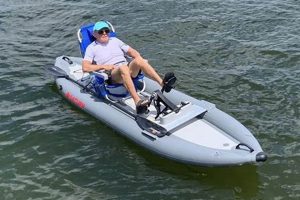
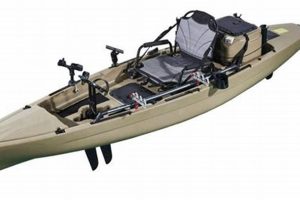
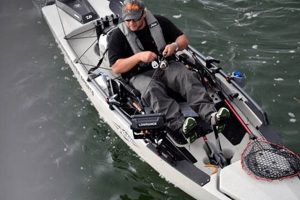
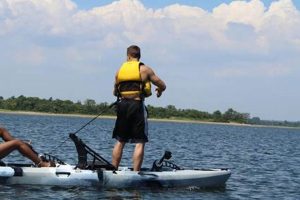
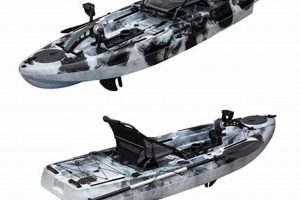
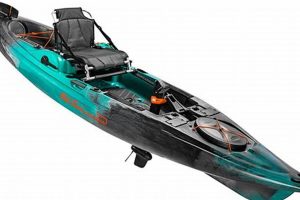
Human-powered watercraft designed for angling offer a unique blend of portability, affordability, and hands-free propulsion. These vessels, constructed from durable, flexible materials, can be easily transported and stored, inflating quickly for use. The pedal-driven system allows anglers to maintain position and navigate waters with minimal disturbance, keeping hands free for casting and reeling. This method offers an alternative to traditional kayaks and motorized boats, particularly in shallow waters or areas with motor restrictions.
This style of fishing provides several advantages. The compact nature of these craft expands access to remote fishing locations, whether small ponds or expansive lakes. Pedal propulsion enables stealthy movement, minimizing disruption to fish and optimizing angling opportunities. The relatively low cost of these vessels compared to traditional boats makes them an accessible option for many anglers. The evolution of materials and design has led to increased durability and performance, making this approach increasingly popular for recreational fishing.
Further exploration will cover topics such as selecting the appropriate vessel, essential gear and accessories, recommended fishing techniques, safety considerations, and responsible angling practices. These topics will provide a complete guide for individuals interested in exploring this accessible and engaging form of fishing.
Tips for Pedal-Powered Inflatable Kayak Angling
Effective angling from human-powered inflatable watercraft requires careful planning and execution. The following tips provide guidance for maximizing success and ensuring a safe and enjoyable experience.
Tip 1: Stability Assessment: Evaluate vessel stability before venturing into open water. Practice entering, exiting, and maneuvering the craft in shallow, calm conditions to understand its balance characteristics.
Tip 2: Gear Organization: Distribute fishing gear evenly within the kayak to maintain balance and accessibility. Secure equipment to prevent loss or shifting during movement.
Tip 3: Anchor Utilization: Utilize a lightweight anchor suitable for shallow water conditions to maintain position in desired fishing locations, particularly in currents or wind.
Tip 4: Pedal Propulsion Technique: Employ smooth, consistent pedal strokes to minimize disturbance and maximize efficiency. Vary pedaling speed to adapt to changing water conditions.
Tip 5: Safety Precautions: Always wear a personal flotation device (PFD) and carry essential safety equipment, including a whistle, signaling device, and first-aid kit. Inform someone of planned fishing locations and estimated return times.
Tip 6: Environmental Awareness: Respect aquatic ecosystems by practicing catch-and-release fishing whenever possible. Properly dispose of fishing line and other waste materials.
Tip 7: Weather Monitoring: Check weather forecasts before embarking on fishing trips. Avoid venturing out in adverse weather conditions, such as strong winds, lightning storms, or extreme temperatures.
Adherence to these guidelines will contribute to a successful and enjoyable experience. Preparation and careful consideration of environmental factors enhance both angling success and personal safety.
The following section will delve into specific techniques for various fish species and aquatic environments. This information will provide anglers with the knowledge necessary to refine their approach and maximize their success on the water.
1. Portability

Portability represents a significant advantage of inflatable pedal-powered fishing kayaks, differentiating them from traditional rigid-hulled vessels. This characteristic expands angling opportunities by granting access to remote or otherwise inaccessible waterways. The following facets explore the components and implications of portability within this context.
- Transportation:
Deflated and packed, these kayaks occupy minimal storage space. Transport becomes feasible in vehicles with limited cargo capacity, eliminating the need for specialized trailers or roof racks. This ease of transport facilitates access to diverse fishing locations, from secluded ponds to remote stretches of rivers.
- Deployment:
Rapid inflation and assembly minimize preparation time at the water’s edge. This streamlined process allows anglers to dedicate more time to fishing, rather than logistical setup. Lightweight construction facilitates carrying the packaged kayak short distances, enabling access to locations beyond immediate vehicle proximity.
- Storage:
Compact storage requirements benefit anglers with limited space. Deflated kayaks can be stored in closets, garages, or even apartments, eliminating the need for dedicated outdoor storage areas. This convenience contributes to the overall accessibility and practicality of this fishing style.
- Travel:
Air travel with inflatable kayaks becomes a viable option. Packable designs meet airline baggage restrictions, expanding fishing opportunities to distant destinations. This capability enables exploration of diverse fisheries and environments beyond the constraints of local waterways.
The inherent portability of these fishing platforms expands angling horizons and simplifies logistical challenges. By enabling access to a wider range of waterways, portability enhances the overall fishing experience. This advantage contributes significantly to the increasing popularity of inflatable pedal-powered kayaks amongst anglers seeking versatile and convenient fishing solutions.
2. Hands-free Propulsion
Hands-free propulsion represents a pivotal advantage in inflatable pedal kayak fishing. Unlike traditional paddle kayaks, pedal-driven systems liberate anglers’ hands, enabling simultaneous fishing activities. This feature proves invaluable for various fishing techniques, including trolling, jigging, and fly fishing. Maintaining precise boat position and navigation through complex waterways becomes significantly easier without the need for constant paddling. This efficiency translates to more time spent fishing and less on maneuvering, ultimately increasing the likelihood of a successful catch. For instance, an angler can maintain a desired drift in a river while simultaneously casting and retrieving a lure, a task difficult to achieve with a paddle kayak. Hands-free operation contributes significantly to the angler’s ability to react quickly to strikes, increasing hook-up ratios.
The practical implications of hands-free propulsion extend beyond simply freeing up one’s hands. It facilitates nuanced control over the vessel, allowing for subtle adjustments in position without interrupting the fishing process. Consider the scenario of sight fishing in shallow water. A pedal-powered kayak allows an angler to approach a fish stealthily and maintain a stable platform for accurate casting, all while keeping hands ready to set the hook. This level of control enhances angling precision and contributes to a more engaging and productive experience. Furthermore, the reduced physical exertion associated with pedaling compared to paddling allows for longer fishing trips without fatigue, expanding access to more distant fishing grounds.
In summary, hands-free propulsion in inflatable pedal kayaks revolutionizes fishing dynamics. It empowers anglers to perform multiple tasks concurrently, improves boat control, and enhances overall fishing efficiency. This advantage distinguishes inflatable pedal kayak fishing from traditional methods, offering a significant improvement in angling effectiveness and enjoyment. The increased control, reduced physical strain, and enhanced fishing opportunities solidify the importance of hands-free propulsion within this rapidly growing segment of recreational fishing.
3. Stability

Stability forms a cornerstone of effective inflatable pedal kayak fishing. A stable platform is essential for casting accuracy, fighting fish, and overall safety on the water. Various factors influence stability, including hull design, weight distribution, and water conditions. Understanding these factors and their interplay is crucial for a successful and safe angling experience. The following facets explore the critical components of stability in this context.
- Hull Design:
Inflatable kayak hull designs vary considerably, impacting stability significantly. Wider beams generally provide greater initial stability, resisting tipping during casting or reeling. However, wider hulls can sacrifice maneuverability. Conversely, narrower hulls offer enhanced tracking and speed but can feel less stable, particularly for anglers unfamiliar with kayak fishing. Modern designs often incorporate features like pontoon-style side chambers or flat bottoms to maximize stability without compromising performance. Careful consideration of hull design is crucial based on intended fishing locations and angler experience.
- Weight Distribution:
Proper weight distribution plays a vital role in maintaining kayak stability. Evenly distributing gear and maintaining a low center of gravity minimizes the risk of capsizing. Securing equipment within the kayak prevents shifting weight, which can destabilize the vessel during movement. Anglers must be mindful of weight distribution, particularly when standing to cast or land fish. Practicing weight shifts in calm, shallow water allows anglers to develop a feel for the kayak’s balance characteristics and avoid unexpected tipping.
- Water Conditions:
Water conditions significantly influence kayak stability. Calm, flat water presents minimal challenges, while choppy water or strong currents demand heightened awareness and careful maneuvering. Wind can also impact stability, particularly for lighter inflatable kayaks. Understanding how wind and currents affect the kayak’s behavior is essential for maintaining control and preventing capsizing. Anglers should avoid exceeding the kayak’s specified weight capacity, as overloading can compromise stability, especially in challenging conditions.
- Angler Behavior:
Angler actions directly impact kayak stability. Sudden movements, leaning too far over the side, or standing abruptly can destabilize the vessel. Practicing smooth, deliberate movements within the kayak enhances stability and reduces the risk of capsizing. Maintaining a low center of gravity, especially in rough water, is paramount. Anglers should also be mindful of their body position when casting or reeling, avoiding jerky motions that could compromise balance. Experience and practice build confidence and improve stability management on the water.
Understanding and managing these facets of stability is fundamental to successful inflatable pedal kayak fishing. A stable platform enhances angling effectiveness, improves safety, and allows anglers to focus on the fishing experience. By carefully considering hull design, weight distribution, water conditions, and their own actions, anglers can maximize stability and enjoy the unique benefits of this increasingly popular fishing style.
4. Fishing Access
Inflatable pedal kayaks significantly broaden fishing access, opening opportunities previously limited by terrain, cost, or physical constraints. Traditional boat ramps and marinas, often required for larger vessels, become unnecessary due to the portability and lightweight nature of inflatable kayaks. This portability translates to access to smaller, secluded bodies of water, including ponds, creeks, and shallow rivers often inaccessible to larger craft. Such locations frequently harbor thriving fish populations, offering unique angling experiences. Furthermore, the reduced financial burden associated with inflatable kayaks compared to motorized boats democratizes access to fishing, making it more inclusive and accessible to individuals with budget constraints.
Consider, for instance, a small, remote mountain lake accessible only by a challenging hiking trail. Transporting a traditional kayak or canoe to such a location would be impractical, if not impossible. An inflatable pedal kayak, however, can be easily packed and carried, granting access to this otherwise secluded fishery. Similarly, urban anglers residing in apartments or lacking vehicle storage for larger boats can readily deploy inflatable kayaks in local parks or waterways. This expanded accessibility fosters community engagement and connects individuals with natural environments, regardless of living situations. Moreover, individuals with physical limitations who find traditional kayaking challenging can benefit from the stability and hands-free propulsion of pedal-powered inflatable kayaks, enabling them to participate more fully in the sport.
In summary, enhanced fishing access represents a core advantage of inflatable pedal kayak fishing. This accessibility stems from the portability, affordability, and adaptability of these vessels. By removing traditional barriers to entry, inflatable pedal kayaks expand angling opportunities for a broader demographic, foster closer connections with nature, and contribute to a more inclusive and accessible fishing experience. This advantage is particularly relevant in densely populated areas where traditional fishing access may be limited and the cost of boat ownership prohibitive. Furthermore, the reduced environmental impact associated with human-powered watercraft supports sustainable fishing practices, preserving these valuable resources for future generations.
5. Cost-effectiveness
Cost-effectiveness represents a significant factor driving the increasing popularity of inflatable pedal kayak fishing. Traditional fishing boats often entail substantial upfront investment, ongoing maintenance expenses, and storage costs, presenting a barrier to entry for many aspiring anglers. Inflatable pedal kayaks offer a compelling alternative, providing a comparable fishing experience at a significantly reduced cost. This affordability expands access to the sport and enables a broader range of individuals to enjoy the benefits of on-the-water angling.
- Initial Investment:
Inflatable pedal kayaks typically require a lower initial investment than traditional fishing boats or even high-end rigid kayaks. This reduced upfront cost makes them an attractive option for budget-conscious anglers or those new to the sport who prefer to avoid a substantial initial outlay before gauging their long-term interest.
- Maintenance Costs:
Maintenance requirements for inflatable kayaks are generally minimal compared to motorized boats. No engine maintenance, fuel costs, or complex mechanical systems are involved. Routine cleaning and occasional patching, if needed, represent the primary maintenance tasks, further contributing to their cost-effectiveness. This ease of maintenance frees up both time and financial resources for the actual fishing experience.
- Storage Expenses:
Inflatable kayaks require minimal storage space when deflated. This eliminates the need for costly boat slips, trailers, or large storage facilities. They can be easily stored in a garage, closet, or even under a bed, significantly reducing ongoing storage expenses, a particularly relevant advantage for urban dwellers or those with limited storage options.
- Accessories and Gear:
While fishing rods, reels, lures, and other essential angling gear remain consistent expenses across all fishing platforms, specialized accessories often required for traditional boats, such as fish finders, downriggers, or trolling motors, are often unnecessary or less critical for inflatable kayak fishing. This further reduces overall cost and simplifies the fishing setup, focusing resources on core angling equipment.
The cost-effectiveness of inflatable pedal kayak fishing expands access to angling by reducing financial barriers. This affordability, combined with portability and ease of use, makes it a particularly attractive option for novice anglers, urban dwellers, and anyone seeking a cost-conscious approach to enjoying the sport. By minimizing upfront investment, ongoing maintenance, and storage expenses, inflatable pedal kayaks provide a fiscally responsible pathway to experiencing the rewards of recreational fishing. This focus on affordability does not necessarily equate to compromised quality; rather, it reflects a practical approach to enjoying the sport without incurring unnecessary expenses.
6. Environmental Impact
Inflatable pedal kayak fishing, while offering numerous advantages, presents potential environmental impacts requiring careful consideration. Responsible angling practices are crucial for minimizing these impacts and preserving aquatic ecosystems. Key environmental considerations include responsible waste disposal, respect for wildlife, and minimizing disturbance to aquatic habitats.
Discarded fishing line poses a significant threat to aquatic life. Birds, turtles, and fish can become entangled, leading to injury or death. Responsible anglers carry a small receptacle for used fishing line and dispose of it properly in designated recycling bins or trash receptacles. Furthermore, avoiding lead sinkers and opting for biodegradable alternatives minimizes the introduction of heavy metals into the aquatic environment. Respect for wildlife extends beyond catch-and-release practices. Minimizing disturbance to nesting birds and other riparian animals ensures their continued presence and contributes to a healthy ecosystem. Avoiding loud noises and excessive splashing while paddling or pedaling minimizes disruption to aquatic life.
Human-powered watercraft offer inherent environmental advantages over motorized boats. The absence of fuel consumption and exhaust emissions significantly reduces water pollution and greenhouse gas contributions. Furthermore, the quiet operation of pedal kayaks minimizes noise pollution, preserving the natural soundscape and reducing stress on aquatic organisms. Careful launching and landing practices, avoiding dragging the kayak over sensitive vegetation or shallow spawning beds, further minimizes physical disturbance to aquatic habitats. Educating oneself about local aquatic ecosystems, including sensitive species and protected areas, empowers anglers to make informed decisions that minimize their environmental footprint. By adopting responsible angling practices, inflatable pedal kayak enthusiasts contribute to preserving these valuable natural resources for future generations. Sustainable enjoyment of this increasingly popular fishing method requires ongoing awareness and a commitment to minimizing environmental impact.
Frequently Asked Questions
Addressing common inquiries regarding inflatable pedal kayak fishing provides clarity and facilitates informed decision-making for prospective anglers. The following questions and answers offer practical insights into this increasingly popular fishing method.
Question 1: How durable are inflatable pedal kayaks compared to traditional hard-shell kayaks?
Modern inflatable kayaks utilize durable, puncture-resistant materials designed to withstand typical on-the-water encounters. While requiring reasonable care, these materials provide surprising resilience in various aquatic environments.
Question 2: What are the typical weight capacities of these vessels?
Weight capacities vary by model but generally range from 300 to 500 pounds, accommodating an angler, gear, and potential catch comfortably within safe operating limits.
Question 3: How long does inflation and deflation typically take?
High-volume pumps and efficient valve systems typically facilitate inflation and deflation within 10-15 minutes, streamlining preparation and pack-up processes.
Question 4: Are these kayaks suitable for ocean fishing?
Certain models are designed specifically for ocean use, incorporating features like reinforced hulls and enhanced tracking capabilities. However, careful consideration of weather conditions and water currents remains crucial for safe operation.
Question 5: What safety precautions are essential for inflatable pedal kayak fishing?
Wearing a personal flotation device (PFD), carrying a whistle and signaling device, informing someone of fishing plans, and adhering to local boating regulations represent fundamental safety practices.
Question 6: How does pedal propulsion compare to traditional paddling in terms of efficiency and fatigue?
Pedal propulsion generally allows for greater sustained speed and reduced upper body fatigue, particularly over longer distances, enabling extended fishing excursions.
Careful consideration of these frequently asked questions empowers potential users to evaluate the suitability of inflatable pedal kayaks for individual fishing needs. Understanding both advantages and limitations facilitates informed purchasing decisions and promotes safe, responsible angling practices.
The following section will explore recommended accessories and gear to enhance the inflatable pedal kayak fishing experience. This information will assist anglers in selecting appropriate equipment to maximize their on-the-water success and enjoyment.
Conclusion
Inflatable pedal kayak fishing presents a compelling approach to angling, combining portability, affordability, and hands-free propulsion. This method expands fishing access to diverse waterways, from remote lakes to urban canals. Factors such as stability, cost-effectiveness, and environmental impact influence the overall experience. Successful integration of this fishing style requires careful consideration of equipment selection, safety precautions, and responsible angling practices. The evolving landscape of fishing technology continues to refine inflatable kayak design, enhancing performance and durability.
The accessibility and adaptability of inflatable pedal kayak fishing position it for continued growth within the angling community. As awareness of this method expands, responsible adoption of sustainable fishing practices remains paramount for preserving aquatic ecosystems and ensuring the future enjoyment of this evolving recreational pursuit.