Providing electrical power to a sonar device mounted on a small, human-powered watercraft involves several key considerations, including the type of fish finder, its power requirements, the desired duration of use, and the available mounting space. Common solutions include portable power packs, rechargeable batteries, and less frequently, small solar panels. Choosing the correct power source impacts the fish finder’s performance and the overall kayaking experience.
A reliably powered fish finder significantly enhances angling success from a kayak. It allows anglers to locate fish, identify underwater structures, and determine water depth, all crucial factors in effective fishing. This technology eliminates guesswork, conserves time and effort, and ultimately leads to a more productive and enjoyable fishing trip. The evolution of smaller, more portable sonar units, coupled with advances in battery technology, has made integrating this technology with kayaks increasingly practical and popular.
The following sections will delve into the various power options, outlining the advantages and disadvantages of each, alongside practical advice on installation, safety considerations, and maintenance tips for ensuring consistent performance and longevity of the equipment.
Powering a Fish Finder on a Kayak
Optimizing power delivery for kayak-mounted fish finders requires careful planning and execution. The following tips offer guidance on selecting and implementing a suitable power solution.
Tip 1: Calculate Power Requirements: Determine the fish finder’s power consumption (typically measured in watts) and the anticipated duration of use. This information is crucial for selecting a battery with adequate capacity (ampere-hours).
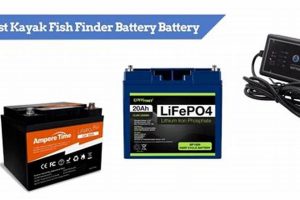
Tip 2: Choose the Right Battery Type: Consider sealed lead-acid (SLA), lithium-ion, or other deep-cycle marine batteries. Lithium-ion batteries offer a higher energy density for their weight and size, but are more expensive. SLA batteries are a more budget-friendly option.
Tip 3: Prioritize Waterproofing: Ensure all electrical connections and components are adequately protected from water exposure. Utilize waterproof connectors and enclosures to prevent damage and ensure safe operation.
Tip 4: Secure Battery Placement: Securely mount the battery in a stable location within the kayak, ensuring it remains protected from impacts and shifting cargo. Consider weight distribution for optimal kayak stability.
Tip 5: Utilize a Fuse: Incorporate an inline fuse near the battery positive terminal to protect the fish finder and other electronics from power surges and short circuits.
Tip 6: Regular Maintenance: Periodically inspect battery terminals for corrosion and clean them as needed. Fully charge batteries after each use and store them according to manufacturer recommendations to prolong their lifespan.
Tip 7: Consider Solar Charging: For extended trips, a small, waterproof solar panel can supplement the primary power source, extending battery life and reducing the need for frequent recharging.
Adhering to these guidelines ensures reliable fish finder operation, maximizing angling success while promoting safety and extending equipment lifespan.
By addressing these power considerations proactively, anglers can fully leverage the benefits of sonar technology, enhancing their kayaking fishing experience.
1. Battery Selection

Battery selection is paramount for powering kayak fish finders. The chosen battery directly impacts the fish finder’s operational duration, reliability, and overall user experience. Selecting an unsuitable battery can lead to premature discharge, inadequate power supply, and potential damage to the fish finder. Factors influencing battery selection include the fish finder’s power draw, desired runtime, and environmental conditions. A fish finder with a higher power consumption necessitates a battery with greater capacity (ampere-hours/Ah) to ensure sufficient power delivery over the intended fishing duration. Operating in colder temperatures can also reduce battery performance, requiring additional capacity considerations. For instance, a small fish finder drawing a low current might function adequately with a smaller, lighter battery, while a larger, more power-hungry unit requires a significantly larger capacity battery.
Several battery types are suitable for powering kayak fish finders, each with distinct characteristics. Common options include sealed lead-acid (SLA), lithium-ion, and Absorbent Glass Mat (AGM) batteries. SLA batteries offer a cost-effective solution, but are heavier and have a shorter lifespan compared to lithium-ion options. Lithium-ion batteries provide higher energy density, allowing for longer runtimes with a lower weight penalty, but come at a premium cost. AGM batteries represent a compromise, offering better performance and durability than SLA at a moderate price point. Choosing the appropriate battery chemistry involves balancing cost, weight, performance, and lifespan based on individual needs and budget. Using a 7Ah SLA battery might suffice for a short fishing trip with a low-power fish finder, while a multi-day excursion with a larger unit might necessitate a 12Ah lithium-ion battery for reliable, extended operation.
Careful consideration of battery specifications is essential for optimized fish finder performance and a positive kayaking experience. Analyzing the fish finder’s power requirements, anticipated runtime, and the advantages and disadvantages of different battery chemistries empowers informed decision-making. Selecting the correct battery ensures consistent fish finder operation, eliminating power-related disruptions and allowing anglers to focus on fishing. This careful evaluation ultimately contributes to a more productive and enjoyable time on the water.
2. Wiring and Connections

Appropriate wiring and secure connections form the crucial link between the power source and the fish finder in a kayak setup. Correct wiring ensures efficient power delivery, minimizes energy loss, and safeguards against electrical hazards. The selection of appropriate gauge wire is determined by the fish finder’s current draw and the distance between the battery and the unit. Undersized wiring can lead to voltage drops, impacting fish finder performance and potentially causing overheating. Conversely, oversized wiring adds unnecessary weight and bulk to the kayak. For instance, a fish finder drawing 3 amps at 12V connected to a battery located 10 feet away would typically require 16-gauge marine-grade wire to minimize voltage drop. Utilizing marine-grade tinned copper wire is essential for corrosion resistance in the harsh marine environment. Furthermore, all connections should be clean, tight, and protected from moisture using heat shrink tubing or waterproof connectors. Neglecting these considerations can result in intermittent operation, premature battery drain, and potential damage to the fish finder.
Connecting the wiring harness correctly is paramount for both functionality and safety. Incorrect polarity can irreversibly damage the fish finder. A clear understanding of the fish finder and battery terminal designations (positive and negative) is essential. Employing color-coded wiring, typically red for positive and black for negative, simplifies the process and reduces the risk of errors. Installing an inline fuse near the battery positive terminal provides crucial protection against short circuits and overloads. The fuse rating should be slightly higher than the fish finder’s maximum current draw, typically 5-10% higher. This protective measure safeguards the fish finder and other connected electronics from damage in the event of a fault. For example, a fish finder drawing 3 amps should be protected by a 5-amp fuse. This safeguard prevents damage to the fish finder and minimizes the risk of fire hazards.
Meticulous attention to wiring and connections ensures reliable fish finder performance and contributes significantly to kayak fishing safety. Properly sized and installed wiring delivers consistent power to the fish finder, maximizing its functionality and preventing premature failure. The use of marine-grade materials and waterproof connections protects against corrosion and ensures longevity in demanding marine environments. Furthermore, correctly implemented safety measures, including fuses and proper polarity adherence, mitigate potential electrical hazards and protect valuable equipment. These practices collectively ensure a safe, enjoyable, and productive kayaking experience.
3. Mounting and Security

Secure mounting and protection of power components are critical for reliable fish finder operation in a kayak. Proper mounting ensures consistent power delivery by preventing battery shifts and connection disruptions during movement. Additionally, safeguarding the battery and wiring from environmental factors, such as water exposure and impacts, prolongs equipment lifespan and ensures safe operation.
- Battery Placement
Battery placement significantly influences kayak stability and accessibility. Positioning the battery near the center of the kayak enhances balance, while ensuring accessibility for easy monitoring and disconnection. Securing the battery with straps or within a dedicated battery box prevents movement that could disrupt wiring or compromise kayak stability. For example, placing the battery beneath the seat allows easy access while maintaining a balanced center of gravity.
- Wiring Management
Effective wiring management minimizes interference with paddling and protects wiring from damage. Securing wiring along the kayak’s interior framework prevents entanglement and safeguards against abrasion or cuts. Using cable ties or clips keeps wiring organized and out of the way, reducing the risk of accidental snags or disconnections. This organized approach minimizes the risk of electrical hazards and ensures consistent fish finder performance.
- Waterproofing
Protecting electrical components from water exposure is paramount for safe and reliable operation in a kayak environment. Employing waterproof connectors and enclosures for the battery and other sensitive electronics prevents corrosion and ensures consistent performance. This protection is crucial for preventing damage from splashes, rain, or even accidental submersion. Using waterproof marine sealant around cable entry points further enhances protection against moisture intrusion, extending the life of the equipment.
- Impact Protection
Safeguarding the battery and wiring from impacts prevents damage and ensures continuous operation. Placing the battery in a protected location, such as a dedicated battery box or a recessed compartment, minimizes the risk of damage from accidental bumps or drops. Protecting wiring by routing it through interior channels or covering it with protective sheathing further safeguards against impacts, preserving electrical connections and preventing power disruptions to the fish finder. This proactive approach extends the lifespan of the power system and ensures consistent fish finder performance.
These mounting and security considerations are integral to successful fish finder operation from a kayak. A stable, protected power system ensures consistent performance and prolongs equipment lifespan. By addressing these factors proactively, anglers can maximize the effectiveness of their fish finder, leading to a more productive and enjoyable fishing experience.
4. Power Consumption

Power consumption is a critical factor in determining the appropriate power solution for a kayak fish finder. Fish finders vary in their power requirements, influenced by screen size, sonar frequency, and additional features. Understanding a fish finder’s power draw, typically measured in watts or amps, is essential for selecting a battery with sufficient capacity. Calculating the anticipated runtime based on power consumption and battery capacity ensures uninterrupted operation throughout the fishing trip. For example, a fish finder consuming 5 watts powered by a 10 amp-hour (Ah) 12V battery will theoretically operate for approximately 24 hours (10Ah * 12V / 5W = 24h). However, factors such as battery age and temperature can affect actual runtime. Overestimating power requirements ensures sufficient reserves, especially for longer trips or unexpected delays.
Optimizing power consumption can extend battery life and reduce the frequency of recharging. Adjusting screen brightness, utilizing power-saving modes, and disabling unnecessary features can significantly reduce power draw. Employing a lower sonar frequency when appropriate also conserves energy. Understanding the fish finder’s power consumption profile enables informed decisions about power management strategies, maximizing operational duration. For instance, reducing screen brightness by half can significantly extend runtime, particularly on smaller, lower-capacity batteries. Similarly, using a narrower sonar cone angle can reduce power consumption compared to a wider cone angle, without necessarily sacrificing essential information for effective fishing.
Careful consideration of power consumption is integral to selecting and managing the power system for a kayak fish finder. Accurate power consumption estimates, combined with practical power-saving strategies, ensure reliable fish finder operation throughout the fishing excursion. This understanding directly translates to a more productive and enjoyable experience on the water, free from power-related interruptions. Furthermore, optimizing power consumption contributes to responsible resource management by minimizing battery waste and promoting sustainable practices.
5. Safety Precautions

Safe operation of electronic devices in a kayak environment requires careful consideration of potential hazards. Implementing appropriate safety precautions when powering a fish finder mitigates risks associated with electrical systems and ensures a secure kayaking experience. These precautions protect both the user and the equipment from potential harm, contributing to an enjoyable and productive fishing trip.
- Water Exposure
Water and electricity present a dangerous combination. Protecting electrical connections and components from moisture is paramount. Utilizing waterproof connectors, marine-grade wiring, and sealed battery enclosures prevents short circuits, corrosion, and potential equipment failure. Properly sealed connections also mitigate the risk of electric shock to the user. For example, all exposed wiring should be encased in marine-grade heat shrink tubing to prevent water intrusion. Battery terminals should be coated with dielectric grease to further protect against corrosion.
- Battery Handling
Batteries, especially lead-acid types, contain corrosive chemicals and generate potentially explosive gases during charging. Handling batteries with care, ensuring proper ventilation during charging, and avoiding contact with battery acid are crucial safety measures. Storing batteries securely and upright prevents spills and minimizes the risk of damage. Wearing appropriate safety gear, such as gloves and eye protection, provides additional protection when handling batteries.
- Fuse Protection
Incorporating an inline fuse near the battery positive terminal provides essential protection against overloads and short circuits. The fuse acts as a sacrificial link, interrupting the circuit in the event of a fault and preventing damage to the fish finder and other connected electronics. Selecting the correct fuse rating, slightly higher than the fish finder’s maximum current draw, ensures effective protection without unnecessary interruptions. Regularly inspecting the fuse and replacing it with the correct rating maintains circuit integrity and safeguards the electrical system.
- Fire Hazards
Electrical systems pose a potential fire hazard, particularly in the confined space of a kayak. Ensuring proper wiring, using appropriate connectors, and avoiding overloading circuits minimizes the risk of overheating and potential fire. Storing flammable materials away from electrical components further reduces fire hazards. Having a fire extinguisher readily accessible in the kayak provides an additional layer of safety in case of an emergency.
Adhering to these safety precautions is essential for responsible and safe operation of a fish finder on a kayak. These practices mitigate potential hazards associated with electrical systems, protecting both the user and the equipment. By prioritizing safety, kayakers can focus on enjoying their fishing experience with peace of mind.
Frequently Asked Questions
This section addresses common queries regarding powering fish finders on kayaks, providing concise and informative responses to facilitate informed decision-making and safe operation.
Question 1: What type of battery is recommended for powering a fish finder on a kayak?
Sealed lead-acid (SLA), absorbent glass mat (AGM), and lithium-ion batteries are commonly used. Lithium-ion batteries offer the best performance and weight-to-capacity ratio, but are more expensive. SLA batteries are a more budget-friendly option, while AGM batteries offer a balance between cost and performance.
Question 2: How long will a fully charged battery power a fish finder?
Runtime depends on the battery capacity (amp-hours), the fish finder’s power consumption (watts), and usage patterns. Calculating estimated runtime requires dividing the battery’s amp-hour rating by the fish finder’s amp draw. For example, a 10Ah battery powering a device drawing 2 amps will theoretically last 5 hours. Actual runtime may vary due to factors like temperature and battery age.
Question 3: Can a fish finder be powered directly from a kayak’s pedal drive system?
Directly powering a fish finder from a pedal drive system is generally not recommended. Pedal drive systems are designed to propel the kayak, and tapping into their power supply could compromise performance and potentially damage the system. A dedicated battery provides a more reliable and stable power source for the fish finder.
Question 4: What safety precautions should be taken when using a battery on a kayak?
Key safety precautions include using a fuse near the battery positive terminal, ensuring waterproof connections and enclosures, securing the battery to prevent movement, and proper ventilation during charging to prevent gas buildup. Handling batteries with care and avoiding contact with battery acid are essential for personal safety.
Question 5: Can a solar panel be used to charge a fish finder battery on a kayak?
Small, waterproof solar panels can supplement the primary power source by trickle charging the battery, particularly during extended trips. However, relying solely on solar charging may not be sufficient for continuous fish finder operation, especially in overcast conditions. A solar panel serves as a valuable supplement, extending battery life, but not as a primary power source in most cases.
Question 6: What gauge wire is recommended for connecting a fish finder to a battery?
Wire gauge selection depends on the fish finder’s current draw and the length of the wiring run. Using a wire gauge calculator, readily available online, is recommended to determine the appropriate size. Undersized wire can lead to voltage drop and overheating, while oversized wire adds unnecessary weight. Marine-grade tinned copper wire is recommended for its corrosion resistance in marine environments.
Prioritizing safety and understanding power requirements are crucial for successful fish finder operation on a kayak. Careful consideration of these aspects ensures reliable performance and contributes to a more enjoyable and productive fishing experience.
For further information on specific fish finder models and power solutions, consult the manufacturer’s documentation or a qualified marine electronics specialist.
Powering a Kayak Fish Finder
Successfully powering a fish finder on a kayak involves careful consideration of several interconnected factors. Battery selection, based on power consumption and desired runtime, forms the foundation of a reliable power system. Proper wiring and connections ensure efficient power delivery, while secure mounting and waterproofing protect vital components from the harsh marine environment. Understanding power consumption characteristics and implementing power-saving strategies maximizes operational duration. Finally, prioritizing safety precautions, including fuse protection and proper battery handling, mitigates potential hazards and ensures a secure kayaking experience. Each of these elements contributes to the overall effectiveness and longevity of the fish finder setup.
Effective implementation of these considerations empowers anglers to leverage the full potential of sonar technology on the water. Informed decision-making regarding power solutions enhances fishing success while promoting safe and responsible kayak operation. A well-powered fish finder becomes an invaluable tool, enabling anglers to explore underwater environments with greater precision and maximize their chances of a successful catch. The continued evolution of battery technology and portable electronics promises further advancements in kayak fishing technology, opening up new possibilities for anglers seeking to explore and understand the underwater world.