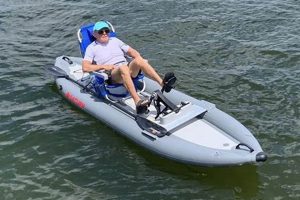
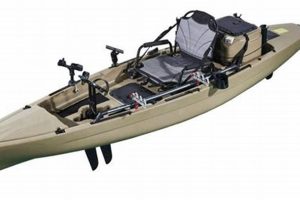
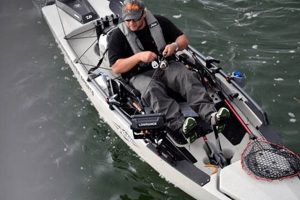
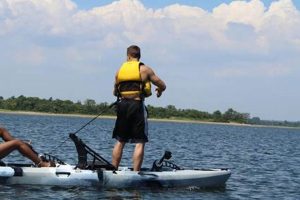
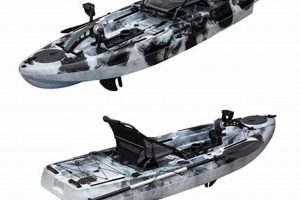
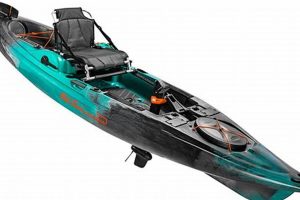
Human-powered watercraft propelled by leg power offer a distinct kayaking experience. These vessels utilize a system of pedals and a propeller or fin system underwater, allowing for hands-free navigation and increased speed and efficiency compared to traditional paddling. This design opens up opportunities for activities like fishing or photography, where free hands are a significant advantage.
Leg-powered propulsion provides a full-body workout, engaging larger muscle groups for increased endurance and power. This method can also reduce strain on the upper body, making it a more accessible and comfortable option for some individuals. The development of this propulsion system reflects a continuous evolution in kayak design, driven by a desire for enhanced performance and user experience. This innovation has broadened the appeal of kayaking to a wider range of users and activities.
Further exploration will cover key aspects of these craft, including variations in propulsion systems, design considerations, advantages and disadvantages compared to traditional kayaks, and relevant applications for different water environments. This information will provide a comprehensive understanding of this evolving segment of the kayaking world.
Tips for Utilizing Leg-Powered Kayaks
Maximizing the benefits of leg-powered watercraft requires understanding certain operational nuances and maintenance procedures. The following tips offer guidance for efficient use and prolonged lifespan.
Tip 1: Proper Pedal Adjustment: Ensure correct pedal positioning for optimal biomechanics and comfort. Incorrect adjustment can lead to reduced efficiency and potential strain.
Tip 2: Regular Maintenance: Drive systems require routine inspection and lubrication. Adhering to manufacturer recommendations ensures smooth operation and prevents premature wear.
Tip 3: Understanding Water Conditions: Leg-powered propulsion excels in calm to moderate conditions. Strong currents or shallow, obstacle-filled waters may present challenges and require careful navigation.
Tip 4: Practice Efficient Pedaling Technique: Smooth, consistent pedaling maximizes propulsion and minimizes fatigue. Avoid jerky or inconsistent movements.
Tip 5: Transport and Storage: Proper handling during transport and secure storage protects the vessel and its drive system from damage.
Tip 6: Safety Precautions: Always wear a personal flotation device and adhere to local boating regulations. Be aware of potential hazards and environmental conditions.
Tip 7: Choosing the Right Model: Vessel design varies based on intended use. Consider factors like fishing features, storage capacity, and hull design when selecting a model.
Implementing these practices enhances the kayaking experience by promoting efficient operation, ensuring longevity, and prioritizing safety. Understanding the nuances of leg-powered kayaks allows for better informed decisions and increased enjoyment on the water.
These tips provide a solid foundation for effective operation. Further investigation into specific features and techniques will enhance one’s understanding and proficiency with leg-powered kayaks.
1. Hands-free Propulsion
Hands-free propulsion represents a defining characteristic of foot pedal kayaks, fundamentally altering the kayaking experience. This innovative approach utilizes leg power, freeing the upper body from paddling responsibilities. This shift has profound implications for various kayaking activities. Consider angling, where precise boat control and simultaneous rod manipulation are essential. Hands-free operation allows anglers to cast, reel, and manage their equipment without sacrificing boat positioning or stability. Similar advantages extend to activities like nature photography and wildlife observation, enabling users to capture fleeting moments without the constraints of a paddle. The core benefit, the liberation of the hands, expands the possibilities of kayak usage.
The mechanics of hands-free propulsion typically involve a pedal-driven system connected to a propeller or fin assembly beneath the kayak. This system translates cyclical leg motion into rotational force, propelling the vessel efficiently through the water. Different drive mechanisms exist, each offering varying degrees of performance and complexity. Rotary pedal systems, mimicking cycling, tend to offer higher speeds, while push-pedal systems emphasize power and stability. The selection of a specific drive system often depends on the intended use and individual preferences. Regardless of the chosen mechanism, the fundamental principle remains consistent: harnessing lower body strength for hands-free navigation.
The adoption of hands-free propulsion signifies a notable advancement in kayak design. It addresses the limitations of traditional paddling by reducing upper body fatigue and expanding the range of activities achievable on the water. While some challenges remain, such as navigating shallow or obstacle-filled waters, the overall benefits of hands-free operation continue to drive its popularity. The integration of this technology underscores the ongoing evolution of kayaks, moving towards enhanced versatility, efficiency, and user experience.
2. Increased Speed/Efficiency
The enhanced speed and efficiency offered by foot pedal kayaks represent a significant departure from traditional paddle-powered vessels. This performance gain stems from the biomechanics of leg-powered propulsion and the efficient transfer of energy to the water. Understanding the factors contributing to this advantage is crucial for appreciating the capabilities of these kayaks.
- Biomechanical Advantage:
Utilizing larger leg muscles allows for sustained power output and reduced fatigue compared to paddling. This translates to higher cruising speeds and the ability to cover greater distances. The rhythmic motion of pedaling engages core muscles, further enhancing stability and power transfer. Marathon kayaking exemplifies the benefits of leg power over extended periods, demonstrating superior endurance.
- Propulsion Efficiency:
Optimized propeller or fin designs minimize energy loss and maximize thrust. These underwater propulsion systems are engineered to convert rotational motion into forward momentum with minimal slippage or turbulence. This efficient transfer of energy contributes directly to increased speed and requires less effort compared to traditional paddling, where slippage and inefficient blade angles can dissipate energy. The streamlined design of modern pedal-drive systems further enhances hydrodynamic performance.
- Impact of Hull Design:
Kayak hull design plays a crucial role in optimizing speed and efficiency. Longer, narrower hulls generally track better and glide more efficiently through the water, minimizing drag and maximizing speed. Pedal kayaks designed for touring or open water often incorporate these features. Shorter, wider hulls prioritize stability over speed, making them suitable for fishing or recreational use in calmer waters. The interplay between hull design and propulsion method dictates the overall performance characteristics.
- Navigational Benefits:
Increased speed and efficiency translate to practical advantages in various kayaking scenarios. Reaching distant fishing spots or exploring larger bodies of water becomes more feasible. Maintaining a desired speed with less effort conserves energy, allowing for longer trips and enhanced enjoyment. These benefits broaden the scope of kayaking activities, extending possibilities for exploration and adventure.
The convergence of biomechanical advantages, efficient propulsion systems, and optimized hull designs contributes to the superior speed and efficiency of foot pedal kayaks. This performance gain expands the horizons of kayaking, enabling longer journeys, faster travel times, and reduced physical strain. This advancement highlights the ongoing evolution of kayak technology and its impact on user experience and capabilities.
3. Leg-powered Workout

Foot pedal kayaks offer a unique advantage: a low-impact, full-body workout centered on leg propulsion. Unlike traditional paddling, which primarily engages the upper body, pedal-powered kayaking distributes the workload across larger muscle groups in the legs and core. This distribution results in several benefits, including increased endurance, reduced strain on shoulder and back muscles, and improved cardiovascular health. The continuous, rhythmic motion of pedaling engages muscles like quadriceps, hamstrings, glutes, and calves, contributing to strength building and toning. Simultaneously, core muscles are activated to maintain balance and stability, enhancing overall fitness. This integrated workout contrasts sharply with the localized exertion of paddling, offering a more comprehensive and balanced approach to physical activity on the water.
The intensity of the leg-powered workout can be adjusted based on several factors, including pedaling resistance, speed, and water conditions. Calm, flat water provides a less strenuous experience, ideal for leisurely exercise or rehabilitation. Conversely, navigating against currents or wind resistance increases the workout intensity, challenging experienced kayakers seeking a vigorous training session. This adaptability makes pedal kayaking suitable for individuals with varying fitness levels, from beginners to seasoned athletes. Real-world examples include athletes using pedal kayaks for cross-training, individuals recovering from upper-body injuries finding a low-impact exercise alternative, and outdoor enthusiasts appreciating the added fitness element incorporated into their recreational kayaking experience. Furthermore, the continuous nature of the workout, often spanning hours during extended kayaking trips, contributes to significant calorie expenditure and improved cardiovascular function.
Understanding the connection between leg-powered workouts and foot pedal kayaks allows for a more informed approach to choosing and utilizing this type of watercraft. Recognizing the potential for a full-body workout, adjustable to individual fitness levels, enhances the appeal of pedal kayaking beyond recreational paddling. The potential benefits extend to physical rehabilitation, cross-training, and improved overall fitness. While traditional kayaks offer upper-body exercise, pedal kayaks offer a more balanced and accessible workout, expanding the potential user base and enriching the kayaking experience.
4. Reduced Upper Body Strain

A significant advantage of foot pedal kayaks lies in their ability to reduce strain on the upper body. This characteristic distinguishes them from traditional paddle-driven kayaks, which often lead to fatigue and discomfort in the shoulders, back, and arms, particularly during extended trips or for individuals with pre-existing conditions. Transferring the primary propulsion effort to the legs minimizes stress on these vulnerable areas, opening up kayaking to a wider range of users. Individuals with shoulder injuries, arthritis, or other upper body limitations can experience the enjoyment of kayaking without exacerbating existing conditions. This shift in physical engagement expands accessibility and promotes inclusivity within the kayaking community. Reduced upper body strain also contributes to increased endurance, allowing for longer kayaking trips and exploration of more distant locations.
The ergonomic design of foot pedal kayaks plays a crucial role in minimizing upper body strain. Adjustable seating positions and footrests accommodate varying body types and preferences, promoting proper posture and reducing the likelihood of muscle imbalances. This customization is essential for individuals with specific physical needs or limitations, enabling them to participate comfortably and safely. The hands-free nature of pedal kayaking further contributes to reduced strain by eliminating the repetitive motions and sustained gripping required for paddling. Users can relax their upper bodies, maintain a natural posture, and focus on navigation, fishing, or other activities without the constant physical demands of paddling. Real-world examples include individuals with rotator cuff injuries transitioning to pedal kayaks to continue enjoying the sport, and older kayakers finding the reduced physical strain allows them to remain active on the water. These practical applications highlight the significance of reduced upper body strain as a key benefit of pedal kayaks.
Reduced upper body strain represents a significant advancement in kayak design, expanding accessibility and enhancing the overall kayaking experience. By shifting the physical demands to larger leg muscles, pedal kayaks minimize fatigue, reduce the risk of injury, and open up the activity to individuals who may have previously found traditional paddling too strenuous. This benefit contributes to the growing popularity of pedal kayaks among diverse user groups, including those seeking low-impact exercise, individuals with physical limitations, and kayakers looking to maximize endurance and comfort on the water. The focus on ergonomic design and reduced physical strain reflects an ongoing evolution in kayak technology, prioritizing user well-being and inclusivity within the sport.
5. Fishing/Photography Advantage
Foot pedal kayaks offer a distinct advantage for activities like fishing and photography due to their hands-free propulsion system. This core feature liberates the upper body from paddling, enabling anglers and photographers to fully engage in their respective pursuits. For anglers, this translates to improved casting accuracy, more efficient line management, and the ability to react quickly to fish strikes. They can maintain boat position and stability while simultaneously manipulating rods and reels, a crucial advantage in various fishing scenarios. Similarly, photographers benefit from enhanced stability and the freedom to adjust camera settings, frame shots, and capture fleeting moments without the constraints of a paddle. This hands-free operation proves particularly valuable in wildlife photography, where quick reactions and precise camera control are essential.
Real-world examples illustrate the practical significance of this advantage. Anglers targeting specific fish species in challenging environments, such as shallow flats or fast-moving rivers, can maintain precise boat control while focusing on their fishing techniques. Wildlife photographers tracking elusive subjects benefit from the stealth and maneuverability of pedal kayaks, coupled with the freedom to capture images without disrupting their subjects or compromising stability. The integration of specialized features further enhances these activities. Fishing kayaks often incorporate rod holders, tackle storage, and anchor trolleys, optimizing the angling experience. Similarly, mounting brackets and stabilized platforms can be added to pedal kayaks to support camera equipment and facilitate steady shot composition.
The hands-free nature of foot pedal kayaks represents a significant advancement for fishing and photography enthusiasts. It expands the possibilities within these pursuits by allowing for greater precision, efficiency, and adaptability. While traditional kayaks present limitations in terms of simultaneous boat control and activity engagement, pedal kayaks overcome these challenges, enhancing the overall experience and enabling users to fully immerse themselves in their chosen activity. This advantage underscores the versatility of pedal kayaks and their growing popularity among outdoor enthusiasts seeking to combine recreation with specialized pursuits.
6. Diverse Model Variations

The market for foot pedal kayaks reflects a growing diversity, with models catering to a wide range of activities, user preferences, and budgetary constraints. Understanding these variations is essential for informed decision-making, ensuring alignment between kayak features and intended use. Factors such as hull design, propulsion system, seating configuration, and integrated accessories contribute to model differentiation, offering specialized functionality for specific kayaking disciplines.
- Hull Design and Stability:
Hull design significantly influences a kayak’s performance and stability. Shorter, wider hulls provide enhanced stability, making them suitable for fishing or recreational paddling in calm waters. Longer, narrower hulls prioritize speed and tracking, benefiting open-water touring or fitness-oriented kayaking. Specialized hull designs, such as pontoon-style hulls, offer exceptional stability for activities requiring a stationary platform, like fly fishing. These variations cater to diverse needs and preferences, impacting maneuverability, speed, and stability in different water conditions.
- Propulsion Systems:
Several propulsion systems exist within the pedal kayak category, each with distinct characteristics. Rotary pedal systems, mimicking cycling, tend to offer higher speeds and efficient cruising. Push-pedal systems prioritize power and stability, advantageous in challenging currents or shallow water. Fin-driven systems offer exceptional maneuverability and shallow-water access, while propeller-driven systems excel in open water. Understanding these variations allows users to select a propulsion system aligned with their preferred kayaking style and environmental conditions.
- Seating and Comfort:
Seating configurations range from basic molded seats to adjustable, high-back designs with lumbar support. Comfort features, including padding, adjustable backrests, and breathable fabrics, enhance long-term comfort and reduce fatigue during extended kayaking trips. Considerations like seat height and adjustability cater to individual preferences and physical needs, promoting proper posture and reducing strain. These variations significantly impact the overall kayaking experience, especially during long hours on the water.
- Integrated Features and Accessories:
Integrated features and accessories contribute to model specialization. Fishing kayaks often include rod holders, tackle storage compartments, and anchor trolleys. Touring kayaks may incorporate dry storage hatches, deck rigging for gear attachment, and rudders for enhanced tracking. Recreational models might prioritize comfort features like cup holders, integrated coolers, and padded seating. These specialized features cater to specific activities and user preferences, enhancing functionality and enjoyment.
The diversity within the foot pedal kayak market reflects the evolving demands of kayaking enthusiasts. Understanding the interplay between hull design, propulsion systems, seating configurations, and integrated features empowers informed purchase decisions, ensuring optimal performance and enjoyment on the water. Choosing a model aligned with specific activity preferences, physical capabilities, and environmental conditions is paramount for maximizing the benefits of pedal kayaking. The continuous innovation in kayak design further expands this diversity, offering ever-evolving options to cater to the diverse needs and preferences of the kayaking community.
Frequently Asked Questions
This section addresses common inquiries regarding leg-powered kayaks, providing concise and informative responses.
Question 1: What are the primary advantages of choosing a leg-powered kayak over a traditional paddle kayak?
Key advantages include hands-free operation, increased speed and efficiency, a full-body workout engaging larger muscle groups, and reduced strain on the upper body. These features benefit activities like fishing and photography, enhance long-distance paddling, and offer a more accessible kayaking experience for individuals with physical limitations.
Question 2: How do different propulsion systems in leg-powered kayaks compare?
Propulsion systems vary, with rotary systems mimicking cycling for speed and fin or propeller systems offering distinct performance characteristics. Rotary systems generally provide higher speeds, while fin systems excel in maneuverability and shallow water, and propeller systems are efficient in open water. The optimal choice depends on intended use and individual preference.
Question 3: Are leg-powered kayaks suitable for all water conditions?
While adaptable, leg-powered kayaks are best suited for calm to moderate conditions. Strong currents, shallow water, or areas with dense submerged vegetation can pose challenges. Understanding water conditions and choosing an appropriate model based on intended use is essential.
Question 4: What maintenance is required for leg-powered kayaks?
Regular maintenance includes inspecting and lubricating the drive system according to manufacturer recommendations. Proper care ensures smooth operation, prevents premature wear, and extends the lifespan of the propulsion system. Rinsing with fresh water after use, especially in saltwater environments, helps prevent corrosion.
Question 5: How does the cost of a leg-powered kayak compare to a traditional kayak?
Leg-powered kayaks generally have a higher initial cost due to the more complex propulsion system. However, factors like features, materials, and brand also influence pricing. Considering long-term value, including potential benefits and reduced physical strain, contributes to a comprehensive cost assessment.
Question 6: What safety precautions should be considered when using a leg-powered kayak?
Standard safety practices apply, including wearing a personal flotation device, adhering to local boating regulations, and carrying essential safety equipment. Understanding navigational rules, being aware of weather conditions, and informing someone of planned kayaking routes enhance safety on the water.
Addressing these common questions provides a foundational understanding of leg-powered kayaks. Further research into specific models and features will further inform purchasing decisions and optimize the kayaking experience.
Further exploration of specific leg-powered kayak models and their features is recommended for a more comprehensive understanding and informed purchase decision. This FAQ section provides a starting point for addressing common concerns and considerations.
Conclusion
Leg-powered kayaks represent a significant evolution in human-powered watercraft, offering distinct advantages over traditional paddle-driven kayaks. The analysis presented herein has explored key aspects of these vessels, including the biomechanics of leg propulsion, the efficiency and speed advantages they offer, the diverse range of models available, and their suitability for specialized activities like fishing and photography. Reduced upper body strain, enabling broader accessibility and enhanced endurance, further distinguishes this category of kayaks. Understanding these features and considerations empowers informed decision-making for prospective purchasers and enhances the overall kayaking experience.
The ongoing development of propulsion systems and hull designs suggests continued innovation within the leg-powered kayak segment. As technology advances and user demand evolves, further refinements in performance, comfort, and specialized functionality are anticipated. Exploration of specific models, coupled with practical on-water experience, provides the most comprehensive understanding of these versatile watercraft and their potential to enhance recreational and specialized kayaking pursuits. The evolution of leg-powered kayaks continues to shape the future of kayaking, offering enhanced accessibility, performance, and enjoyment on the water.