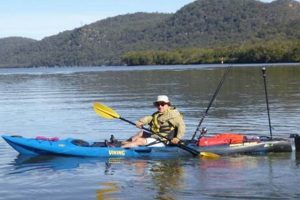
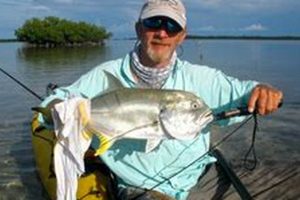
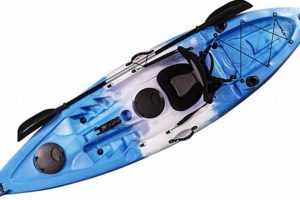
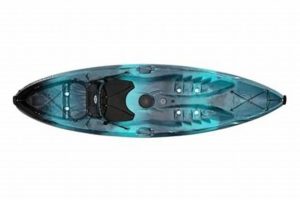
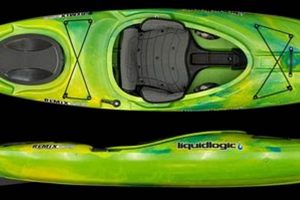
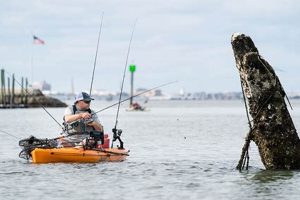
Angling from a small, human-powered watercraft offers a unique blend of recreation and sport. This quiet, low-impact approach allows close contact with nature and access to shallow, secluded waters often inaccessible to larger vessels. A typical experience might involve casting for species like panfish, bass, or trout in a pond, lake, or slow-moving river. The stability and maneuverability of these crafts make them suitable for various fishing techniques, from still-fishing to trolling.
This method provides several advantages. Its affordability and ease of transport make it accessible to a wide range of individuals. The minimal environmental impact contributes to preserving the natural serenity of waterways. Historically, small boats have played a vital role in subsistence fishing and continue to be a popular choice for recreational anglers seeking a tranquil and rewarding experience. The quiet operation allows anglers to approach fish without disturbance, increasing the chances of a successful catch.
The following sections will explore specific techniques for maximizing success, including equipment choices, ideal locations, and safety considerations for this rewarding pastime.
Tips for Paddle Boat Angling
Maximizing success and safety requires careful planning and execution. The following tips offer valuable insights for a productive and enjoyable experience.
Tip 1: Stability is Paramount: Distribute weight evenly within the vessel. Avoid sudden movements or leaning too far over the side, which could lead to capsizing. Keep a low center of gravity.
Tip 2: Essential Gear Selection: Pack light and choose equipment appropriate for the target species. A shorter rod and reel are often preferable in the confined space. Essential safety gear includes a personal flotation device (PFD), a whistle, and a first-aid kit.
Tip 3: Location, Location, Location: Select calm, sheltered waters, avoiding areas with heavy boat traffic or strong currents. Research potential fishing spots beforehand, focusing on shallow areas, weed beds, or drop-offs where fish tend to congregate.
Tip 4: Quiet Approach: Paddle smoothly and avoid splashing to minimize disturbance. Stealth is key to approaching fish without startling them.
Tip 5: Anchor Wisely: A lightweight anchor is crucial for maintaining position in desired fishing areas. Ensure the anchor is properly secured before casting.
Tip 6: Mind the Weather: Check weather forecasts before embarking. Avoid venturing out in strong winds, storms, or extreme temperatures. Be prepared for changing conditions.
Tip 7: Respect Wildlife and the Environment: Practice catch-and-release whenever possible. Properly dispose of fishing line and other waste. Adhere to local fishing regulations.
By adhering to these guidelines, anglers can enhance their chances of a successful outing while prioritizing safety and environmental responsibility. Preparation and mindful practice are crucial for a rewarding experience.
With these tips in mind, one can move forward confidently to explore the nuances of tackle and techniques specific to different fish species and aquatic environments.
1. Quiet Propulsion

Quiet propulsion is a defining characteristic of paddle boats and a significant advantage for angling. Unlike motorized vessels, the human-powered paddling motion produces minimal noise and vibration, reducing disturbances that can spook fish. This stealthy approach allows anglers to get closer to their target species, particularly in shallow or clear waters where fish are more easily startled. The absence of a motor also eliminates the noise pollution that can disrupt the tranquility of the natural environment, enhancing the overall fishing experience. For instance, in calm waters, a paddled approach can be significantly more effective for targeting wary species like bass or trout.
The impact of quiet propulsion extends beyond simply getting closer to fish. It contributes to a more natural and immersive experience, allowing anglers to better observe the subtle signs of aquatic life and appreciate the surrounding environment. This quiet interaction with nature is often cited as a primary reason for choosing paddle boats for fishing. Practically, this translates to more opportunities for sight fishing and a greater chance of success when using lures or bait that rely on subtle presentations. The reduced noise also facilitates better communication amongst anglers in the boat, allowing for coordinated fishing strategies and improved situational awareness.
In summary, quiet propulsion offers a distinct advantage in paddle boat fishing, enhancing stealth, improving the angler’s connection with nature, and ultimately increasing the likelihood of a successful catch. While navigating certain currents or covering larger distances can be more challenging with human-powered propulsion, the benefits for fish-catching and overall enjoyment in many fishing scenarios outweigh these limitations. The ability to approach fish undetected is a crucial element for a productive and immersive angling experience from a paddle boat.
2. Shallow Water Access
Shallow water zones often hold significant populations of fish, particularly species that utilize these areas for breeding, feeding, or shelter. Paddle boats, with their shallow draft and maneuverability, provide unparalleled access to these productive fishing grounds, offering a distinct advantage over larger, deeper-hulled vessels. Exploring the multifaceted connection between shallow water access and paddle boat fishing provides valuable insights for anglers.
- Reduced Disturbance:
The minimal draft of a paddle boat allows navigation in extremely shallow waters, often inaccessible to other watercraft. This minimizes disturbance to the habitat and reduces the likelihood of spooking fish in these sensitive areas. For instance, navigating shallow, vegetated areas where larger boats cannot reach can lead to increased catches of species like bass or pike that ambush prey in such locations. This ability to fish discreetly in shallow water is a key benefit of paddle boats.
- Targeting Specific Habitats:
Shallow water environments offer a diverse range of habitats, from weed beds and lily pads to submerged logs and rocky shorelines. Paddle boats allow anglers to precisely target these specific habitats, placing them in ideal positions to exploit the feeding patterns of various fish species. An example would be targeting panfish around submerged structures or casting into pockets within weed beds, techniques highly effective from a paddle boat.
- Sight Fishing Opportunities:
Clear, shallow water often provides opportunities for sight fishing, allowing anglers to observe fish behavior and target individual specimens. The low profile and quiet operation of a paddle boat further enhance this advantage, enabling anglers to approach fish without being detected. This is particularly effective in clear lakes or streams where sight fishing for species like bonefish or redfish can be exceptionally productive.
- Versatility in Technique:
Shallow water access expands the range of fishing techniques available to paddle boat anglers. From fly fishing in shallow flats to casting lures around structure, the maneuverability of a paddle boat allows for adapting to various approaches. This versatility is invaluable for targeting different species and adjusting to changing conditions. For instance, switching from a slow retrieve along a weed line to a vertical jigging presentation in a deeper pocket within the shallows can be easily accomplished from a paddle boat.
The ability to access shallow water environments is a core strength of paddle boat fishing. This capability opens up a wealth of fishing opportunities unavailable to other boat types, enabling anglers to target specific habitats, utilize specialized techniques, and engage with the aquatic environment in a more intimate and productive way. The advantages of shallow water access significantly contribute to the overall effectiveness and enjoyment of the paddle boat fishing experience.
3. Stable Casting Platform
A stable casting platform is fundamental to successful angling from a paddle boat. The ability to maintain balance and control while casting significantly impacts accuracy, efficiency, and overall fishing performance. Exploring the components, examples, and implications of a stable platform provides valuable insights for maximizing success in this specific fishing context.
- Center of Gravity and Weight Distribution:
Maintaining a low center of gravity is paramount for stability. Evenly distributing weight within the boat minimizes rocking and tipping. Positioning heavier items low and centrally, and avoiding sudden movements or leaning too far over the side, enhances balance. For example, placing a tackle box in the center of the boat rather than near the edge contributes to a more stable casting platform. Understanding weight distribution directly influences the angler’s ability to cast accurately and maintain control, particularly in challenging conditions such as wind or current. Improper weight distribution can compromise stability, increasing the risk of capsizing or interfering with casting accuracy.
- Boat Design and Stability:
The inherent design of a paddle boat influences its stability. Wider beams and flat bottoms generally offer greater stability compared to narrower or more rounded hulls. Consideration of hull design is essential when selecting a paddle boat for fishing. A wider, flatter-bottomed boat provides a more secure platform for casting, particularly in choppy water. Conversely, a narrower, more agile design may be preferable for navigating tight spaces but could compromise stability during casting. Choosing a boat design suited to the intended fishing environment and personal preferences directly impacts casting performance and overall safety on the water.
- Anchor System and Positioning:
Deploying an anchor effectively stabilizes the boat, preventing drift and maintaining position in a desired fishing spot. A properly set anchor eliminates the need for constant adjustments and allows the angler to focus on casting. Positioning the anchor appropriately relative to the target area ensures optimal casting angles and minimizes line tangling. For instance, anchoring upstream of a structure allows a natural drift presentation. Conversely, anchoring too close or at an improper angle can hinder casting and create difficulties in retrieving hooked fish. Proper anchoring enhances the angler’s ability to focus on technique and maximize fishing efficiency.
- Body Positioning and Posture:
Maintaining a balanced and comfortable posture within the boat contributes significantly to casting stability. Sitting upright with feet firmly planted provides a solid base for casting motion. Avoiding excessive leaning or reaching minimizes the risk of losing balance. Practicing casts from a seated position prior to fishing can improve balance and coordination. Maintaining a stable body position, even during the exertion of casting or fighting a fish, is crucial for preventing falls or capsizing. This awareness of body mechanics translates directly to improved casting accuracy and overall safety on the water.
These facets of a stable casting platform are interconnected and essential for successful fishing from a paddle boat. By understanding and optimizing these elements, anglers can significantly improve casting accuracy, maintain better control while fighting fish, and enhance overall safety and enjoyment on the water. A stable platform translates to a more efficient and rewarding fishing experience.
4. Lightweight Equipment

Lightweight equipment plays a crucial role in paddle boat fishing, impacting both maneuverability and overall efficiency. The limited weight capacity and human-powered propulsion of these vessels necessitate careful consideration of gear selection. Heavier equipment can negatively affect the boat’s balance and responsiveness, hindering navigation and making paddling more strenuous. For example, using a heavy tackle box or bulky rods can make it difficult to maintain a steady course or quickly change direction. This is particularly relevant in areas with currents or wind where precise control is essential for safety and effective fishing. Conversely, opting for lightweight rods, reels, tackle boxes, and other gear enhances maneuverability, allowing for easier paddling, quicker adjustments, and improved responsiveness to changing water conditions. This is especially beneficial when navigating shallow areas or targeting specific fish habitats requiring precise boat positioning.
Beyond maneuverability, lightweight equipment contributes to the overall efficiency of paddle boat fishing. Reduced weight minimizes fatigue during longer outings, allowing anglers to cover more water and fish for extended periods. This is especially important when paddling against currents or wind, where heavier loads can significantly increase exertion. Lightweight gear also facilitates easier transport and storage of the paddle boat and its accessories. Consider a fishing outing involving portaging the boat between different bodies of water or transporting it on a vehicle’s roof rack. The reduced weight simplifies these tasks, making the overall experience more convenient and enjoyable. Furthermore, lightweight equipment often translates to quicker setup and breakdown times at the fishing location, allowing anglers to maximize their time on the water. A lightweight, compact tackle system, for example, can be organized and deployed more quickly than a bulky, heavy one.
In summary, selecting lightweight equipment is essential for optimizing the paddle boat fishing experience. It directly affects maneuverability, reduces fatigue, and enhances overall efficiency. From navigating challenging water conditions to facilitating easier transport and setup, the benefits of lightweight gear contribute significantly to a more productive and enjoyable outing. The careful consideration of weight and bulk in equipment choices is a practical necessity for maximizing success and comfort in the context of paddle boat fishing.
5. Careful Maneuverability
Careful maneuverability is paramount for successful fishing from a paddle boat. Unlike motorized crafts, paddle boats rely on precise and deliberate paddling for positioning and navigation. This characteristic significantly influences fishing techniques, access to specific locations, and overall safety. Understanding the nuances of maneuvering a paddle boat effectively is crucial for optimizing fishing success and ensuring a safe and enjoyable experience.
- Navigating Shallows and Obstacles:
Paddle boats excel in shallow water environments, often inaccessible to larger vessels. Careful maneuvering allows anglers to navigate tight spaces, weave through vegetation, and avoid submerged obstacles like rocks or logs. This precision is essential for accessing prime fishing locations and preventing damage to the boat or entanglement of fishing lines. For example, navigating a narrow, weed-choked channel to reach a secluded pond requires careful paddle strokes and precise boat control. The ability to maneuver effectively in these environments opens up opportunities to target fish in areas typically undisturbed by other anglers.
- Controlling Drift and Maintaining Position:
Precise maneuvering is crucial for controlling drift and maintaining the desired boat position, especially in currents or windy conditions. Skilled paddling allows anglers to hold position near structure, along weed lines, or in specific feeding zones. For instance, maintaining a steady position upstream of a submerged log allows for a natural presentation of bait or lures, maximizing the chances of attracting fish. Conversely, uncontrolled drifting can lead to missed opportunities and entanglement in obstacles. Effective maneuvering allows for precise boat control, enhancing fishing effectiveness.
- Approaching Fish Stealthily:
Quiet and controlled movements are essential for approaching fish without disturbance. Paddle boats, by their nature, offer a stealthy approach, but careful maneuvering further enhances this advantage. Slow, deliberate paddle strokes minimize noise and vibration, preventing fish from being spooked. This is particularly crucial in clear, shallow water where fish are easily alerted to disturbances. For example, approaching a school of bonefish in shallow flats requires precise and silent maneuvering to avoid detection. This stealthy approach significantly increases the chances of a successful presentation and hookup.
- Facilitating Different Fishing Techniques:
Careful maneuverability enables anglers to adapt to various fishing techniques from a paddle boat. Whether trolling slowly along a weed bed, casting to specific targets, or drifting with the current, precise boat control enhances the effectiveness of each technique. For instance, trolling requires consistent speed and direction control, while casting accuracy benefits from a stable and well-positioned boat. The ability to maneuver the boat precisely expands the range of techniques available and optimizes their effectiveness, leading to a more versatile and productive fishing experience.
Careful maneuverability is an integral aspect of successful paddle boat fishing. It enables anglers to access prime fishing locations, control boat positioning, approach fish stealthily, and employ a wider range of fishing techniques. Mastering the art of precise and controlled paddling significantly enhances the overall fishing experience, contributing directly to increased catches and a deeper connection with the aquatic environment. The ability to maneuver a paddle boat effectively transforms it from a simple vessel into a versatile and powerful tool for angling success.
Frequently Asked Questions
This section addresses common inquiries regarding angling from paddle-powered watercraft. Clarity on these points can contribute to a safer and more rewarding experience.
Question 1: What safety precautions are essential when fishing from a paddle boat?
Wearing a personal flotation device (PFD) is paramount. Checking weather forecasts prior to departure is crucial. Carrying a whistle, first-aid kit, and communication device enhances safety. Informing someone of the intended fishing location and expected return time is also recommended.
Question 2: What type of fishing license is required?
Regulations vary by jurisdiction. Consulting local authorities or visiting relevant websites provides accurate information regarding specific licensing requirements. Compliance with local regulations is the angler’s responsibility.
Question 3: What are the best types of fish to target from a paddle boat?
Species commonly targeted include panfish, bass, trout, and catfish. The ideal species depends on the specific body of water and local fish populations. Researching local fish species and their habitats informs effective targeting strategies.
Question 4: What essential equipment is recommended for paddle boat fishing?
Essential equipment includes a properly sized rod and reel, appropriate line and tackle, a landing net, pliers, and a selection of lures or bait suitable for the target species. A lightweight anchor and appropriate storage solutions are also recommended.
Question 5: How does one choose the right paddle boat for fishing?
Factors to consider include stability, size, weight capacity, and storage options. The intended fishing environment also influences boat selection. Wider, more stable designs are preferable for larger bodies of water, while narrower boats may be suitable for navigating smaller streams or rivers.
Question 6: What are common challenges encountered while fishing from a paddle boat, and how can they be addressed?
Common challenges include wind drift, maintaining position, and navigating shallow water obstacles. Effective anchoring, proper weight distribution, and skilled paddling techniques mitigate these challenges. Practice and experience enhance maneuvering proficiency and improve overall control.
Careful consideration of these frequently asked questions prepares anglers to address potential challenges and maximize their chances of a successful and enjoyable experience on the water.
Further exploration of specific techniques, location selection, and species-specific tactics will enhance fishing proficiency and contribute to a rewarding paddle boat angling experience.
Fishing in a Paddle Boat
This exploration has highlighted the multifaceted nature of angling from a paddle boat. From the quiet propulsion facilitating a stealthy approach to the unparalleled access to shallow-water habitats, this method offers unique advantages. The importance of a stable casting platform, the benefits of lightweight equipment, and the necessity of careful maneuverability have been examined in detail. These elements, when combined effectively, contribute to a rewarding and efficient fishing experience. Understanding these core aspects empowers anglers to maximize their success while minimizing environmental impact.
The continued appeal of fishing in a paddle boat lies in its blend of tranquility, challenge, and connection with nature. As anglers seek more immersive and sustainable fishing practices, the value of this human-powered approach becomes increasingly evident. Careful consideration of the techniques and principles discussed herein will undoubtedly enhance future angling endeavors, fostering a deeper appreciation for both the sport and the environment it embraces.