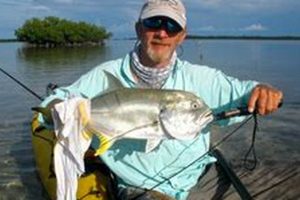
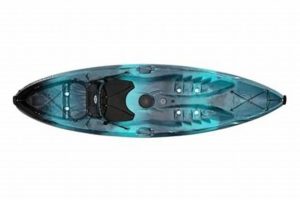
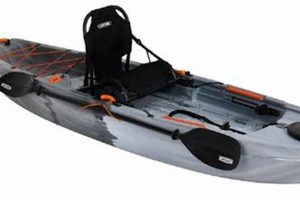
A kayak designed for angling with a weight limit of 350 pounds combines stability and load-bearing capabilities. This allows anglers to carry necessary gear, including rods, tackle boxes, and potentially even a fish finder, while maintaining a safe and balanced vessel. A higher weight capacity generally indicates a wider and more stable hull design.
The ability to accommodate substantial weight is critical for a successful and safe fishing experience. Sufficient capacity ensures the kayak remains buoyant and maneuverable, even with a heavier angler and equipment. Historically, fishing kayaks were often limited in their carrying capacity. Advancements in design and materials have led to the development of kayaks that can comfortably support larger loads, opening up the sport to a wider range of individuals and enabling longer expeditions with more gear. This increased capacity also contributes to stability, a crucial factor in open water or challenging conditions.
Understanding the factors that contribute to a kayak’s weight limit, such as hull design and material construction, empowers informed purchasing decisions. Further exploration will delve into the various types of fishing kayaks available, their specific features, and how to choose the appropriate model for individual needs and preferences.
Tips for Utilizing Kayaks with a 350 lb Capacity
Proper understanding and utilization of a kayak’s weight capacity are crucial for safety and performance. The following tips offer guidance for maximizing the benefits of a 350 lb capacity kayak.
Tip 1: Calculate Total Load Accurately: Include the combined weight of the angler, all gear (rods, reels, tackle boxes, etc.), and any potential catch. Accurate calculations ensure the total load remains within the safe operating limit.
Tip 2: Distribute Weight Evenly: Proper weight distribution is essential for stability and maneuverability. Center heavier items low and towards the middle of the kayak for optimal balance.
Tip 3: Consider Water Conditions: Rougher water or strong currents require greater stability. Adjust the load accordingly, potentially reducing the total weight carried in challenging conditions.
Tip 4: Practice Entry and Exit Techniques: Proper techniques minimize the risk of capsizing, especially when entering or exiting the kayak from a dock or shallow water. Practice these techniques in calm conditions before venturing into more challenging environments.
Tip 5: Understand Capacity Limitations: While a 350 lb capacity provides ample room for gear, exceeding this limit compromises stability and safety. Respect the manufacturer’s specified weight limit.
Tip 6: Regularly Inspect the Kayak: Before each use, inspect the hull for any damage or wear that could compromise its structural integrity and affect its capacity. Address any issues promptly.
Adhering to these guidelines will ensure a safe and enjoyable kayaking experience. Careful planning and mindful execution maximize stability, performance, and overall safety on the water.
By following these tips, anglers can confidently utilize the full potential of their 350 lb capacity kayak while prioritizing safety and performance. This knowledge contributes to a more rewarding and secure fishing experience.
1. Safety

Safety is paramount in kayak fishing, and the 350 lb weight capacity plays a crucial role in ensuring a secure experience on the water. Understanding the relationship between capacity and safety is essential for mitigating risks and preventing accidents.
- Buoyancy and Stability
A kayak’s weight capacity directly relates to its buoyancy and stability. A 350 lb capacity provides sufficient buoyancy to support the combined weight of the angler, gear, and potential catch. This buoyancy is essential for preventing capsizing and maintaining a stable platform, especially in challenging conditions such as rough water or strong currents. Exceeding the weight limit compromises buoyancy and stability, increasing the risk of capsizing or swamping.
- Freeboard and Water Entry
Freeboard, the distance between the waterline and the top edge of the kayak’s hull, is influenced by the load carried. A kayak loaded near its maximum capacity will sit lower in the water, reducing freeboard. Reduced freeboard increases the likelihood of water entering the cockpit, especially in waves or choppy conditions. Maintaining adequate freeboard through adherence to the 350 lb limit is crucial for preventing swamping and maintaining control.
- Maneuverability and Control
A kayak loaded within its weight capacity offers optimal maneuverability and control. Exceeding the limit can make the kayak sluggish and difficult to control, especially in windy conditions or currents. This reduced responsiveness can create hazardous situations, particularly when navigating obstacles or reacting to changing water conditions. Maintaining control is crucial for avoiding collisions and maintaining a safe course.
- Structural Integrity
The 350 lb capacity rating reflects the structural integrity of the kayak. Exceeding this limit places undue stress on the hull and other components, increasing the risk of damage or failure. Maintaining loads within the specified capacity ensures the kayak’s structural integrity, preventing potential equipment failure and maintaining a safe platform for the angler.
Careful consideration of these safety factors, in conjunction with respecting the 350 lb weight limit, contributes significantly to a secure and enjoyable kayaking experience. Understanding the interplay between capacity, stability, and control empowers informed decision-making and promotes responsible practices on the water.
2. Stability
Stability is a critical factor in fishing kayak design, significantly influenced by weight capacity. A 350 lb capacity generally indicates a wider and more stable platform compared to kayaks with lower capacities. This increased stability is crucial for various fishing activities, from casting and reeling to landing fish. The relationship between capacity and stability is complex and influenced by factors beyond weight alone, including hull design, width, and length. A wider hull generally provides more initial stability, resisting tipping, while a longer kayak tends to have better tracking and directional stability. A kayak designed for a 350 lb capacity often balances these design elements to offer both initial and tracking stability suitable for diverse fishing environments.
Consider an angler standing to cast in a kayak. A higher weight capacity, reflected in a more stable hull design, provides a secure platform, minimizing the risk of capsizing. This stability becomes even more critical in challenging conditions, such as currents or windy environments. For instance, a kayak with a 350 lb capacity can more effectively handle the destabilizing forces of a hooked fish fighting against the line, compared to a kayak with a lower capacity. Furthermore, the added stability allows for smoother, more controlled movements within the kayak, crucial for maintaining balance while retrieving gear or landing a catch. This translates to a more comfortable and efficient fishing experience, enabling anglers to focus on the sport rather than constantly correcting balance.
Understanding the relationship between stability and weight capacity is crucial for informed kayak selection. Anglers must consider their weight, gear, and intended fishing environment when choosing a kayak. A 350 lb capacity offers a stable platform for a variety of fishing styles and conditions, accommodating heavier anglers and ample gear. Prioritizing stability enhances safety, improves fishing performance, and contributes to a more confident and enjoyable on-the-water experience. Ultimately, a stable kayak allows anglers to focus on the thrill of the catch, rather than the precariousness of their vessel. The interplay between capacity and stability remains a fundamental consideration in optimizing kayak design and ensuring a secure and productive fishing experience.
3. Gear Capacity

A fishing kayak’s gear capacity is intrinsically linked to its overall weight capacity. A 350 lb capacity provides ample space and weight allowance for essential fishing equipment, directly impacting the angler’s preparedness and effectiveness on the water. Understanding the nuances of gear capacity within this weight limit is crucial for optimizing fishing excursions.
- Essential Gear Considerations
Essential fishing gear includes rods, reels, tackle boxes, safety equipment (life vest, whistle), and potentially electronic devices like fish finders. Each item contributes to the total weight carried. A 350 lb capacity allows anglers to comfortably accommodate these essentials, ensuring they are well-equipped for various fishing scenarios. For instance, a larger tackle box with a wider assortment of lures and tools can be carried without compromising stability or exceeding the weight limit.
- Extended Trips and Provisions
Kayaks with a higher weight capacity, such as 350 lbs, are well-suited for longer fishing trips. The increased allowance accommodates additional provisions like food, water, and extra clothing. These provisions are essential for multi-day excursions or trips to remote locations where resupply is unavailable. This extended capacity contributes to angler comfort and safety, enabling longer explorations without compromising essential supplies.
- Specialized Equipment and Accessories
Certain fishing styles require specialized equipment. Kayak anglers targeting larger species, for example, might carry heavier rods, reels, and tackle. A 350 lb capacity kayak provides the necessary support for this heavier gear, enabling specialized fishing techniques without compromising stability or safety. Additionally, accessories like anchor systems or specialized rod holders contribute to the overall weight and require a kayak with sufficient capacity.
- Weight Distribution and Balance
Effective gear organization and weight distribution are crucial for maintaining stability and maneuverability, especially in a fully loaded kayak. A 350 lb capacity provides flexibility in distributing gear evenly throughout the kayak, preventing imbalances that could compromise stability. Proper weight distribution ensures optimal performance and reduces the risk of tipping, especially when maneuvering in challenging conditions or retrieving a catch.
The 350 lb capacity provides a generous allowance for essential and specialized gear, supporting diverse fishing styles and extended trips. Effective utilization of this capacity, through thoughtful gear selection and strategic weight distribution, enhances fishing performance, extends range, and contributes to a safe and successful experience on the water. Ultimately, a kayak’s gear capacity plays a significant role in determining its versatility and suitability for specific fishing needs and ambitions.
4. Angler Weight

Angler weight is a critical factor in kayak selection, directly impacting safety and performance. A fishing kayak’s 350 lb capacity must accommodate not only gear and potential catch but, most importantly, the angler’s own weight. Accurate assessment of angler weight is essential for ensuring the kayak remains within its safe operating limits. Exceeding the maximum capacity compromises stability, maneuverability, and overall safety. For example, an angler weighing 200 lbs requires a kayak with a capacity significantly greater than 200 lbs to accommodate additional gear and potential catch. Choosing a kayak based solely on angler weight without considering other factors risks overloading the vessel and jeopardizing stability.
The relationship between angler weight and kayak capacity influences performance characteristics. A heavier angler in a kayak near its maximum capacity will experience reduced maneuverability and slower speeds compared to a lighter angler in the same kayak. Furthermore, the kayak will sit lower in the water, reducing freeboard and increasing the risk of water entry. Conversely, a lighter angler in a kayak designed for a much higher capacity might find the kayak less responsive and more difficult to control. Appropriate kayak selection requires careful consideration of the angler’s weight in relation to the kayak’s overall capacity, balancing stability and maneuverability for optimal performance. An angler intending to fish in rougher conditions or carry heavier gear requires a kayak with a higher capacity than an angler fishing in calm waters with minimal equipment.
Understanding the interplay between angler weight and kayak capacity is paramount for a safe and enjoyable fishing experience. Accurate weight assessment, combined with realistic gear and catch estimations, ensures the kayak remains within its operational limits, maximizing stability and performance. Failure to account for angler weight can lead to hazardous situations, compromising safety and diminishing the overall fishing experience. Careful consideration of these factors empowers informed decision-making, ensuring appropriate kayak selection for individual needs and promoting responsible practices on the water.
5. Performance

Performance in a fishing kayak is multifaceted, encompassing speed, maneuverability, stability, and tracking. A 350 lb capacity influences these performance characteristics, impacting how the kayak handles on the water. Weight capacity is intrinsically linked to hull design and dimensions, which in turn affect speed, how easily the kayak turns, its resistance to tipping, and its ability to maintain a straight course. Understanding these relationships is crucial for selecting a kayak optimized for individual fishing needs and preferences.
- Tracking
Tracking refers to a kayak’s ability to maintain a straight course with minimal corrective strokes. A kayak’s length and hull design significantly influence tracking performance. Longer kayaks generally track better than shorter ones. A 350 lb capacity often implies a wider hull to maintain stability, which can sometimes negatively impact tracking. However, manufacturers address this by incorporating design features like a defined keel or tracking channels to improve directional stability. Efficient tracking conserves energy and allows anglers to cover greater distances, crucial for exploring larger bodies of water or reaching distant fishing spots.
- Maneuverability
Maneuverability describes how easily a kayak turns and responds to paddle input. Shorter kayaks are generally more maneuverable than longer ones. While a 350 lb capacity often suggests a wider, more stable hull, potentially reducing maneuverability, design elements like a rockered hull (curved upwards at the bow and stern) can enhance turning performance. This is particularly important in rivers, creeks, or areas with obstacles where quick turns and precise maneuvering are essential. Enhanced maneuverability allows for navigating tight spaces and efficiently positioning the kayak for optimal casting angles.
- Speed
Speed is influenced by factors such as hull design, length, and waterline length. Longer, narrower kayaks with a streamlined hull design are generally faster. While kayaks designed for a 350 lb capacity might prioritize stability over speed, a longer waterline can partially offset the reduced speed associated with a wider hull. Speed is important for covering distances quickly, reaching fishing spots efficiently, and trolling effectively. Understanding the trade-offs between stability and speed within the context of a 350 lb capacity is crucial for selecting a kayak suited to individual fishing styles.
- Stability
Stability, or resistance to tipping, is paramount in a fishing kayak. A 350 lb capacity often indicates a wider and more stable hull design. This enhanced stability allows anglers to confidently stand and cast, retrieve fish, and maneuver in various conditions. Initial stability, or resistance to tipping from a level position, is generally higher in wider kayaks. Secondary stability, or the ability to remain upright when leaned, becomes increasingly important as the kayak is tilted. A kayak’s stability is critical for safety and comfort, enabling anglers to focus on fishing rather than maintaining balance.
The 350 lb capacity of a fishing kayak influences performance by affecting its dimensions and hull design. Balancing stability with maneuverability, speed, and tracking is essential for selecting a kayak optimized for individual needs and fishing styles. Understanding the interplay between capacity and these performance characteristics empowers informed decision-making, leading to a more enjoyable and productive fishing experience.
Frequently Asked Questions
This section addresses common inquiries regarding fishing kayaks with a 350 lb capacity, providing clarity on key aspects of selection, use, and maintenance.
Question 1: What factors contribute to a kayak’s 350 lb weight capacity?
Hull design, material construction, and overall dimensions determine a kayak’s weight capacity. Wider hulls and robust materials contribute to higher capacities. Manufacturers rigorously test kayaks to determine safe weight limits.
Question 2: Is it safe to load a 350 lb capacity kayak to its maximum limit?
While manufacturers specify a maximum capacity, loading the kayak slightly below the limit provides a margin of safety, especially in challenging conditions. This accounts for unexpected weight shifts or changing water conditions.
Question 3: How does weight capacity affect stability?
Higher weight capacities often correlate with increased stability due to wider hull designs. However, stability is also influenced by factors such as hull shape and length. A well-designed 350 lb capacity kayak balances stability with maneuverability.
Question 4: What type of fishing is suitable for a 350 lb capacity kayak?
Kayaks with this capacity are versatile, suitable for various fishing styles, including freshwater and inshore saltwater fishing. The ample capacity accommodates gear for diverse techniques, from trolling to casting and jigging.
Question 5: How does weight capacity affect paddling performance?
Heavier kayaks, even when loaded below capacity, may require more effort to paddle and maneuver compared to lighter kayaks. However, a well-designed 350 lb capacity kayak balances load-bearing capacity with efficient hull design for reasonable paddling performance.
Question 6: How does one maintain a fishing kayak with a 350 lb capacity?
Regular cleaning, proper storage, and periodic inspections are essential for maintaining a kayak’s condition and prolonging its lifespan. Rinse the kayak with freshwater after each use, especially in saltwater environments. Store the kayak protected from sunlight and extreme temperatures. Inspect the hull, fittings, and any moving parts for damage or wear.
Careful consideration of these frequently asked questions empowers informed decisions regarding kayak selection, utilization, and maintenance. Understanding the nuances of weight capacity and its implications for performance and safety contributes to a more rewarding and secure kayaking experience.
Further exploration can delve into specific kayak models and features, providing a more granular understanding of options available within the 350 lb capacity range.
Conclusion
Exploration of the 350 lb capacity in fishing kayaks reveals its significance for safety, performance, and overall fishing experience. Capacity directly influences stability, impacting an angler’s ability to cast, reel, and land fish effectively. Furthermore, sufficient capacity accommodates essential gear and provisions, enabling diverse fishing styles and extended trips. The interplay between capacity, angler weight, and gear considerations underscores the importance of accurate load calculations for optimal performance and safety. Performance characteristics, including speed, maneuverability, and tracking, are also affected by capacity and related design elements.
Appropriate kayak selection requires careful consideration of individual needs and intended fishing applications. A 350 lb capacity offers versatility and ample load-bearing potential for a wide range of anglers and fishing styles. Thorough understanding of capacity limitations and their impact on performance and safety empowers informed decision-making, contributing to a more rewarding and secure experience on the water. Ultimately, prioritizing appropriate capacity ensures not only a successful fishing trip but also the angler’s well-being and enjoyment of the sport.