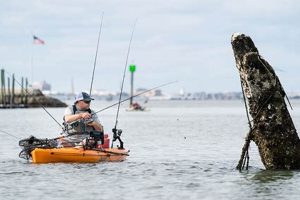
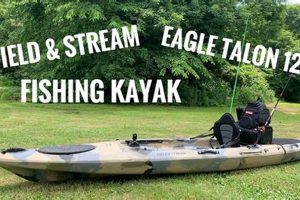
A sit-on-top kayak measuring 11 feet in length, manufactured by Lifetime Products, and designed specifically for angling, typically features specialized components like rod holders, tackle storage, and potentially other fishing-oriented accessories. These vessels are often constructed from high-density polyethylene (HDPE) for durability and affordability.
Vessels of this type offer anglers stability, portability, and access to shallow or otherwise difficult-to-reach fishing grounds. Their relatively compact size facilitates transport and storage compared to larger boats, while the sit-on-top design promotes easy entry and exit, especially beneficial for anglers in warmer climates. The incorporation of fishing-specific features enhances angling convenience and efficiency. This style of kayak has grown in popularity as a cost-effective and versatile approach to fishing.
This discussion will further explore relevant aspects of kayak fishing, including selection considerations, essential gear, popular fishing techniques, and safety best practices.
Tips for Kayak Fishing
Proper preparation and technique enhance safety and success on the water. The following tips offer guidance for anglers using a fishing kayak.
Tip 1: Stability and Balance: Maintaining balance is crucial. Weight distribution should be even, and sudden movements minimized. Practice entering, exiting, and maneuvering the kayak in calm, shallow water before venturing into more challenging conditions.
Tip 2: Safety Equipment: A personal flotation device (PFD) is essential and should be worn at all times. A whistle, signaling mirror, and first-aid kit are also recommended safety items.
Tip 3: Planning and Navigation: Check weather forecasts and water conditions before embarking. Inform someone of the intended fishing location and estimated return time. Carry a map or chart, compass, or GPS device for navigation.
Tip 4: Efficient Paddling: Utilize proper paddling techniques to conserve energy and cover distance effectively. A kayak paddle with an appropriate blade shape and length contributes to efficient propulsion.
Tip 5: Fishing Gear and Tackle: Select fishing gear appropriate for the target species and fishing environment. Organize tackle for easy access and secure rods when not in use.
Tip 6: Anchor and Drift Control: Employ an anchor or drift sock to maintain position in current or wind. Consider the water depth and bottom conditions when anchoring.
Tip 7: Catch and Release Practices: Handle fish carefully and practice proper catch-and-release techniques to conserve fish populations. Minimize handling time and use appropriate hooks and landing nets.
Adhering to these guidelines contributes significantly to a safe and productive kayak fishing experience.
By understanding and implementing these tips, anglers can maximize their enjoyment and success on the water.
1. Brand

The “Lifetime” brand plays a significant role in defining the characteristics and market position of the Lifetime 11-foot fishing kayak. Understanding Lifetime’s brand identity provides valuable context for evaluating the kayak’s features, construction, and target audience. This section explores key facets of the Lifetime brand and their connection to the specific kayak model.
- Durability and Affordability
Lifetime Products has built a reputation for producing durable and affordable products using high-density polyethylene (HDPE). This focus on practicality and value influences the design and material choices for their kayaks, making them accessible to a wider range of consumers. The emphasis on HDPE construction contributes to the kayak’s resistance to impact, UV damage, and general wear and tear, factors crucial for its intended use in outdoor environments.
- Focus on Recreational Products
Lifetime specializes in manufacturing products for recreational activities, including basketball hoops, tables, sheds, and playsets, in addition to kayaks. This specialization allows them to leverage manufacturing expertise and distribution networks to offer a diverse range of outdoor recreational equipment, including fishing kayaks tailored to specific needs.
- Target Audience and Market Positioning
Lifetime products often target families and recreational users seeking value-driven options. This market positioning influences the design and pricing of their kayaks, aiming for a balance between functionality and affordability. The Lifetime 11-foot fishing kayak aligns with this strategy, offering essential features for anglers without the premium price tag associated with higher-end brands.
- Brand Recognition and Reputation
Lifetime has established a level of brand recognition and reputation for producing reliable recreational products. This brand awareness can influence consumer purchasing decisions, providing a sense of familiarity and trust in the quality and performance of their kayaks. This pre-existing brand perception contributes to the market viability of the Lifetime 11-foot fishing kayak.
These facets of the Lifetime brand directly influence the design, material selection, target market, and overall value proposition of the Lifetime 11-foot fishing kayak. By understanding the brand’s focus on durability, affordability, and recreational use, consumers can better assess the kayak’s suitability for their individual needs and budget. This analysis provides a comprehensive perspective on the interplay between brand identity and product characteristics within the competitive landscape of fishing kayaks.
2. Length

The 11-foot length of the Lifetime fishing kayak significantly influences its performance characteristics, making it a suitable choice for specific fishing environments and angler preferences. This length represents a compromise between maneuverability and tracking performance. Shorter kayaks are generally more agile in tight spaces, such as small creeks or vegetated areas, while longer kayaks track more efficiently in open water, covering greater distances with less effort. An 11-foot length offers a balance suitable for a variety of fishing locations, including lakes, ponds, slow-moving rivers, and protected coastal waters. For example, navigating through narrow channels or around obstacles benefits from the kayak’s moderate length, while paddling across larger bodies of water remains manageable. This versatility expands the range of fishing opportunities accessible with this particular kayak model.
The 11-foot length also affects stability and load capacity. Longer kayaks generally offer greater stability than shorter ones, providing a more secure platform for casting, reeling, and landing fish. This added stability becomes particularly important when standing to fish, a common practice in certain fishing styles. Furthermore, the 11-foot length typically allows for a higher weight capacity compared to shorter kayaks, accommodating anglers of varying sizes and gear requirements. This increased capacity enables anglers to carry sufficient tackle, safety equipment, and potentially even small coolers or other accessories for extended fishing trips. The interplay between length, stability, and load capacity directly impacts the kayak’s suitability for different fishing applications and angler preferences.
In summary, the 11-foot length of the Lifetime fishing kayak represents a deliberate design choice that balances maneuverability, tracking performance, stability, and load capacity. This length makes it a versatile option suitable for a variety of fishing environments and angler needs. Understanding the relationship between kayak length and performance characteristics is essential for selecting the appropriate kayak model for specific fishing applications and maximizing on-the-water efficiency and enjoyment. Considerations related to storage and transportation further underscore the practical significance of this kayak’s length.
3. Purpose
The designation “fishing” as the core purpose fundamentally shapes the design and features of the Lifetime 11-foot kayak. This purpose dictates specific design elements absent in recreational or touring kayaks, directly impacting an angler’s experience. For instance, integrated rod holders provide secure storage and quick access to fishing rods, a crucial element for efficient angling. Similarly, strategically placed tackle storage compartments keep essential gear organized and within reach, minimizing disruptions during fishing. Other fishing-oriented features might include paddle parks, anchor trolleys, and even transducer mounts for fish finders. Without these specialized features, the kayak would lose its utility as a dedicated fishing platform. Consider the scenario of an angler attempting to troll without rod holders; the constant need to hold the rod would significantly impede maneuverability and overall fishing effectiveness. This illustrates the direct causal relationship between the kayak’s intended purpose and its design features.
The “fishing” designation extends beyond physical attributes to influence the kayak’s overall performance profile. Stability, a critical factor for fishing kayaks, receives heightened consideration in the design process. A stable platform allows anglers to cast, reel, and land fish without compromising balance, even in challenging conditions. The kayak’s hull design, often wider and flatter than that of recreational kayaks, prioritizes stability over speed, reflecting the specific demands of fishing activities. Furthermore, the kayak’s weight capacity often exceeds that of recreational models to accommodate the additional weight of fishing gear, further highlighting the influence of the “fishing” purpose on practical design choices. Imagine an angler attempting to stand and cast in a narrow, unstable kayak; the inherent risk of capsizing underscores the practical importance of stability as a core design consideration for fishing kayaks.
In conclusion, the “fishing” purpose serves as the driving force behind the Lifetime 11-foot kayak’s design and functionality. The inclusion of specialized features like rod holders, tackle storage, and a stability-focused hull design directly addresses the unique needs of anglers. These features, absent in kayaks designed for other purposes, underscore the crucial link between intended use and product design. Understanding this connection allows consumers to select the most appropriate kayak for their specific needs and appreciate the practical significance of design choices tailored to enhance the fishing experience. The absence of these specialized features would significantly diminish the kayak’s utility and effectiveness as a fishing platform, highlighting the inextricable link between purpose and design in this specific context.
4. Type
Categorizing the Lifetime 11-foot fishing vessel as a “kayak” immediately establishes fundamental characteristics that distinguish it from other watercraft. This classification signifies a human-powered vessel propelled by a double-bladed paddle, typically featuring a closed deck and a cockpit where the paddler sits. This inherent design contrasts sharply with other watercraft like canoes, which utilize single-bladed paddles and open decks, or motorized boats reliant on engines for propulsion. This distinction directly impacts practical usage; maneuvering a kayak through narrow waterways or shallow areas, infeasible for larger boats, becomes readily achievable. Consider navigating a densely vegetated marsh; a kayak’s slender profile and paddle-based propulsion offer access denied to motorized vessels or wider canoes.
Furthermore, the “kayak” designation implies a specific relationship between the paddler and the water. The seated position, often close to the waterline, offers a unique perspective and connection to the surrounding environment, enhancing the fishing experience. This intimate interaction contrasts with the elevated vantage point of a motorboat or sailboat, providing anglers in kayaks with a closer, more immersive experience. Picture an angler casting a line from a kayak; the proximity to the water’s surface amplifies the sensory feedback, enhancing the angler’s awareness of subtle takes and underwater structures. This intimate connection to the aquatic environment represents a defining characteristic of the kayaking experience, particularly relevant in the context of fishing.
In summary, classifying the Lifetime 11-foot fishing vessel as a “kayak” defines its core operational characteristics and the angler’s interaction with the environment. Paddle-based propulsion, a closed deck, and a seated position distinguish kayaks from other watercraft, influencing maneuverability and access to specific fishing locations. The intimate connection to the water, a defining feature of the kayak experience, enhances the angler’s engagement with the surrounding aquatic environment. Understanding the practical implications of the “kayak” designation provides crucial context for appreciating the design choices and functionality of the Lifetime 11-foot fishing kayak within the broader spectrum of watercraft. This classification ultimately shapes the angler’s experience, influencing access, maneuverability, and the overall connection to the fishing environment.
5. Material

High-density polyethylene (HDPE) constitutes the primary material for constructing Lifetime 11-foot fishing kayaks. This material choice directly influences the kayak’s performance characteristics, durability, and affordability. HDPE offers distinct advantages in kayak construction, including impact resistance, UV stability, and relatively low cost. Impact resistance proves crucial for navigating shallow waters, rocky shorelines, and accidental collisions. UV stability ensures the kayak withstands prolonged sun exposure without significant degradation, preserving its structural integrity and color. The lower cost of HDPE compared to alternative materials like fiberglass or composites contributes to the kayak’s affordability, making it accessible to a wider range of consumers. For example, a kayak striking a submerged log might sustain only minor scratches with HDPE, whereas a fiberglass kayak could suffer substantial damage. This resilience extends the lifespan of the kayak and reduces the need for frequent repairs.
The manufacturing process for HDPE kayaks further reinforces their practicality. Rotational molding, a common technique employed for creating HDPE kayaks, allows for seamless, one-piece construction, eliminating potential leak points and structural weaknesses associated with multi-piece designs. This manufacturing method also facilitates the integration of features like molded-in rod holders, seat wells, and storage compartments, enhancing functionality and reducing the need for additional hardware. The relatively lightweight nature of HDPE, combined with its inherent buoyancy, contributes to the kayak’s portability and ease of transport. Consider the scenario of loading a kayak onto a car roof rack; the lighter weight of an HDPE kayak simplifies this process compared to heavier alternatives. This practical aspect enhances the overall user experience, particularly for individuals transporting kayaks without specialized trailers or loading assistance.
In summary, the utilization of HDPE in constructing Lifetime 11-foot fishing kayaks represents a strategic material choice balancing performance, durability, and affordability. HDPE’s inherent properties, including impact resistance, UV stability, and relatively low cost, contribute to the kayak’s suitability for recreational fishing. The rotational molding manufacturing process further enhances the kayak’s structural integrity, functionality, and portability. Understanding the implications of this material choice informs consumer perceptions of the kayak’s value proposition and its suitability for diverse fishing environments. This analysis demonstrates the direct connection between material selection, manufacturing processes, and the practical performance characteristics of the Lifetime 11-foot fishing kayak within the context of recreational angling.
Frequently Asked Questions
This section addresses common inquiries regarding 11-foot fishing kayaks manufactured by Lifetime Products. The information provided aims to offer clarity and facilitate informed purchasing decisions.
Question 1: What is the maximum weight capacity of a typical Lifetime 11-foot fishing kayak?
Weight capacities vary by model, but typically range from 275 to 300 pounds. Consulting the manufacturer’s specifications for the specific model is recommended.
Question 2: Are these kayaks suitable for ocean use?
While designed primarily for calm waters like lakes and slow-moving rivers, some models can handle protected coastal bays and estuaries. Open ocean use is generally not recommended due to potential stability limitations in rough conditions.
Question 3: What materials are used in the construction of Lifetime 11-foot fishing kayaks?
These kayaks are typically constructed from high-density polyethylene (HDPE), known for its durability, impact resistance, and UV stability.
Question 4: What features are typically included on these kayaks designed for fishing?
Common features include multiple rod holders, integrated tackle storage compartments, paddle parks, and adjustable seating systems. Specific features may vary depending on the exact model.
Question 5: How do these kayaks compare in price to other fishing kayak brands?
Lifetime kayaks are generally considered more budget-friendly compared to many other fishing kayak brands, offering a balance of functionality and affordability.
Question 6: What maintenance is required for a Lifetime 11-foot fishing kayak?
Routine maintenance includes rinsing with fresh water after each use, especially in saltwater environments, and storing the kayak out of direct sunlight when not in use. Periodic inspections for damage and minor repairs, if necessary, are also recommended.
Understanding these key aspects contributes significantly to informed decision-making and ensures optimal utilization of the kayak for its intended purpose.
The following section will provide further details regarding specific models and available accessories.
Conclusion
Exploration of the Lifetime 11-foot fishing kayak reveals a strategically designed vessel tailored for angling. Key features, including specialized storage, rod holders, and a stable hull, directly address angler needs. The utilization of high-density polyethylene contributes to durability and affordability. The 11-foot length offers a balance between maneuverability and tracking performance, suitable for diverse fishing environments. Understanding these attributes empowers informed selection and optimal usage within the context of recreational fishing.
Careful consideration of individual fishing styles, target species, and waterway characteristics remains essential for maximizing the kayak’s potential. Appropriate safety precautions and adherence to ethical angling practices further enhance the experience. The Lifetime 11-foot fishing kayak represents a valuable tool for anglers seeking efficient and accessible exploration of aquatic environments.