A specialized angling setup designed for use in kayaks combines a compact, balanced fishing rod with a robust reel capable of handling various fish species and line types. This equipment facilitates casting and retrieving lines effectively from a seated position while maintaining stability and control within the limited space of a kayak.
This specialized equipment offers significant advantages in kayak angling. The shorter length of the rod allows for easier maneuverability and casting in confined spaces, while its balanced design minimizes fatigue during prolonged fishing sessions. A well-chosen reel, often featuring a sealed drag system to protect against water intrusion, provides the necessary power and durability to handle larger fish and challenging conditions. Historically, kayak fishing has evolved alongside advancements in rod and reel technology, with modern materials and designs contributing to lighter, stronger, and more efficient equipment.
This article will explore the key considerations for selecting appropriate equipment, including rod length, action, power, reel types, line selection, and essential accessories, empowering kayak anglers to make informed decisions based on their target species, fishing style, and environment.
Tips for Effective Kayak Fishing Equipment Selection
Choosing appropriate equipment significantly impacts success and enjoyment while kayak fishing. These tips offer guidance for selecting an optimal setup.
Tip 1: Prioritize shorter rod lengths. Rods between 6 and 7 feet offer optimal balance and control within a kayak’s limited space. Longer rods can be cumbersome and difficult to manage.
Tip 2: Consider rod action. A fast-action rod provides greater sensitivity and hook-setting power, ideal for techniques requiring quick reactions. Slower action rods offer more flexibility, beneficial for fighting larger fish.
Tip 3: Select appropriate rod power. Rod power should align with target species and fishing conditions. Lighter power rods suit smaller fish and calmer waters, while heavier power rods handle larger fish and stronger currents.
Tip 4: Choose a durable and sealed reel. Opt for a spinning or baitcasting reel designed for saltwater environments. A sealed drag system protects against corrosion and ensures smooth operation.
Tip 5: Select appropriate fishing line. Braided lines offer excellent sensitivity and strength, while fluorocarbon lines provide low visibility and abrasion resistance. Monofilament lines offer a balance of affordability and versatility.
Tip 6: Utilize rod holders and leashes. Securely store rods when not in use using rod holders and leashes to prevent loss or damage.
Tip 7: Pack essential accessories. Items such as pliers, line cutters, and a first aid kit are crucial for handling fish, maintaining equipment, and addressing unforeseen circumstances.
By carefully considering these factors, anglers can assemble an effective and enjoyable kayak fishing setup tailored to their specific needs and target species. Proper equipment selection enhances angling performance and contributes to a safer, more rewarding experience on the water.
This information provides a foundation for informed decision-making when equipping for kayak fishing adventures. Subsequent sections will further detail specific rod and reel choices and their applications in diverse fishing scenarios.
1. Rod Length

Rod length significantly influences effectiveness and practicality in kayak fishing. Kayak anglers operate within a confined space, often needing to cast and retrieve in close proximity to obstacles like overhanging branches or fellow anglers. Shorter rods, typically ranging from 6 to 7.5 feet, offer superior maneuverability and control in such environments. Longer rods, while advantageous for casting distance in open water, become cumbersome and difficult to manage from a seated position within a kayak. Attempting to cast or fight a fish with an overly long rod risks tangling lines, striking the kayak, or even capsizing.
The choice of rod length also depends on the targeted species and fishing techniques employed. For instance, shorter rods excel in vertical jigging for species like crappie or panfish, allowing for precise control of the lure. Slightly longer rods, around 7 feet, provide the necessary leverage and casting distance for techniques like topwater fishing for bass or inshore saltwater species. In contrast, trolling from a kayak often benefits from slightly longer rods, allowing lures to run further behind the kayak and cover more water. Therefore, rod length considerations should always align with the specific fishing application within the constraints of the kayak environment.
Choosing the correct rod length is paramount for a successful kayak fishing experience. It directly impacts casting accuracy, fish-fighting control, and overall safety while operating within the confines of a kayak. By understanding the relationship between rod length and the demands of kayak fishing, anglers can select equipment that optimizes their performance and enhances their enjoyment on the water.
2. Rod Action
Rod action, a critical aspect of fishing rod design, significantly influences performance and effectiveness in kayak fishing. It refers to the degree of bend a rod exhibits under pressure, affecting casting distance, lure presentation, hook-setting power, and fish-fighting capabilities. Understanding rod action and its implications empowers kayak anglers to select equipment optimized for their target species and fishing techniques.
- Fast Action
Fast-action rods bend primarily in the upper third, providing enhanced sensitivity, quick responsiveness, and strong hook-setting power. This action excels in techniques requiring precise lure control and immediate reaction to bites, such as jigging, topwater fishing, or fishing with reaction baits. In kayak fishing, fast-action rods facilitate accurate casts in tight quarters and provide the backbone to quickly subdue fish near the kayak.
- Moderate Action
Moderate-action rods bend in the upper half, offering a balance between sensitivity and casting distance. This versatility suits various techniques and species, making them a popular choice for kayak anglers. They provide adequate sensitivity for detecting bites while maintaining enough flex to absorb the shock of larger fish and prevent line breakage. Moderate-action rods are well-suited for crankbaits, spinnerbaits, and soft plastics.
- Slow Action
Slow-action rods bend throughout most of their length, providing maximum flex and shock absorption. This action excels in fighting larger, more powerful fish, offering a cushioning effect that reduces the risk of pulling hooks or breaking lines. In kayak fishing, slow-action rods can be beneficial when targeting larger species like catfish or saltwater gamefish, as they provide greater control and minimize stress on the angler and equipment during prolonged battles. However, their slower response can be less effective for techniques requiring quick hooksets.
- Extra-Fast Action
Extra-fast action rods exhibit a very stiff bend, primarily in the tip-top section. This provides ultimate sensitivity and responsiveness for techniques like drop-shotting or finesse fishing, where detecting subtle bites is crucial. In kayak fishing scenarios, extra-fast action allows for precise lure manipulation and effective hooksets in close quarters. However, this stiffness may make them less forgiving when fighting larger or more aggressive fish.
Matching rod action to target species and fishing techniques is essential for maximizing success in kayak fishing. Consider the type of lures used, the size and fighting characteristics of the target fish, and the specific demands of the kayak fishing environment when selecting rod action. The correct rod action ensures effective lure presentation, optimal hooksets, and enhanced control throughout the fight, culminating in a more rewarding angling experience.
3. Reel Type

Reel selection significantly impacts the effectiveness and enjoyment of kayak fishing. The confined space and unique demands of kayak angling necessitate choosing a reel that balances performance, durability, and ease of use. Different reel types offer distinct advantages and disadvantages, making careful consideration crucial for optimizing a kayak fishing setup. The following explores various reel types commonly employed in kayak fishing, highlighting their characteristics and suitability for specific applications.
- Spinning Reels
Spinning reels are popular for kayak fishing due to their versatility, ease of use, and suitability for various fishing techniques. Their open-face design facilitates easy line management and reduces the risk of tangles, a significant advantage in the confined space of a kayak. Spinning reels accommodate a wide range of line types and weights, making them adaptable to diverse target species and fishing conditions. They excel in casting lighter lures and presentations, making them ideal for techniques like finesse fishing, drop-shotting, and fishing with smaller crankbaits or soft plastics.
- Baitcasting Reels
Baitcasting reels offer greater casting distance and accuracy compared to spinning reels, making them advantageous for targeting species further from the kayak or covering more water. Their increased line capacity and higher gear ratios also provide more power and control when fighting larger fish. However, baitcasting reels require more practice and skill to master, as their increased complexity can lead to backlashes and tangled lines if not handled properly. In kayak fishing, baitcasting reels excel in techniques like flipping, pitching, and fishing with heavier lures or larger baits.
- Spincast Reels
Spincast reels offer a simple, user-friendly design that makes them suitable for beginners or anglers seeking a hassle-free experience. Their closed-face design minimizes tangles and simplifies casting, making them ideal for children or novice anglers. While spincast reels may not offer the same casting distance or power as spinning or baitcasting reels, they provide a reliable and convenient option for kayak fishing, particularly when targeting smaller species or fishing in calmer waters.
- Fly Reels
Fly fishing from a kayak presents unique challenges and rewards. Fly reels, specifically designed for fly fishing techniques, store fly line and provide drag when fighting fish. Kayak fly fishing necessitates specialized techniques and equipment, including shorter fly rods and specialized fly lines designed for shorter casts. While less common than spinning or baitcasting setups, fly fishing from a kayak offers a unique and engaging way to target species like bass, panfish, or trout in shallow water environments.
Selecting the appropriate reel type is essential for optimizing kayak fishing performance. Factors such as target species, fishing techniques, angler experience, and personal preference all contribute to this decision. By understanding the characteristics and capabilities of each reel type, kayak anglers can assemble a setup that enhances their efficiency, enjoyment, and overall success on the water. The interplay between reel type and rod choice further refines the setup, emphasizing the importance of a balanced and integrated system for optimal kayak fishing performance.
4. Line Choice

Line choice represents a critical component within the broader context of rod and reel selection for kayak fishing. The fishing line directly connects the angler to the target species, transmitting information about underwater conditions and playing a crucial role in lure presentation, hooksets, and fighting fish. Its properties significantly influence the overall effectiveness and success of a kayak fishing setup. Different line types exhibit varying characteristics regarding strength, stretch, visibility, abrasion resistance, and knot strength, necessitating careful consideration based on target species, fishing environment, and angling techniques employed.
For example, braided lines, known for their exceptional strength and minimal stretch, excel in situations requiring high sensitivity and direct contact with the lure, such as bottom fishing or jigging in heavy cover. Their lack of stretch transmits even subtle bites directly to the angler, facilitating immediate hooksets. However, braided lines offer limited abrasion resistance, making them less suitable for fishing around sharp rocks or structure. Conversely, fluorocarbon lines exhibit low visibility underwater and high abrasion resistance, making them ideal for fishing in clear water or around abrasive structures. Fluorocarbon’s inherent density also enhances its sink rate, benefiting techniques like crankbaiting or fishing deep-diving lures. Monofilament lines offer a balance of affordability, versatility, and moderate stretch, making them a suitable choice for various fishing applications, particularly when targeting smaller species or fishing in less demanding environments. Matching line characteristics to specific fishing scenarios optimizes performance and increases the likelihood of success.
Understanding the nuances of line choice and its interplay with rod and reel selection is essential for maximizing efficiency and enjoyment in kayak fishing. An improperly matched line can compromise casting distance, reduce sensitivity, hinder hooksets, and increase the risk of line breakage during a fight. Conversely, a well-chosen line enhances lure action, improves bite detection, provides the necessary strength to land target species, and contributes to a more seamless and rewarding fishing experience. Therefore, careful consideration of line type, diameter, and specific properties, in conjunction with rod and reel characteristics, represents a crucial step in assembling a balanced and effective kayak fishing setup.
5. Target Species

Target species significantly influence equipment choices for kayak fishing. The size, fighting strength, and habitat of the intended catch dictate appropriate rod power, action, reel type, and line strength. A mismatch between tackle and target species can lead to lost fish, broken lines, and damaged equipment. For instance, targeting large, powerful fish like striped bass in strong currents necessitates a heavier rod with a fast action, a robust reel with high line capacity, and a strong braided line. Conversely, pursuing smaller panfish in calm ponds requires a lighter rod with a slower action, a smaller reel with lighter line, and monofilament or fluorocarbon line. The fishing environment further refines these choices. Targeting fish in heavy cover necessitates a heavier rod and stronger line to extract them efficiently, while open-water fishing permits lighter tackle. Understanding the target species’ behavior and preferred habitat also plays a role. Bottom-dwelling species require different tackle compared to surface feeders.
Practical applications of this understanding are numerous. An angler targeting trout in a clear mountain stream might opt for a lightweight spinning rod with a slow action, a small spinning reel, and a light fluorocarbon line to present small flies or lures delicately. An angler pursuing muskie in a weedy lake requires a heavy-power baitcasting rod with a fast action, a large baitcasting reel with a high gear ratio, and heavy braided line to handle the fish’s size and aggressive strikes. These examples demonstrate the direct relationship between target species and equipment selection. Ignoring this connection results in an inefficient and potentially frustrating fishing experience. Properly matching tackle to the target species maximizes the chances of a successful and enjoyable outing.
Effective kayak fishing requires careful consideration of the target species and its associated habitat and behavior. This knowledge informs appropriate equipment choices, optimizing performance and increasing the likelihood of success. A balanced and well-matched setup enhances the angler’s ability to present lures effectively, detect bites, and land fish efficiently, transforming the kayak fishing experience from potentially challenging to consistently rewarding. Understanding the interconnectedness of target species and equipment selection is paramount for achieving desired results and enjoying the full potential of kayak angling.
6. Kayak Compatibility
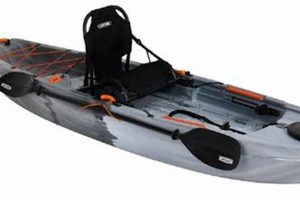
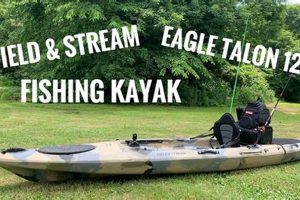
Kayak compatibility plays a crucial role in optimizing rod and reel setups for effective fishing. A harmonious relationship between the kayak’s design and the chosen fishing equipment significantly enhances angler comfort, efficiency, and overall success on the water. Considerations such as kayak width, storage options, and the presence of dedicated fishing features directly influence rod and reel choices, impacting casting, retrieving, and fish fighting. Understanding these interdependencies allows anglers to tailor their setups for seamless integration with their kayak, maximizing both performance and enjoyment.
- Kayak Width and Stability
Kayak width directly impacts stability, influencing casting mechanics and fish-fighting leverage. Wider kayaks offer greater stability, allowing for more aggressive casting motions and secure footing when battling larger fish. Narrower kayaks, while offering increased maneuverability and speed, may require more controlled casting movements and careful weight distribution during a fight. Rod length and action should complement kayak width. Shorter rods offer better control in narrower kayaks, while longer rods can be effectively utilized in wider, more stable platforms.
- Storage and Accessibility
Efficient storage and easy access to rods and reels are essential for maintaining a clutter-free and organized kayak. Dedicated rod holders, either flush-mounted or adjustable, secure rods when not in use, preventing tangles and damage. Easily accessible storage compartments for tackle boxes and other gear streamline lure changes and equipment adjustments, minimizing disruptions during fishing. Kayak design features like recessed trays or tank wells accommodate tackle storage, enhancing efficiency and maintaining a clear deck space.
- Dedicated Fishing Features
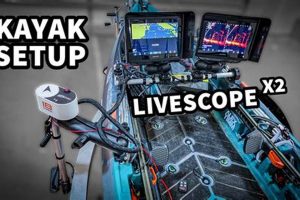
Modern fishing kayaks often incorporate specialized features that enhance compatibility with rods and reels. Integrated rod holders, anchor trolleys, and transducer mounts facilitate hands-free fishing and precise boat control, maximizing angling opportunities. Adjustable footrests and elevated seating positions improve casting leverage and visibility, optimizing comfort and performance. The presence of these features influences rod and reel choices, allowing anglers to select equipment that seamlessly integrates with the kayak’s design.
- Rod and Reel Placement
Strategic placement of rods and reels within the kayak maximizes efficiency and minimizes interference during casting and retrieving. Positioning rod holders within easy reach allows for quick transitions between paddling and fishing. Similarly, situating tackle storage near the angler’s seated position streamlines lure changes and equipment adjustments. Careful consideration of rod and reel placement, in conjunction with kayak design, creates an ergonomic and efficient fishing platform, enhancing overall performance and enjoyment.
Kayak compatibility significantly influences rod and reel selection, impacting overall fishing effectiveness and enjoyment. A well-integrated setup enhances casting accuracy, improves fish-fighting control, and maximizes angler comfort. By carefully considering kayak design features and their interplay with fishing equipment, anglers create a streamlined and efficient platform optimized for success on the water. A balanced approach to kayak compatibility transforms the angling experience, promoting seamless transitions between paddling and fishing and ultimately increasing the likelihood of a rewarding outing.
Frequently Asked Questions
This section addresses common inquiries regarding rod and reel selection for kayak fishing, providing concise and informative responses to facilitate informed decision-making.
Question 1: What rod length is optimal for kayak fishing?
Rods ranging from 6 to 7.5 feet generally offer the best balance of maneuverability and casting control within a kayak’s confined space. Longer rods can become cumbersome and difficult to manage.
Question 2: Which reel type is better suited for kayak fishing: spinning or baitcasting?
Spinning reels are generally recommended for beginners due to their ease of use and reduced risk of tangles. Baitcasting reels offer greater casting distance and accuracy but require more practice to master. The best choice depends on individual experience and fishing style.
Question 3: What fishing line is recommended for kayak fishing?
Braided line offers excellent strength and sensitivity, making it suitable for most kayak fishing applications. Fluorocarbon line provides low visibility and abrasion resistance, beneficial in clear water or around heavy cover. Monofilament remains a versatile and cost-effective option.
Question 4: How does kayak stability affect rod and reel choices?
Kayak stability influences casting mechanics and fish-fighting leverage. Wider, more stable kayaks permit use of slightly longer rods and heavier tackle. Narrower kayaks necessitate shorter rods and lighter gear for better control and balance.
Question 5: Are specialized kayak fishing rods and reels necessary?
While specialized equipment exists, standard rods and reels can be effectively adapted for kayak fishing. Prioritizing shorter lengths, appropriate power and action, and durable reel construction ensures optimal performance in a kayak environment.
Question 6: How should rods and reels be stored and accessed while kayak fishing?
Utilizing rod holders keeps rods secure and readily accessible. Storing tackle and other gear in designated compartments maintains a clutter-free kayak deck, promoting efficient fishing and enhanced safety.
Careful consideration of these frequently asked questions empowers anglers to make informed decisions regarding rod and reel selection for kayak fishing. Matching equipment to individual needs, target species, and kayak type ensures a balanced and effective setup, maximizing enjoyment and success on the water.
The next section will delve into specific rod and reel recommendations for various kayak fishing scenarios.
Conclusion
Effective angling from a kayak hinges upon selecting appropriate equipment. This article explored critical factors influencing rod and reel choices, including rod length, action, and power, reel type and functionality, line selection, target species considerations, and kayak compatibility. A balanced approach to these elements ensures a cohesive and efficient setup, optimizing performance and enjoyment on the water.
Careful equipment selection empowers anglers to navigate the unique challenges and opportunities presented by kayak fishing. By understanding the interplay of these factors, anglers enhance their ability to target diverse species, adapt to varying environments, and ultimately experience the full potential of this dynamic angling discipline. Continued exploration of these principles fosters a deeper appreciation for the nuanced relationship between angler, equipment, and the aquatic environment.