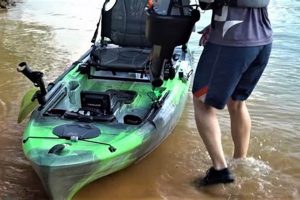
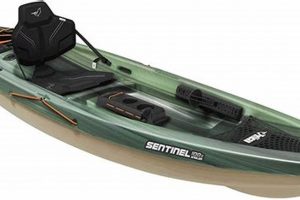
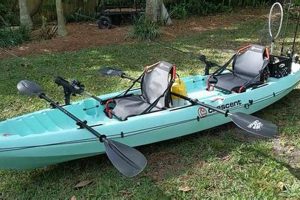
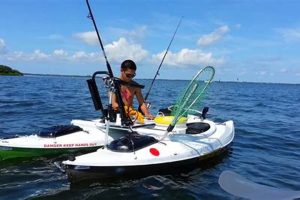
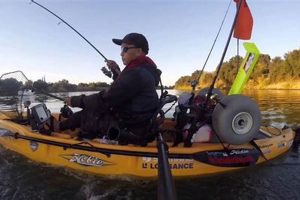
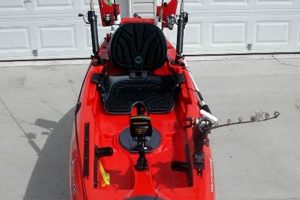
Tandem kayaks designed for angling offer a stable platform for two individuals to enjoy the sport. These vessels typically feature specialized amenities such as rod holders, storage compartments for tackle, and sometimes even livewells. An example would be a sit-on-top model with recessed fishing rod holders and a large rear storage well.
Shared paddling effort reduces fatigue on longer trips, allowing anglers to cover more water and reach prime fishing spots. The collaborative nature enhances the experience, providing opportunities for shared strategy and camaraderie. Historically, tandem kayaks adapted from general recreational models as the popularity of kayak fishing grew, leading manufacturers to incorporate fishing-specific features. This evolution has resulted in highly specialized vessels designed to maximize angling success and comfort.
Further exploration will cover key features to consider when selecting a suitable vessel, popular models available on the market, and essential safety tips for a successful and enjoyable fishing excursion.
Tips for Tandem Kayak Fishing
Successful tandem kayak fishing requires careful planning and coordination. The following tips offer guidance for a safe and productive experience.
Tip 1: Distribute Weight Evenly: Proper weight distribution is crucial for stability. Gear should be balanced between the two paddlers and positioned low in the kayak to minimize the center of gravity.
Tip 2: Synchronize Paddling: Communicate and coordinate paddling strokes to maintain efficient movement and straight tracking. Practice paddling together before venturing onto the water.
Tip 3: Establish Fishing Roles: Designate roles for tasks like paddling, navigating, and handling fish. This prevents confusion and maximizes efficiency while on the water.
Tip 4: Choose Compatible Paddles: Using paddles of similar length and blade shape ensures balanced paddling effort and reduces strain. Consider adjustable paddles to accommodate varying arm lengths and paddling styles.
Tip 5: Plan for Emergencies: Carry essential safety equipment, including a first-aid kit, signaling devices, and a bilge pump. Review emergency procedures and practice self-rescue techniques.
Tip 6: Respect Fishing Regulations: Familiarize oneself with local fishing regulations, including licensing requirements and catch limits. Practice ethical angling techniques and leave no trace behind.
Tip 7: Check Weather Conditions: Before embarking on a fishing trip, check the weather forecast and water conditions. Avoid paddling in strong winds, rough seas, or during lightning storms.
Adhering to these guidelines enhances safety and enjoyment, allowing for a productive and memorable fishing experience.
By following these tips, anglers can maximize their time on the water and focus on the thrill of the catch.
1. Stability

Stability is a paramount concern in fishing two-person kayaks, directly influencing safety and angling success. A stable platform allows anglers to cast, reel, and land fish without compromising balance. This section explores key facets contributing to stability in these vessels.
- Hull Design:
Hull design significantly impacts stability. Wider hulls generally offer greater initial stability, resisting tipping when at rest. A flatter hull provides enhanced primary stability, beneficial for calm waters. However, a more rounded or V-shaped hull, while less initially stable, offers superior secondary stability the ability to resist capsizing when leaned. For example, a pontoon-style hull provides exceptional primary stability, ideal for still fishing, while a moderate V-hull performs better in choppy conditions. Understanding the trade-offs between primary and secondary stability is crucial for selecting a kayak appropriate for the intended fishing environment.
- Weight Capacity and Distribution:
Weight capacity and its distribution significantly affect stability. Exceeding the manufacturer’s recommended weight capacity compromises stability and increases the risk of capsizing. Proper weight distribution within the kayak is equally crucial. Concentrating weight low and evenly distributes the load, enhancing stability. For example, placing heavier items, like tackle boxes, near the center of the kayak and securing loose gear prevents shifting weight and maintains balance.
- Center of Gravity:
A lower center of gravity enhances stability. Sitting lower in the kayak and minimizing the height of onboard gear keeps the center of gravity low, making the vessel less prone to tipping. Higher seats, while offering better visibility, raise the center of gravity and can reduce stability. Kayaks designed specifically for fishing often feature lower seating positions to maximize stability while angling.
- Water Conditions:
Calm water conditions generally contribute to greater stability. Wind, waves, and currents can significantly impact stability, requiring increased vigilance and careful maneuvering. Kayaks designed for rougher water conditions typically feature longer hulls and more pronounced keels for enhanced tracking and stability in challenging environments. Choosing a kayak appropriate for the anticipated water conditions is crucial for safety and a successful fishing experience.
By considering these facets, anglers can select a two-person fishing kayak that provides the optimal balance of stability and performance for their specific needs and fishing environment. Prioritizing stability ensures a safe and enjoyable fishing experience, allowing anglers to focus on the pursuit of their catch with confidence.
2. Capacity

Capacity in a fishing two-person kayak directly impacts functionality and user experience. This encompasses both weight capacity and storage capacity. Weight capacity dictates the combined weight of paddlers, gear, and any potential catch. Exceeding this limit compromises stability and safety, increasing the risk of capsizing. Storage capacity determines the amount of equipment, such as tackle boxes, rods, and personal items, that can be carried comfortably. Insufficient storage can lead to a cluttered cockpit, hindering movement and fishing activities. For instance, a kayak with a lower weight capacity might be suitable for smaller individuals with minimal gear, while a larger capacity is essential for heavier paddlers or longer expeditions requiring more equipment. Selecting a kayak with appropriate capacity is crucial for a safe and efficient fishing experience.
The interplay between weight capacity and storage capacity requires careful consideration. A kayak with a high weight capacity might not necessarily offer sufficient storage. Conversely, ample storage in a kayak with a lower weight capacity limits the total payload. This balance necessitates evaluating individual needs and intended usage. For example, anglers targeting larger species might prioritize weight capacity to accommodate heavier fish, while those focusing on multi-day trips require ample storage for camping gear and supplies. Analyzing specific fishing requirements allows for informed decisions regarding capacity, optimizing both safety and functionality.
Understanding capacity limitations ensures both safety and efficient use of the fishing two-person kayak. Overloading compromises stability and increases the risk of capsizing, especially in challenging conditions. Inadequate storage restricts the amount of essential equipment that can be carried, impacting fishing effectiveness and overall enjoyment. Careful consideration of weight and storage needs, coupled with adherence to manufacturer guidelines, contributes significantly to a successful and safe fishing experience. This understanding allows anglers to select the appropriate vessel and pack accordingly, maximizing comfort and performance on the water.
3. Maneuverability
Maneuverability in a fishing two-person kayak significantly impacts angling effectiveness and overall experience. The ability to precisely position the vessel for optimal casting angles, navigate through tight spaces like vegetated shorelines or narrow creeks, and efficiently respond to changing currents or wind conditions contributes directly to fishing success. A less maneuverable kayak can hinder access to prime fishing spots and limit responsiveness to fish activity, potentially reducing catch rates. For instance, navigating a winding river choked with fallen logs requires a highly maneuverable kayak, while open-water trolling demands less intricate maneuvering but benefits from efficient tracking.
Several factors influence maneuverability, including hull design, length, and the presence of a rudder or skeg. Shorter kayaks generally offer greater maneuverability, allowing for tighter turns and quicker adjustments in direction. Longer kayaks, while offering superior tracking in open water, can be less agile in confined areas. A kayak’s hull design also plays a crucial role. A flatter hull enhances maneuverability, while a more rounded or V-shaped hull prioritizes tracking and stability over turning agility. A rudder or skeg can enhance tracking in windy conditions, but may slightly reduce turning responsiveness. Understanding these factors allows anglers to select a kayak that balances maneuverability with other performance characteristics based on their specific fishing style and target environment.
The practical significance of maneuverability extends beyond simply reaching desired fishing locations. It enables anglers to precisely control drift speed and direction, presenting lures or bait effectively in specific currents or along targeted structures. Efficient maneuvering also facilitates quicker adjustments to fish activity, enabling anglers to follow moving schools or react swiftly to strikes. In challenging conditions, enhanced maneuverability can be crucial for navigating obstacles, avoiding hazards, and ensuring a safe return. Selecting a fishing two-person kayak with appropriate maneuverability characteristics is therefore essential for maximizing fishing success and overall enjoyment on the water. This understanding empowers anglers to effectively target specific species and fishing environments, ultimately enhancing their chances of a rewarding experience.
4. Storage
Storage capacity in a fishing two-person kayak directly influences organization, efficiency, and overall fishing success. Adequate storage facilitates convenient access to essential gear, such as tackle boxes, rods, lures, and safety equipment. Conversely, insufficient storage leads to a cluttered cockpit, hindering movement, impeding fishing activities, and potentially compromising safety. Organized storage allows anglers to quickly locate and deploy necessary equipment, maximizing fishing time and responsiveness to changing conditions or fish activity. For example, dedicated compartments for tackle boxes prevent tangled lines and lost lures, while secure rod holders minimize the risk of damage and allow for efficient rod changes. Ample dry storage protects sensitive electronics and personal items from water damage, ensuring their functionality throughout the fishing trip.
Practical applications of effective storage extend beyond mere convenience. Designated storage for specific gear types streamlines fishing processes. Storing different lure types in separate compartments allows for rapid selection based on prevailing conditions or target species. Easy access to safety equipment, such as a first-aid kit or signaling devices, ensures preparedness for unexpected situations. Furthermore, efficient storage contributes to weight distribution balance within the kayak, influencing stability and maneuverability. For instance, distributing heavier items evenly throughout designated storage compartments optimizes the kayak’s center of gravity, enhancing stability and preventing tipping. Inadequate or poorly planned storage can negatively impact performance and safety, particularly in challenging conditions.
Optimizing storage solutions in a fishing two-person kayak directly contributes to a more productive and enjoyable angling experience. Adequate and well-organized storage enhances efficiency, reduces clutter, and maximizes access to essential equipment. This, in turn, allows anglers to focus on the task at hand fishing rather than managing gear or navigating a cluttered cockpit. Understanding the importance of storage and implementing effective organization strategies are crucial for maximizing both safety and fishing success. This practical understanding empowers anglers to select kayaks with appropriate storage features and utilize them effectively, ultimately contributing to a more rewarding experience on the water.
5. Comfort

Comfort in a fishing two-person kayak directly influences endurance, focus, and overall enjoyment. Extended fishing trips can become arduous if the kayak lacks adequate comfort features. Discomfort can lead to fatigue, reduced concentration, and a diminished fishing experience. Prioritizing comfort ensures anglers can remain on the water longer, focus on fishing, and fully appreciate the experience. This section explores key facets contributing to comfort in these vessels.
- Seating:
Comfortable seating is paramount for extended fishing trips. Adjustable seating systems allow individual customization, accommodating varying body types and preferences. Features like padded seats, adjustable backrests, and breathable fabrics enhance comfort and reduce fatigue. High-quality seating promotes proper posture, minimizing strain and discomfort during long hours on the water. For example, a kayak with adjustable lumbar support can significantly alleviate back strain, while breathable mesh seating enhances comfort in warm weather.
- Legroom and Footrests:
Ample legroom and adjustable footrests are crucial for comfort and paddling efficiency. Sufficient legroom prevents cramping and allows for comfortable changes in position. Adjustable footrests provide essential leverage for efficient paddling and contribute to overall stability. Properly positioned footrests reduce leg fatigue and improve power transfer during paddling strokes. Kayaks designed with ample cockpit space and multiple footrest positions accommodate individuals of varying heights, ensuring comfortable and efficient paddling for both occupants.
- Stability and Smooth Ride:
A stable and smooth ride contributes significantly to overall comfort, especially in choppy water conditions. Kayaks designed for stability minimize rocking and tipping, reducing anxiety and promoting a sense of security. A smooth ride reduces the impact of waves and chop, minimizing fatigue and discomfort. Features like a well-designed hull and effective tracking enhance stability and create a smoother ride, contributing to a more comfortable and enjoyable fishing experience.
- Accessibility and Deck Layout:
A well-designed deck layout with easy access to essential gear and features enhances comfort and efficiency. Conveniently placed rod holders, tackle storage compartments, and cup holders minimize reaching and stretching, promoting a more relaxed and organized fishing experience. Easy access to storage compartments allows for efficient retrieval of gear without disrupting fishing activities. A clutter-free cockpit enhances comfort and reduces the risk of tripping or entanglement.
By considering these facets of comfort, anglers can select a two-person fishing kayak that maximizes enjoyment and endurance on the water. Prioritizing comfort features allows for longer, more productive fishing trips, enhancing the overall experience and fostering a deeper appreciation for the sport. A comfortable and well-equipped kayak empowers anglers to fully immerse themselves in the fishing experience, free from distractions caused by discomfort or inefficient design.
6. Propulsion
Propulsion systems significantly influence a fishing two-person kayak’s performance, impacting accessibility, range, and fishing effectiveness. Selecting an appropriate propulsion system depends on factors such as fishing style, target environment, and personal preferences. This section explores various propulsion methods and their implications for tandem kayak fishing.
- Paddle Power:
Traditional paddle propulsion offers versatility, affordability, and quiet operation, beneficial for stealthy approaches in shallow waters or protected environments. Paddle kayaks require physical exertion, potentially limiting range and tiring anglers, especially during longer trips or against strong currents. However, the direct connection to the water enhances maneuverability and control, advantageous for navigating tight spaces or responding quickly to fish activity. For example, navigating a shallow, winding creek choked with vegetation necessitates the precise control offered by paddle propulsion.
- Pedal Power:
Pedal-powered kayaks utilize leg muscles, offering sustained speed and freeing hands for fishing. This hands-free operation allows anglers to focus on casting, reeling, and landing fish without interrupting paddling. Pedal drives, while generally more expensive than paddles, offer increased range and efficiency, particularly in open water or against currents. However, the added mechanical complexity requires occasional maintenance and can limit maneuverability in tight spaces compared to paddle kayaks. Pedal drives excel in open-water trolling or covering long distances to reach offshore fishing grounds.
- Motorized Kayaks:
Motorized kayaks offer speed and range exceeding paddle or pedal-powered options, allowing access to distant fishing locations. Electric motors provide quiet operation, minimizing disturbance to fish and preserving the tranquility of the natural environment. Gas-powered motors offer greater range and speed but introduce noise and potential environmental impact. While motors enhance accessibility, they introduce additional costs, maintenance requirements, and potential regulatory considerations regarding permitted usage in certain areas. Motorized kayaks are well-suited for traversing large bodies of water or reaching distant offshore fishing spots quickly and efficiently.
- Combination Propulsion:
Some kayaks offer combined propulsion systems, such as paddle/pedal or paddle/motor combinations, providing versatility for diverse fishing scenarios. These hybrid systems allow anglers to leverage the advantages of different propulsion methods based on prevailing conditions or specific fishing requirements. For example, an angler might use a motor to reach a distant fishing spot, then switch to paddle propulsion for quieter maneuvering in shallow water near the shoreline. This adaptability enhances overall fishing effectiveness and allows for customized approaches based on individual preferences and environmental factors.
The choice of propulsion system significantly influences the fishing experience in a two-person kayak. Careful consideration of fishing style, target environment, physical capabilities, and budget constraints allows anglers to select the most appropriate propulsion method. Understanding the advantages and limitations of each system empowers informed decision-making, ensuring a safe, efficient, and enjoyable fishing experience tailored to individual needs and preferences. Ultimately, the right propulsion system enhances accessibility, range, and overall fishing effectiveness, contributing significantly to a successful and rewarding time on the water.
Frequently Asked Questions
This section addresses common inquiries regarding two-person fishing kayaks, providing concise and informative responses to facilitate informed decision-making and enhance understanding.
Question 1: What are the key advantages of a two-person fishing kayak over a single-person model?
Two-person kayaks offer increased stability, shared paddling effort reducing fatigue, enhanced load capacity for gear and potential catch, and a collaborative fishing experience fostering camaraderie.
Question 2: How does one choose the right size two-person fishing kayak?
Appropriate size depends on combined paddler weight, intended gear load, and fishing environment. Manufacturer specifications regarding weight capacity and kayak dimensions should be consulted. Longer kayaks generally track better in open water, while shorter models offer enhanced maneuverability in tight spaces.
Question 3: What essential safety equipment should be carried on a two-person fishing kayak?
Essential safety equipment includes personal flotation devices (PFDs) for each paddler, a signaling device (whistle or air horn), a first-aid kit, a bilge pump or bailer, and navigation tools (map, compass, or GPS). A communication device (VHF radio or cell phone in a waterproof case) is also recommended.
Question 4: How does one transport a two-person fishing kayak?
Transportation options include roof racks designed for kayaks, trailers, or truck beds. Securing the kayak properly during transport is crucial to prevent damage or loss. Following manufacturer recommendations for tie-down procedures ensures safe and secure transportation.
Question 5: What are the typical price ranges for two-person fishing kayaks?
Prices vary based on features, materials, and propulsion systems. Entry-level models typically start around $500, while high-end kayaks with advanced features and propulsion systems can exceed $3000. Researching various models and considering specific fishing needs allows for informed budget allocation.
Question 6: How is a two-person fishing kayak maintained?
Regular maintenance includes rinsing with fresh water after each use, especially after saltwater exposure, and storing the kayak in a sheltered location away from direct sunlight. Periodic inspection of hull integrity, hardware, and any propulsion systems is also recommended. Following manufacturer guidelines for maintenance ensures longevity and optimal performance.
Addressing these common inquiries provides a foundation for informed decision-making regarding selecting, utilizing, and maintaining a two-person fishing kayak. Careful consideration of these factors enhances safety, efficiency, and overall enjoyment on the water.
For a deeper dive into specific kayak models and features, consult comprehensive product reviews and expert angler insights.
Fishing Two Person Kayak
Exploration of tandem fishing kayaks reveals key considerations encompassing stability, capacity, maneuverability, storage, comfort, and propulsion. Each facet significantly impacts angling effectiveness and overall experience. Stability ensures safe casting and landing, while capacity dictates gear and passenger limits. Maneuverability influences access to fishing spots, and ample storage accommodates essential equipment. Comfort promotes prolonged fishing sessions, and propulsion options dictate range and speed. Careful evaluation of these interconnected elements empowers informed selection, aligning vessel characteristics with individual angler needs and target environments.
Successful tandem kayak fishing necessitates informed decision-making and responsible practices. Prioritizing safety considerations, respecting environmental regulations, and employing ethical angling techniques contribute to a sustainable and rewarding pursuit. As kayak fishing continues to evolve, informed selection and mindful usage of tandem kayaks will remain crucial for maximizing enjoyment and preserving aquatic ecosystems for future generations.